ME-P01 Auto Plug to Pin Assembling Machine – Heatecx Limited

Heatecx Limited

ME-P01 Auto Plug to Pin Assembling Machine

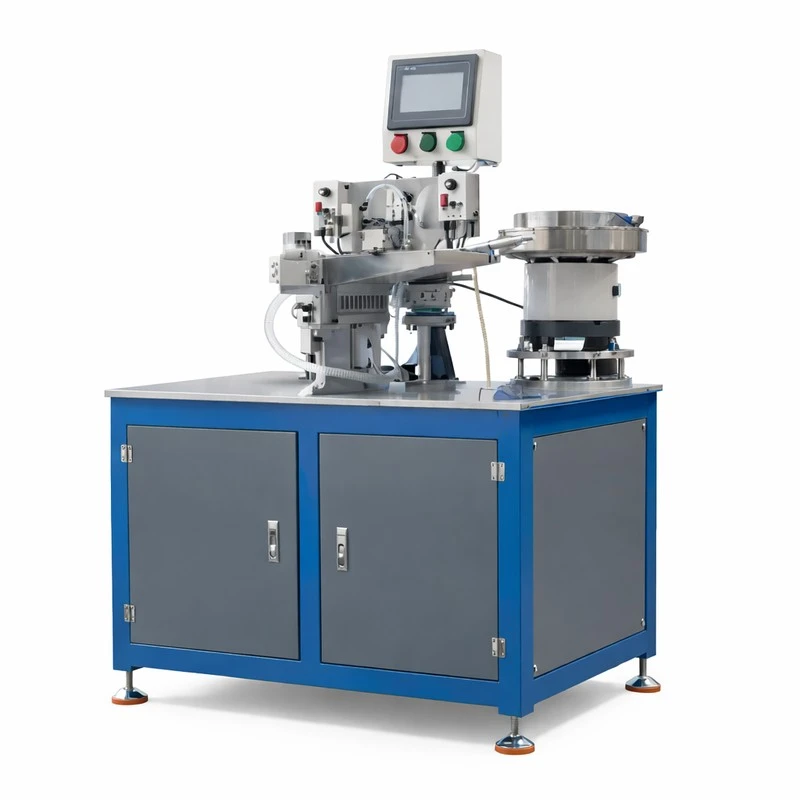
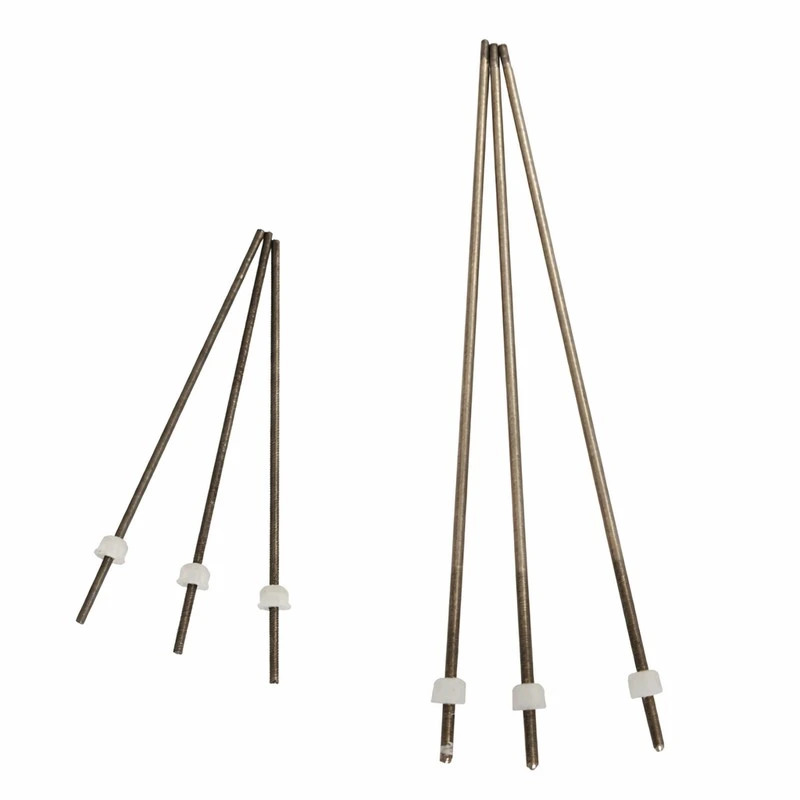
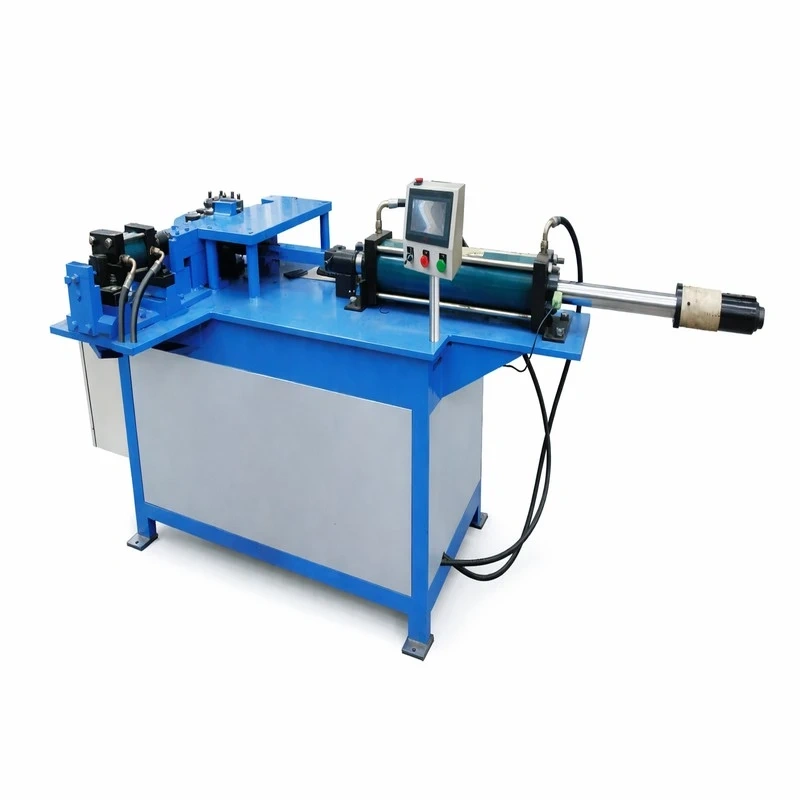
The ME-P01 Automatic Terminal Pin Insertion Machine for Electric Heater Plugs is a cutting-edge solution designed to optimize and automate the critical process of connecting the rubber plug and the terminal pin in the manufacturing of electric heaters. This automatic electric heater assembly equipment ensures a precise and efficient union, adjusting to the preset length based on technical filling parameters. Its robust design and advanced technology make it an indispensable tool for industrial automation in the electronic components and industrial electric heating sectors.

The ME-P01 Automatic Terminal Pin Insertion Machine for Electric Heater Plugs is a state-of-the-art solution engineered to optimize and automate the crucial connection process between the rubber plug and the terminal pin in electric heater manufacturing. This automatic electric heater assembly equipment guarantees a precise and efficient union, accurately adjusting to the preset length via technical filling parameters. Its robust design and advanced technology position it as an indispensable tool for industrial automation within the electronic components and industrial electric heating sectors. The machine is controlled by an integrated servomotor, PLC, and touchscreen system, ensuring extremely precise, intuitive, and user-friendly operation. This pin assembly machine significantly reduces manual intervention, enhancing product consistency and operational efficiency. It is ideal for companies seeking to optimize heater production and reduce labor costs, as a single operator can supervise multiple units simultaneously.

The ME-P01 Automatic Terminal Pin Insertion Machine for Electric Heater Plugs operates on a principle of high-precision automation, ensuring efficient and consistent assembly. The process unfolds in several key stages:

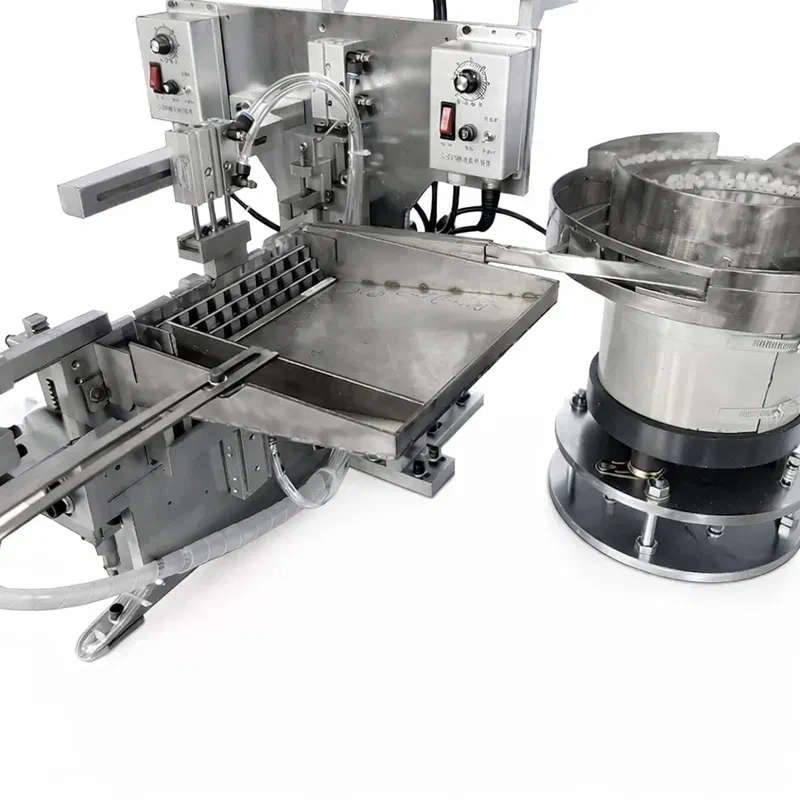
1      Material Feeding: Terminal pins and rubber plugs are loaded into the vibratory bowl. This disc, through controlled vibration, automatically orientates and feeds each component to the processing station, ensuring a continuous and uninterrupted flow.

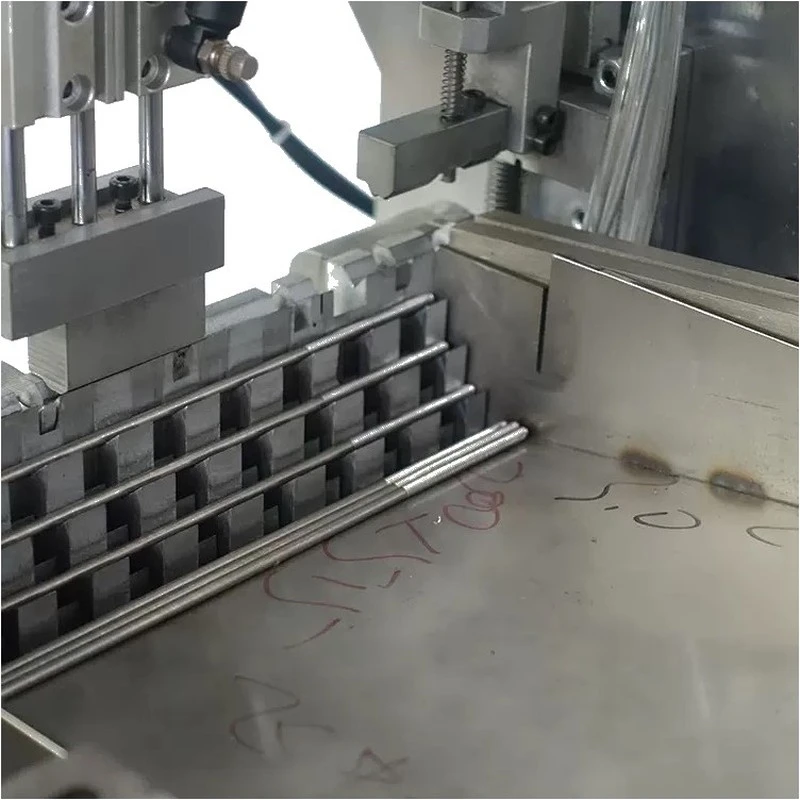
2      Component Positioning: Once fed, the pins and plugs are transported and precisely positioned at the assembly station. High-precision sensors verify the correct orientation and presence of each part before proceeding to the next phase.

3      Servomotor-Controlled Insertion: The core of the process lies in the insertion system. A high-precision servomotor, controlled by the PLC, is responsible for inserting the terminal pin into the rubber plug. The insertion length is digitally adjusted via the touchscreen, based on preset technical parameters, allowing for quick adaptation to different product specifications.

4      Verification and Output: After insertion, the system can perform an optional verification to ensure correct union and pin length. Finally, the assembled units are released from the workstation and directed to a collection container or the next stage of the production line.

The entire process is supervised and managed by a Programmable Logic Controller (PLC), which coordinates the actions of the servomotor, vibratory discs, and sensors. The touchscreen provides an intuitive interface for the operator, allowing real-time monitoring, parameter adjustment, and diagnosis of potential issues, facilitating simple operation and total control over assembly automation.

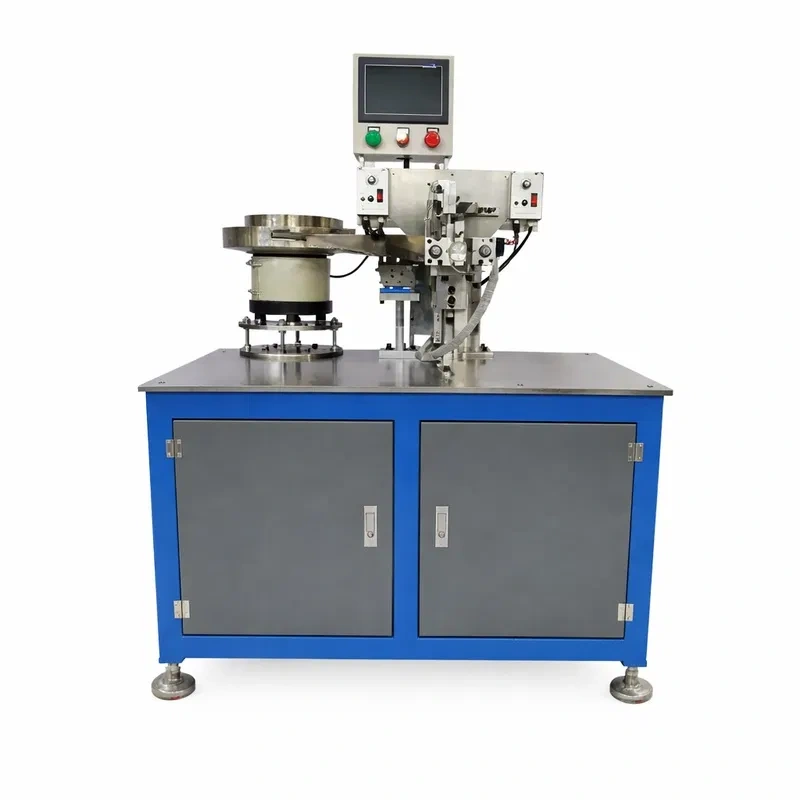
The ME-P01 Automatic Terminal Pin and Plug Assembly Machine offers a series of features and advantages that distinguish it in the market:

•       Advanced Control (Servomotor + PLC + Touchscreen): Provides unparalleled precision in insertion and total control over the process. The touchscreen interface facilitates setup and monitoring, making machine operation simple and accessible even for personnel with minimal technical training.

•       Automatic Vibratory Bowl Feeding: The vibratory bowl system automatically selects and feeds materials, eliminating the need for manual loading and ensuring a continuous and efficient workflow. This contributes to higher productivity and reduces human errors.

•       High Precision and Consistency: Servomotor technology ensures that each pin is inserted with the exact length and position required, resulting in superior product quality and a drastic reduction in defects. This assembly precision is crucial for the reliability of electric heaters.

•       Labor Cost Optimization: The ability of a single operator to manage multiple machines simultaneously allows companies to reduce labor costs and reallocate personnel to higher value-added tasks, improving overall profitability.

•       Ease of Operation and Maintenance: PLC control simplifies programming and troubleshooting, while the machine's overall design is intended for minimal maintenance and a long service life.

•       Terminal Pin Versatility: Capable of handling a wide range of terminal pin diameters (1-6 mm) and lengths (30-350 mm), making it adaptable to various product specifications.

The ME-P01 Heater Assembly Machine presents the following detailed technical specifications:

Technical Feature

Value

Terminal Pin Diameter

1 - 6 mm

Terminal Pin Length

30 - 350 mm

Control System

Servomotor + PLC + Touchscreen

Material Feeding

Automatic vibratory bowl

Power Supply

Single-phase 220 V, 50Hz (customizable)

Rated Power

20 W

Dimensions (LWH)

1200 mm * 600 mm * 850 mm

Weight

100 kg

Operation

Single operator for multiple machines

FAQ

Our electric heater assembly machine stands out for its high speed and precision. Thanks to its advanced servomotor and PLC-based control system, coupled with automatic vibratory bowl feeding, the equipment can process a significant volume of parts in a standard work shift.

Under optimal operating conditions, the machine has an impressive production capacity, capable of assembling between 30,000 and 40,000 terminal pin and plug assemblies per 8 hours of work. This translates to an hourly production ranging from 3,750 to 5,000 assemblies, depending on part complexity and specific process adjustments.

Customers also viewed