Industrial Heating Blankets and Heating Belts
Overview
Heating blankets and heating belts are among the most versatile families of surface heating equipment used in industry today. Unlike tubular resistors or cartridge heaters, which transfer heat through point contact or immersion, a heating blanket or belt wraps entirely — or in a perimeter band — around the exterior of a container, pipe, mechanical component, or irregularly shaped part, distributing heat evenly over a large area without modifying the equipment or piercing the vessel wall.
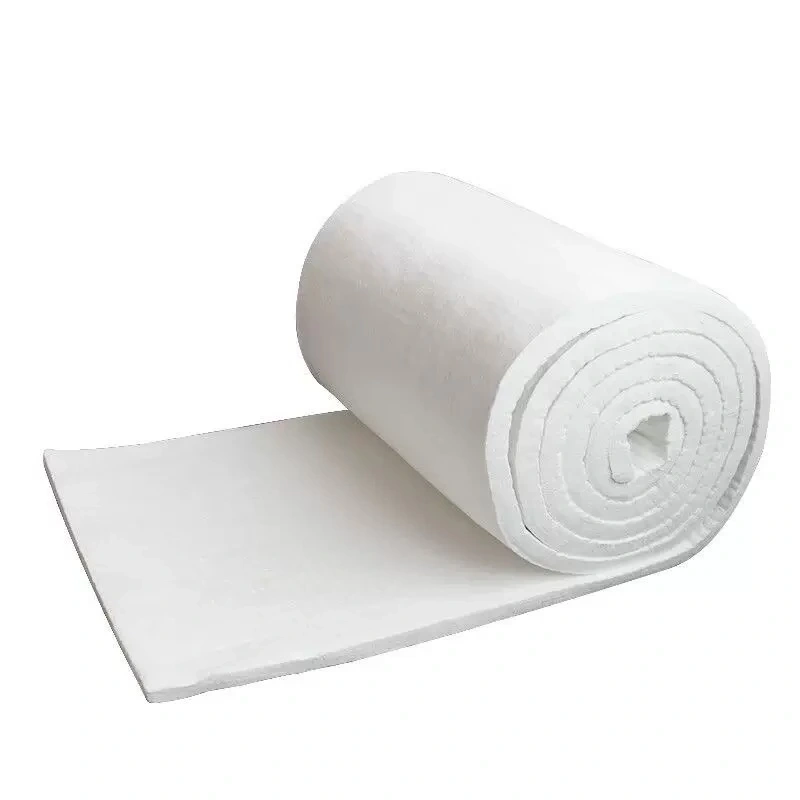
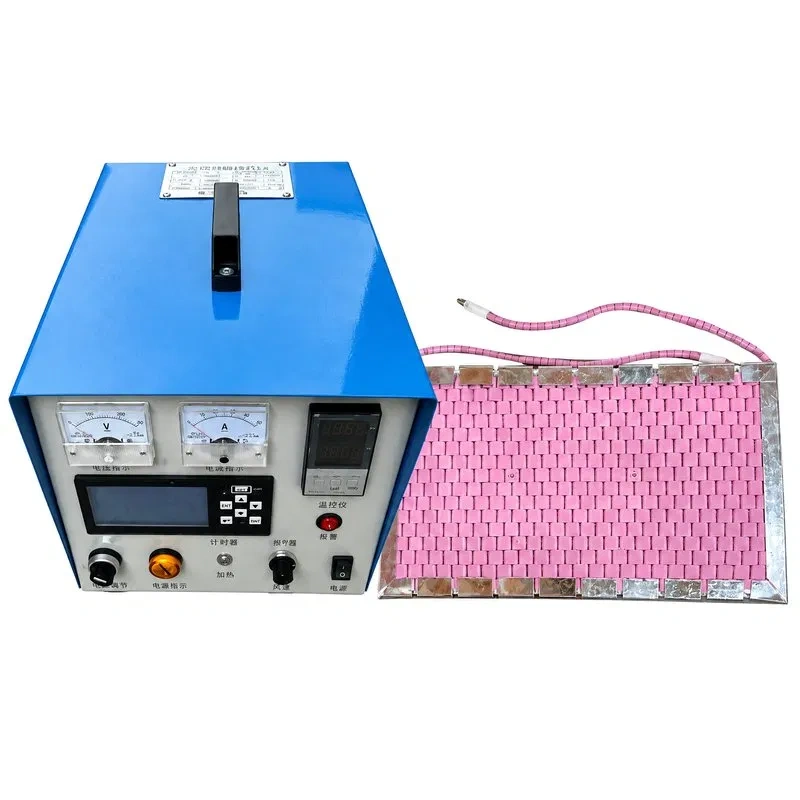
Constructively, these products consist of a resistive wire circuit (typically nickel-chromium alloy) laminated or stitched between layers of flexible dielectric materials — fiberglass-reinforced silicone rubber, ceramic felt, aluminum silicate, or nomex fabric — which simultaneously act as electrical insulation, an outward thermal barrier, and mechanical protection for the heating element. The assembly is completed with a fastening system (hook-and-loop, stainless steel spring hooks, buckles, or fiberglass cords), power leads in PTFE or silicone jacketing, and, in most industrial applications, a controller or thermostat regulating the working temperature.
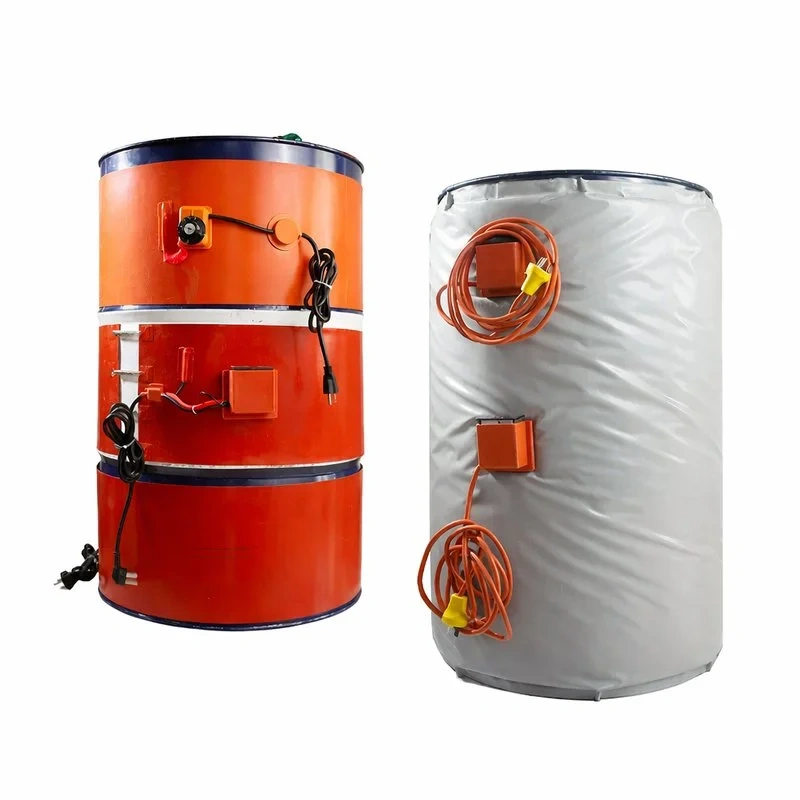
Two main configurations coexist within this category, addressing different geometries: the heating blanket itself, a continuous flexible surface that conforms to conical, cylindrical, or flat shapes; and the heating belt or strap, a narrower band — usually closed with a spring latch or buckle — designed to cinch around drums, metal or plastic barrels, or pipe sections. Both variants share the same physical principle — heat transfer by conduction and radiation from a distributed resistive circuit — but the choice between them depends on the required coverage, the geometry of the object being heated, and the power needed.
Heatecx manufactures heating blankets and belts as a vertically integrated direct manufacturer: we produce both the raw materials (resistance wire, silicone fabrics, fiberglass, mica) and the winding and assembly machinery used to build them, allowing dimensions, power ratings, temperature range, and fastening systems to be tailored exactly to each industrial project.
Background
Blanket-style heating originated from the industrial need to keep viscous substances — molasses, resins, greases, bitumen, soaps — flowable while stored in drums and tanks during transport and storage in cold climates, a challenge that intensified as trade in petroleum derivatives and chemical products expanded through the mid-20th century. Early systems relied on rigid tubular resistors mechanically clamped to the outside of the container — a poor fit for varying drum diameters and impossible to remove without tools.
The gradual replacement of rigid shells with flexible materials — first bituminous fabrics with embedded resistance wire, later vulcanized fiberglass-reinforced silicone rubber — transformed the sector during the 1970s and 1980s, as the petrochemical and coatings industries began demanding reusable, weather-resistant solutions compatible with multiple drum formats. The subsequent addition of adjustable thermostats, and later digital controllers with RTD or thermocouple sensors, established the heating blanket as the industry standard for container heating, largely displacing immersion heating in applications where direct contact with the product is undesirable or prohibited due to cross-contamination risk.
In parallel, the heating belt/strap variant was developed specifically for applications where only a band of the container needs heating — for example, the lower section of a drum to reduce viscosity without heating the entire volume — or for handling and straightening high-voltage cable during cold-weather installation, an application still in active use across the electrical power sector today.
Key Concepts
Power density (W/cm²): the amount of energy dissipated per unit of blanket surface area. This is the central design parameter: excessive density for the product being heated can cause localized thermal degradation (hot spots) where the blanket contacts the container wall, while insufficient density unnecessarily extends heat-up time.
Heating zone: an independently controlled section of the resistive circuit. Larger-surface blankets — for IBC tanks or large equipment — are often divided into multiple zones with separate controllers to achieve a uniform temperature profile and avoid local overheating where container geometry isn't uniform.
Thermostat hysteresis (deadband): the gap between cut-off and reconnection temperature on the control. A narrow deadband gives finer precision but increases relay cycling; a wider deadband reduces contactor wear at the cost of greater temperature swing.
Dielectric strength: the insulating material's (silicone, mica, fiberglass) ability to withstand electrical stress without arcing or leaking current to the grounded metal shell of the container — a critical parameter when a blanket is installed on grounded metal drums.
Conformability: the degree to which a blanket adapts to non-perfectly cylindrical or flat surfaces (dents, weld seams, flanges). Silicone fabric blankets offer better conformability than rigid reinforced felt constructions.
Types and Construction Variants
|
Type
|
Typical construction
|
Temperature range
|
Characteristic application
|
|
Silicone heating blanket
|
NiCr wire laminated between two layers of fiberglass-reinforced silicone rubber
|
-40 °C to 260 °C
|
Drums, metal/plastic barrels, IBC tanks
|
|
Heating belt/strap with spring latch
|
Resistive circuit in a narrow band, closure via stainless steel spring or buckle
|
-20 °C to 300 °C
|
Perimeter cinching around 25-200 L drums
|
|
Non-woven fabric heater with silicone insulated wire
|
Silicone-insulated resistance wire stitched onto flexible non-woven fabric, lighter and more economical
|
0 °C to 150 °C
|
Light surface heating, packaging, low-temperature curing
|
|
Aluminum foil heating pad
|
Silicone-insulated wire laminated onto self-adhesive aluminum foil
|
0 °C to 120 °C
|
Localized heating, defrosting, low-profile applications
|
|
Removable insulation blanket/jacket (no heater)
|
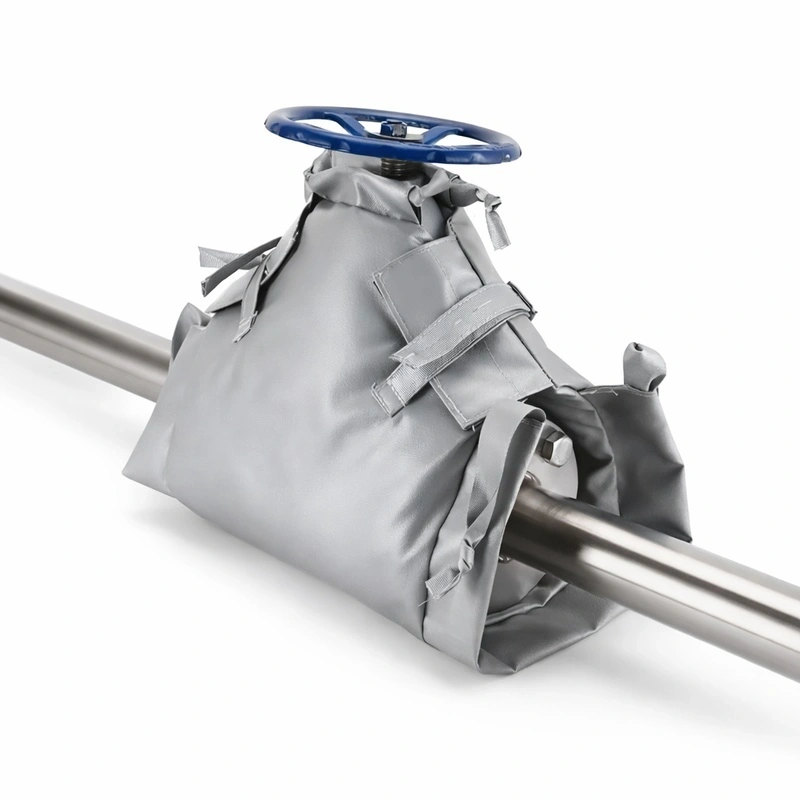
Silicone with aluminum silicate or fiberglass filling, no heating element of its own
|
-30 °C to 1000 °C
|
Retaining heat from an external heater, insulation of valves and flanges
|
|
Flexible silicone rubber heater for drums
|
NiCr element encapsulated between silicone rubber layers with integrated controller
|
Ambient to approx. 200 °C
|
Thawing and homogenizing liquids and solidified solids inside drums
|
Reference Technical Specifications
|
Parameter
|
Typical value
|
Notes
|
|
Insulation thickness
|
3-8 mm
|
Depends on required temperature range
|
|
Supply voltage
|
110-120 V / 220-240 V / 380 V three-phase
|
Per power rating and local electrical code
|
|
Surface power density
|
0.3-1.2 W/cm²
|
Depends on viscosity and melting point of the product being heated
|
|
Fire rating
|
Class A (non-combustible silicone/fiberglass materials)
|
Verify certification per installation destination
|
|
Ingress protection
|
IP44 to IP65 depending on model
|
Relevant for outdoor installations
|
|
Fastening system
|
Hook-and-loop, stainless steel spring hooks, buckles, fiberglass cords
|
Selected per diameter and removal frequency
|
|
Temperature control
|
Bimetallic analog thermostat, digital thermostat, PID controller with RTD/thermocouple
|
Required precision determines control type
|
Recent Advances
The most significant development in heating blankets and belts over recent years has been the integration of smart digital controllers with remote communication, enabling programmed heat-up ramps, temperature history logging for process traceability (especially relevant in resin and composite curing), and alerts on heating element deviations or failures — replacing the simple bimetallic cut-off thermostats that were the industry standard for decades.
On the materials side, partial replacement of fiberglass felt with silica aerogel compounds in the insulating layers has meaningfully reduced blanket thickness while maintaining the same level of thermal retention — an improvement particularly valued in applications where space around the equipment is limited, such as densely instrumented pipe runs.
Blankets and belts certified for hazardous (explosive) atmospheres (ATEX/IECEx zones) have also become more widespread, with resistive circuits limited in surface temperature and intrinsically safe controllers, extending this heating method into petrochemical and solvent processing industries that traditionally relied on steam or hot water for safety reasons.
Finally, software-assisted on-demand manufacturing has shortened lead times for non-standard geometry blankets — for valves, exchangers, or irregularly shaped parts — enabling custom cut profiles that previously required manual pattern-making.
Selection Criteria
|
Criterion
|
Technical consideration
|
|
Geometry of the object being heated
|
Regular cylindrical surfaces accommodate standard blankets; irregular geometries (valves, flanges, elbows) require custom design
|
|
Required process temperature
|
Determines the insulating material (silicone up to ~260 °C; ceramic felt or mica for higher ranges)
|
|
Nature of the product being heated
|
Substances with a low melting point or sensitivity to localized heat require lower power density and finer control
|
|
Area classification (safe or hazardous)
|
ATEX-classified zones require specifically certified circuits and controllers
|
|
Installation/removal frequency
|
Equipment requiring frequent inspection should prioritize quick-fastening systems (hook-and-loop, hooks) over stitched or permanent solutions
|
|
Environmental exposure
|
Outdoor installations require higher IP rating and UV resistance in the outer jacket
|
|
Required control precision
|
Critical processes (composite curing, pharmaceutical) justify PID controllers with data logging over simple thermostats
|
Applications by Industry
|
Industry
|
Typical application
|
|
Chemical & petrochemical
|
Reducing viscosity of resins, bitumen, and additives in drums and IBC tanks before transfer
|
|
Food processing
|
Maintaining temperature of honey, chocolate, fats, and syrups in drums during storage
|
|
Cosmetics & pharmaceutical
|
Melting and homogenizing waxes, ointments, and bases in process containers
|
|
Wind energy & aerospace
|
Controlled curing of epoxy resins and composites in blade and structure manufacturing
|
|
Electrical power sector
|
Heating high-voltage cable to facilitate handling and straightening in cold weather
|
|
Construction
|
Ground thawing, curing of mortars and concrete in low-temperature conditions
|
|
Telecommunications
|
Anti-icing blankets for satellite dishes, preventing snow accumulation that degrades signal
|
|
Automotive
|
Preheating diesel engines and equipment before startup in cold climates
|
Manufacturing Process
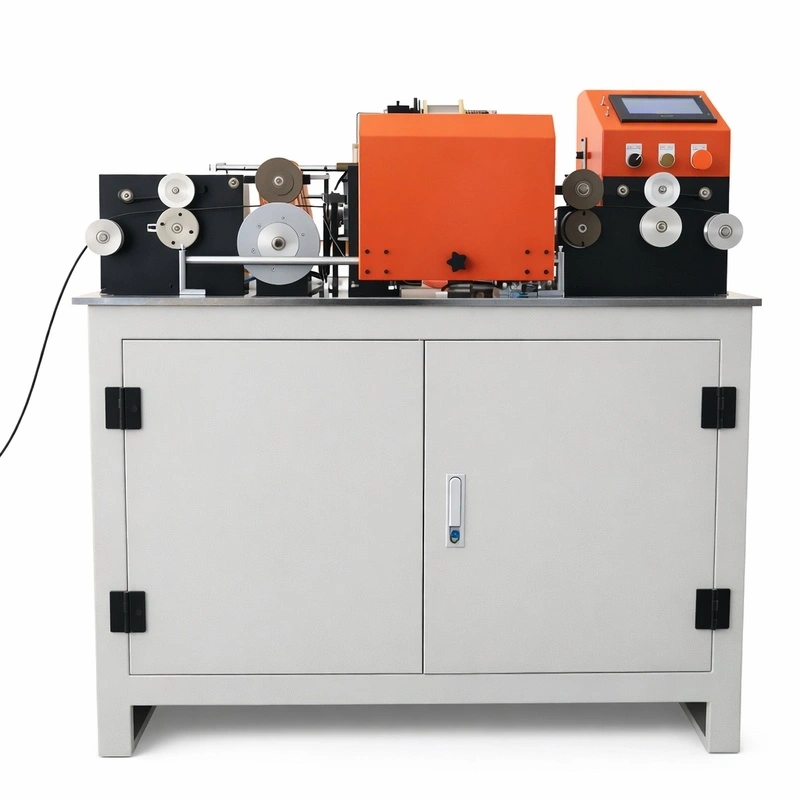
- Resistance wire winding: nickel-chromium wire is wound with a controlled pitch onto a temporary carrier or directly onto the dielectric substrate, setting the electrical resistance and therefore the final circuit power.
- Lamination with dielectric layers: the resistive circuit is encapsulated between two layers of fiberglass-reinforced silicone rubber (or stitched onto non-woven fabric), providing electrical insulation and mechanical protection.
- Vulcanization: in silicone blankets, the assembly undergoes high-temperature, high-pressure vulcanization that fuses the layers into a single homogeneous piece, eliminating delamination and trapped air bubbles.
- Pattern cutting: the vulcanized sheet is cut to the specific project geometry — rectangular, conical, with cutouts for flanges or valves — following the destination equipment's design pattern.
- Fastening system installation: fastening elements (hook-and-loop, cord eyelets, spring anchors) are stitched or riveted at calculated positions to ensure a snug fit without excessive tension points.
- Wiring and control system connection: power leads, the temperature sensor, and, depending on the model, the thermostat or digital controller are integrated, with cable glands sealed to maintain the specified IP rating.
- Electrical and functional testing: every unit undergoes continuity testing, insulation resistance (megger) testing, and dielectric strength testing, followed by functional testing at rated power to verify the actual heat-up curve against the specification.
Common Failure Modes and Preventive Maintenance
|
Failure mode
|
Common cause
|
Preventive measure
|
|
Localized hot spot
|
Uneven contact between the blanket and the surface, folds or wrinkles
|
Verify a snug fit at every installation; avoid reusing deformed blankets
|
|
Thermostat failure
|
Excessive cycling, bimetallic contact fatigue
|
Preventive replacement based on service hours; migrate to digital control for critical processes
|
|
Electrical insulation degradation
|
Prolonged exposure to moisture, oils, or aggressive chemicals without adequate protection
|
Select an outer jacket with chemical resistance specific to the product handled
|
|
Resistance wire breakage
|
Repeated flexing at the same point, abrupt installation/removal
|
Handle by the fastening system, not the cable leads; store rolled without sharp creases
|
|
Loss of thermal efficiency
|
Compaction or moisture absorption in the internal insulating fill
|
Periodic thickness inspection and dry storage between uses
|
Comparison Against Other Heating Solutions
|
Solution
|
Contact with product
|
Temperature uniformity
|
Reusability
|
Typical application
|
|
Heating blanket/belt
|
Indirect (outside the container)
|
High (large surface)
|
High, no tools required
|
Drums, tanks, pipes, curing
|
|
Immersion heater
|
Direct with the liquid
|
Very high at the immersion point
|
Medium (requires cleaning)
|
Liquids without cross-contamination risk
|
|
Heat tracing
|
Indirect (attached to pipe)
|
High along the run
|
Low (semi-permanent installation)
|
Freeze protection for long pipe runs
|
|
Flexible heating cable
|
Indirect (wound around)
|
Medium, depends on winding pitch
|
Medium
|
Complex-shaped components, coil windings
|
|
Steam/hot water heating
|
Indirect (jacket or coil)
|
High but requires auxiliary infrastructure
|
Low (fixed installation)
|
Large tanks with existing steam infrastructure
|
Application Case: Preheating Epoxy Resin Drums
A wind turbine component manufacturer needed to keep 200-liter drums of epoxy resin at a constant 40 °C during winter storage, avoiding partial crystallization that hampered downstream dosing. The solution deployed silicone heating belts with stainless steel spring latches, sized at a moderate power density (0.4 W/cm²) to avoid localized thermal degradation of the resin in direct contact with the belt, combined with digital controllers using an RTD sensor placed between the belt and the drum wall. The system reduced pre-use conditioning time from over 6 hours with ambient-air heaters to under 90 minutes, while also logging the temperature history of each batch for quality traceability.
Application Case: De-icing Satellite Dishes in Cold Climates
A telecommunications operator in a region with frequent snowfall reported recurring signal loss caused by snow and ice accumulation on parabolic dishes at ground stations. A circular, low-power-density heating blanket (approximately 0.15 W/cm²) was designed using silicone-insulated resistance wire stitched onto low-profile flexible fabric, chosen not to alter the dish's reflective geometry, and powered continuously at low output during winter months through an ambient thermostat that activated below 2 °C. The solution eliminated service interruptions caused by snow buildup without requiring manual de-icing intervention.
Why Choose Heatecx
Heatecx is a direct manufacturer of heating blankets and belts, with vertical integration between raw material production (resistance wire, silicone fabrics, fiberglass, mica) and the winding, lamination, and assembly machinery used to build them — allowing dimensions, power ratings, and fastening systems to be fully customized without dependence on external suppliers for critical components. Our Shenzhen facility provides engineering support for non-standard geometry projects and applies 100% functional testing to every unit before shipment, verifying insulation resistance, electrical continuity, and the actual heat-up curve against the project specification.