Heating Plates and Disks
Heating plates and disks are flat or circular heating components that combine an embedded, brazed, or bonded electrical resistance with a heat-conducting body — typically cast iron, aluminum, or technical ceramic — to generate and transfer heat through direct contact or infrared radiation onto a working surface. Unlike a flexible ceramic heating element that wraps around a workpiece, a heating plate or disk functions as a rigid, self-supporting heating surface, engineered for applications that demand stable thermal mass, even heat distribution across a defined area, and a robust build capable of withstanding repeated thermal cycling.
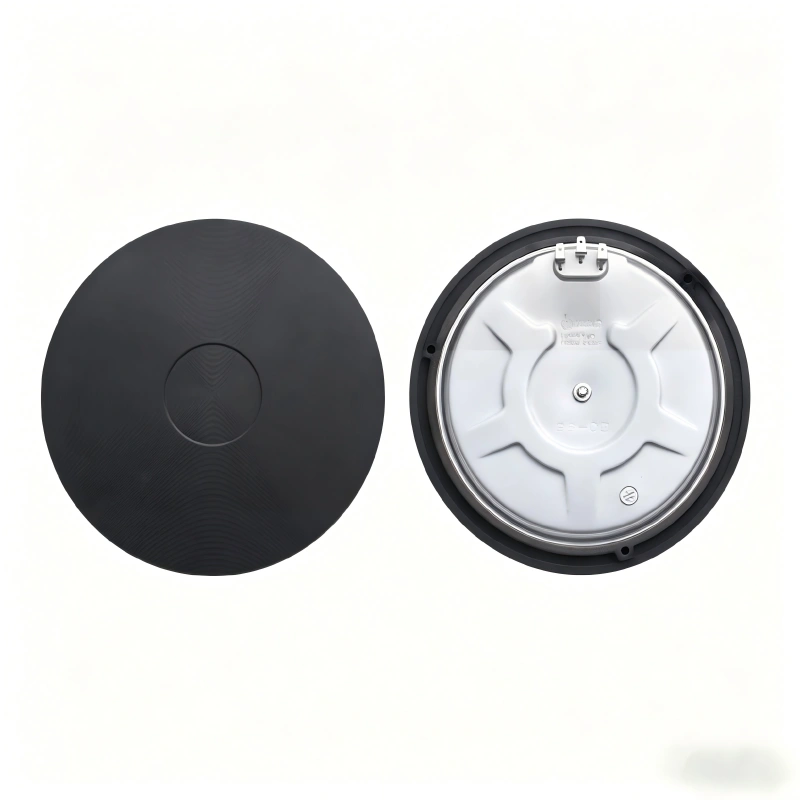
This product family spans two closely related application fields built on the same underlying construction principle: cast iron plates and disks used in domestic, commercial, and light-industrial cooking equipment (electric stove elements, hot plates, catering equipment), and heating plates and ceramic disks used in manufacturing processes — injection molds, hot press platens, thermal sealing equipment, infrared radiant ovens, and industrial glass-ceramic cooktop systems. Heatecx manufactures both variants under the same quality standard, with dimensional, power, and electrical configuration customization available for each project.
What Is a Heating Plate or Disk?
A heating plate is a heating component in which the resistive element — nickel-chromium alloy wire, sheathed tubular heating element, or a screen-printed resistive track — is integrated inside or bonded to the back face of a solid, flat body. Heat generated by the Joule effect is conducted through the mass of the body (cast iron, aluminum) or radiated as infrared energy from the surface (technical ceramic, cordierite), producing a uniform heating effect across the working surface or the material in contact with it.
A heating disk is, in essence, a circular-format heating plate, commonly associated with cooking applications (stove elements, hot plates) where the diameter matches standard cookware dimensions — though the same operating principle applies to industrial heating disks used for circular molds, extrusion dies, or rotary process plates.
Types and Design Variants
|
Variant
|
Body / Material
|
Resistive Element
|
Typical Temperature Range
|
Primary Application
|
|
Cast iron electric stove plate
|
High-density cast iron
|
Embedded coiled resistance wire beneath the surface
|
Up to ~500-550°C at the plate face
|
Domestic and commercial cooking, stove element replacement
|
|
Quick plate (Red Dot type)
|
Cast iron
|
Embedded resistance + integrated thermal cutout
|
Faster heat-up, automatic cutoff on overtemperature
|
Faster response cooking applications with overheating protection
|
|
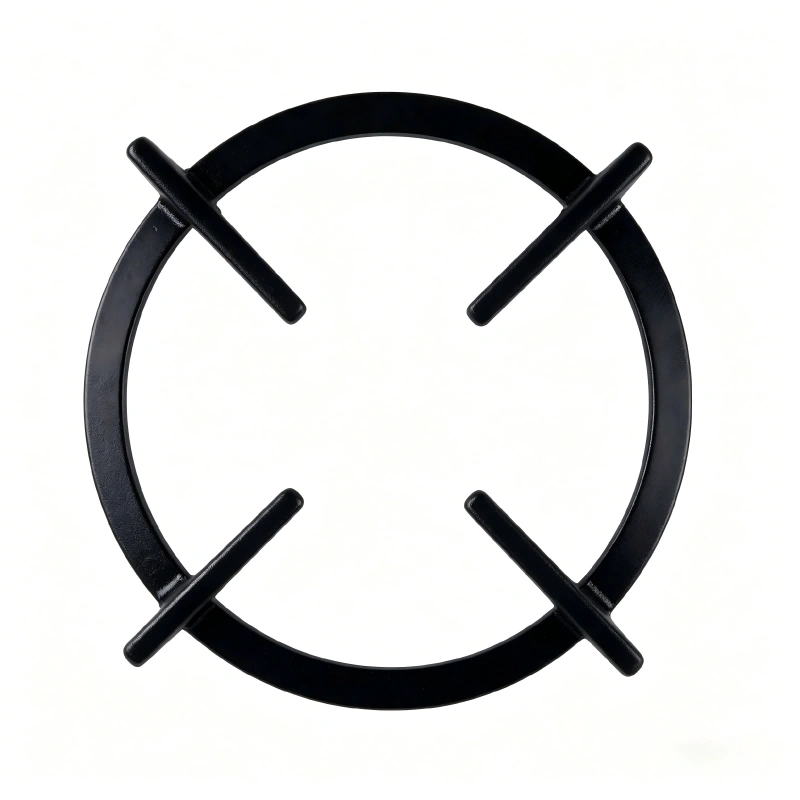
Cast iron grate
|
Enameled cast iron
|
Non-heating (support component)
|
Withstands direct heat from the burner or plate
|
Cookware support on gas or electric stoves
|
|
Ceramic plate for IR radiant oven
|
High-purity technical ceramic / cordierite
|
Screen-printed or embedded resistive track
|
High infrared emissivity, flameless combustion
|
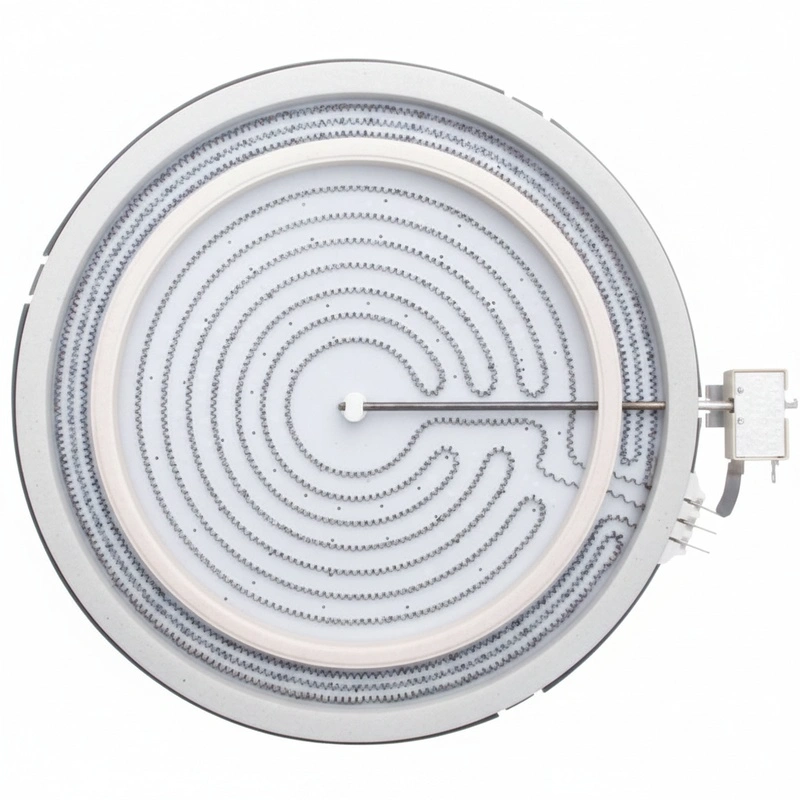
Radiant IR ovens, industrial electric ceramic cooktops
|
|
Mold and platen heating plate
|
Cast aluminum or steel
|
Embedded tubular or cartridge resistances
|
Up to ~300-450°C depending on design
|
Injection molds, thermoforming presses, hot platens
|
|
Brazed / bonded heating plate
|
Metal base + bonded strip resistance
|
Laminar or ribbon resistive element
|
High contact thermal conductivity
|
Heat-sealing equipment, packaging, direct-contact processes
|
Materials and Thermal Behavior
High-density cast iron. Provides high thermal mass, which supports stable temperature holding once the working range is reached, along with excellent mechanical resistance to impact and to the weight of heavy cookware. Its main drawback is a longer preheat time compared to lower-mass elements, and vulnerability to thermal shock if subjected to sudden cooling — for example, cold water contact on a hot plate.
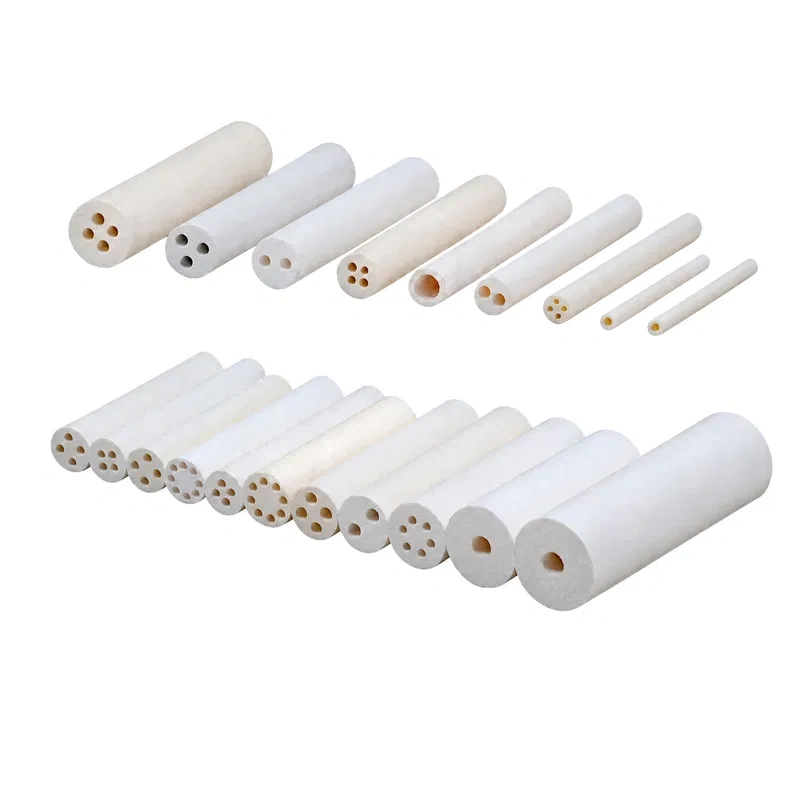
Technical ceramic and cordierite. Used in radiant oven plates for its low thermal mass, high infrared-band emissivity, and excellent thermal-shock resistance, allowing rapid heating and cooling cycles without cracking. It is the preferred option where fast thermal response or flameless combustion is required.
Cast aluminum. Used in industrial heating plates for molds and platens due to its high thermal conductivity, enabling faster and more even heat spread than cast iron, at the cost of lower mechanical strength and a lower maximum working temperature.
|
Material
|
Thermal Conductivity
|
Thermal Mass
|
Thermal-Shock Resistance
|
Approx. Max. Temp.
|
|
Cast iron
|
Medium
|
High
|
Low-Medium
|
~550°C
|
|
Cast aluminum
|
High
|
Medium
|
Medium
|
~450°C
|
|
Technical ceramic / cordierite
|
Medium-High (composition-dependent)
|
Low
|
High
|
>800°C (design-dependent)
|
|
Carbon steel
|
Medium
|
Medium-High
|
Medium
|
~400°C
|
Power Density and Sizing
Selecting the power rating of a heating plate or disk depends directly on the surface area to be heated, the target temperature, and the required response speed. As general guidance:
|
Application
|
Typical Power Density (W/cm²)
|
Notes
|
|
Domestic cooking (hot plate)
|
3-6 W/cm²
|
On/off cycling controlled by a thermostat
|
|
Commercial cooking / catering
|
6-10 W/cm²
|
Higher recovery demand between uses
|
|
Injection mold heating
|
8-15 W/cm²
|
Depends on mold material and injection cycle
|
|
Industrial radiant IR oven
|
5-12 W/cm²
|
Optimized for distance to product and emissivity
|
|
Thermal sealing / packaging
|
4-9 W/cm²
|
Short cycles with precise contact-temperature control
|
As a general rule, an oversizing margin of 15-25% above the theoretical calculation is recommended to compensate for convective losses, unused radiation, and ambient variation on the plant floor.
Advantages and Disadvantages
Advantages
- Rigid, self-supporting heating surface that requires no additional support structure.
- Uniform heat distribution across the entire contact area, avoiding cold spots.
- Robust construction with a long service life against impact and mechanical wear, particularly in cast iron.
- Direct compatibility with thermocouple- or RTD-based temperature control systems.
- Custom manufacturing in geometry, power, and voltage matched to the customer's equipment.
- In ceramic variants, fast thermal response and lower consumption in intermittent cycles.
Disadvantages
- Longer preheat time in cast iron variants compared to lower thermal-mass solutions.
- Sensitivity to thermal shock in cast iron or lower-grade ceramic bodies if exposed to sudden cooling.
- Less geometric flexibility than a flexible ceramic heating element or a heating blanket, given the rigid body.
- Higher weight than equivalent surface-heating solutions, a relevant factor for portable equipment.
- Limited repairability: a failure in the embedded resistance typically requires full plate or disk replacement.
Common Selection and Installation Mistakes
- Specifying a cast iron plate for applications requiring fast heat-up/cool-down cycles, overlooking its high thermal mass.
- Failing to specify the ambient and process temperature range to the manufacturer, leading to incorrect power sizing.
- Installing the plate without adequate rear thermal insulation, causing energy losses and overheating of nearby components.
- Using thermostats or controllers not calibrated to the specific thermal mass of the disk, causing temperature overshoot.
- Subjecting a ceramic plate to direct mechanical impact without accounting for its lower impact tolerance compared to cast iron.
- Applying cold water or wet cloths to a hot plate, causing thermal shock and premature cracking.
- Not verifying voltage and power compatibility between the heating plate and the available plant electrical supply before purchase.
- Omitting a thermal protector or thermal fuse in applications where temperature control could fail.
Recent Technological Advances
The development of Red Dot-type quick disks with an integrated thermal protector has significantly reduced overheating risk and extended resistive element life by cutting power before critical temperatures are reached. In radiant oven ceramic plates, the adoption of low-thermal-mass cordierite composites has shortened response times without sacrificing thermal-shock resistance, which is particularly relevant on production lines with short cycle times. Additionally, integrating temperature sensors directly into the plate body — rather than relying on external contact sensors — is gaining ground in industrial applications requiring precise thermal traceability, enabling faster control response and reducing wear from unnecessary thermal cycling.
Applications by Industry
|
Industry
|
Use of the Heating Plate or Disk
|
|
Appliances and commercial cooking
|
Electric stove elements, replacement hot plates, catering and food-truck equipment
|
|
Mold and tooling manufacturing
|
Heating for plastic injection molds and forming dies
|
|
Food processing
|
Hot plates and griddles for industrial cooking and baking lines
|
|
Packaging and heat sealing
|
Contact-sealing heads in packaging machinery
|
|
Industrial ovens
|
Radiant IR plates in drying, curing, and surface-treatment ovens
|
|
Laboratories and R&D
|
Laboratory hot plates for controlled thermal testing
|
Failure Modes and Preventive Maintenance
The most common failure modes in heating plates and disks include body fracture from thermal shock — typical in cast iron exposed to sudden cooling or in lower-grade ceramic — wear or breakage of the internal resistive element after prolonged overheating cycles, degradation of electrical connections from oxidation or loose terminals, and localized hot spots when the rear thermal insulation has deteriorated or shifted out of position.
Recommended preventive maintenance includes periodic visual inspection for cracks or deformation in the body, verification of electrical insulation resistance with a megohmmeter, periodic torque checks on connection terminals, cleaning of residue that could affect thermal conduction at the contact surface, and regular calibration of the temperature control system to prevent overheating cycles that accelerate thermal fatigue in the material.
Comparison vs. Other Surface-Heating Solutions
|
Solution
|
Thermal Mass
|
Response Speed
|
Geometric Flexibility
|
Typical Application
|
|
Heating plate/disk (cast iron)
|
High
|
Low-Medium
|
None (rigid body)
|
Cooking, fixed molds
|
|
Radiant IR ceramic plate
|
Low-Medium
|
High
|
Low
|
Radiant ovens, ceramic cooktops
|
|
Flexible Ceramic Heating Element
|
Low
|
High
|
High (conforms to the workpiece)
|
Heat treatment of irregular parts
|
|
Heating Blanket
|
Very low
|
Very high
|
Very high
|
Preheating of tanks, pipes, enclosures
|
|
Ceramic Infrared Heater
|
Low
|
High
|
None (contactless)
|
Contactless heating, drying, curing
|
Manufacturing Process
- Thermal design and calculation: determining geometry, power rating, and resistive element placement based on the customer's application.
- Body casting or machining: casting of cast iron or aluminum, or forming of the ceramic body according to the applicable mold.
- Resistance winding or insertion: integration of the resistive element by embedding, brazing, or screen printing, depending on the plate type.
- Electrical insulation: application of dielectric materials (mica, ceramic) between the resistive element and the conductive body where construction requires it.
- Finish machining: grinding of the contact surface to ensure flatness and optimal thermal contact.
- Terminal assembly: installation of terminals, leads, or connectors per customer specification.
- Dielectric and functional testing: insulation verification and heating test at rated power on 100% of units.
- Final quality control: dimensional inspection and finish verification prior to packaging.
Selection Criteria
|
Criterion
|
Consideration
|
|
Working temperature
|
Determines body material (cast iron vs. high-temperature ceramic)
|
|
Required response speed
|
Fast-cycle applications favor low-thermal-mass ceramic
|
|
Geometry and dimensions
|
Diameter, thickness, and shape per the equipment or cookware to be heated
|
|
Available power and voltage
|
Must match the customer's electrical installation (single-phase/three-phase)
|
|
Required mechanical strength
|
High-impact or heavy-load environments favor cast iron
|
|
Control system
|
Compatibility with thermocouple, RTD, or integrated thermal protector
|
|
Installation environment
|
Presence of moisture, vapors, or aggressive atmospheres affects finish and sealing
|
Application Case: Commercial Cooking Line Upgrade
A catering equipment manufacturer needed to replace outdated electric hot plates on an industrial kitchen line with higher-efficiency, longer-life components. The solution used high-density cast iron heating disks with an integrated Red Dot-type thermal protector, sized to match the installation footprint of the original hot plates for a direct swap without modifying the equipment chassis. The result was a reduced initial heat-up time and greater thermal consistency across units on the same production line.
Application Case: Mold Heating for a Thermoforming Process
A plastics thermoforming plant needed a uniform heating solution for a circular-geometry mold, avoiding cold spots that caused surface defects in the finished product. A cast aluminum heating plate was engineered with embedded tubular resistances arranged in a radial layout, integrating a Type K temperature sensor directly into the plate body for more precise process control. The radial resistance layout evened out temperature across the full mold surface, reducing the rate of parts rejected for thermal defects.
Why Choose Heatecx
Heatecx is a direct manufacturer of heating elements and related raw materials, with vertical integration between our production machinery division and our materials division, allowing us to control every stage of heating plate and disk manufacturing from our facility in Shenzhen, China. We provide engineering support for thermal and electrical sizing on every project, custom manufacturing in geometry, power, and voltage, and 100% functional testing of every unit before shipment, ensuring lot-to-lot consistency for industrial and commercial customers.