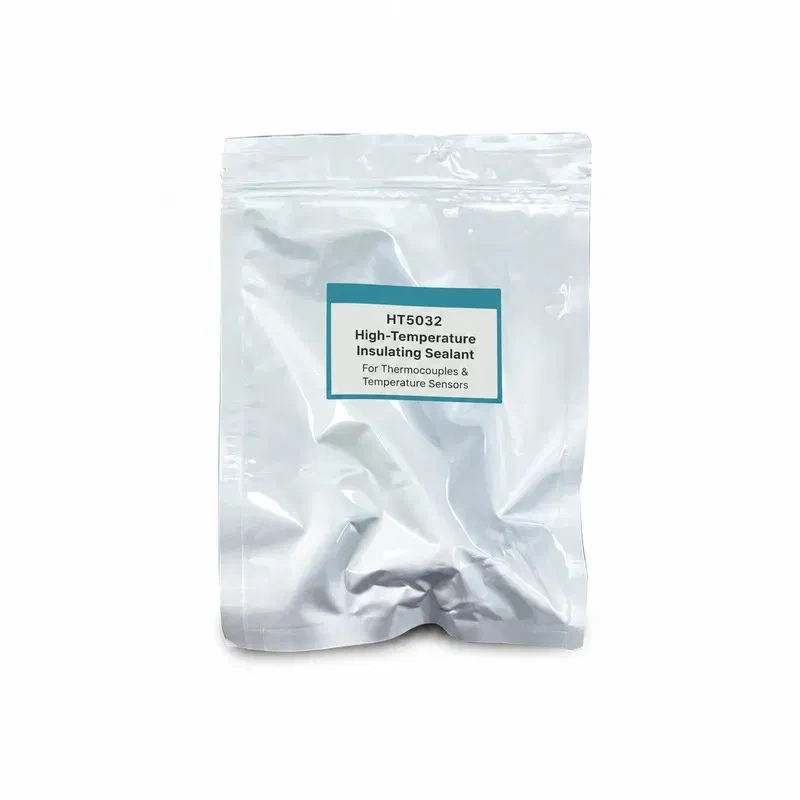
HT5032 High-Temperature Sealant for Thermocouples & Sensors

HT5032 high-temperature sealant for thermocouples &sensors RTD/PT100. Electrical insulation and >1200 °C resistance. Single-component.

High-Temperature Insulating Sealant for Thermocouples and Temperature Sensors

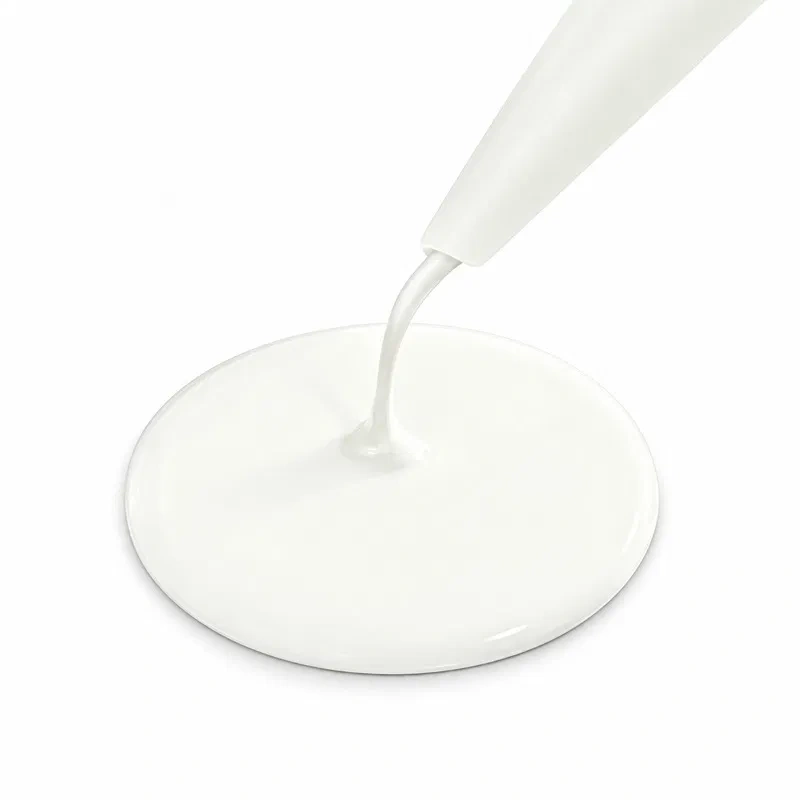
HT5032 is a single-component high-temperature insulating sealant developed for assemblies in which a thermocouple, RTD/PT100 probe or industrial temperature sensor must be fixed, filled and sealed while maintaining electrical insulation and process protection. It is supplied ready to use, without two-part mixing, and can be dispensed through a dosing machine or syringe/needle depending on the sensor geometry.

Before cure, the material has a typical viscosity of 2,000–5,000 mPa·s and a surface-dry time of 5–15 minutes at 25 °C and 55% relative humidity. It can cure at room temperature or be accelerated through controlled heating. The cured material forms a compact sealing structure with good water resistance, chemical resistance under the manufacturer’s test conditions and electrical insulation properties. High-temperature resistance above 1,200 °C; final suitability must be confirmed on the complete sensor, substrate and process assembly.

The HT5032 high-temperature sealant for thermocouples and temperature sensors addresses a critical point in probe manufacturing: the area where the sensing element, conductors, insulation and housing must remain mechanically stable without creating an unwanted electrical leakage path or compromising heat transfer. Its single-component format simplifies production, supports repeatable dispensing and helps manufacturers seal cable passages, protection tubes, sensor housings, terminal areas and local potting zones near heat sources.

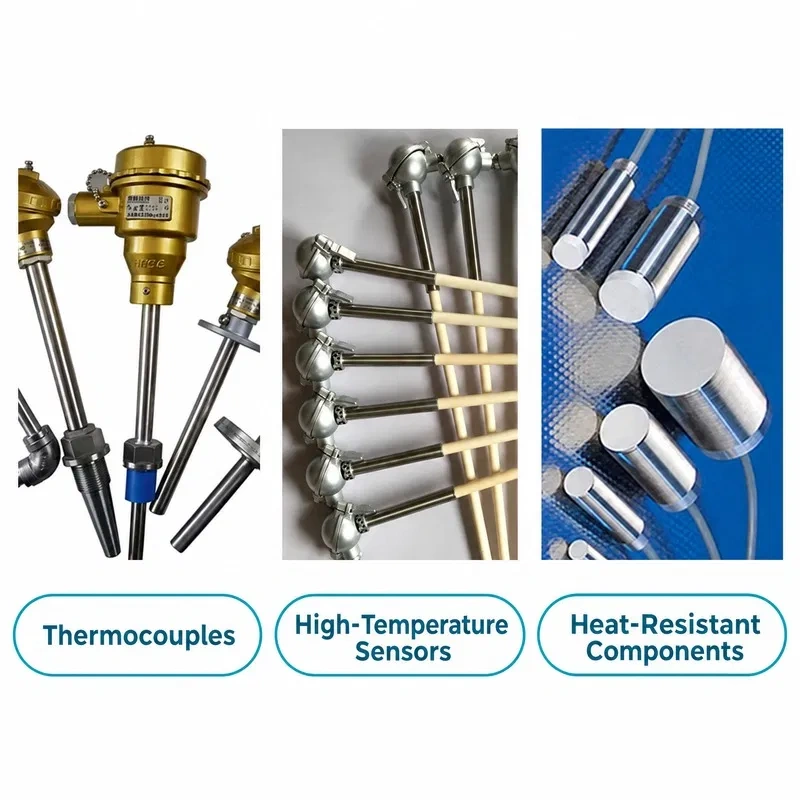
HT5032 is suitable for technical sealing where controlled thermal transfer, low-temperature cure and resistance to water, solvents, acids and alkalis under the stated test conditions are required. It can be evaluated for industrial thermocouples, Type K/J assemblies, RTD/PT100 probes, temperature sensors, metal housings, terminal blocks and protection tubes. It should not be positioned as a conventional RTV silicone or a universal DIY adhesive. Selection must consider actual temperature, thermal cycling, sensor construction, seal thickness, substrate compatibility and required measurement response.

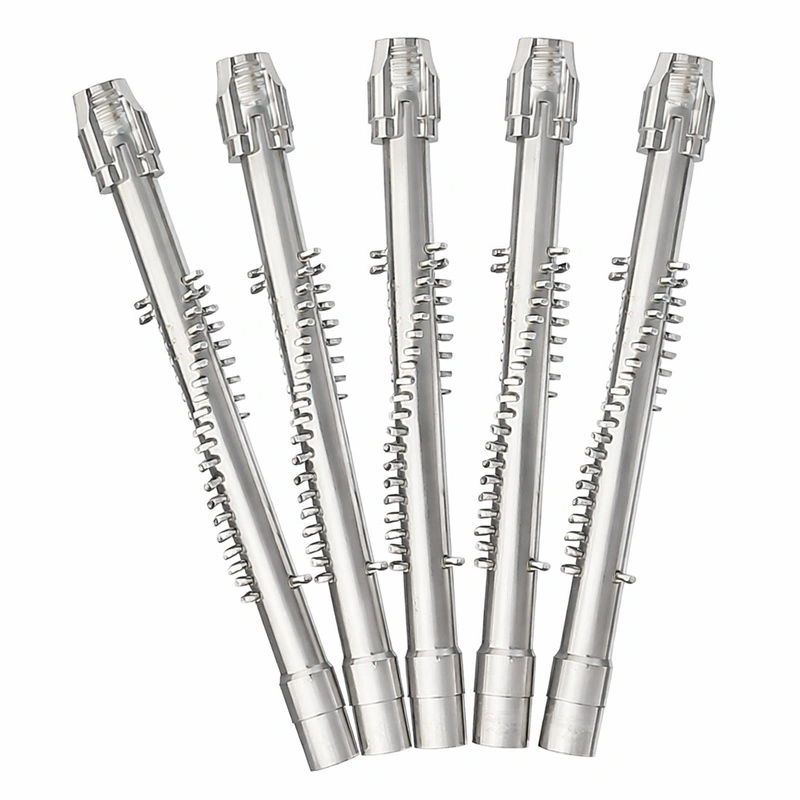
•Thermocouple and thermocouple probe sealing: fixing sensor elements inside tubes, sheaths, housings and metal parts; filling cable entries and sensor cavities where insulation and environmental sealing are required.

•RTD/PT100 and temperature sensor assemblies: securing sensing elements and protecting connections from moisture, dust, vibration and process contamination after design compatibility has been confirmed.

•Local potting and sensor filling: controlled encapsulation of components and subassemblies where movement must be limited and moisture paths reduced without losing the required thermal response.

•Protection tubes and sensor accessories: sealing ends, cable entries, connection heads and terminal-block areas installed close to a heat source. 

•Heaters and nearby electrical parts: sealing heaters and fixing electrical components exposed to elevated temperatures.

•Technical protective coatings: localized protective layers against moisture, splashes, contamination and corrosion on compatible surfaces.

•Single-component, ready-to-use format: no base-and-hardener mixing step is required.

•Good processability: viscosity suited to controlled dispensing through a dosing machine or syringe/needle.

•Low-temperature curing: can cure at room temperature; controlled heating can be selected to match production requirements.

•Neutral, non-corrosive cure system: neutral curing system for the intended applications.

•Electrical insulation: the liquid contains no water and the cured sealant provides good insulation performance.

•Sealing performance: the compact cured structure provides good gas-tightness and water resistance under the stated test conditions. 

•Thermal transfer: typical thermal conductivity is declared as ≥2 W/m·K.

•High-temperature resistance: declared above 1,200 °C; this is not a universal continuous-service rating for every sensor assembly.

Packaging and storage

200 g per unit, with other packaging formats available. Store the product closed in a cool place protected from light. The stated storage period is 6 months; after expiry, the material may be used only if re-inspection confirms that it remains suitable.

The product is classified as non-hazardous for transport and should be handled as an industrial chemical. Do not leave the package open for extended periods, because exposure can increase viscosity and reduce dispensing convenience. For OEM programs, request the packaging format, batch information, manufacturing date and applicable documentation from Heatecx.

Property

Test method/condition

Typical value

Components

—

Single component

Uncured appearance

Visual inspection

Grey-white viscous liquid

Viscosity

GB/T 2794-2013

2,000–5,000 mPa·s

Surface-dry time

25 °C, 55% RH

5–15 min

Density

GB/T 13354-1992

2.6–2.9 g/ml

Cured hardness

GB/T 531.1-2008

≥60 Shore D

Thermal conductivity

ASTM D5470-2006

≥2 W/m·K

Linear expansion coefficient

GB/T 7320-2008

75 × 10⁻⁷ /°C

High-temperature resistance

—

>1,200 °C

Actual service temperature must be determined from the sensor element, conductor, sheath, housing metal, atmosphere, exposure time and thermal cycle. For critical thermocouple and RTD/PT100 assemblies, verify signal drift, insulation and seal integrity after cure and thermal ageing.

Chemical and media resistance

Good results under the following test conditions:

Medium

Test condition

Result

Water

100 °C, 8 h

Good

Ethyl acetate

25 °C, 24 h immersion

Good

5% hydrochloric acid

25 °C, 24 h immersion

Good

5% NaOH

25 °C, 24 h immersion

Good

These results must not be presented as universal resistance to every chemical. In a thermocouple or temperature-sensor assembly, compatibility also depends on the metal, ceramic, insulation, cable and the actual process concentration. Run a representative validation test for continuous exposure to acids, alkalis, solvents, molten salts or reactive atmospheres.

1.Substrate preparation: degrease the contact surfaces and, where compatible with the component, lightly abrade them to improve sealing. Remove dust, oil, loose oxide and cleaning residues.

2.Homogenization: knead the flexible package thoroughly before use. If the material has stood for a long time and separation is visible, homogenize it again.

3.Dispensing: apply with a dosing machine or syringe/needle. Fill without trapping air and control the volume so that the sensor position and required thermal path are not altered.

4.Open-package use: the opened material should generally be used the same day. Close the cap immediately after dispensing.

5.Cure: reference conditions are 2–4 h at room temperature; ≥6 h at 50 °C; ≥1 h at 100 °C; and ≥1 h at 150 °C. For small applications with length ≤5 mm and depth ≤25 mm, the TDS gives 50 °C ≥12 h, 100 °C ≥1 h and 150 °C ≥1 h. Do not shorten the 50 °C heating period.

6.Exceptional dilution: where dilution is required, use no more than 3% anhydrous methanol or ethanol. Validate that dilution does not reduce insulation, adhesion or sensor accuracy.

7.Cleaning and safety: do not add water. Clean tools immediately with anhydrous ethanol. Use suitable personal protection and provide ventilation. If swallowed or splashed into the eyes, rinse with plenty of clean water and seek medical attention.

The data in this page are typical laboratory values and do not replace validation of the final assembly. Performance may vary with substrate, surface preparation, geometry, thickness, cure cycle, temperature, humidity, chemical exposure and installation method. Before production, the customer must test HT5032 with the actual thermocouple, RTD/PT100, cable, protection tube, housing and process conditions.

FAQ

HT5032 is used to fix, fill and seal selected areas of a thermocouple assembly, including cable entries, tube ends, housings and joints near the sensing point. The cured seal helps reduce moisture and contamination paths while providing electrical insulation. Validate its volume and placement so the thermal response is not unnecessarily changed.

Customers also viewed