High-Temperature Sleeving: Insulating Sleeves for Thermal and Dielectric Protection
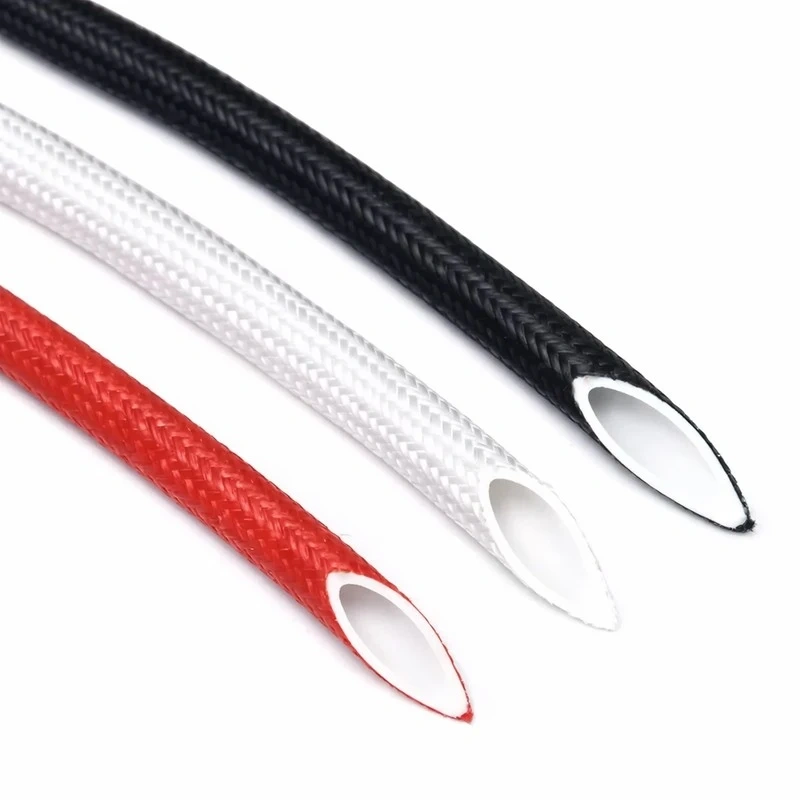
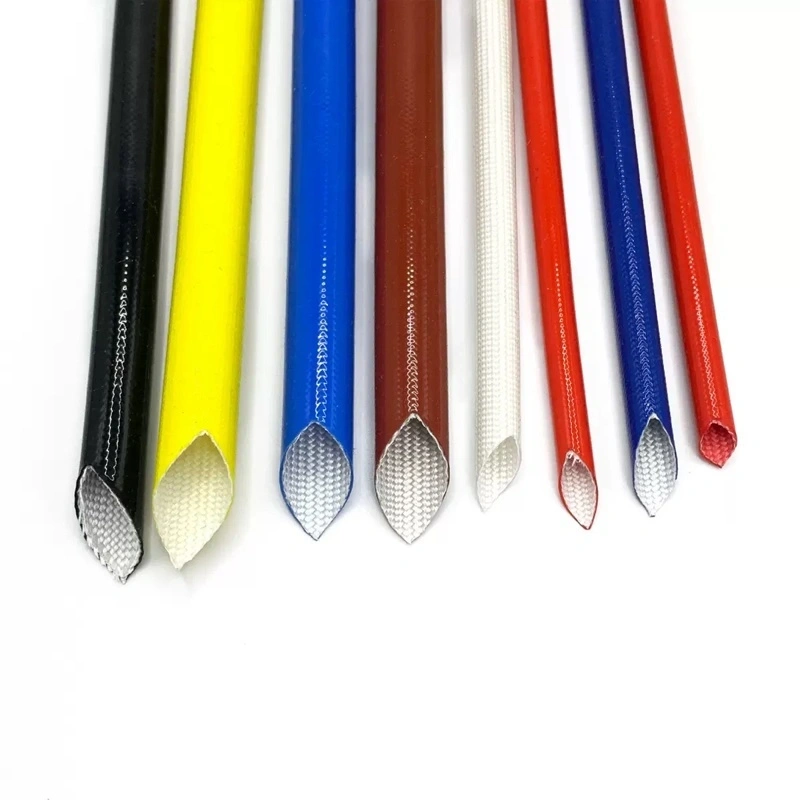
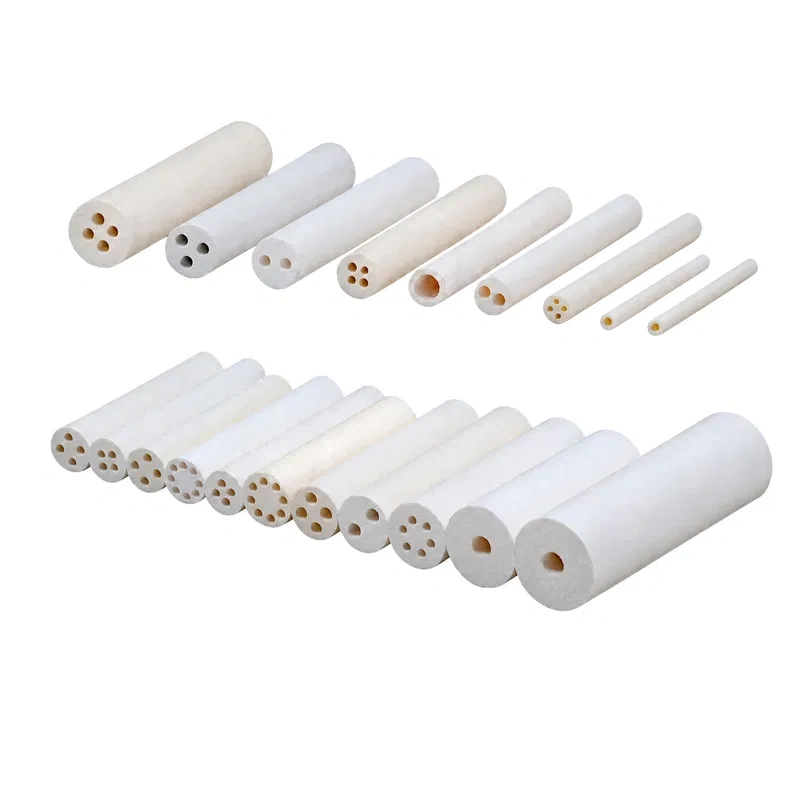
High-temperature sleeving — also referred to as thermal sleeve, insulating sleeve, or braided tubing — is a category of flexible tubular textile material engineered to wrap and protect wires, cables, hoses, and electrical components exposed to extreme heat, mechanical abrasion, and aggressive chemical agents. Rather than a single product, this raw-material family covers several distinct constructions — fiberglass, silica fiber, silicone-coated fiberglass, PTFE, ceramic fiber, and metallic mesh — each engineered for a specific temperature range, dielectric strength level, and service environment.
In the manufacturing of industrial electric heating elements, furnaces, heating systems, and instrumentation equipment, high-temperature sleeving performs a critical secondary insulation function: it prevents radiant heat, direct contact with hot surfaces, or mechanical abrasion from degrading a conductor's primary insulation, extending its service life and safeguarding the electrical integrity of the assembly.
Advantages and Disadvantages of High-Temperature Sleeving
Advantages:
- Provides simultaneous thermal and electrical protection in a single component, avoiding the need for more costly combined solutions.
- Available in a wide range of diameters (0.5mm to 60mm and above), adaptable to virtually any cable or wire bundle gauge.
- Quick installation with no specialized tools required: it slides directly over the conductor.
- Variants exist for every service environment: indoor, outdoor, high humidity, oil contact, or chemical exposure.
- Superior cost-to-performance ratio compared to rigid metallic or ceramic solutions when the required protection level is moderate.
- Directly reduces the risk of short circuits from contact and extends the service life of the cable's primary insulation.
- Lightweight material that adds negligible weight to the assembly, relevant in aerospace and automotive applications.
Disadvantages and limitations to consider:
- Does not replace the conductor's primary electrical insulation; it functions as complementary secondary protection.
- Uncoated variants (bare fiberglass or silica) lose dielectric strength significantly in humid environments.
- Requires precise diameter selection; a sizing error compromises both installation and the actual level of protection achieved.
- Higher-temperature materials such as silica fiber or ceramic fiber offer lower flexibility and higher cost than standard fiberglass.
- Service life drops sharply if operated continuously above the specified continuous temperature rating, even without reaching peak temperature.
Common Selection and Installation Mistakes
- Confusing nominal (round) diameter with flat (folded) diameter when ordering: many Asian-origin datasheets list only the flat diameter, leading to an incorrect size order if the proper conversion is not applied.
- Selecting material based on peak temperature rather than actual continuous service temperature, causing embrittlement and premature failure well before expected.
- Failing to seal cut ends of the sleeve, resulting in progressive fraying of the braid, particularly in installations subject to constant vibration.
- Installing uncoated fiberglass or silica sleeving in high-relative-humidity environments without checking whether the project actually requires a silicone-coated variant.
- Choosing a diameter that is too tight, creating excessive braid tension during installation that reduces mechanical service life from the outset.
- Not verifying the chemical compatibility of the finish (silicone, acrylic, PTFE) with oils, solvents, or cleaning agents present in the actual installation environment.
- Purchasing on price alone, without requiring a datasheet or batch certificate from the manufacturer, making it impossible to verify the actual temperature rating and dielectric strength of the product received.
Recent Technological Advances
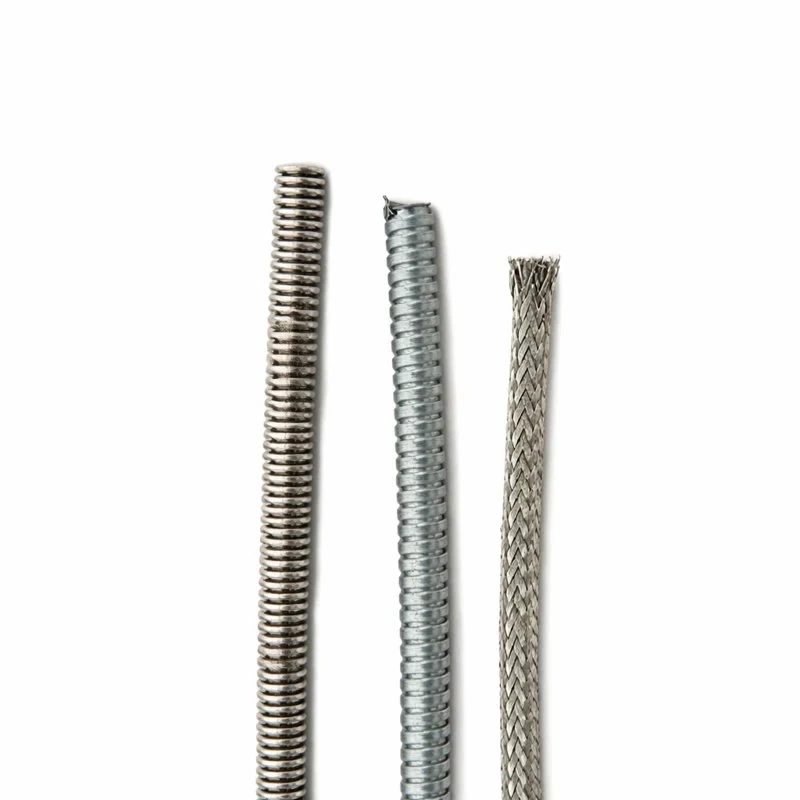
The category has evolved along three main fronts over the past decade. First, high-modulus silicone coatings have made it possible to combine fiberglass's thermal resistance with flexibility and sealing levels previously available only from pure elastomers, extending dielectric strength up to 7000V in thick-wall constructions. Second, the development of higher-purity silica fibers (above 96–99% SiO2) has reduced post-thermal-exposure brittleness, a historic limitation of this material near its 1000°C–1800°C ceiling. Third, the addition of braided stainless steel or nickel-alloy mesh as an outer reinforcement layer has produced hybrid constructions capable of simultaneously resisting radiant heat, severe mechanical abrasion, and occasional molten-metal splash exposure, extending thermal sleeving use into foundry and industrial welding applications.
Types and Construction Variants
|
Sleeving type
|
Base material
|
Continuous temperature
|
Peak temperature
|
Typical dielectric strength
|
Distinctive characteristics
|
|
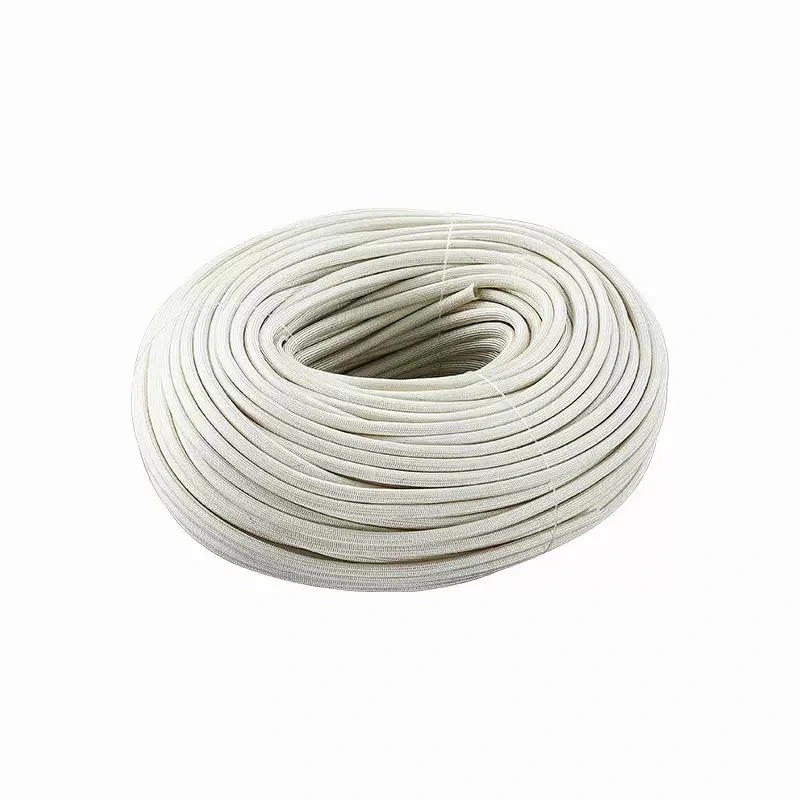
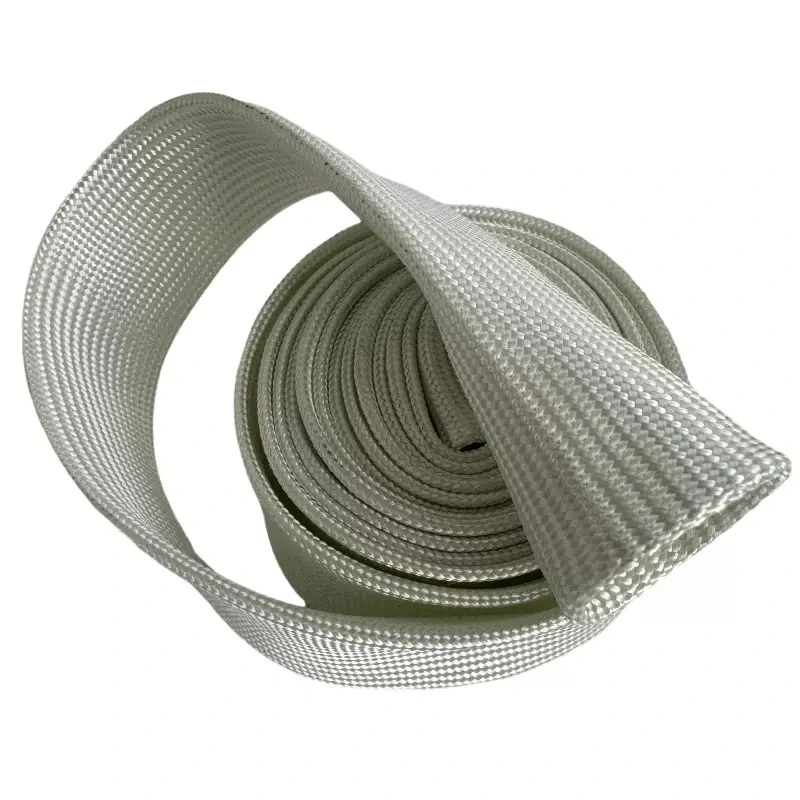
Fiberglass sleeving
|
Alkali-free fiberglass (E-glass)
|
400°C
|
600°C
|
500V – 1500V
|
Economical, good flexibility, general-purpose
|
|
Silicone-coated fiberglass sleeving
|
Fiberglass + silicone coating
|
-60°C to 200°C
|
250°C
|
Up to 7000V
|
Waterproof, hermetic seal, high dielectric strength
|
|
Silicone core / fiberglass outer sleeving
|
Silicone core + outer fiberglass braid
|
-60°C to 200°C
|
250°C
|
2000V – 7000V
|
Maximum flexibility, ideal for tight spaces
|
|
Silica (quartz) fiber sleeve
|
SiO2 > 96%
|
1000°C
|
1800°C (peak)
|
Varies by wall thickness
|
Maximum thermal resistance, inorganic, non-combustible
|
|
PTFE sleeving
|
Polytetrafluoroethylene
|
-70°C to 260°C
|
300°C
|
High
|
Chemically inert, non-stick, low friction
|
|
Aramid fiber sleeving (Nomex-type)
|
Aramid fiber
|
220°C continuous
|
300°C
|
Medium-high
|
Excellent cut and flame resistance
|
|
Ceramic fiber sleeve
|
Refractory ceramic fiber
|
1000°C – 1260°C
|
1400°C
|
Low (thermal, not a primary dielectric)
|
Extreme thermal insulation, low conductivity
|
|
Braided metal sleeve
|
Stainless steel / nickel
|
Up to 800°C (alloy-dependent)
|
Variable
|
Not applicable (conductive)
|
Extreme mechanical protection, splash shielding
|
Additional finish configurations
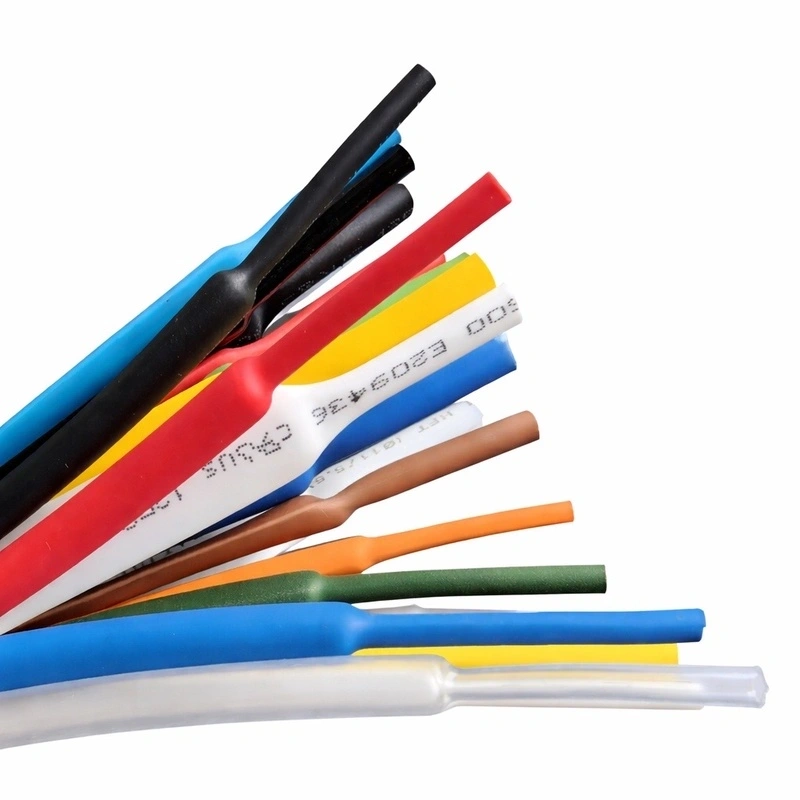
Within each material family, manufacturers offer finish variants that modify performance without changing the base substrate: self-extinguishing sleeves with additional flame-retardant treatment, low-smoke zero-halogen (LSZH) versions for confined spaces, anti-static finishes for explosive-atmosphere environments, and heat-shrinkable sleeves that conform to the cable diameter after installation, improving end-seal quality.
Technical Comparison Between Material Families
|
Criterion
|
Fiberglass
|
Silicone-coated fiberglass
|
Silica fiber
|
PTFE
|
Ceramic fiber
|
|
Maximum thermal resistance
|
Medium (600°C peak)
|
Medium-low (250°C peak)
|
Very high (1800°C peak)
|
Medium (300°C peak)
|
Very high (1400°C)
|
|
Flexibility
|
Medium
|
High
|
Low-medium
|
High
|
Low
|
|
Chemical resistance
|
Medium
|
High
|
High
|
Very high
|
Medium
|
|
Moisture resistance
|
Low (uncoated)
|
Very high
|
Low
|
Very high
|
Low
|
|
Dielectric strength
|
Medium
|
High
|
Variable
|
High
|
Not a primary insulator
|
|
Relative cost
|
Low
|
Medium
|
High
|
High
|
High
|
Selection Criteria
Choosing the correct high-temperature sleeving type depends on the simultaneous analysis of the following design variables:
- Expected service temperature (continuous and peak): determines the admissible material family; specifying below the actual temperature margin is the most frequent cause of premature failure through embrittlement or combustion.
- Voltage level of the protected circuit: defines the minimum wall thickness and dielectric construction required, with a safety margin above the rated voltage.
- Exposure to moisture, oils, or chemical agents: favors silicone, PTFE, or hermetic constructions over untreated fiberglass or silica.
- Degree of flexing and handling during installation: harnesses with tight bends or frequent disassembly favor flexible constructions (silicone, PTFE) over rigid sleeves.
- Risk of mechanical abrasion or contact with sharp surfaces: favors high braid-density sleeves or outer metallic reinforcement.
- Sector-specific low-smoke or fire-behavior regulations: relevant in rail, marine, or confined-space applications requiring LSZH or self-extinguishing certification.
- Conductor or cable bundle diameter to be protected: the sleeve's nominal diameter should be selected slightly larger than the covered element to allow installation without excessive braid tension.
Manufacturing Process
- Base fiber selection and preparation: alkali-free fiberglass yarns, high-purity silica filaments, or PTFE/aramid yarns are selected according to lot specification, verifying denier and uniformity.
- Braiding: braiding machines interlace the yarns in a helical pattern around a mandrel calibrated to the target diameter, controlling picks per inch to achieve the specified coverage and flexibility.
- Thermal stabilization treatment: the braided sleeve passes through a curing oven that fixes the braid geometry and relieves residual manufacturing stresses.
- Coating application (where applicable): for silicone, PTFE, or acrylic resin variants, the sleeve is impregnated or coated by dip-coating or extrusion, followed by a controlled-temperature vulcanization or curing process.
- Cutting and spooling: the material is cut into standard-length rolls according to diameter (typically 50 to 200 meters per roll).
- Batch quality control: each lot undergoes dielectric strength testing, inner-diameter dimensional verification, and thermal resistance testing under controlled exposure before release to inventory.
Common Failure Modes and Prevention
- Thermal embrittlement: sustained exposure above the material's rated continuous temperature causes loss of flexibility and braid cracking; prevented by respecting the thermal safety margin during material selection.
- Moisture absorption and dielectric strength loss: in untreated fiberglass or silica sleeves, ambient moisture drastically reduces dielectric strength; mitigated with water-repellent silicone finishes or controlled-environment storage.
- Abrasion wear at contact points: constant rubbing against metal edges or rough surfaces wears down the outer braid; prevented with additional mechanical protection (metal mesh) at critical zones.
- Incompatible chemical contamination: certain oils, solvents, or cleaning agents degrade silicone or acrylic coatings; requires verifying the finish's chemical compatibility with the process environment.
- Incorrect diameter selection: an undersized diameter creates excessive tension on the braid and complicates installation; an oversized diameter compromises mechanical protection through excess play.
Storage and handling
Uncoated fiberglass and silica sleeves must be stored in dry environments, protected from ambient moisture and direct dust exposure, since both factors degrade dielectric strength before installation. Rolls should remain in original packaging until use, avoiding sharp bends that permanently damage the braid geometry.
Applications by Industry
|
Industry
|
Typical application
|
|
Electric heating element manufacturing
|
Protection of terminals, lead wires, and exit points on tubular and cartridge heaters
|
|
Automotive
|
Insulation of wire harnesses in engines, exhaust systems, and high-temperature compartments
|
|
Household appliances
|
Internal wiring protection in ovens, ranges, and heaters
|
|
Power generation and metallurgy
|
Insulation of instrumentation and wiring exposed to furnaces, boilers, and high-temperature process lines
|
|
Aerospace and defense
|
Protection of wire harnesses in engine compartments and high-thermal-demand zones
|
|
HVAC
|
Wiring insulation in heating units, boilers, and hot-air ducts
|
|
Power electronics
|
Protection of connections in transformers and heat-dissipating equipment
|
Application Case 1: Tubular Heater Manufacturing for Industrial Furnaces
A manufacturer of tubular heating elements for heat-treatment furnaces needed to protect the lead wires of its heaters at the tube exit point, where surface temperature regularly exceeded 350°C during extended operating cycles. The solution specified fiberglass sleeving rated to 600°C on the segment directly exposed to the tube, combined with a silicone-coated fiberglass sleeve segment at the outer connection point, where resistance to workshop ambient humidity was also required. Combining two variants within the same category met the thermal requirements of the most critical point without over-specifying the cost of the outer segment, which is not exposed to extreme temperatures.
Application Case 2: Wiring Protection in Foundry Casting Lines
At an aluminum foundry, instrumentation wiring near the casting area was exposed to both intense radiant heat and the occasional risk of molten metal splash. Using a high-purity silica fiber sleeve as the inner thermal insulation layer, wrapped by a braided stainless-steel mesh as the outer mechanical protection layer, resolved both the thermal and direct physical damage risks simultaneously — a solution neither construction could have achieved independently.
Why Choose Heatecx
Heatecx is a direct manufacturer of high-temperature sleeving and the full range of raw materials for electric heating elements, allowing us to offer custom technical specifications (diameter, roll length, finish) without intermediaries. The vertical integration between our raw materials division and our heating element machinery division gives us applied knowledge of how each material actually behaves in production, not just on a datasheet. Every batch of sleeving undergoes 100% dielectric strength testing and dimensional verification before shipment, and our engineering team in Shenzhen can recommend the most suitable combination of material and finish for the specific thermal environment of each project.
Related Links
Within our raw materials for heating elements line, high-temperature sleeving complements other insulating materials such as high-temperature cables, high temperature tapes and fabrics, mica, and ceramic insulators. For complete protected wiring assemblies, also see our heating cables and heat tracing categories, where thermal sleeving is commonly used as an additional protective component during field installation.