Industrial Laser Marking Machines
In the manufacturing of electric heating elements, metal tubes, and industrial heating components, every part needs a permanent identity: a batch number, a traceability code, voltage and wattage rating, a manufacturer's logo, or a quality-control QR code. That's the job of laser marking machines — equipment that engraves this information directly onto metal without ink, solvents, or consumables, producing a mark that lasts the entire service life of the heating element, even after years of operation at high temperature.
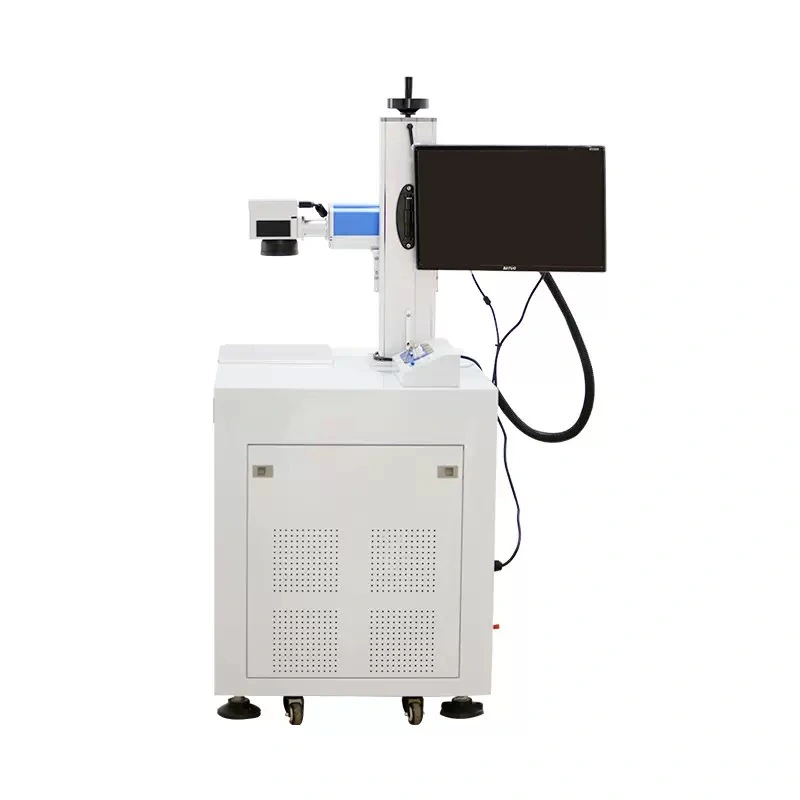
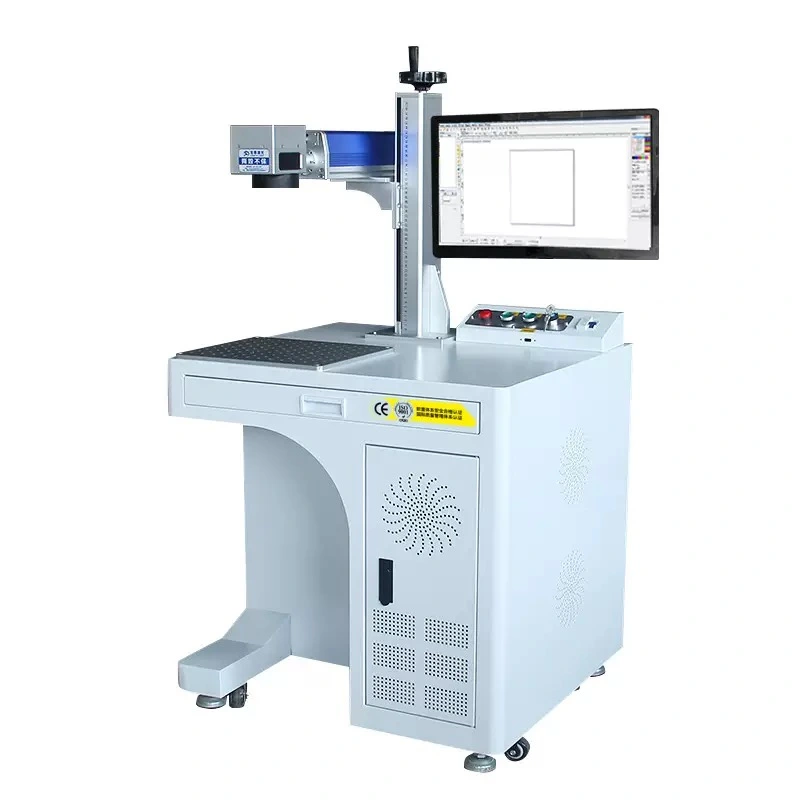
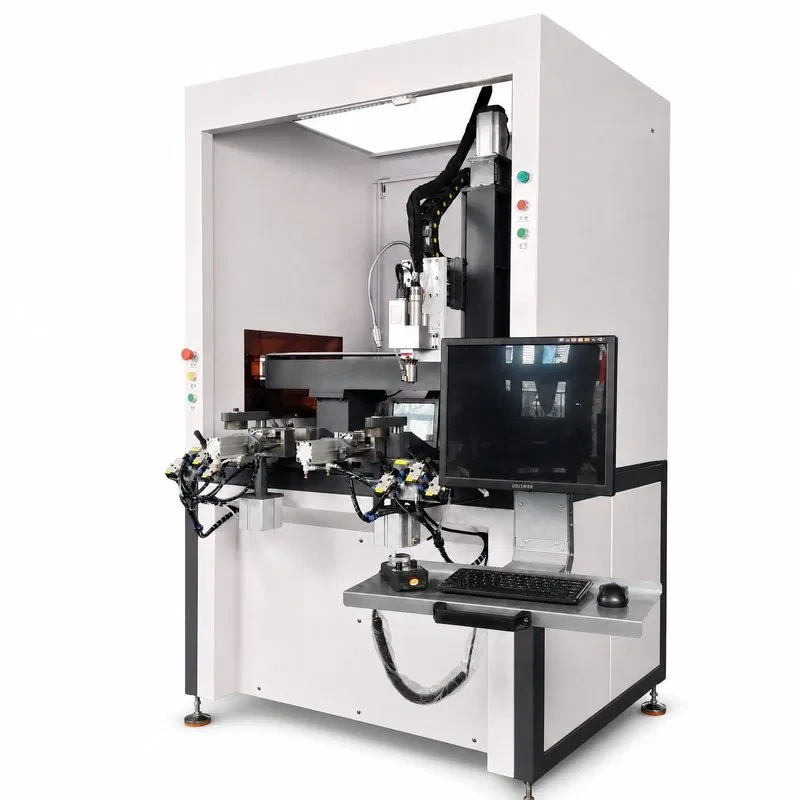
At Heatecx, we manufacture and integrate fiber laser marking machines, the reference technology in the electric heating element and tube manufacturing industry, valued for their combination of speed, sub-millimeter precision, and virtually zero maintenance.
Product overview
An industrial laser marking machine uses a high-energy beam generated by a solid-state fiber laser source (Ytterbium-doped) to alter the material's surface through oxidation, ablation, or surface annealing, leaving a permanent, high-contrast mark. Unlike ink-based or label marking systems, laser marking:
- Requires no ink, solvents, or replacement parts.
- Does not fade or wear off from handling, chemical cleaning, or exposure to high operating temperatures.
- Can produce text, serial numbers, barcodes, Data Matrix / QR codes, and logos with the same marking head.
- Integrates easily into automated production lines through PLC control or a USB interface.
Within this category, Heatecx offers two configurations: standard fiber laser marking machines, built for high-contrast marking on metal, and MOPA (Master Oscillator Power Amplifier) fiber laser marking machines, which allow precise control over pulse duration to achieve color marking or shallow-depth engraving on stainless steel and aluminum without inducing mechanical stress on the part.
Types of laser marking processes
Not all laser marking is the same, and choosing the right process depends on the material and the final finish required on the heating element:
- Ablation engraving: the laser physically removes a microscopic layer of material, leaving a raised or recessed mark. This is the deepest, most abrasion-resistant process, used on parts that will undergo heavy handling or further machining.
- Annealing marking: laser heat produces controlled sub-surface oxidation without removing material, generating color contrast (typically black on stainless steel) without affecting the part's integrity or corrosion resistance. This is the preferred method for marking stainless-steel electric heating elements that require a smooth surface, since it avoids micro-roughness where dirt or corrosion could accumulate.
- Deep engraving: multiple laser passes produce a deeper mark, used on parts subject to later sandblasting, painting, or galvanizing, where a surface-level mark would otherwise be lost.
- Color marking by controlled oxidation (MOPA only): adjusting pulse frequency and duration produces different shades (black, gray, gold, blue) on stainless steel — useful for quick visual coding of part references or product lines.
The role of laser marking in electric heating element manufacturing
Marking isn't an isolated step — it's part of the traceability chain for every industrial heating element, from raw material to finished product:
- Raw tube receiving: some manufacturers mark the raw tube with the steel heat/batch code before starting production.
- After MgO filling: once the magnesium oxide filling process is complete, the heater's serial number is engraved, linking each physical part to its manufacturing parameters (compaction density, final diameter, length).
- After tube reduction/drawing: on parts processed through tube stretching machines, marking is performed after this operation to prevent tube deformation from distorting the code.
- Before final annealing: when the heating element goes through annealing/heat-treatment, a laser-annealed mark applied beforehand easily withstands the subsequent heat-treatment temperatures, unlike an adhesive label.
- Marking electrical specifications: rated voltage, wattage (W), resistance (ohms), and CE marking are engraved just before packaging, meeting CE and export compliance requirements.
- Quality control and warranty tracking: the engraved code allows any returned or inspected heating element to be traced back to its raw-material batch, the responsible operator, and the original process parameters — something adhesive labels can't reliably guarantee on parts that operate at elevated temperatures where adhesives degrade over time.
This end-to-end traceability is especially critical for heating elements exported to regulated markets (European Union, United States, Brazil), where buyers require the ability to identify the manufacturing batch in the event of any issue.
Industrial applications
Laser marking machines are a critical link in the production line for electric heating elements and industrial heating components:
- Traceability of tubular heaters and thermocouples: batch numbers and manufacturing dates engraved directly onto the metal tube.
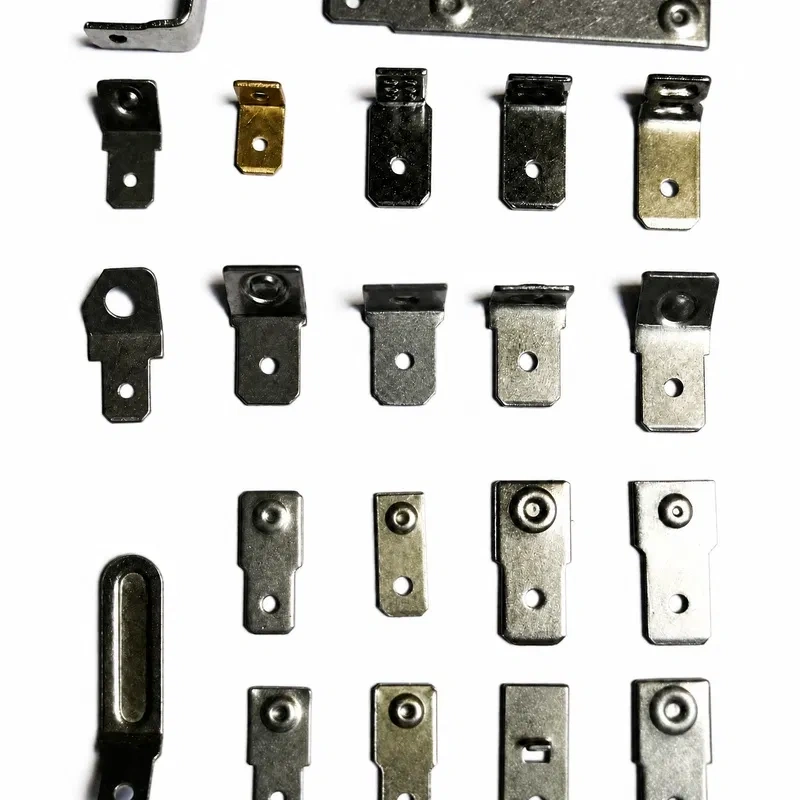
- Identification of terminals and connections: reference codes engraved on heating element terminals to support in-line quality control.
- Marking of tubes and metal profiles: applied to parts processed on tube cutting machines or straightening machines prior to shipment.
- Certification and regulatory compliance: engraving of CE marks, electrical ratings (voltage, wattage, resistance in ohms), and export compliance codes.
- Product branding: applying an OEM customer's logo directly onto the part, eliminating adhesive labels that can peel off at high operating temperatures.
- Cartridge, band, and ceramic heaters: model reference marking directly on the metal housing, essential when the heating element is installed in hard-to-access locations after final assembly.
Features and advantages
- Permanent, tamper-proof marking: resistant to high temperatures, solvents, abrasion, and industrial cleaning — essential for heating elements that operate above 300 °C.
- High processing speed: marking speeds up to 7,000 mm/s in MOPA configuration, suited to high-volume production lines.
- Sub-millimeter precision: line widths from 0.01–0.03 mm, suitable for machine-readable Data Matrix codes even on small-diameter heating elements.
- No consumables, minimal maintenance: the fiber laser source has a nominal service life of around 100,000 hours, with no ink cartridges or print heads to replace.
- Multi-material compatibility: stainless steel, carbon steel, aluminum, copper, nickel, and resistance alloys such as Incoloy, Nichrome, or Kanthal, all common in heating element manufacturing.
- Easy integration: USB interface or PLC-based control for synchronization with welding machines and other production line stations.
- Operational safety: the marking beam is confined within an enclosed head or cabin, keeping the effective operator exposure at Class 1 under normal use in most benchtop configurations.
Quick selection guide
|
If your production needs...
|
Recommendation
|
|
Fast, high-contrast marking at low operating cost
|
Standard fiber laser marking machine
|
|
Color marking / low thermal stress on polished parts
|
MOPA fiber laser marking machine
|
|
Small heater batches with many different reference codes
|
System with template management software and code database
|
|
Integration into a high-volume automated line
|
PLC interface configuration with automatic part positioning
|
|
Marking on variable tube diameters
|
Marking head with motorized focal-distance adjustment
|
Reference technical specifications
|
Parameter
|
Typical range
|
|
Laser type
|
Fiber optic (Ytterbium) / MOPA fiber
|
|
Wavelength
|
1064 nm
|
|
Laser class
|
Class 1 (enclosed) / Class 4 (source, restricted use)
|
|
Power
|
20 W – 60 W
|
|
Marking speed
|
Up to 7,000 mm/s
|
|
Repeat positioning accuracy
|
0.01 mm
|
|
Minimum line width
|
0.01 – 0.03 mm
|
|
Standard marking area
|
110 × 110 mm (expandable)
|
|
Laser source lifespan
|
≈ 100,000 hours
|
|
Cooling
|
Air-cooled, no chiller required
|
|
Control
|
USB interface / PLC integration
|
|
Compatible materials
|
Stainless steel, carbon steel, aluminum, copper, nickel-chromium alloys, technical ceramics
|
Why choose Heatecx?
Heatecx designs and manufactures machinery for electric heating element production in China, covering more than 40 equipment categories across the entire process — from MgO filling and tube forming to annealing, welding, and final marking. This lets us offer laser marking machines calibrated to work in sync with the rest of an electric heating element production line, rather than off-the-shelf generic equipment. Every machine comes with direct manufacturer support and customization options for power, marking area, and fixturing according to tube diameter or part geometry.
Contact us for a tailored technical recommendation.