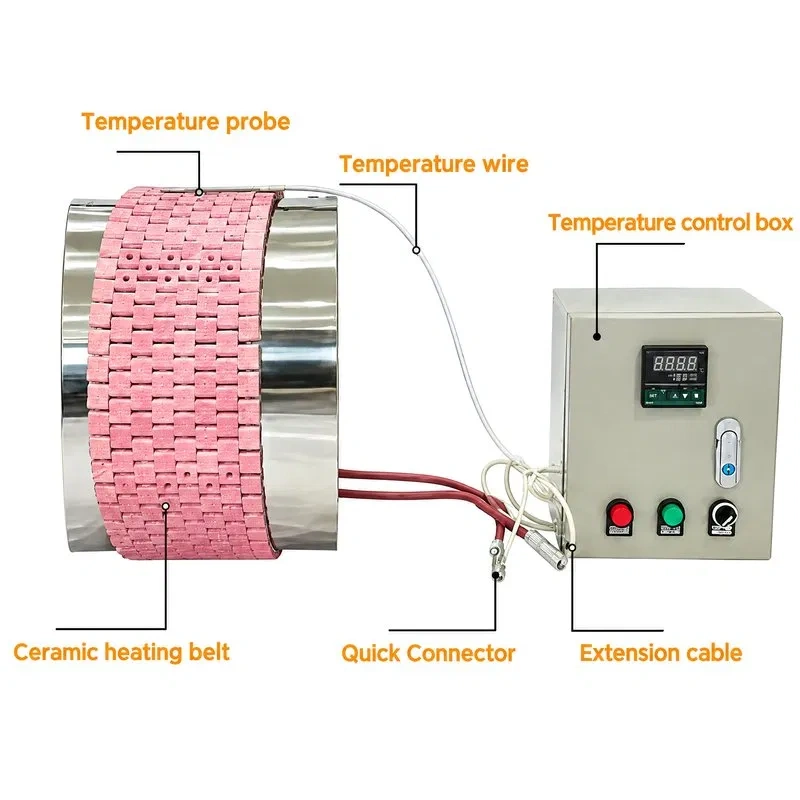
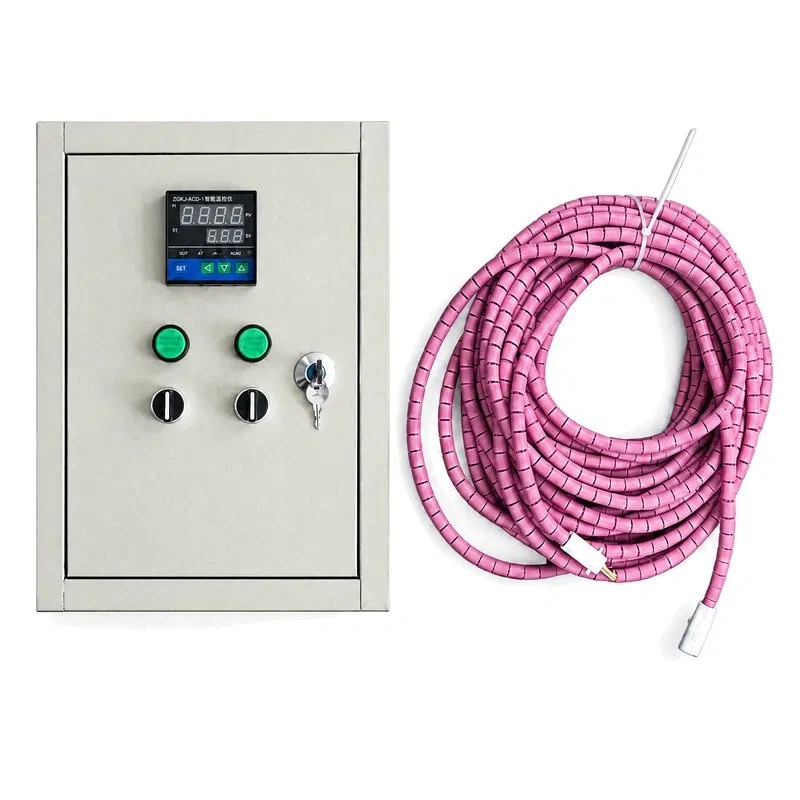
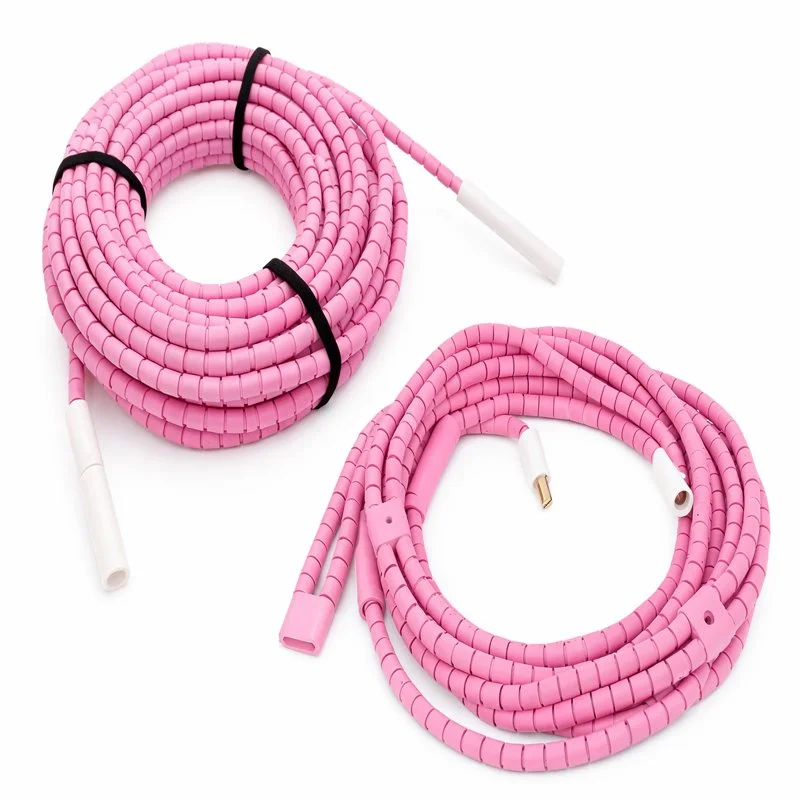
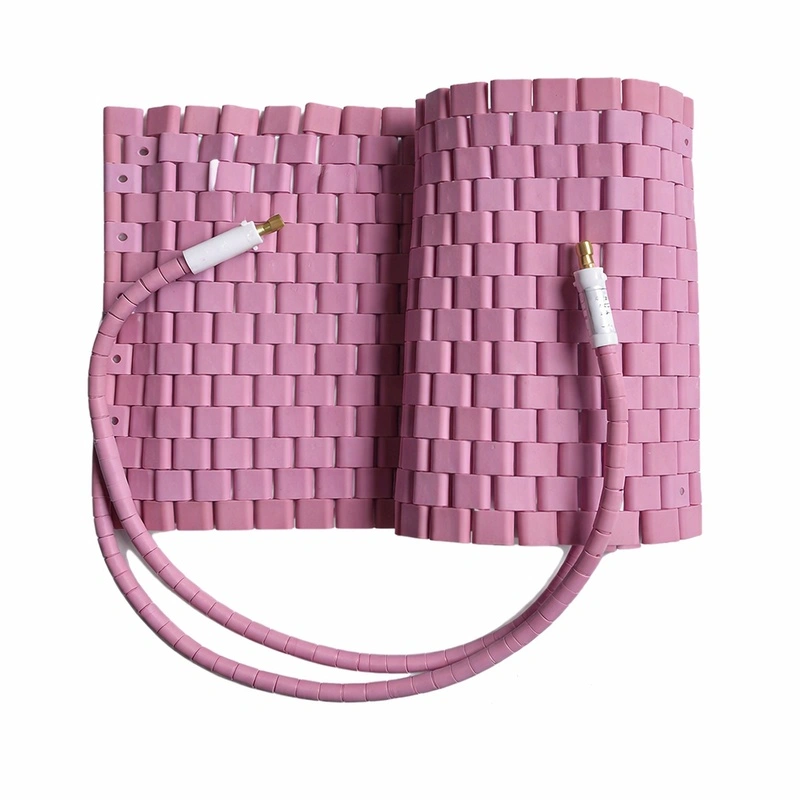
ZWK-II Temperature Control Box for Ceramic Pad Heaters

The ZWK-II is intended for heater manufacturers, industrial integrators and maintenance teams that need a ready-to-configure temperature and power control enclosure without designing a complete control panel from the ground up. Bringing power input, output modulation and basic indication into one enclosure simplifies commissioning and first-line troubleshooting.
It can be used as a controller for flexible ceramic heating mats, ceramic pad heaters, contact heaters, custom heating blankets and other resistive heating elements. The 0–220 V adjustment range allows the operator to match the delivered power to the process, provided that the selected voltage remains within the heater’s rated voltage. The control box does not replace load calculation, protective-device selection or installation design; the complete system must be engineered for current, ambient temperature, ventilation and operating conditions.
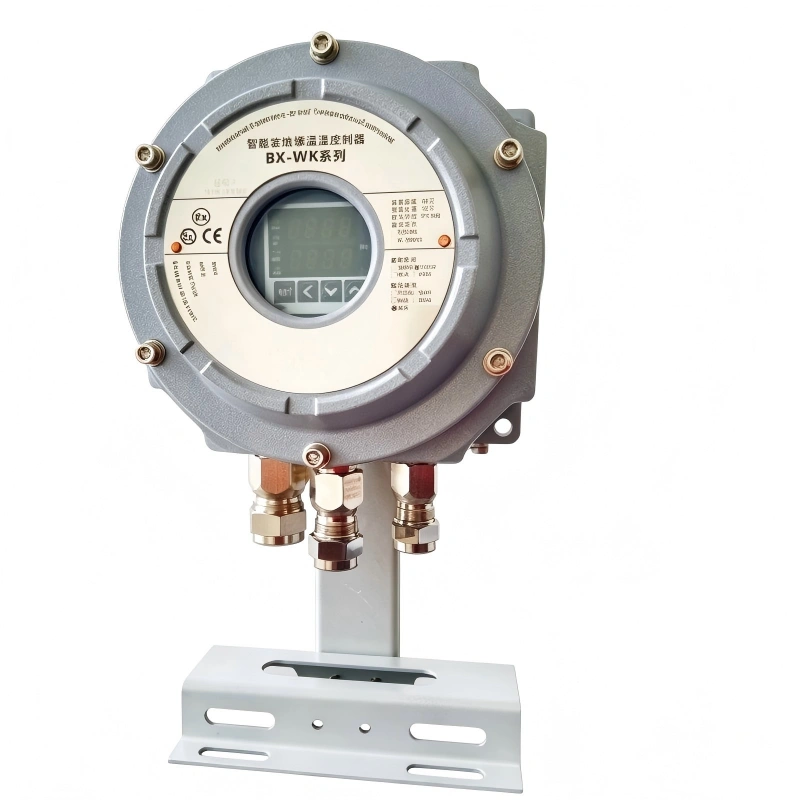
For demanding processes, the box can be configured with a Fuji-type intelligent temperature controller, Type K thermocouple, recording point, independent over-temperature alarm, thermocouple-break protection and forced-air cooling. These options should be defined before quotation so that the final controller matches the heater and the installation environment.

The ZWK-II temperature control box is a compact industrial power-control system designed for flexible ceramic heaters, ceramic heating mats, ceramic pad heaters and other compatible electrical heating elements supplied from a single-phase 220 V circuit. It combines the main control and monitoring functions required to energize and regulate a heating load: power control electronics, output measurement, thermocouple input and configurable electrical protection.

For a flexible ceramic mat heater, the control box adjusts the energy delivered to the load and helps the operator establish a more stable heating process than a direct mains connection. The front potentiometer provides progressive output adjustment, while the voltmeter and ammeter show the actual output voltage and current. A Type K thermocouple input can be used for temperature feedback, and the system may be specified with over-temperature alarm, thermocouple fault detection and forced ventilation.

Depending on the selected build, the output stage can use a bidirectional thyristor/SCR or a solid-state relay (SSR). The correct device depends on heater power, current, control mode, switching frequency and duty cycle. For high-inertia loads such as ceramic heating blankets installed on pipes, tanks or metal parts, progressive power adjustment supports controlled warm-up and reduces unnecessary electrical stress.

Typical applications include:

•Flexible ceramic heaters and ceramic heating mats for curved surfaces, moulds, tanks, pipes, flanges and metal components.

•Industrial preheating before welding, heat treatment, forming, bending or repair work.

•Temperature maintenance to reduce condensation, freezing or solidification in pipes, valves, tanks and process lines.

•Localized heating where heating an entire oven or chamber would be inefficient.

•Heater manufacturing and maintenance, including gradual start-up and load testing.

•Laboratory and production test benches for controlled heating cycles.

•OEM integration into industrial heating systems, curing equipment and engineered heating assemblies.

For temperature sensing in pressurized, flowing or corrosive process environments, the controller can be paired with thermowells and temperature sensor pockets. For the heating load, see the flexible silicone wire non-woven heating pad or the silicone wire aluminum foil heating sheet, depending on the surface and temperature requirements.

Before energizing the equipment, verify the heater’s rated voltage, power, expected current and thermocouple compatibility. Never apply a voltage above the heater’s rated value. Installation, earthing and protective-device selection must be completed by qualified personnel.

1.Switch off the main power and verify that the terminals are de-energized.

2.Connect the single-phase 220 V supply. For the base configuration, the source manual specifies a 2 × 10 mm² power cable; the protective conductor must be provided in accordance with local electrical requirements.

3.Connect the flexible ceramic heater or ceramic mat to the output socket or terminals.

4.Connect the Type K thermocouple. The supplied manual identifies red as positive and black as negative; confirm the polarity against the actual sensor before commissioning.

5.Turn on the main switch. The power indicator confirms that the control circuit is energized.

6.Increase the potentiometer gradually from zero and check that voltage and current readings are consistent with the load.

7.Monitor temperature, current, wiring, ventilation and heater stability during warm-up.

8.Reduce the output before switching off, then allow the assembly to cool before service work.

The 0–220 V figure is the available output range, not a universal operating voltage for every heater. The setpoint must always remain within the heater’s rated voltage and the approved process limits.

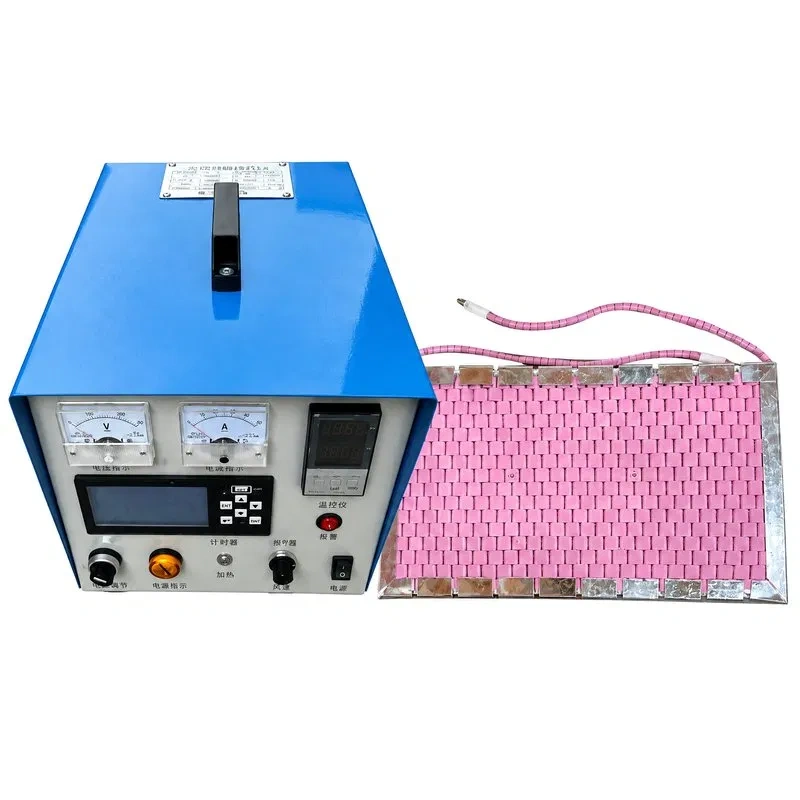
Functional features

•One control point and one recording point.

•Adjustable 0–220 V output in the base configuration.

•Front-panel voltmeter and ammeter.

•Type K thermocouple input.

•Bidirectional thyristor/SCR or SSR output stage, depending on configuration.

•Manual potentiometer for progressive output adjustment.

•Fuji-type intelligent meter in the configuration described by the source manual.

•Optional breaker, over-temperature alarm, thermocouple-failure detection and forced-air ventilation.

•Enclosure suitable for industrial heater integration, maintenance and test applications.

Proposed model range

Model

Reference configuration

Supply

Adjustable output

Reference power

Approx. current at 220 V

Specification status

ZWK-II-10

Base configuration described in the manual

1 × 220 V

0–220 V

Up to 10 kW

45.5 A

Confirmed 

ZWK-II-20

Higher-power engineered configuration

1 × 220 V or project-defined supply

Project-defined

20 kW target

90.9 A at 220 V

To be validated according to client's requirements 

ZWK-II-30

High-power industrial configuration

Project-defined

Project-defined

30 kW target

136.4 A at 220 V

To be validated according to client's requirements

ZWK-II-10 Technical Specifications 

Parameter

ZWK-II-10 base configuration

Equipment type

Temperature and power control box for electrical heaters

Supply

Single-phase, 220 V AC

Specified supply cable

2 × 10 mm² according to the source manual; add protective conductor as required

Output

Adjustable 0–220 V

Stated maximum power

10 kW

Control point

1

Recording point

1

Sensor

Type K thermocouple

Polarity stated in manual

Red positive, black negative; verify the installed sensor

Front indication

Voltmeter and ammeter

Adjustment

Output potentiometer; intelligent Fuji-type controller in the specified version

Power device

Bidirectional thyristor/SCR or SSR, according to build

Configurable protection

Breaker, over-temperature alarm, thermocouple-failure detection and forced-air ventilation

Recommended use

Flexible ceramic heaters, ceramic mats and compatible resistive loads

FAQ

The family can be built with a Fuji-type intelligent controller and temperature sensor, while the source manual also specifies potentiometer-based manual adjustment. Confirm whether the requested build is manual, automatic PID or combined before ordering.

Customers also viewed