High-Temperature Cables for Industrial Use
High-temperature cables are multilayer electrical conductors engineered to transmit power or control signals reliably in environments where ambient or contact temperature exceeds the working range of a standard PVC-insulated cable (typically 70-90°C). A cable is generally classified as high-temperature when its continuous service rating is 125-150°C or above, and engineered variants exist that operate continuously between 500°C and 1000°C through the use of specialty metallic conductors combined with high-performance organic or inorganic insulation.
Unlike a standard cable, whose PVC or polyethylene insulation embrittles, cracks, or loses dielectric strength above roughly 90-105°C, a high-temperature cable pairs a conductor with mechanical and hot-oxidation resistance with an insulation system — silicone, fiberglass, mica, PTFE, FEP, or PFA — capable of retaining its dielectric properties, flexibility, and thermal-shock resistance over thousands of hours of continuous or cyclic operation.
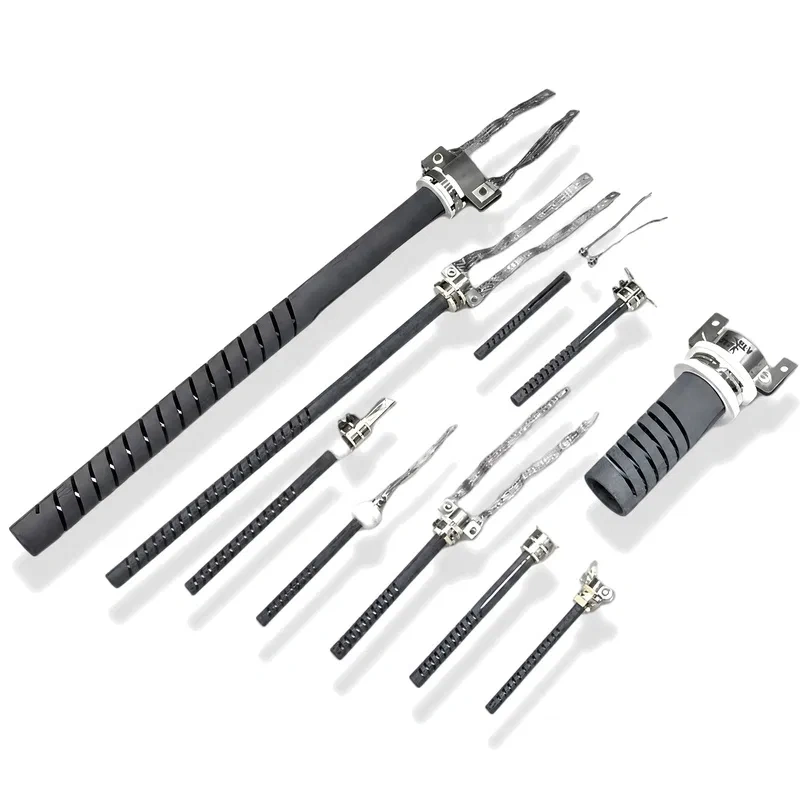
This category covers the cable used for internal furnace wiring, power connections to electric heating elements (MoSi2, SiC, NiCr), temperature-sensor wiring, and lighting, heavy machinery, and medical-equipment installations where ambient or radiant heat is a critical design factor.
What Is a High-Temperature Cable and How Is It Built?
A high-temperature cable consists of three functional elements:
- Conductor: solid or stranded copper or nickel wire, selected according to the operating temperature and required conductivity.
- Primary insulation: the dielectric layer surrounding the conductor, which determines the voltage rating and maximum continuous service temperature.
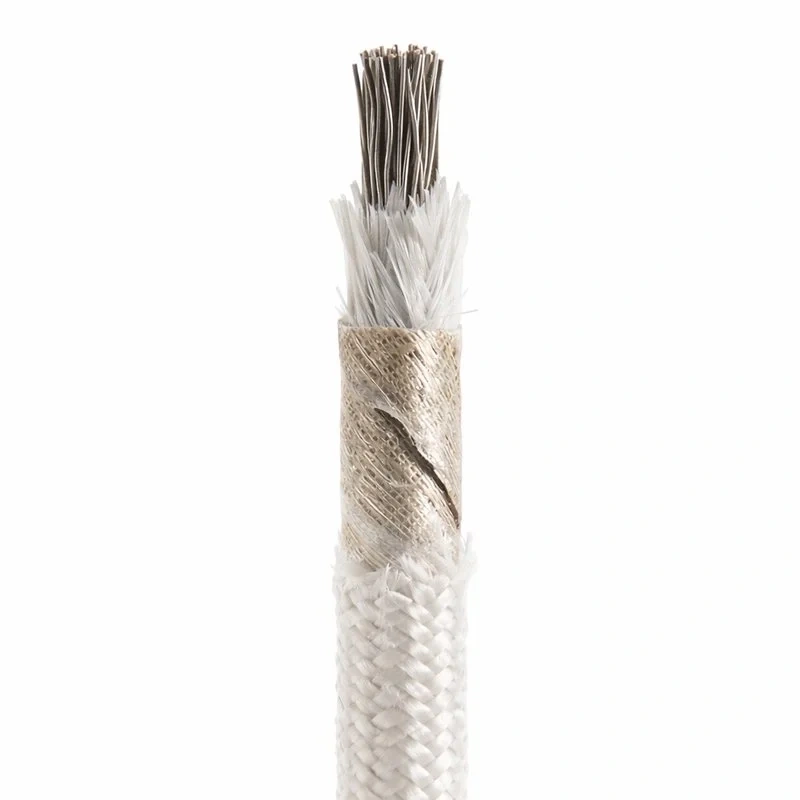
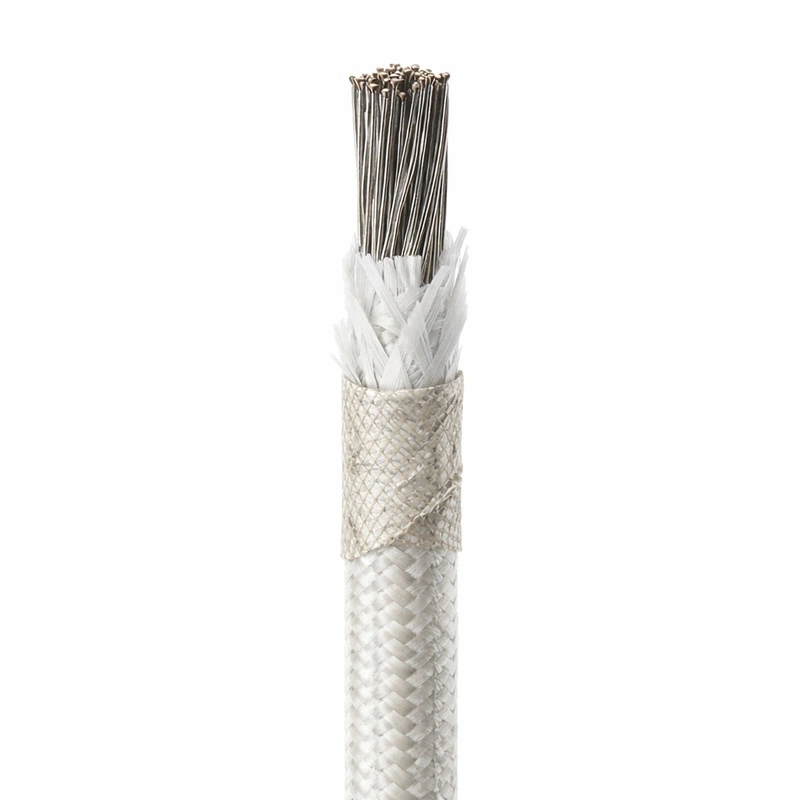
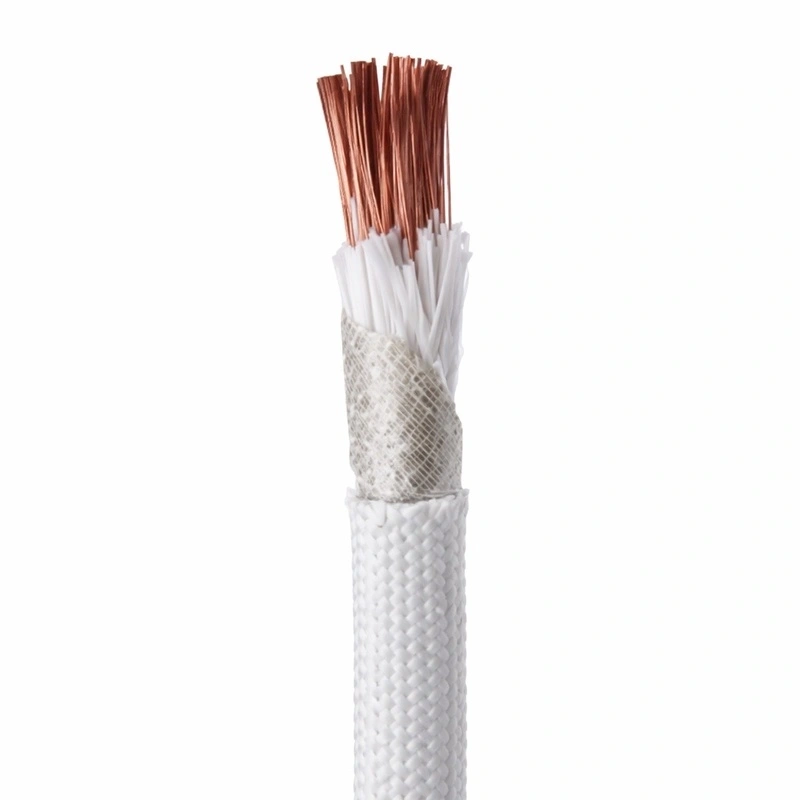
- Protective jacket or braid: the outer layer (silicone, impregnated fiberglass braid, metallic mesh, or mica tape) that provides mechanical and abrasion resistance and, in some designs, electromagnetic shielding.
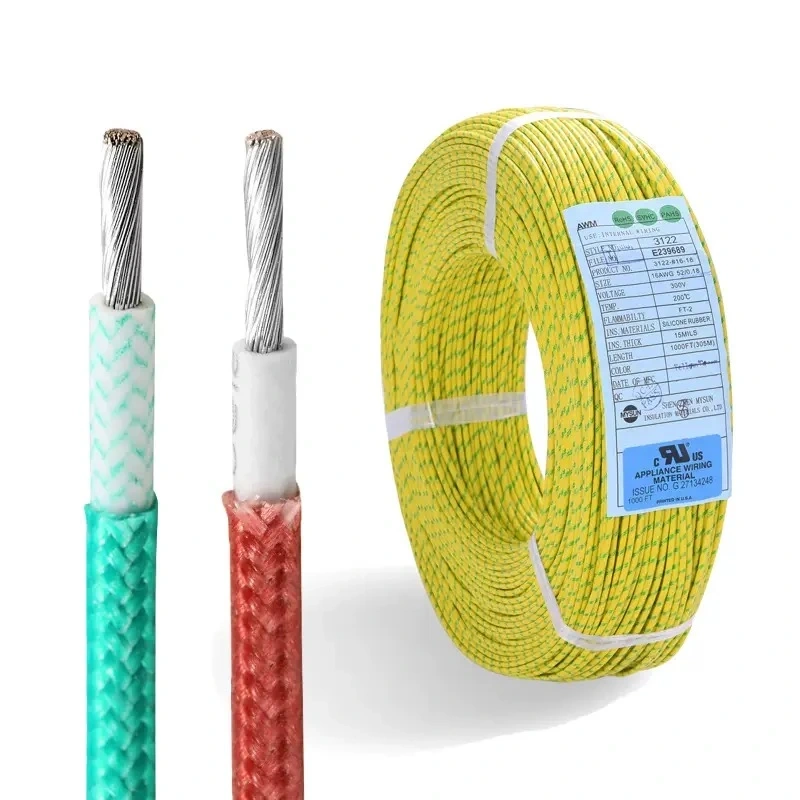
The combination of these three elements defines the commercial reference of the cable — for example, a tinned-copper conductor with silicone insulation rated 200°C, or a pure-nickel conductor with a dual fiberglass-and-mica layer rated 1000°C.
Conductor Materials
|
Conductor material
|
Typical service temperature
|
Relative conductivity (% IACS)
|
Typical application
|
|
Bare annealed copper
|
Up to 105°C
|
100%
|
General low-temperature wiring
|
|
Tinned copper
|
Up to 200°C
|
95-97%
|
General-purpose silicone and fiberglass cables
|
|
Silver-plated copper
|
Up to 250°C
|
98-100%
|
PTFE/FEP cable, aerospace and instrumentation
|
|
Nickel-plated copper
|
Up to 350-400°C
|
85-90%
|
Fiberglass cable for heating elements and furnaces
|
|
Pure nickel (Ni 99.x%)
|
Up to 1000°C
|
~25%
|
Ultra-high-temperature cable for industrial furnaces
|
|
Ni-Cu alloy (NPC)
|
Up to 450-600°C
|
40-50%
|
Compensation cable and intermediate-temperature applications
|
The higher the required service temperature, the lower the relative electrical conductivity of the available conductor tends to be, so cross-section selection must compensate for this reduced conductivity relative to pure copper.
Insulation and Jacket Types
|
Insulation
|
Max. continuous temperature
|
Dielectric strength
|
Flexibility
|
Chemical resistance
|
Typical use
|
|
Silicone rubber
|
180-200°C
|
High
|
Very high
|
Medium
|
Internal furnace wiring, industrial lighting, appliances
|
|
Fiberglass + silicone
|
200-250°C
|
High
|
High
|
Medium-high
|
Motors, heating elements, vibration-prone environments
|
|
Fiberglass + mica
|
450-500°C
|
Medium-high
|
Medium
|
High
|
Heat-treatment furnaces, ceramics industry
|
|
Fiberglass (uncoated) + nickel-plated conductor
|
800°C
|
Medium
|
Low-medium
|
High
|
Wiring for high thermal-demand furnaces
|
|
Nickel conductor + reinforced fiberglass/mica
|
1000°C
|
Medium
|
Low
|
Very high
|
Metallurgy, technical ceramics, aerospace
|
|
PTFE
|
260°C
|
Very high
|
Medium
|
Very high (chemicals and solvents)
|
Instrumentation, semiconductor, aerospace
|
|
FEP
|
200°C
|
High
|
Medium-high
|
High
|
Connection wire, plenum-rated instrumentation cable
|
|
PFA
|
260°C
|
Very high
|
Medium
|
Very high
|
Aggressive chemical processes, semiconductor
|
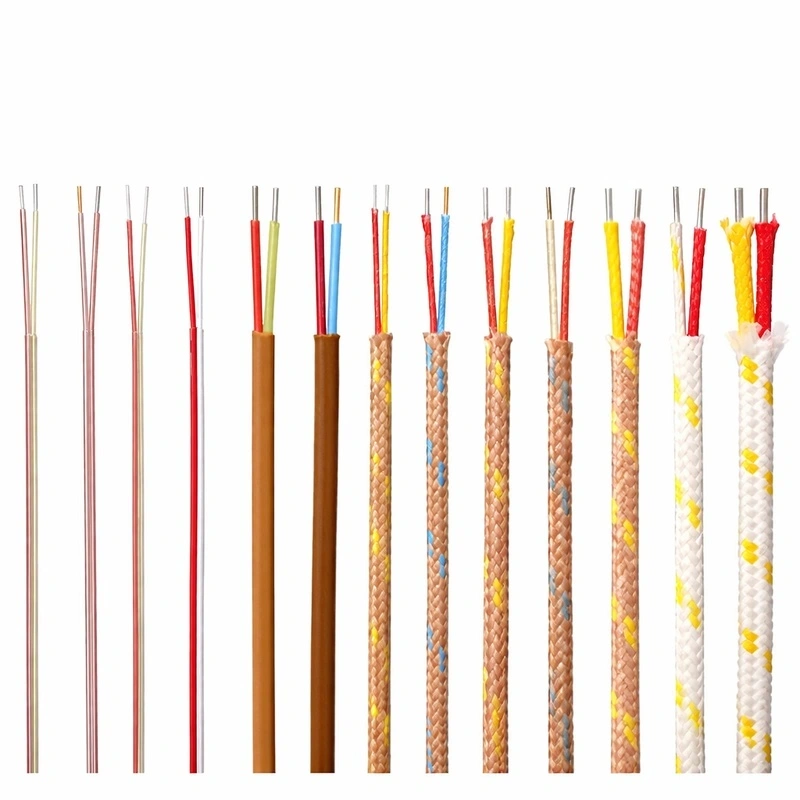
Thermocouple extension/compensation cables use specific alloys (Type K, J, T, N, S/R) whose function is not only insulation but also replication of the sensor's thermoelectric curve, avoiding measurement error.
Applicable Standards and Certifications
- UL 758 (Appliance Wiring Material – AWM): classifies high-temperature cable as a Recognized Component for use in UL Listed equipment, defining gauge, insulation, temperature, and voltage rating by style.
- UL 83A (Fluoropolymer Insulated Wire): applies to high-temperature cable with fluoropolymer insulation (PTFE, FEP, PFA) seeking direct UL Listing.
- SAE AS22759 / MIL-W-22759: reference specification for PTFE- or ETFE-insulated high-temperature wire in aerospace and military applications, rated from -65°C to 260°C.
- IEC 60216: determines the long-term thermal endurance of electrical insulating materials and underpins continuous service-temperature classification.
- IEC 60332-1: flame-propagation test for single cables, relevant to industrial installations with fire-safety requirements.
- IEC 60228: defines standard nominal conductor cross-sections.
- RoHS / REACH: hazardous-substance restrictions commonly required for cables destined for European markets and OEM equipment manufacturers.
When specifying a high-temperature cable, the reference standard should be stated alongside the service temperature, since the same nominal temperature rating can correspond to different constructions depending on the standard applied.
Electrical Design Criteria
Voltage rating: industrial high-temperature cables are commonly manufactured in 300 V, 500 V, and 600-1100 V ranges, depending on insulation thickness and type.
Cross-section and current-carrying capacity (ampacity): the allowable current of a high-temperature cable must be calculated applying a thermal derating factor, since elevated ambient temperature reduces the available margin between conductor operating temperature and insulation limit. As an indicative reference:
|
Cross-section (mm²)
|
Approx. current at 25°C ambient
|
Approx. current at 200°C ambient*
|
|
0.5
|
8-10 A
|
4-5 A
|
|
1.0
|
13-16 A
|
7-9 A
|
|
1.5
|
17-20 A
|
9-11 A
|
|
2.5
|
24-28 A
|
13-15 A
|
|
4.0
|
32-36 A
|
17-20 A
|
*Indicative values for a tinned-copper conductor with silicone or fiberglass insulation; exact values depend on manufacturer, number of conductors in the bundle, ventilation, and the applicable reference standard.
Thermal derating: for each significant increase in ambient temperature above the 25-30°C reference point, allowable current-carrying capacity must be reduced to avoid shortening insulation life. This correction is especially critical when several high-temperature conductors are grouped in the same bundle or conduit, since Joule heating adds to ambient heat.
Common Failure Modes and Preventive Maintenance
|
Failure mode
|
Typical cause
|
Preventive measure
|
|
Insulation embrittlement and cracking
|
Thermal aging from sustained operation above the cable's rated temperature
|
Verify actual operating temperature stays below the cable's rating with a safety margin
|
|
Loss of dielectric strength
|
Contamination by moisture, oils, or conductive dust in porous insulation
|
Use appropriate cable glands and bushings; periodic insulation inspection
|
|
Conductor fatigue failure
|
Mechanical vibration without additional protection, or excessive bend radius
|
Select flexible stranded conductor and respect the recommended minimum bend radius
|
|
Accelerated conductor oxidation
|
Use of standard copper in applications exceeding its temperature limit
|
Select nickel-plated or pure-nickel conductor according to actual service temperature
|
|
Reading error in compensation cable
|
Use of compensation cable not matching the installed thermocouple type
|
Verify polarity and compensation alloy (K, J, T, N, S/R) before commissioning
|
|
Outer jacket deterioration
|
Exposure to mechanical abrasion or chemical agents not covered by the original design
|
Add a protective braided mesh or supplementary sleeving in friction zones
|
Comparison vs. Other Wiring Solutions
|
Feature
|
High-temperature cable
|
Standard PVC cable
|
Heating Cables
|
|
Primary function
|
Transmit power/signal in a high-temperature environment
|
Transmit power/signal in a standard environment
|
Generate heat through Joule effect
|
|
Service temperature
|
150°C to 1000°C depending on construction
|
Approx. -20°C to 90°C
|
Depends on the heating setpoint
|
|
Typical insulation
|
Silicone, fiberglass, mica, PTFE, FEP, PFA
|
PVC, polyethylene
|
Silicone, PVC, mineral insulation (MI)
|
|
System role
|
Passive connecting cable
|
Passive connecting cable
|
Active heating element
|
Many industrial heating systems combine both product types: the high-temperature cable connects the controller to the heating element or sensor, while the heating cable or resistance element performs the heat-generation function.
Manufacturing Process
- Conductor drawing and annealing: copper or nickel wire is drawn to the required diameter and annealed to restore flexibility.
- Conductor stranding: individual strands are twisted per the specified strand count and lay length to optimize flexibility and current-carrying capacity.
- Extrusion or wrapping of the primary insulation: depending on the material, insulation is applied via continuous extrusion (silicone, FEP, PFA) or spiral tape-wrapping with subsequent sintering (PTFE, mica).
- Application of the reinforcement layer: fiberglass braid, metallic mesh, or thermal barrier tape, according to the required level of mechanical and thermal protection.
- Impregnation and curing: on fiberglass-braided cables, a silicone varnish or high-temperature resin is applied to fix the fibers and improve abrasion and moisture resistance.
- Electrical and dimensional testing: continuity, insulation resistance, dielectric strength, and outer diameter are verified before spooling and packaging.
Selection Criteria
|
Selection variable
|
Technical consideration
|
|
Maximum ambient/contact temperature
|
Determines the insulation family (silicone, fiberglass, mica, PTFE)
|
|
Circuit operating voltage
|
Defines insulation thickness and cable voltage rating
|
|
Mechanical exposure
|
Vibration, abrasion, or repeated flexing favor stranded conductor and reinforced jacket
|
|
Chemical exposure
|
Presence of oils, solvents, or corrosive atmospheres favors PTFE, FEP, or PFA
|
|
Regulatory requirement
|
OEM, aerospace, or building applications require UL, SAE AS22759, or specific IEC compliance
|
|
Cable function
|
Power cable, control signal, or thermocouple compensation require different constructions
|
Application Case
A metal heat-treatment plant periodically replaces the internal wiring of its annealing furnaces due to hardening and cracking of the original PVC insulation, which operates continuously next to heating elements that raise chamber temperature above 300°C. By switching to a nickel-plated conductor cable with fiberglass-and-mica insulation rated at 500°C, the plant eliminates unplanned downtime associated with insulation failures, reduces corrective-maintenance frequency, and improves overall electrical safety by maintaining dielectric strength throughout extended thermal cycles.
Why Choose Heatecx
Heatecx is a direct manufacturer based in Shenzhen, China, with vertical integration of machinery and raw materials for the electric heating industry. This position enables:
- Direct manufacturing with no intermediaries, supporting cost and lead-time control.
- Vertical integration: the same group that manufactures machinery for heating elements and cable production also produces the associated raw materials, easing technical compatibility between components.
- Engineering support for conductor, insulation, and cross-section selection based on the customer's temperature and application.
- Batch-level quality control, with electrical and dimensional verification on 100% of production before shipment.
Available Constructions
|
Construction
|
Description
|
Typical application
|
|
Single-core
|
A single insulated conductor, without an additional outer jacket
|
Point-to-point wiring in electrical panels and furnaces
|
|
Multi-core (2-4 conductors)
|
Several insulated conductors bundled under a common jacket
|
Power feed to heating elements and motors with neutral/ground
|
|
Multi-core (5-8 conductors or more)
|
Conductor bundle combining signal and power
|
Control panels with multiple auxiliary circuits
|
|
Shielded/screened
|
Braided metallic mesh or aluminum-polyester tape over the conductor assembly
|
Environments with electromagnetic interference, analog signal lines
|
|
Flat/ribbon
|
Conductors arranged in parallel and bonded by the jacket
|
Reduced clearance spaces, furnace-door wiring
|
|
Thermocouple compensation cable
|
Pair of wires in a specific alloy (Type K, J, T, N, S/R), typically twisted
|
Connecting temperature sensors to control instruments
|
|
Multi-pair instrumentation cable
|
Several twisted, individually shielded pairs under a common jacket
|
Distributed control systems with multiple measurement points
|
Environmental and Chemical Resistance
|
Agent
|
Silicone
|
Fiberglass + mica
|
PTFE / FEP / PFA
|
|
Mineral oils
|
Good
|
Good to high
|
Excellent
|
|
Ozone
|
Good
|
High
|
Excellent
|
|
UV radiation
|
Good to high
|
High
|
Excellent
|
|
Moisture / water
|
Medium (not suited to continuous immersion without an additional jacket)
|
Medium (depends on impregnation)
|
Excellent
|
|
Dilute acids and alkalis
|
Medium
|
Medium-high
|
Excellent (practically inert)
|
|
Solvents and aromatic hydrocarbons
|
Medium
|
Medium
|
Excellent
|
In applications with simultaneous exposure to high temperature and aggressive chemical agents (chemical processing, semiconductors), fluoropolymer insulation (PTFE, FEP, PFA) typically offers the longest service life, while purely thermal applications without chemical aggression are better served by silicone or fiberglass on a cost-to-flexibility basis.
Cold-Temperature Behavior and Thermal Cycling
An aspect frequently overlooked when selecting high-temperature cable is its behavior at the cold end of its working range. Silicone rubber retains flexibility down to approximately -60°C without cracking or losing structural integrity, making it well suited both for installations that alternate between cold outdoor conditions and hot chambers and for refrigeration equipment with cable runs exposed to localized heat. PTFE shows similar behavior, maintaining flexibility and dielectric strength across a wide range extending from cryogenic temperatures up to 260°C.
This bidirectional performance is especially relevant in applications with frequent thermal cycling — furnace start/stop cycles, batch furnaces, intermittent heat-treatment equipment — where the cable is repeatedly subjected to expansion and contraction. Fatigue from thermal cycling is distinct from aging under continuous exposure: an insulation system may have adequate maximum-temperature margin and still fail prematurely if the design does not account for the number of thermal cycles expected over the equipment's service life.
Color Coding and Conductor Identification
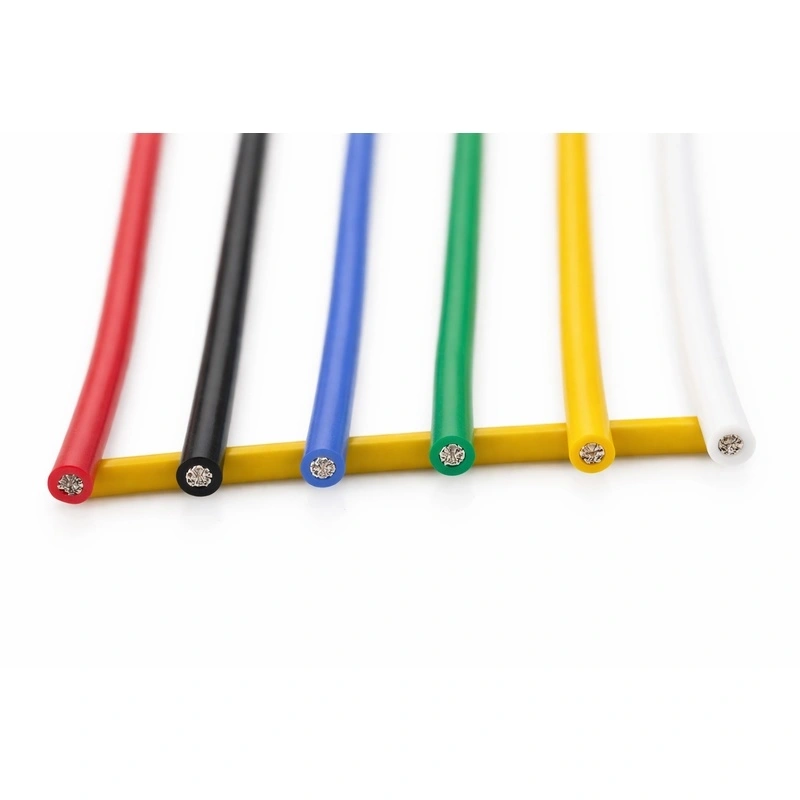
Industrial high-temperature cables are commonly supplied in a range of jacket colors that allow circuits to be identified and maintained without measuring instruments:
|
Color
|
Typical use
|
|
Black
|
Phase conductor or general use
|
|
Red
|
Secondary phase conductor or control circuit
|
|
Blue
|
Neutral conductor (per local regulation)
|
|
Yellow-green (bicolor)
|
Ground/earth conductor
|
|
White / Transparent
|
Auxiliary or signal circuit identification
|
|
Brown
|
Phase conductor (European practice)
|
In addition to jacket color, many manufacturers print the cross-section, voltage rating, temperature classification, and manufacturing batch number directly on the cable, which supports traceability during installation and subsequent maintenance.
Supply Formats and Packaging
High-temperature cable is commonly supplied in the following formats:
- Standard coils: typical lengths of 100 m and 200 m for small and medium cross-sections, suitable for maintenance stock and medium-sized projects.
- Wood or plastic reels: for large footages (500 m or more), used for complete installation projects on production lines or industrial furnaces.
- Custom-cut lengths: specific lengths for original equipment manufacturer (OEM) orders, where the cable is supplied already sized to the customer's design.
- Batch identification: each coil or reel is accompanied by its manufacturing batch reference, enabling traceability of the material in the event of a quality audit or technical claim.
Industry Sectors and Specific Applications
Metallurgy and heat treatment: internal wiring of annealing, quenching, and normalizing furnaces, where the cable operates alongside heating elements and sensors in atmospheres that commonly exceed 300-500°C.
Glass and technical ceramics: connection of molding heating elements and firing kilns, where the combination of radiant heat and frequent thermal cycling calls for high-stability fiberglass-and-mica insulation.
Power generation: instrumentation and control wiring in thermal and biomass power plants, where elevated temperature coexists with fire-resistance and low-smoke requirements.
Oil and gas: sensor and instrumentation wiring in refineries and platforms, combining high temperature, hydrocarbon exposure, and, in some cases, potentially explosive atmospheres.
Semiconductors and electronics: wiring for diffusion furnaces and chemical processing equipment, where PTFE and FEP are preferred for their chemical inertness and low particle shedding.
Aerospace: wiring for engine compartments and auxiliary systems where weight, chemical resistance, and compliance with specifications such as SAE AS22759 are decisive.
Food processing: wiring for industrial ovens, continuous fryers, and sterilization equipment, where resistance to steam cleaning and sanitizing agents is also required.
Automotive and heavy machinery: wiring for motors, sensors, and compartments near heat sources, with additional requirements for vibration and oil resistance.