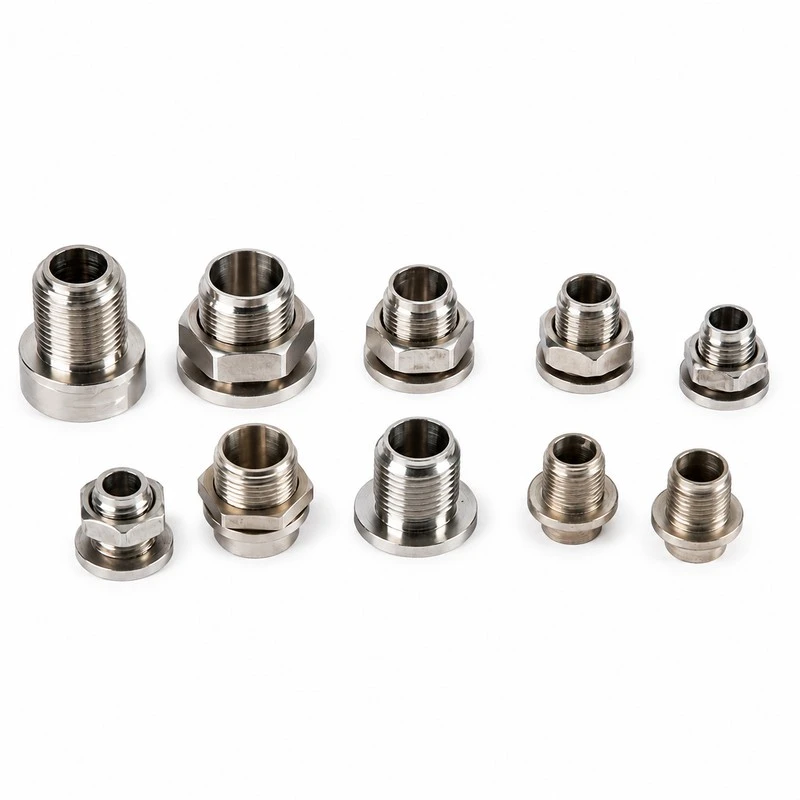
Thermocouple And RDT Accessories
Temperature sensor accessories are the mechanical and electrical components — thermowells, connectors, protection tubes, connection heads and terminal blocks — that allow a thermocouple or an RTD to be installed, protected and wired into an industrial process without compromising measurement accuracy or sensor integrity. These are not minor parts: in most unplanned instrumentation-related shutdowns, the root cause is not the sensing element itself (the thermocouple wire or the RTD resistive element), but an accessory that was poorly specified or degraded by the process — a thermowell perforated by corrosion, a connector wired with reversed polarity, a connection head that let in moisture.
At Heatecx we manufacture this accessory family as part of our raw materials and component line for the industrial heating and temperature measurement industry, applying the same vertical-integration logic we use across our catalog: control of source material and in-house machining with lot traceability, rather than reselling generic components with no documented quality control.
What role does each accessory play in the measurement loop?
A temperature measurement loop is not just the sensor — it is a chain of components where every link can introduce error or a point of failure. The typical sequence is: sensing element (thermocouple/RTD) → thermowell or protection sheath → connection head or terminal block → connector or extension/compensating cable → instrument or controller. Temperature sensor accessories cover every link in this chain except the sensing element itself and the end instrument.
Configurations and variants by accessory type
Within each accessory family, several construction variants determine real-world fit:
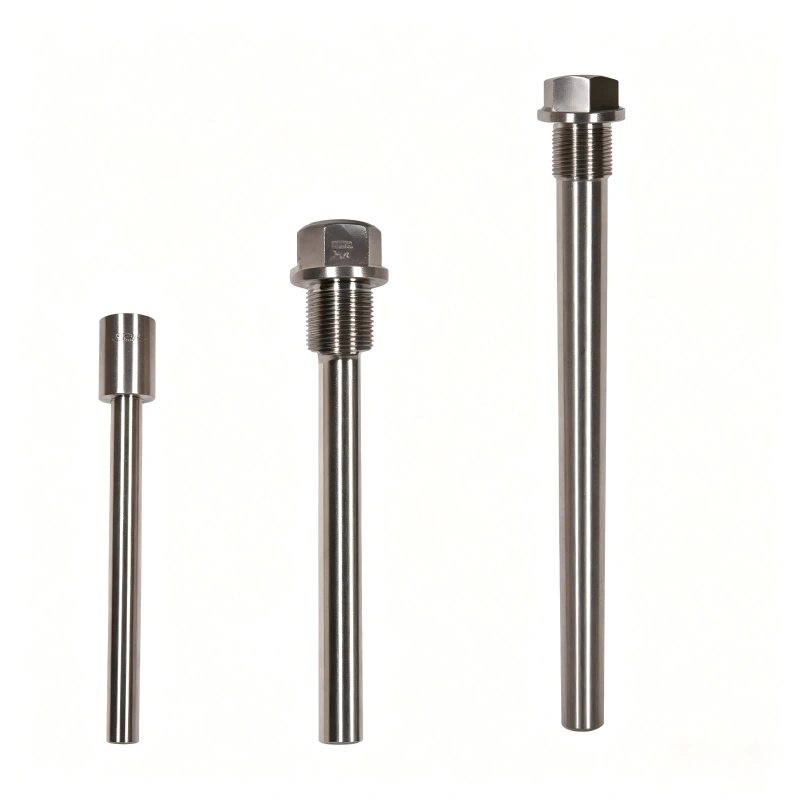
- Thermowells: available as threaded (fast install/removal on low- to medium-pressure connections), flanged (high-pressure joints or large diameters, per the applicable flange standard), weld-in (maximum tightness, no removal possible), and Van Stone (a free-floating flange that lets the thermowell rotate to align with the process without rotating the body). The stem profile can be straight (higher mechanical and vibration resistance), tapered (lower thermal mass at the tip, faster response time), or stepped (a compromise between the two). On insulated piping, a lagging extension neck is added so the head remains accessible outside the insulation layer.
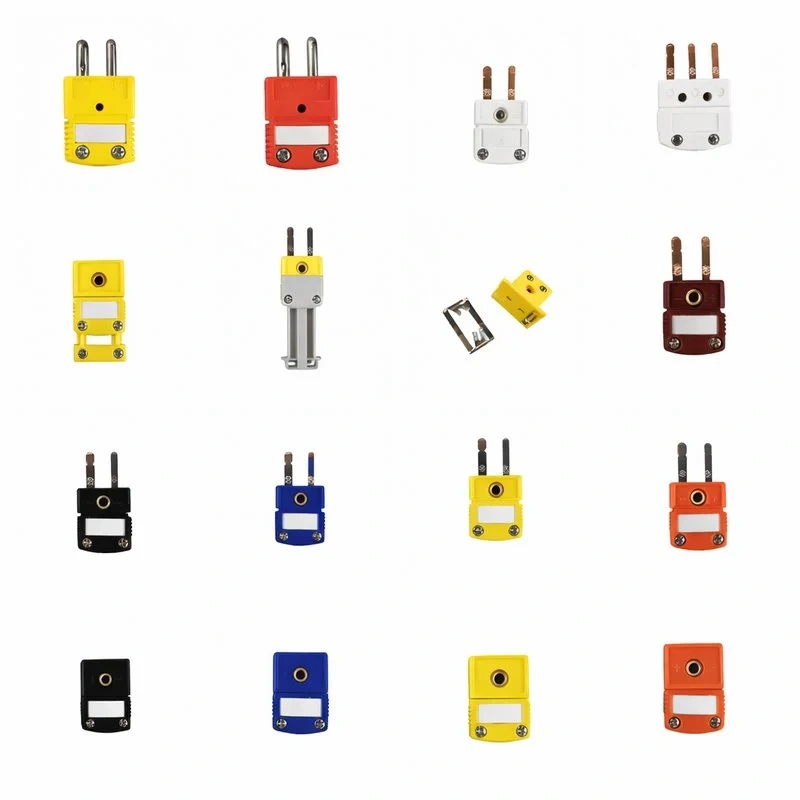
- Plugs and connectors: miniature (flat pins, standard for portable instrumentation and lab equipment), standard (round pins with larger cross-section, for heavy industrial machinery), panel-mount (fixed to a control panel, round or rectangular), and IP-sealed versions for humid or dusty environments.
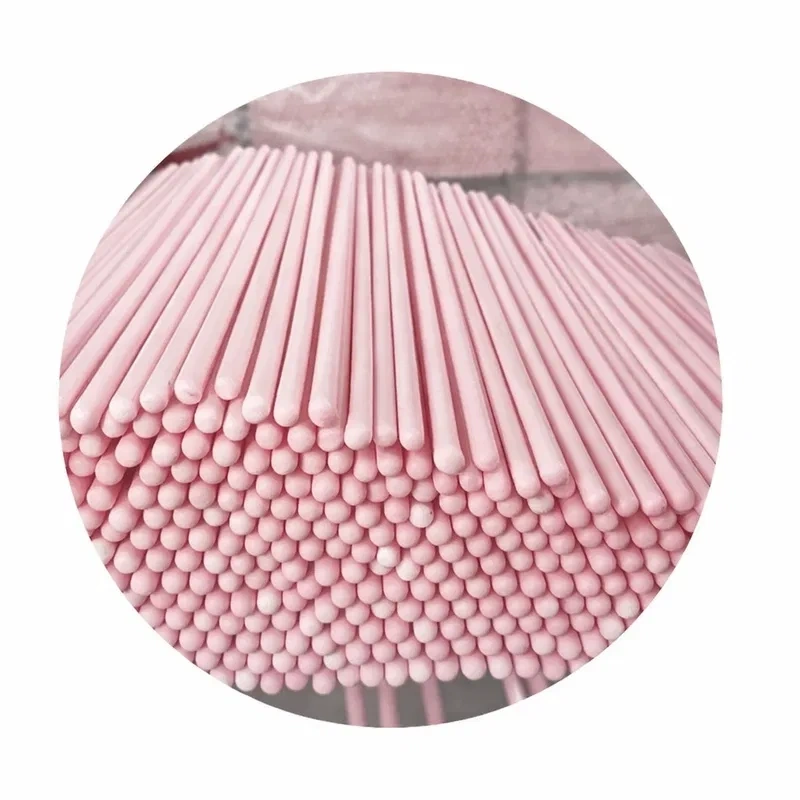
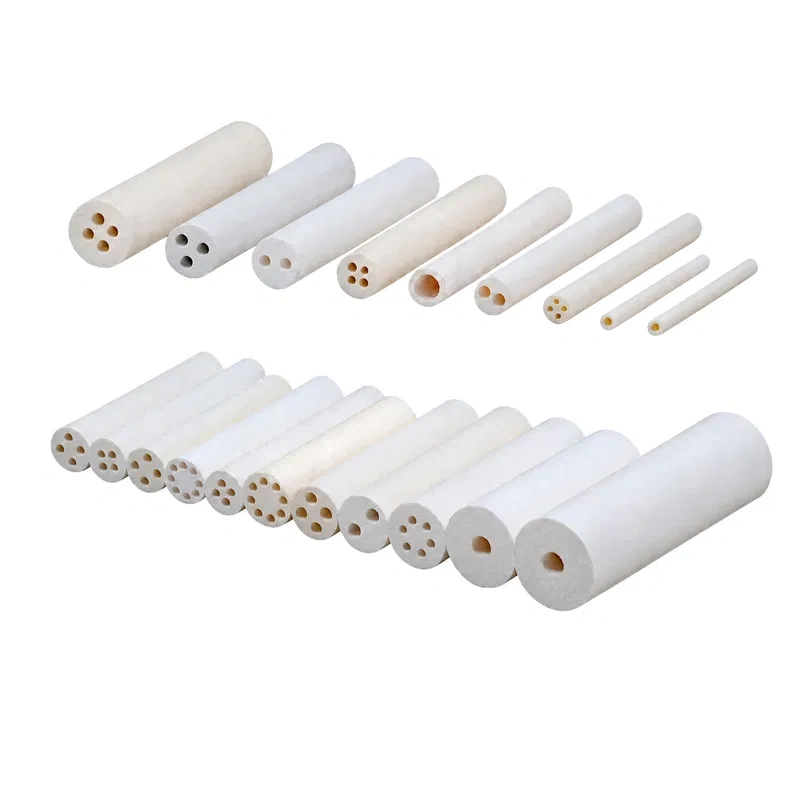
- Ceramic protection tubes: single-piece with closed end (greater tightness, recommended for immersion in liquids or molten metal) or two-piece assembled (allow longer overall lengths). Standard factory lengths typically range from 300 to 1500 mm, with custom machining or cutting available.
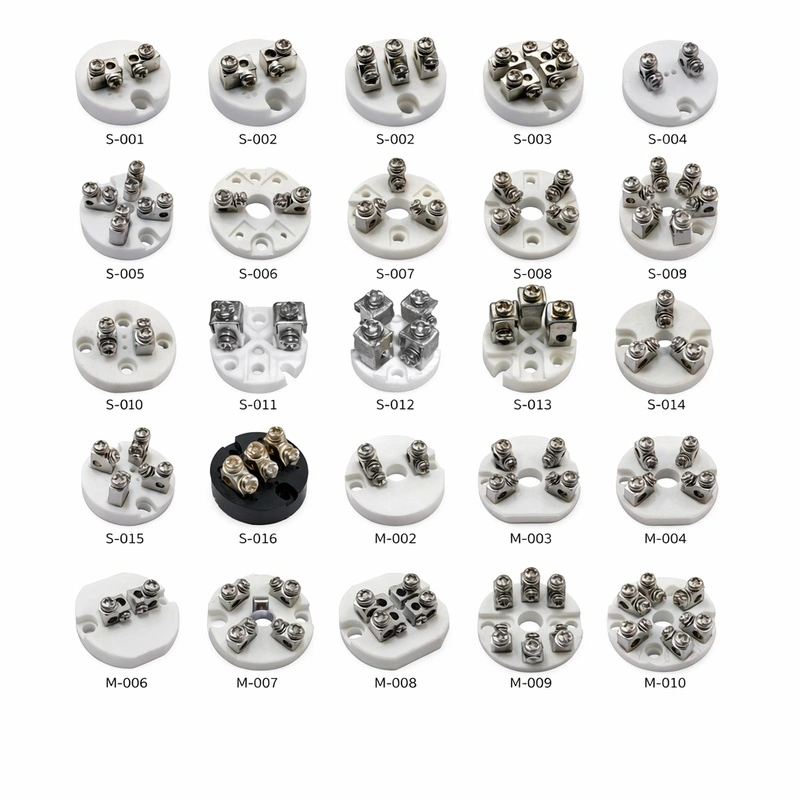
- Terminal blocks: 2-way configuration (2-wire RTD or single thermocouple) or 4-way (3-4 wire RTD, or dual thermocouple), with standard screw terminals or captive-screw terminals that prevent small parts from being lost during field maintenance.
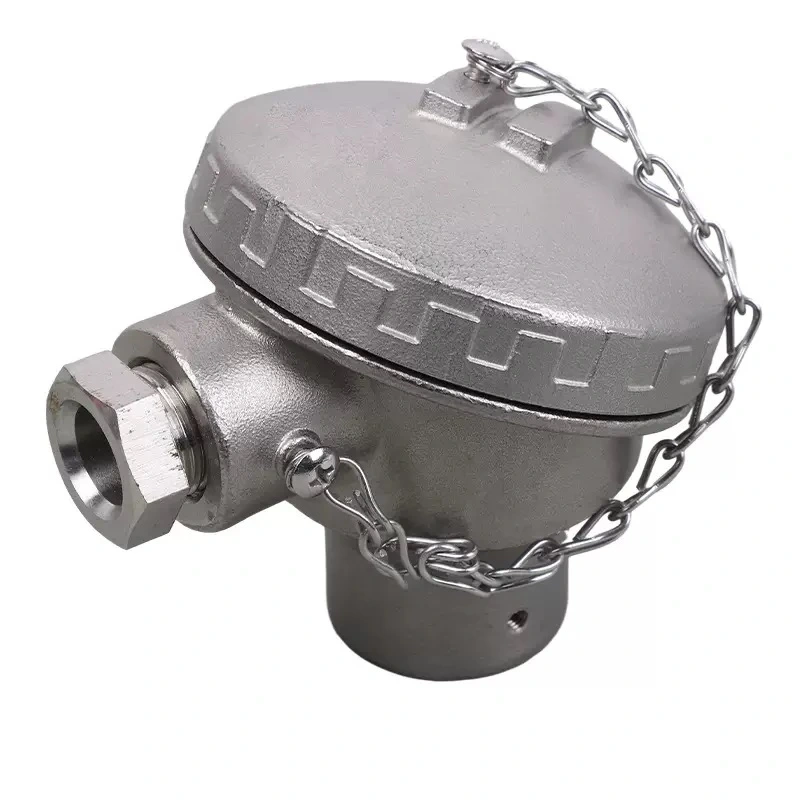
- Connection heads: Type B per DIN 43729 (the most common in industrial plants, accepts a 4-6 way terminal block) and miniature Type A (for compact sensors); available in die-cast aluminum (lightweight, good heat dissipation), stainless steel (maximum chemical resistance), or bakelite (cost-effective, indoor use in non-aggressive environments).
Dimensional and immersion considerations
Correct sizing of a thermowell or protection sheath affects both reading accuracy and mechanical strength:
|
Parameter
|
General recommendation
|
|
Immersion length
|
At least 8 to 10 times the thermowell's outer diameter in the sensing zone, to minimize heat-conduction error along the stem toward the outside of the process
|
|
Bore diameter
|
Minimal clearance relative to the sensor diameter (typically 0.5–1 mm), enough to allow insertion/removal without compromising contact heat transfer
|
|
Lagging extension
|
Must account for the thickness of the pipe or equipment's thermal insulation, so the head remains accessible outside the insulation layer
|
|
Stem profile
|
A tapered or stepped profile reduces tip thermal mass and improves response time, at the cost of lower vibration resistance than a straight profile
|
|
Process diameter vs. thermowell
|
On small-diameter piping, an oversized thermowell can create significant pressure drop and a flow dead zone, so diameter should be sized jointly with the process engineer
|
Construction materials and service ranges
|
Material
|
Typical temperature range
|
Key strength
|
Common accessory use
|
|
Stainless steel AISI 304/316/316L
|
Up to 800–870 °C
|
General corrosion, moisture, moderate chemical exposure
|
Thermowells, connection heads, housings
|
|
Inconel 600 / 601
|
Up to 1150–1200 °C
|
Oxidation and creep resistance at high temperature
|
Thermowells in furnaces and heat treatment
|
|
High-alumina ceramic (Al₂O₃, 95–99.7%)
|
Up to 1600–1800 °C
|
Electrical insulation, chemical inertness
|
Protection tubes, terminal blocks, high-temperature connectors
|
|
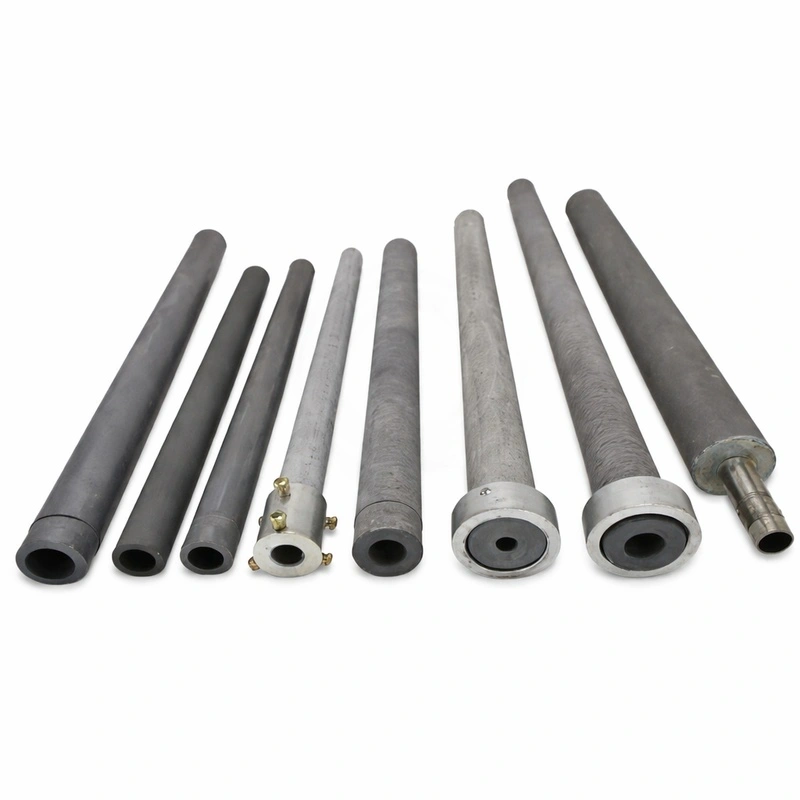
Silicon nitride (Si₃N₄)
|
Up to 1400–1650 °C (load dependent)
|
Thermal shock, molten metal and slag resistance
|
Silicon nitride protection tubes
|
|
Glass-fiber-reinforced thermoplastic / nylon
|
-29 °C to 220 °C
|
Impact, oils, common chemical agents
|
Standard connector bodies
|
|
Bakelite / phenolic
|
Up to 150–180 °C
|
Cost-effective electrical insulation
|
Standard-grade heads and terminal blocks
|
|
Brass / tinned copper
|
Ambient to 200 °C
|
Electrical conductivity
|
Screw terminals, connector pins
|
Applicable standards
|
Standard
|
Scope
|
|
IEC 60584-1
|
EMF tables and tolerances for K, J, T, E, N, R, S and B thermocouples
|
|
IEC 60584-3
|
International color-coding for thermocouple cables and connectors
|
|
ASTM E230 / ANSI MC96.1
|
US color-coding and tolerance reference, commonly used for connectors and compensating cables
|
|
DIN 43772
|
Standardized thermowell forms, dimensions and designations (forms 2, 3, 3F, 4, 5, 8, among others)
|
|
ASME PTC 19.3 TW-2016
|
Wake frequency calculation used to validate thermowells subjected to process flow
|
|
IEC 60529 (IP)
|
Ingress protection rating for connection heads against dust and water
|
|
ATEX / IECEx
|
Certification of heads and connectors for installation in hazardous, explosive-atmosphere areas
|
|
EN 10204 3.1
|
Material certification for thermowells and process-wetted components
|
Technical selection criteria
Selecting sensor accessories is driven by the process conditions the thermowell/head/connector assembly will face, not by the sensor itself.
|
Process variable
|
Selection criterion
|
|
Process temperature
|
Below 850 °C: 316 stainless steel; 850–1200 °C: Inconel; above 1200 °C: alumina ceramic or silicon nitride
|
|
Pressure and flow velocity
|
High-velocity or high-pressure lines require a wake frequency calculation per ASME PTC 19.3 TW-2016 to prevent vibration fatigue
|
|
Nature of the medium
|
Corrosive media (acids, chlorides) call for special alloys or ceramic coatings; molten metal and slag call for silicon nitride
|
|
Need for hot swap
|
A thermowell allows sensor replacement without stopping the process; without one, the sensor is in direct contact and replacement requires a shutdown
|
|
Electrical environment
|
In environments with electrical noise or RFI, shielded compensating cable and shielded connectors are recommended
|
|
Area classification
|
Hazardous areas with explosive dust or gas atmospheres require ATEX/IECEx-certified heads and connectors
|
|
Sensor type
|
Thermocouples (K, J, N, R, S, T, E) require connectors and blocks with matching compensated alloy; RTDs (Pt100, Cu50) need no alloy compensation, only correct electrical insulation
|
|
Moisture/dust exposure
|
The head's IP rating must equal or exceed the environmental classification of the installation point
|
Applications by industry
|
Industry
|
Critical accessory
|
Specific consideration
|
|
Metallurgy and foundry
|
Silicon nitride protection tubes, Inconel thermowells
|
Resistance to thermal shock and molten metal/slag attack
|
|
Glass
|
High-alumina ceramic tubes
|
Dimensional stability sustained above 1400 °C without deformation
|
|
Petrochemical and refining
|
Flanged thermowells in stainless steel or special alloys, with wake frequency calculation
|
High pressure, significant flow velocity and corrosive media
|
|
Food and pharmaceutical
|
Thermowells and heads in sanitary-grade 316L stainless steel
|
Compatibility with CIP/SIP cleaning protocols and no bacterial retention zones
|
|
Power generation and boilers
|
Thermowells per DIN 43772, heads resistant to continuous vibration
|
Frequent thermal cycling and sustained mechanical vibration
|
|
Heat treatment and industrial furnaces
|
High-temperature ceramic connectors and tubes, heads mounted near the furnace mouth
|
Ambient temperature at the connection point often exceeds the rating of a standard connector body
|
|
Technical ceramics
|
Ceramic protection tubes and tapered-profile thermowells
|
Firing atmospheres with rapid heating and cooling cycles
|
Sensor type compatibility
|
Sensor type
|
Typical range
|
Required connector/block
|
Technical note
|
|
Type K (Chromel/Alumel)
|
-200 to 1260 °C
|
K-compensated alloy
|
The most widely used in general industrial applications for its linearity and availability
|
|
Type J (Iron/Constantan)
|
-40 to 750 °C
|
J-compensated alloy
|
Limited to moderate temperatures by oxidation of the sensor's iron leg
|
|
Type N (Nicrosil/Nisil)
|
-200 to 1300 °C
|
N-compensated alloy
|
Better long-term stability than type K in oxidizing atmospheres
|
|
Type R / S (Platinum-Rhodium)
|
0 to 1600 °C
|
Dedicated compensating cable and connector, different from the sensor's own alloy
|
Used in very high-temperature furnaces; requires careful handling due to wire fragility
|
|
Type T (Copper/Constantan)
|
-200 to 350 °C
|
T-compensated alloy
|
Common in cryogenic and low-temperature applications
|
|
RTD Pt100 / Pt1000
|
-200 to 600 °C
|
3- or 4-wire terminal block, no alloy compensation needed
|
4-wire wiring eliminates the error introduced by lead-wire resistance
|
|
RTD Cu50
|
-50 to 150 °C
|
2-3 wire terminal block
|
Lower-cost alternative for mid-range applications
|
Common failure modes and preventive maintenance
|
Failure mode
|
Typical cause
|
Preventive action
|
|
Erratic reading or signal "noise"
|
Corrosion or oxidation on connector pins
|
Periodic visual inspection and cleaning with isopropyl alcohol
|
|
Temperature reading too low or too high
|
Mixing connectors/cables of one thermocouple type with a sensor of another type (parasitic junction)
|
Verify color code and alloy before every replacement
|
|
Thermowell fracture from fatigue
|
Flow-induced vibration without wake frequency validation
|
Calculate wake frequency per ASME PTC 19.3 TW-2016 on high-velocity installations
|
|
Moisture ingress into the head
|
Deteriorated gasket or insufficient IP rating for the environment
|
Replace gaskets and verify IP rating during periodic audits
|
|
Deformation or melting of the connector body
|
Thermoplastic body exposed to ambient temperature above 200 °C
|
Switch to a ceramic connector near furnaces or hot process heads
|
|
Loose screw terminals
|
Mechanical vibration without a strain-relief clamp
|
Install cable clamps and re-torque during scheduled maintenance
|
Modular accessories vs. integrated/compact sensor assembly
|
Aspect
|
Modular accessories (independent thermowell + sensor + head)
|
Integrated/compact-mount sensor
|
|
Sensor replacement
|
Fast, without stopping the process (via the thermowell)
|
Requires removal of the entire assembly
|
|
Initial cost
|
Higher when purchased separately, but optimizable component by component
|
Lower unit cost, but no flexibility
|
|
Customization
|
High: materials combined per process variable
|
Limited to factory configuration
|
|
Maintenance
|
Component-level, more economical long term
|
Full assembly replacement on any failure
|
|
Material traceability
|
Certifiable per component (EN 10204 3.1)
|
Depends on the assembly manufacturer
|
Storage, handling and service life
- Unglazed ceramic components: slightly porous and hygroscopic; store in dry environments and avoid prolonged exposure to moisture, since absorbed water can cause thermal-shock micro-cracking during the first heat-up. A gradual preheat is recommended when putting long-stored ceramic tubes into service for the first time.
- Mechanical handling of ceramic parts: both protection tubes and ceramic terminal blocks tolerate point impacts poorly; transport in original packaging and avoid direct contact with hard surfaces during installation.
- Thermoplastic connector bodies: prolonged storage under direct sunlight (UV exposure) accelerates thermoplastic embrittlement; covered storage is recommended for spare-parts stock.
- Head gaskets and seals: rubber or silicone gaskets that maintain the IP rating have a limited service life due to hardening and loss of elasticity; they should be treated as consumables in the maintenance plan, with visual inspection at every intervention on the head.
- Screw terminals: continuous mechanical vibration progressively loosens connections; a scheduled periodic re-torque, rather than a reactive one triggered by failure, significantly reduces erratic-reading shutdowns.
- Expected service life: under process conditions within the material's design limits, metallic thermowells typically retain integrity for several years; actual service life depends directly on the chemical aggressiveness of the medium and on whether the sensor operates with or without a protective thermowell.
Manufacturing process
Our production process combines precision machining with certified raw material control:
- Raw material sourcing and certification: stainless steels, Inconel and high-purity ceramic powders (Al₂O₃, Si₃N₄) with composition certificates.
- Machining: CNC turning of thermowells and metal components with dimensional control per DIN 43772 or other requested standards.
- Ceramic forming and sintering: for ceramic protection tubes and terminal blocks, fired at controlled temperature to maximize density and chemical inertness.
- Electrical assembly: installation of terminals, compensated pins and polarization systems in heads and connectors.
- Quality testing: dimensional verification, electrical insulation testing, and — on critical thermowells — wake frequency calculation or testing.
- Tightness testing: thermowells and protection tubes intended for immersion in liquids or pressurized atmospheres are leak-tested before the lot is released.
- Surface finishing: polishing or passivation of metal components to improve corrosion resistance and facilitate cleaning in sanitary applications.
- Packaging and traceability: lot identification and technical documentation on every shipment.
Application cases
Case 1 — Metal heat treatment. A plant reported recurring shutdowns in its quench furnaces due to unstable temperature readings. Diagnosis identified two simultaneous causes: type K connectors with thermoplastic bodies mounted less than 15 cm from the furnace mouth (exceeding their 220 °C limit), and thermowells with no wake frequency calculation on a high-velocity gas line, which was generating fatigue micro-cracks. The fix combined migrating to high-temperature ceramic connectors and redesigning the thermowell with validation per ASME PTC 19.3 TW-2016, eliminating both failure causes without changing the original sensor.
Case 2 — Beverage plant pasteurization line. A packaged-beverage manufacturer experienced temperature reading variability on its heat exchangers during CIP cleaning cycles. The cause was standard connection heads with an IP rating insufficient for repeated exposure to steam and cleaning agents, allowing moisture micro-ingress into the terminal block. Heads were replaced with 316L stainless steel versions with a reinforced gasket and a higher IP rating, and gasket inspection was added to the preventive maintenance schedule, eliminating the reading variability without altering the measurement point or the installed RTD sensor.
Why choose Heatecx
- Direct manufacturer, not a reseller: we produce these accessories in our own Shenzhen facility, with control over raw material and machining.
- Vertical integration: we manufacture both the machinery used to produce heating elements and sensors, and the raw materials and accessories that go with them, allowing us to tune tolerances and materials for each application.
- Engineering support: our technical team assists with material selection and thermowell/connector configuration based on real process conditions.
- Batch quality control: 100% dimensional and electrical testing per lot before dispatch.
Related links