Technical Ceramic Insulators for Electric Heating Elements
Heatecx manufactures and supplies a complete line of ceramic insulators for heating elements — the material that allows any resistive heating system to run safely, efficiently, and for thousands of hours of continuous operation without failure. This category brings together the ceramic components that act as the insulating core, structural support, and dielectric separator inside tubular, cartridge, band, flexible, and immersion heaters, produced in alumina, steatite, cordierite, and high-purity magnesium oxide (MgO).
Unlike organic, polymer, or conventional glass insulation, technical ceramics withstand continuous operating temperatures ranging from several hundred to over 1500 °C without losing their dielectric properties or dimensional stability. This combination of thermal resistance, dielectric strength, and mechanical stability is why these materials remain the de facto standard across heat treatment, metallurgy, petrochemicals, appliance manufacturing, and automotive industries — sectors where an insulation failure means not just downtime, but a real safety risk to people and equipment.
What is technical ceramic and how is it manufactured?
Technical ceramic (also called advanced or engineering ceramic) is produced from high-purity inorganic oxides and silicates — primarily aluminum oxide (Al₂O₃), magnesium silicate (steatite/talc), and magnesium-aluminum silicate (cordierite) — processed through tightly controlled manufacturing routes:
- Dry pressing: ceramic powder mixed with an organic binder is compacted in steel dies under pressure to produce simple-geometry parts in high volumes (beads, washers, discs).
- Extrusion: ceramic paste is forced through a die to produce elongated, constant-section parts such as MgO or alumina tubes and rods.
- Tape casting or injection molding: used for complex-geometry or thin-wall parts such as plates and terminal blocks.
- Sintering (firing): all parts are fired in kilns at temperatures between 1250 °C and 1750 °C, depending on the material, to reach final density, mechanical strength, and definitive crystalline microstructure.
- Precision grinding: after firing, many parts are ground with diamond tooling to meet tight dimensional tolerances, particularly for high-voltage components or high-speed production lines.
The result is an inert, low-porosity (or controlled-porosity) material that is chemically stable and has a service life far longer than organic insulation, provided it is handled and stored correctly, away from moisture and impact.
IEC 60672 material classification
The international standard IEC 60672 (Ceramic and glass insulating materials) classifies ceramic materials used in electrical engineering into groups based on composition. Knowing this classification helps specify the correct material for the right application:
|
IEC 60672 group
|
Material
|
Main characteristics
|
|
C110 / C120
|
Quartz / alumina porcelain
|
Good mechanical strength, extrusion-formed
|
|
C130
|
High-alumina porcelain
|
High mechanical strength, extrusion-formed
|
|
C200 / C220 / C221
|
Steatite (magnesium silicate)
|
Benchmark electrical insulator, low dielectric loss, high dielectric strength
|
|
C230
|
Porous steatite
|
High porosity, low thermal conductivity, high hot electrical resistance
|
|
C410 / C520
|
Cordierite
|
Very low thermal expansion, excellent thermal shock resistance
|
|
C530
|
Porous cordierite
|
For high-temperature applications with frequent thermal cycling
|
This classification is an internationally recognized technical reference; specifying the IEC group when sourcing ceramics helps avoid ambiguity with international suppliers.
What's included in this category
Each ceramic material has distinct properties and is selected based on operating temperature, heater type, and environmental conditions:
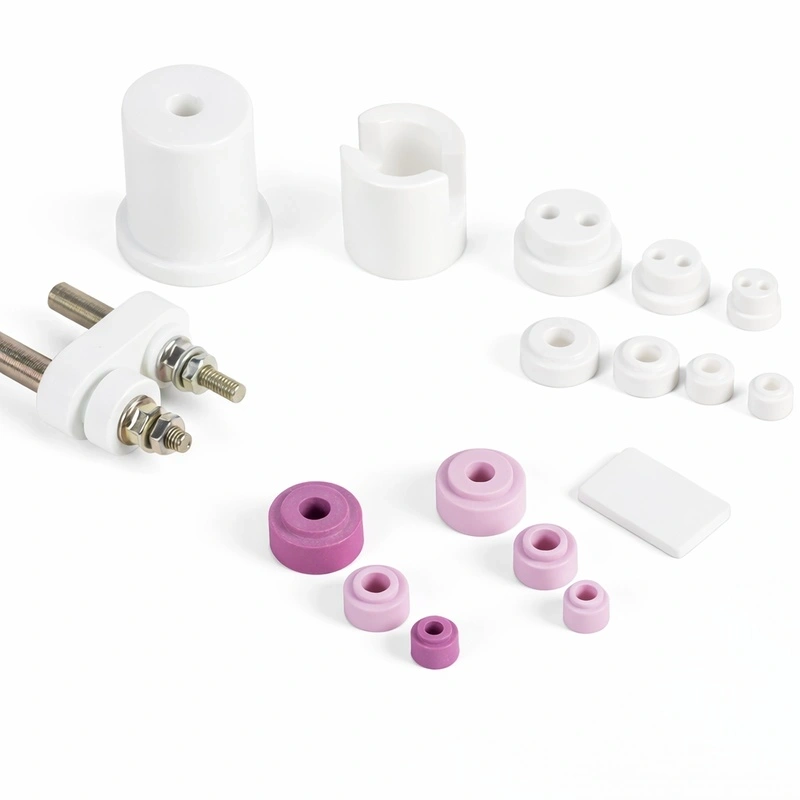
- Industrial Electric Heating Ceramics — alumina and steatite cores and components for internal insulation of the resistive element, rated up to 850 °C, with dielectric strength above 2000 V/min and low loss coefficient.
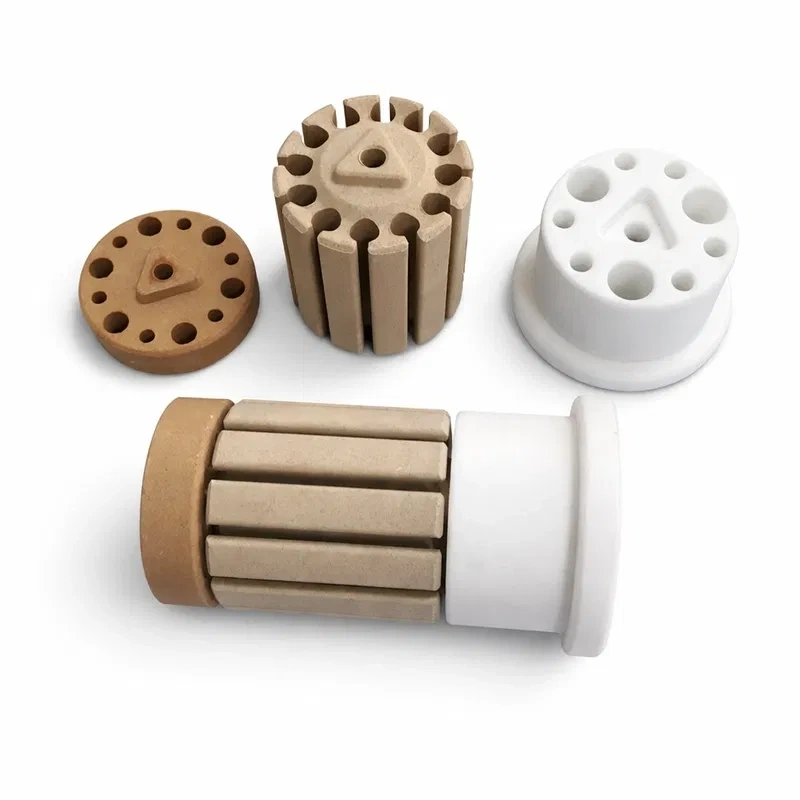
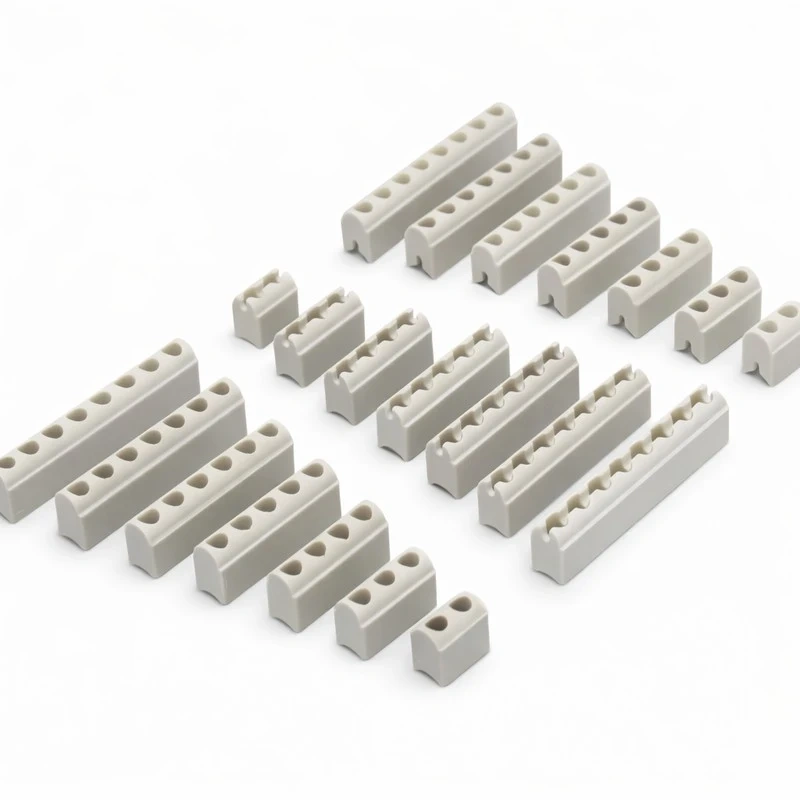
- Ceramic Spool-Type Insulators — cordierite, steatite, and alumina ceramics for electrical separation and heater support, available as multi-wire ceramics, ducts, ceramic beads, and "bone-type" insulators, with 2 to 12-way configurations depending on the coil design.
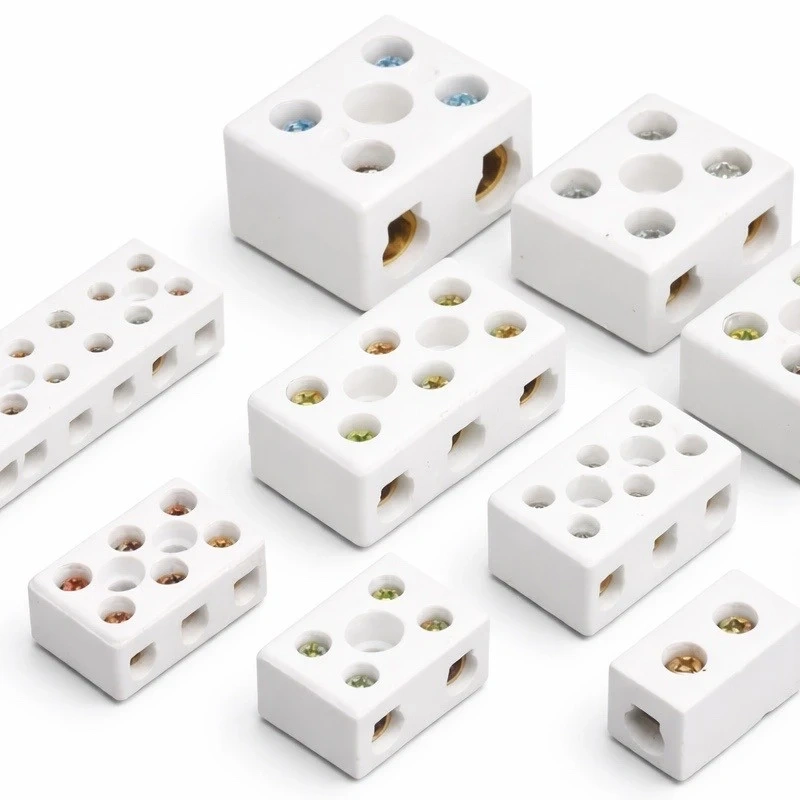
- High-Temperature Ceramic Terminal Blocks — high-frequency porcelain terminal blocks for secure electrical connections up to 1300 °C, capable of isolating voltages of several hundred volts between adjacent terminals.
- Alumina Ceramic Components — high-purity (95–99% Al₂O₃) modular beads for flexible rope-type ceramic heaters, produced to tight dimensional tolerances to ensure uniform winding.
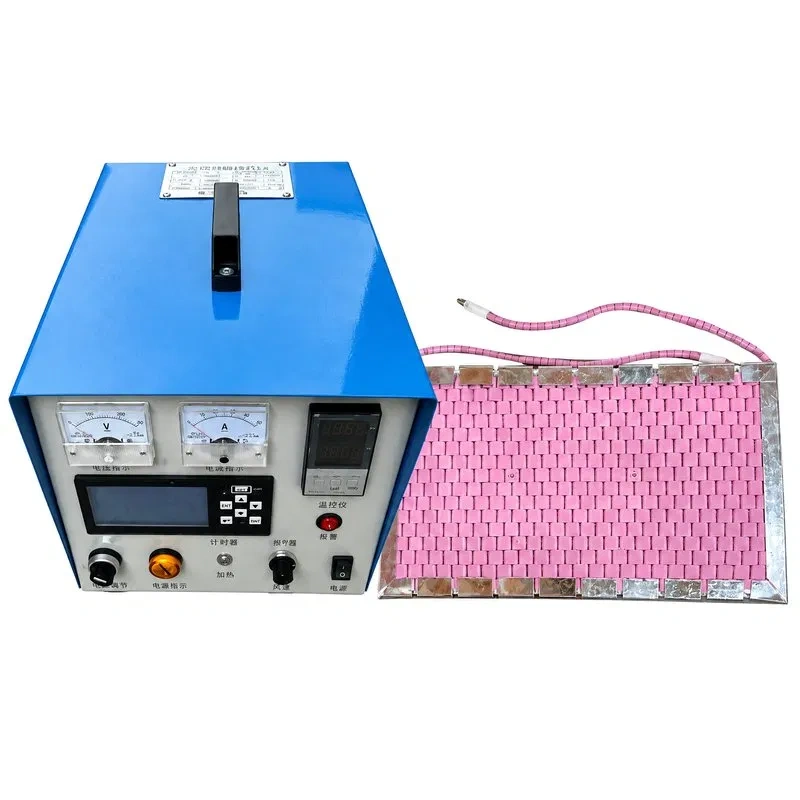
- Steatite Ceramic Components for Heaters — steatite and alumina slabs/train-type ceramics for band heaters, clamps, and straps, with precision channels to seat the resistive wire.
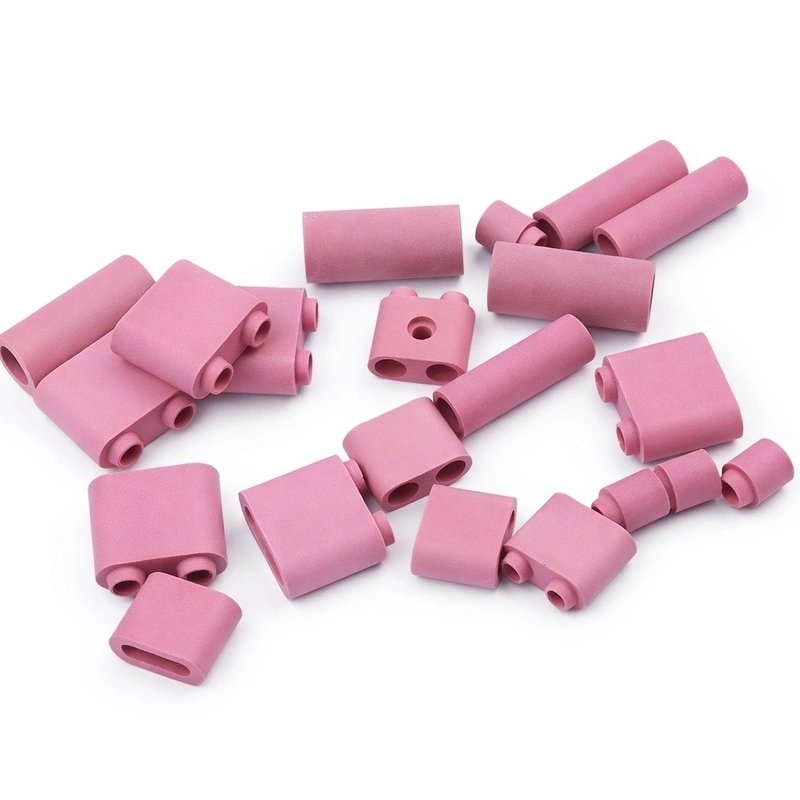
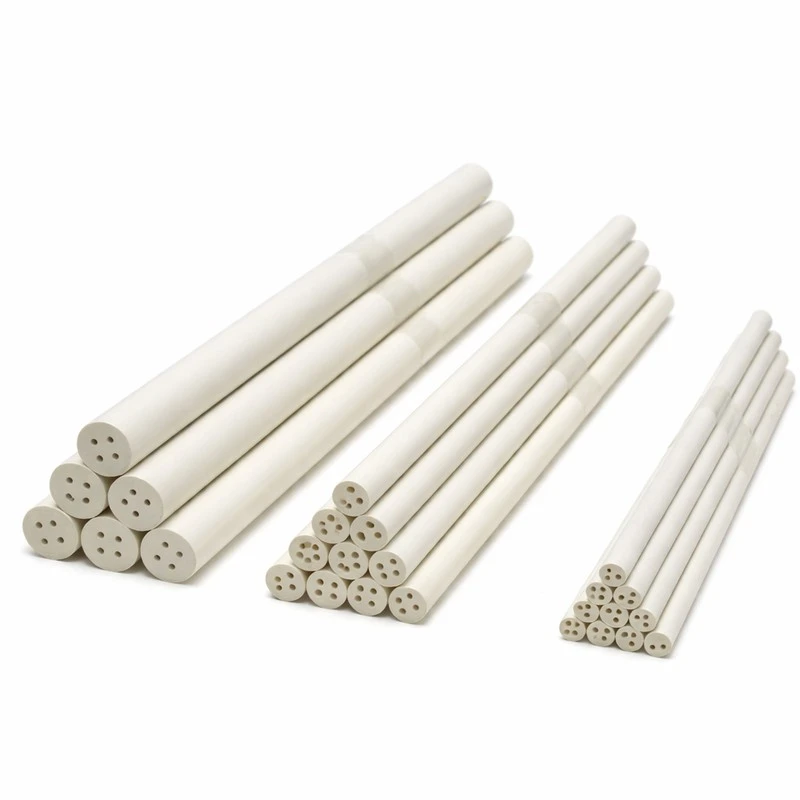
- High-Purity Magnesium Oxide (MgO) Tubes and Rods — high-density (2.3 g/ml), 97–99% purity MgO insulation, manufactured by high-pressure extrusion and firing at 1700 °C, available in single, double, and multi-bore configurations for cartridge heaters and mineral-insulated cable.
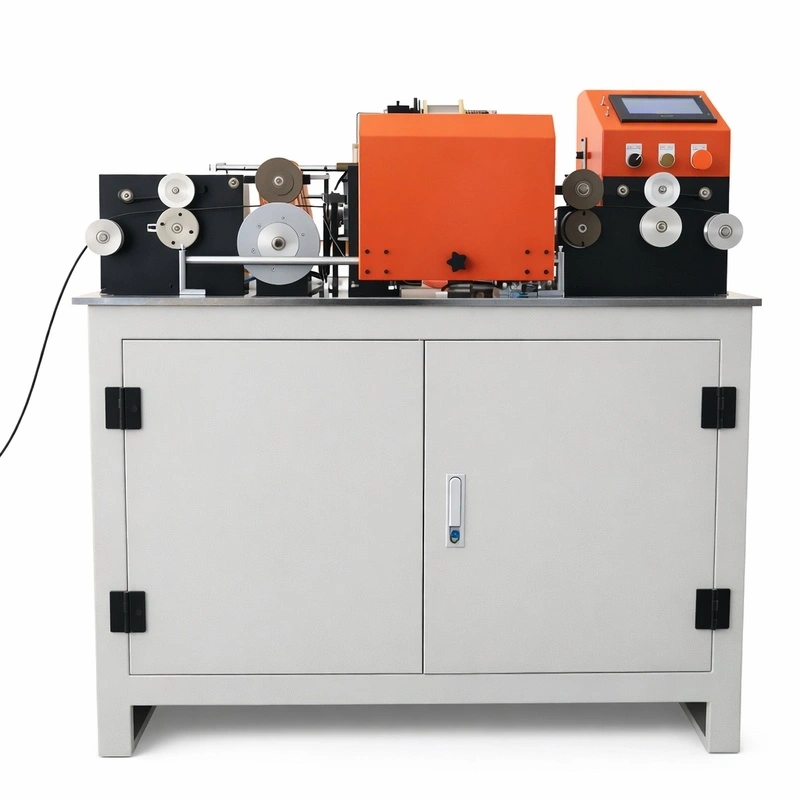
These parts pair naturally with our flexible ceramic heaters, heating element sealants, and mica insulation, together forming a complete insulation system for a heating element. For coiling the resistive wire before it's inserted into the ceramic insulator, also check our resistance wire coiling machines.
Comparative technical properties of ceramic materials
|
Property
|
Alumina (Al₂O₃ 95–99.8%)
|
Steatite
|
Cordierite
|
Magnesium oxide (MgO)
|
|
Max. continuous temperature
|
1500–1750 °C
|
1000–1200 °C
|
1200–1300 °C
|
Up to 1700 °C
|
|
Bulk density
|
3.6–3.9 g/cm³
|
2.5–2.7 g/cm³
|
2.3–2.6 g/cm³
|
2.3–3.0 g/cm³ (compacted)
|
|
Dielectric strength
|
>2000 V/min (>15 kV/mm)
|
15–25 kV/mm
|
8–15 kV/mm
|
>50 MΩ cold
|
|
Thermal shock resistance
|
Medium
|
Medium-high
|
Very high
|
High (compacted powder)
|
|
Water absorption
|
Virtually zero
|
Low (except porous grades)
|
Low
|
Very low if sealed
|
|
Thermal expansion coefficient
|
Low-medium
|
Medium
|
Very low
|
Low
|
|
Relative cost
|
High
|
Medium
|
Medium-high
|
Medium (purity-dependent)
|
|
Typical use
|
High-demand heater cores, critical insulators
|
Heater supports, terminal blocks, spool insulators
|
Parts under abrupt thermal cycling, domestic ovens
|
Internal insulation for cartridge heaters, MI cable
|
General industrial applications
- Fluid and gas heating: immersion and circulation heaters for water, industrial oils, compressed air, process gases, and corrosive media across the chemical and water treatment industries.
- Metallurgy and materials processing: furnaces for melting salts, alkalis, and low-melting-point alloys, as well as heat treatment furnaces (quenching, annealing, tempering) where the ceramic must withstand intensive heating cycles.
- Plastics and rubber: tubular, band, and cartridge heaters for extruders, injection molders, blow molders, and vulcanizing presses, where thermal precision directly affects final product quality.
- Lab, pharmaceutical, and medical equipment: drying ovens, incubators, autoclaves, and sterilizers requiring precise temperature control and leak-free electrical insulation.
- Industrial HVAC and drying: unit heaters, radiant ceramic panels, and drying ovens for paint, wood, and food products in industrial facilities.
- Automotive and appliances: ceramic components for coolant heaters, toasters, hair dryers, irons, and other appliances that combine high temperature with strict electrical safety requirements in mass-consumer environments.
- Petrochemical and industrial welding: preheating and post-weld heat treatment (PWHT) of pipelines and pressure vessels, where the ceramic insulation must withstand both operating temperature and rough field handling.
How to select the right ceramic for your application
Choosing the correct ceramic material depends on four main factors, best evaluated in this order:
- Maximum operating temperature (continuous and intermittent): if your process consistently exceeds 1200 °C, alumina or MgO are the only viable options; below 1000 °C, steatite is usually the more cost-effective choice.
- Dielectric requirements: for high-voltage applications or where electrical safety is critical (medical equipment, explosive atmospheres), prioritize materials with higher certified dielectric strength, such as high-purity alumina.
- Exposure to thermal cycling: if the equipment is switched on and off frequently, thermal shock resistance matters more than absolute maximum temperature — cordierite is the reference material in these cases.
- Geometry and production volume: for high-volume, simple-geometry parts (beads, washers), dry pressing reduces cost; for long tubes or rods, extrusion is more efficient.
Integrating ceramics into your production line
Technical ceramics aren't installed in isolation — they're part of the heating element manufacturing line alongside MgO filling, resistance wire coiling, swaging, and final terminal sealing. A typical manufacturing sequence for a ceramic-insulated tubular heater includes:
- Coiling the resistive wire (nichrome or Kanthal) onto a mandrel, per the specifications of our wire coiling machines.
- Inserting the coiled wire into the metal sheath together with the ceramic insulator (beads, MgO powder, or solid core, depending on design).
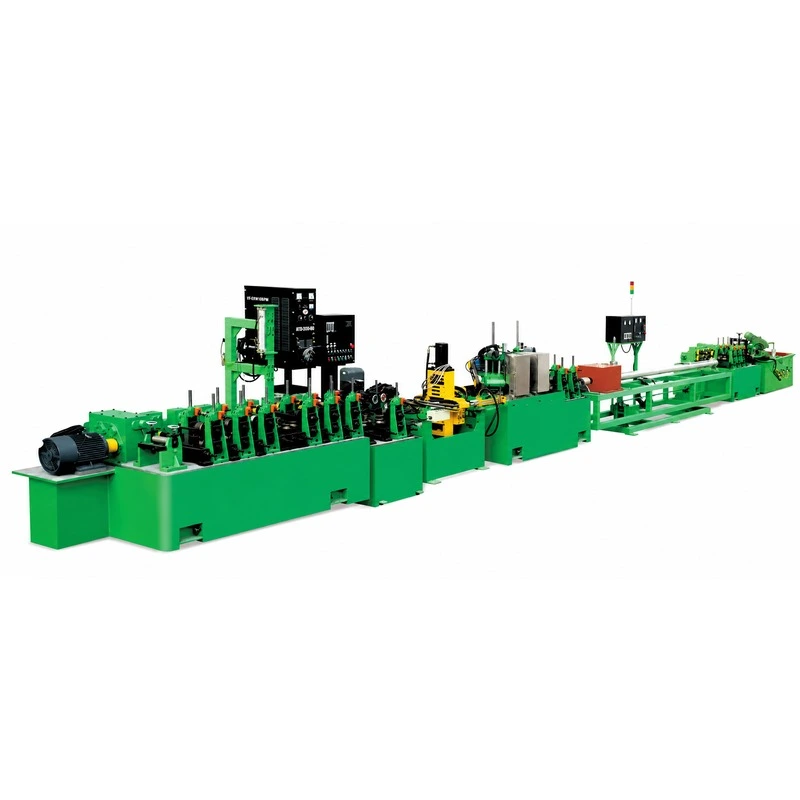
- Swaging to reduce the sheath diameter and densify the insulation, typically with equipment such as our HTR-5000 Roll Reduction Machine.
- Hermetic sealing of the terminals to prevent moisture absorption, using ceramic glass sealant or inorganic adhesive.
- Electrical quality control: insulation resistance measurement (≥5 MΩ per JB/T4088 standard) and dielectric strength testing before packaging.
Common failures and preventive maintenance
|
Symptom
|
Probable cause
|
Recommended fix
|
|
Short circuit or leakage current after months of use
|
Moisture absorption due to insulator porosity (especially MgO)
|
Use high-density ceramic and ensure hermetic sealing at both ends
|
|
Visible cracks or fractures in the ceramic
|
Thermal shock from ramps that are too fast, or frequent on/off cycling
|
Use PID controllers with gradual ramps and low-expansion materials (cordierite)
|
|
Progressive drop in insulation resistance
|
Aging from prolonged exposure near the material's temperature limit
|
Select a safety margin of at least 10–15% between operating temperature and the material's limit
|
|
Mechanical breakage during assembly
|
Improper handling or impact during storage
|
Store in a dry location, protected from impact, and follow the manufacturer's installation procedures
|
Ceramic vs. other insulating materials
|
Insulator
|
Typical max. temp.
|
Dielectric strength
|
Cost
|
Limitations
|
|
Technical ceramic
|
Up to 1750 °C
|
Very high
|
Medium-high
|
Brittle under mechanical impact
|
|
Mica
|
Up to 900–1000 °C
|
High
|
Medium
|
Sensitive to delamination with moisture
|
|
Glass
|
Up to 500–600 °C
|
High
|
Low-medium
|
Low mechanical strength
|
|
High-temperature polymers (PTFE, PI)
|
Up to 250–300 °C
|
Medium-high
|
Low
|
Not suitable for very high-temperature applications
|