Resistance Wire for Electric Heaters and Heating Elements
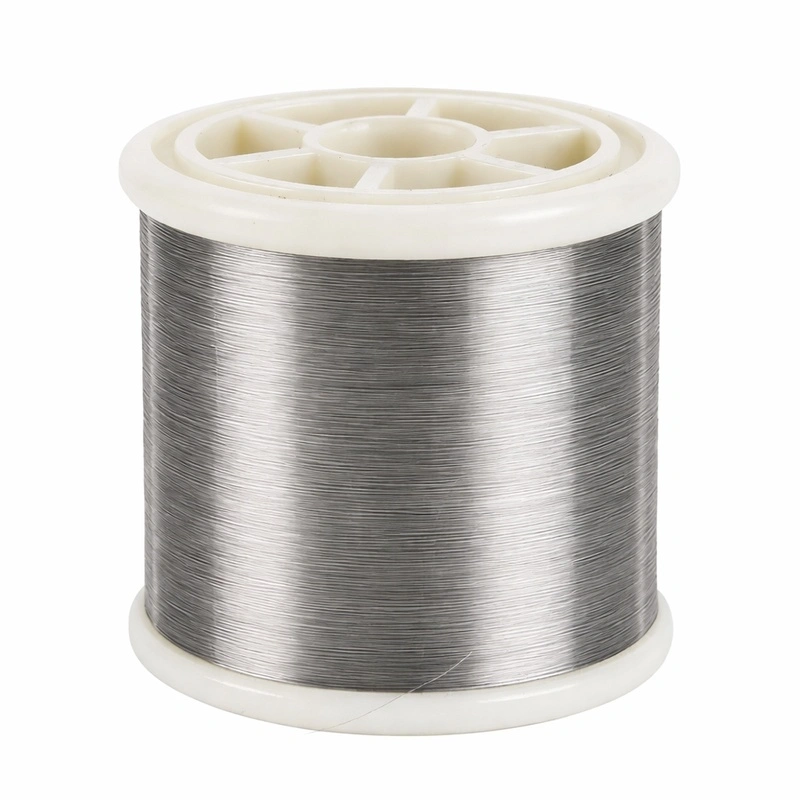
Resistance wire is the component that turns electric current into heat — the starting point of every electric heater, whether tubular, cartridge-type, ceramic, or built for household use. How much heat it generates, how high a temperature it can sustain continuously, and how long it lasts before failing depend almost entirely on the metal alloy it's made from and its gauge. Getting the wire selection wrong at the design stage is not a minor issue: it shows up later as heaters that burn out prematurely, wattages that don't match the calculated output, or unnecessary material costs.
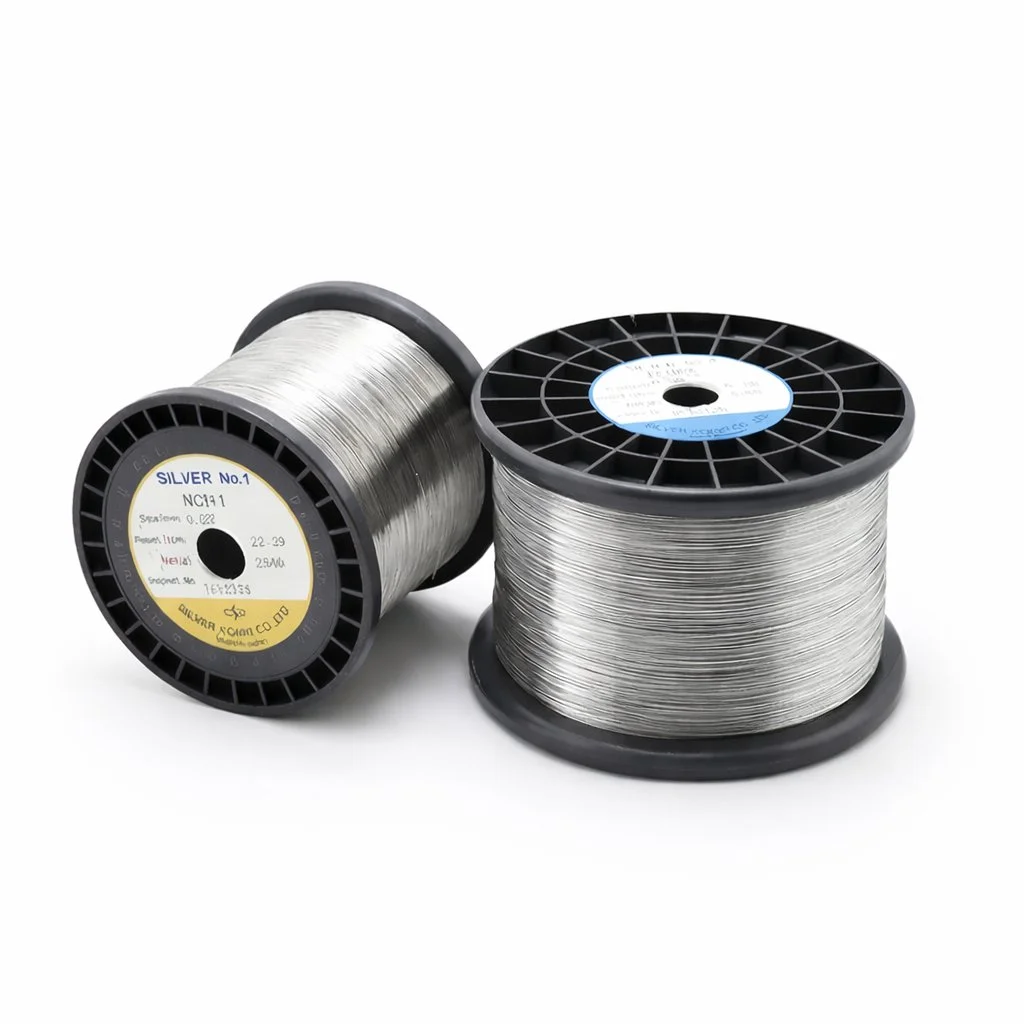
At Heatecx we supply resistance wire across the main alloy families — Nickel-Chromium and Iron-Chromium-Aluminum — along with pure nickel wire and flat resistance wire, covering everything from household appliances to demanding industrial furnaces.
The two main resistance alloy families
There is no single resistance wire that fits every application; the choice usually comes down to two alloy families with clearly different behavior.
Nickel-Chromium (Ni-Cr), commercially known as Nichrome, is an austenitic alloy most commonly supplied as Ni-Cr 80/20 (80% nickel, 20% chromium). It stands out for its excellent ductility — making it easy to wind and shape without becoming brittle — and for retaining its mechanical properties through repeated on/off cycles. It's the standard choice for household appliances and general-purpose heating up to around 1200 °C.
Iron-Chromium-Aluminum (Fe-Cr-Al), commercially known as Kanthal, is a ferritic alloy. The aluminum content forms a protective aluminum oxide (Al₂O₃) layer that gives it superior oxidation resistance compared to Nichrome, allowing operating temperatures of up to 1400 °C. Because it has higher resistivity than Ni-Cr, less wire length is needed to reach the same resistance value — though it tends to become brittle after its first heating cycle.
Both alloy families offer excellent creep resistance at high temperature and a low temperature coefficient of resistance (TCR), which keeps output power stable over the working life of the heating element.
Comparison table: Nichrome (NiCr) vs. Kanthal (FeCrAl)
|
Property
|
Nickel-Chromium (Ni-Cr)
|
Iron-Chromium-Aluminum (Fe-Cr-Al)
|
|
Maximum service temperature
|
Up to 1200 °C
|
Up to 1400 °C
|
|
Resistivity
|
Medium
|
High (less material for the same resistance)
|
|
Ductility & handling
|
Very good, holds its shape
|
Becomes brittle after first use
|
|
Lifespan under on/off cycling
|
Excellent
|
Better only at very high temperatures
|
|
Corrosion resistance
|
Very good
|
Superior (Al₂O₃ layer)
|
|
Relative cost
|
Higher (nickel content)
|
Generally lower
|
|
Recommended use
|
Appliances, tubular heaters, sealing elements
|
Industrial furnaces, ceramics, heat treatment
|
Wire types by resistivity
Within the two alloy families there are several grades, each with its own resistivity and maximum service temperature. Choosing the right grade — not just the family (Ni-Cr or Fe-Cr-Al) — is what lets you fine-tune the exact operating point of a heater:
|
Alloy
|
Type
|
Typical composition
|
Max. temp. (°C)
|
Resistivity at 20 °C (µΩ·m)
|
|
Cr20Ni80
|
Ni-Cr
|
80% Ni, 20% Cr
|
1200
|
1.09
|
|
Cr30Ni70
|
Ni-Cr
|
70% Ni, 30% Cr
|
1250
|
1.18
|
|
Cr15Ni60
|
Ni-Cr
|
60% Ni, 15% Cr, Bal. Fe
|
1150
|
1.12
|
|
Cr20Ni35
|
Ni-Cr
|
35% Ni, 20% Cr, Bal. Fe
|
1100
|
1.04
|
|
Cr20Ni30
|
Ni-Cr
|
30% Ni, 20% Cr, Bal. Fe
|
1100
|
1.00
|
|
0Cr27Al7
|
Fe-Cr-Al
|
27% Cr, 7% Al, Bal. Fe
|
1400
|
1.53
|
|
0Cr21Al6Nb
|
Fe-Cr-Al
|
21% Cr, 6% Al, Nb, Bal. Fe
|
1350
|
1.45
|
|
0Cr25Al5
|
Fe-Cr-Al
|
25% Cr, 5% Al, Bal. Fe
|
1250
|
1.42
|
|
0Cr23Al5
|
Fe-Cr-Al
|
23% Cr, 5% Al, Bal. Fe
|
1250
|
1.35
|
|
0Cr21Al6
|
Fe-Cr-Al
|
21% Cr, 6% Al, Bal. Fe
|
1250
|
1.45
|
|
0Cr21Al4
|
Fe-Cr-Al
|
21% Cr, 4% Al, Bal. Fe
|
1100
|
1.28
|
|
1Cr13Al4
|
Fe-Cr-Al
|
13% Cr, 4% Al, Bal. Fe
|
950
|
1.25
|
Reference values; exact specifications depend on the manufacturer and production batch. As a general rule, within each family, higher chromium and aluminum content (Fe-Cr-Al) or higher nickel and chromium content (Ni-Cr) increases both resistivity and maximum service temperature — but also raises cost and, for Fe-Cr-Al, brittleness after first use.
Other resistance wire formats
Beyond standard round wire, specialized formats exist for specific design needs:
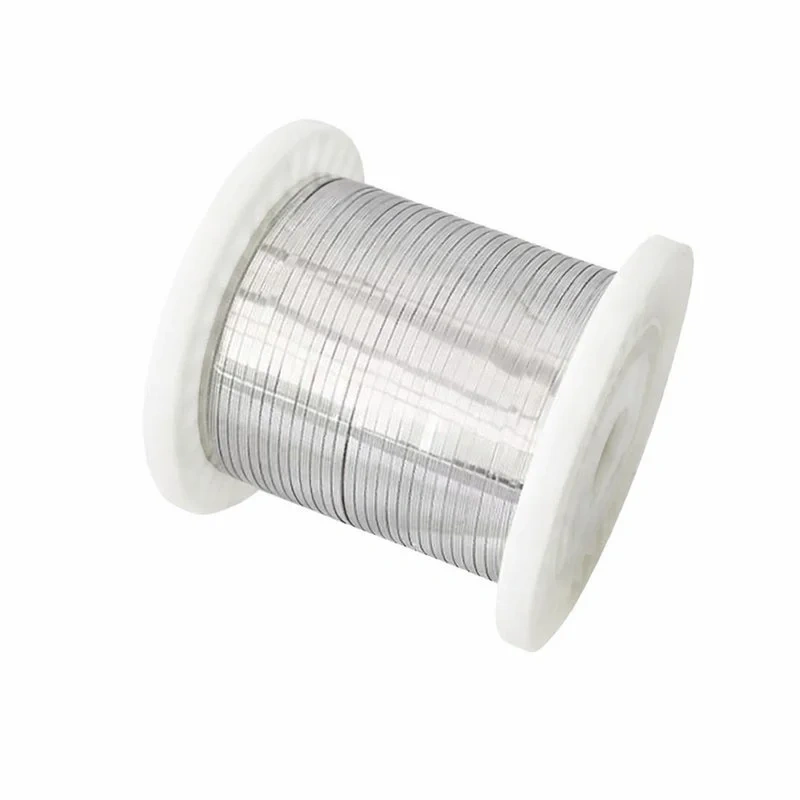
Flat resistance wire, also called ribbon wire, is manufactured as a flat strip rather than a round wire. Its larger contact surface improves heat dissipation, making it especially useful in compact designs where high power density is required in limited space.
Pure nickel wire (Nickel 200 and 201 grades, up to 99.9% purity) is not used as a primary resistive conductor but in applications where alkaline corrosion resistance, high thermal conductivity, and low electrical resistivity are the priority — see our pure round resistance wire datasheet for the full alloy and gauge breakdown.
How to choose the right gauge and alloy
Selecting a resistance wire should follow a logical order of priorities:
- Maximum working temperature of the heating element. Up to 1200 °C, Ni-Cr is usually sufficient and more cost-effective; above that, up to 1400 °C, Fe-Cr-Al becomes necessary.
- Process atmosphere. In environments with sulfur exposure or reducing atmospheres, each alloy behaves differently; chemical compatibility should be confirmed before finalizing the design.
- On/off cycling frequency. For heaters that switch on and off frequently, Ni-Cr generally performs better long-term thanks to its ductility and resistance to embrittlement.
- Required power and available space. Higher resistivity (Fe-Cr-Al) means fewer meters of wire are needed for the same wattage, which can be decisive in compact designs.
- Gauge (AWG or mm). A finer gauge increases resistance per meter but lowers the maximum allowable current; sizing should always start from the design wattage (W) and voltage (V), not just the available diameter.
Thermal behavior: resistance is not a fixed value
A common design mistake is assuming the wire's ohmic value stays constant. In reality, most metals increase in electrical resistance as they heat up (Temperature Coefficient of Resistance, TCR). This means that once the wire is powered on, its resistance rises and the actual current and wattage come in slightly lower than a cold calculation would suggest. Nichrome has a low temperature coefficient and therefore very stable behavior; Kanthal, by contrast, increases its resistance more noticeably near its thermal limits. For precision designs, power should be calculated from the hot resistance value, not a cold multimeter reading.
Reference table — resistance per meter (common gauges)
|
Gauge (mm)
|
Cr20Ni80 (NiCr) Ω/m
|
0Cr25Al5 (FeCrAl) Ω/m
|
|
1.024
|
1.32
|
1.72
|
|
0.644
|
3.35
|
4.36
|
|
0.405
|
8.46
|
11.02
|
|
0.255
|
21.34
|
27.80
|
Reference values; the full resistance wire datasheet lists the complete table by alloy and AWG gauge.
How to calculate the wattage of a heater
Sizing a heater means solving three interrelated unknowns: the target power (P, in watts), the supply voltage (V), and the required wire length (L). The base formulas are:
- Ohm's Law: V = I × R
- Power: P = V × I = V² / R = I² × R
- Resistance of a conductor: R = ρ × L / A (where ρ is the material's resistivity, L is length, and A is the wire's cross-sectional area)
Step-by-step calculation process:
- Define the target power (P) and voltage (V).
- Calculate the required total resistance: R = V² / P.
- Choose the alloy and gauge from the Ω/m table.
- Calculate the required wire length: L = R ÷ (Ω/m for the chosen gauge).
Worked example: for a 1000 W heater at 220 V, using Cr20Ni80 (Nichrome) wire at 0.644 mm (3.35 Ω/m):
- R = 220² ÷ 1000 = 48.4 Ω
- L = 48.4 ÷ 3.35 = 14.45 meters of wire
This calculation is based on cold resistance. As explained above, wire resistance rises as it heats up, so precision designs should apply a correction factor based on the chosen alloy's temperature coefficient, or validate a prototype before moving to series production.
Power density: how much wattage each gauge can handle
Beyond length, it's essential to respect the surface load (W/cm²) the wire can dissipate without overheating or shortening its service life. Wire exposed to open air dissipates heat less efficiently than wire embedded in MgO powder inside a metal tube, so the allowable limit varies by heater type:
- Open-air wire (exposed heaters, toaster-style): typically 2-3 W/cm² as a reference.
- Wire embedded in MgO (tubular/sheathed heaters): can handle higher loads thanks to the packing's better thermal conductivity, provided the MgO powder compaction is done correctly.
- Wire wound on mica or ceramic supports: depends on the support thickness and the final design's ventilation.
These values are indicative and vary by manufacturer, alloy grade, and the dissipation conditions of the specific design. Exceeding the recommended surface load is the most common cause of premature hot-spot failure, even when the overall wattage calculation is correct.
Resistance wire within the complete heater system
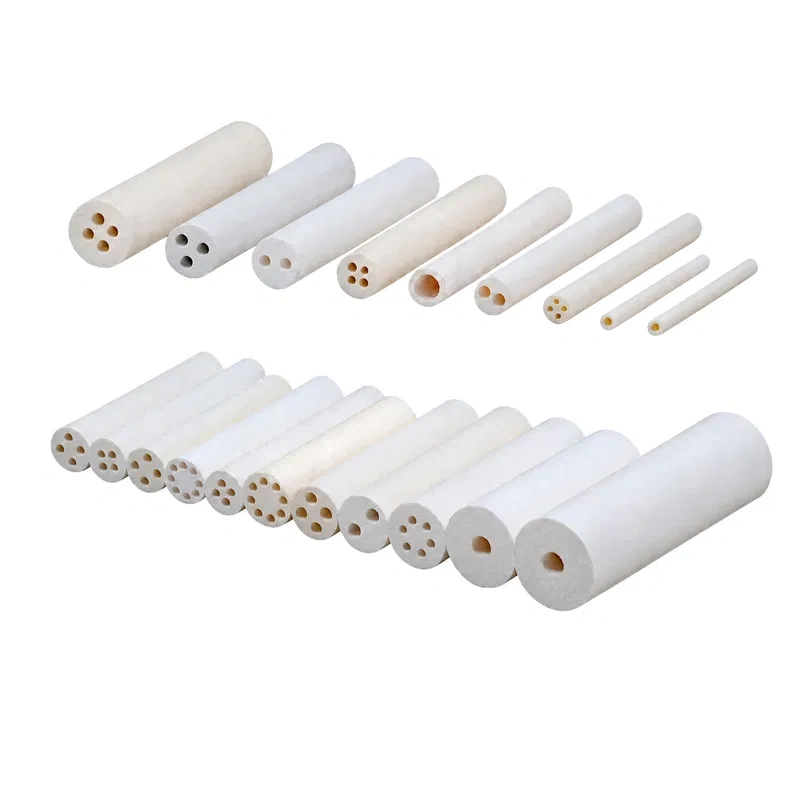
The wire never works in isolation. In a conventional tubular heater, it's coiled and centered inside a metal tube, surrounded by magnesium oxide (MgO) powder, which acts as an electrical insulator and thermal conductor. In ceramic and band heaters, the wire is typically wound around mica supports or technical ceramic cores, both of which insulate electrically without compromising heat transfer.
Industrial applications of resistance wire
- High-temperature industrial furnaces: Fe-Cr-Al (Kanthal), for higher service temperature and longer life in oxidizing atmospheres.
- Household appliances (toasters, dryers, water heaters): Ni-Cr 80/20, for its ductility and resistance to on/off cycling.
- Sheathed tubular heaters: Ni-Cr, for its mechanical stability inside MgO packing.
- Ceramic and glass furnaces: Fe-Cr-Al, for its resistance to corrosive atmospheres and extreme temperatures.
- Cutting and sealing elements (bag sealers): Ni-Cr, for its combination of mechanical strength and flexibility.
At Heatecx we supply NiCr, Kanthal, pure nickel, and flat resistance wire for every type of industrial and household electric heater. If you're unsure which alloy and gauge best suit your heating element, our technical team can advise based on operating temperature, required wattage, and environment.