Spiral Silicon Carbide Heating Element for Industrial Furnaces
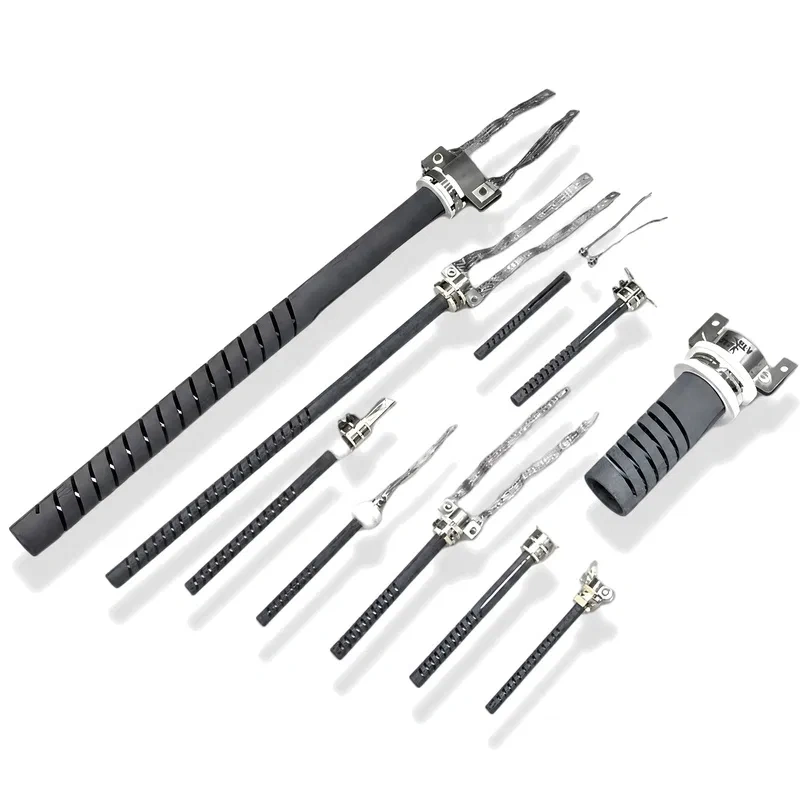
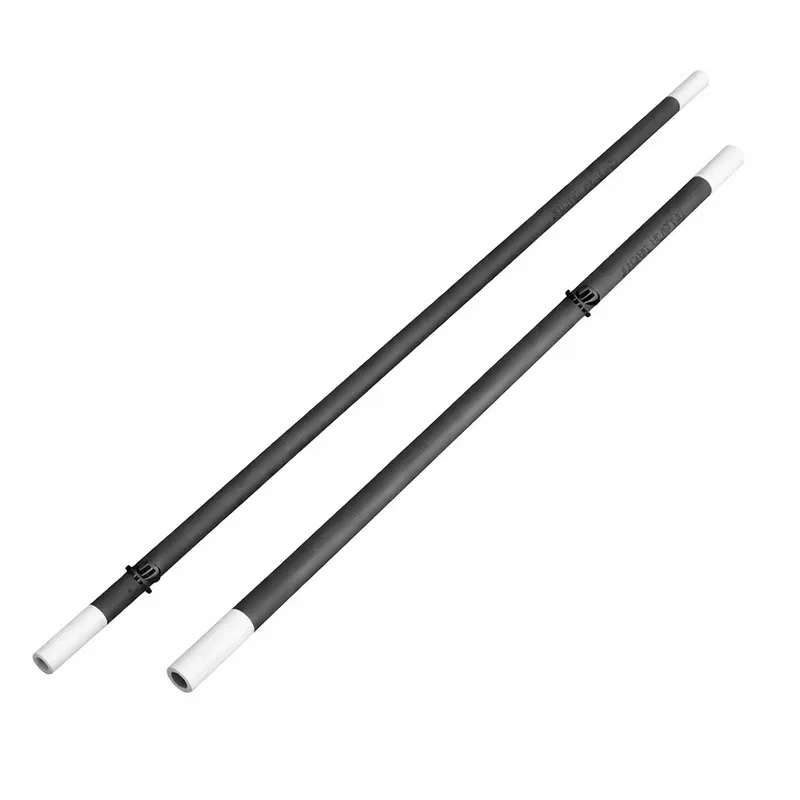
A silicon carbide (SiC) heating element is a non-metallic ceramic heater designed to generate heat inside industrial furnaces and high-temperature thermal-processing equipment. Unlike a conventional metallic resistance made from wire or alloy ribbon, a SiC element uses a ceramic semiconductor body. The active section may be manufactured as a straight rod, spiral-cut element, double-spiral element, spiral-type element or another geometry matched to the furnace.
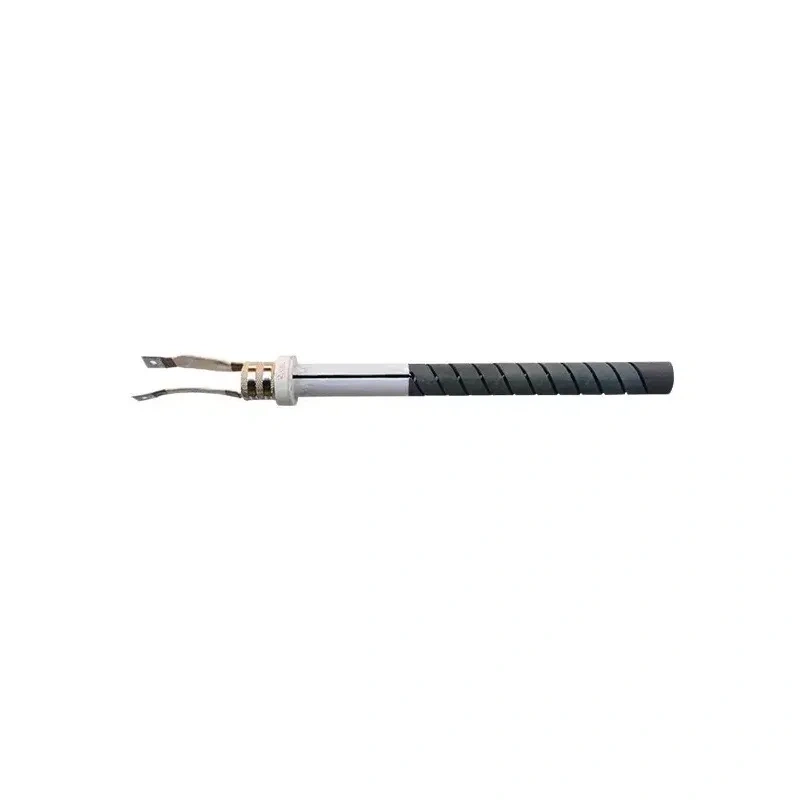
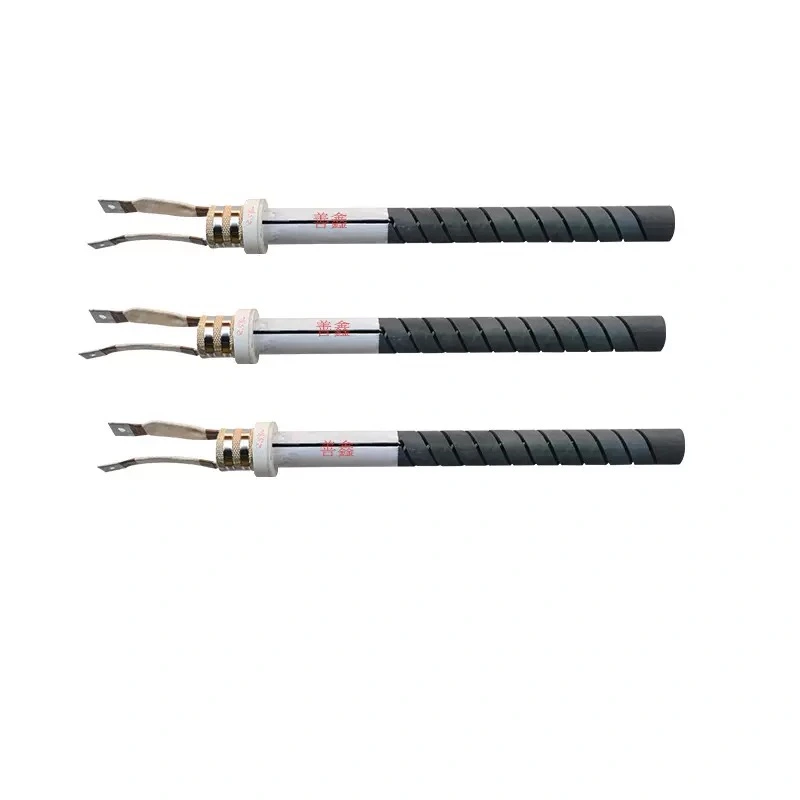
A spiral-cut design increases the effective electrical path within a compact external length. This can help fit a longer hot zone into a restricted furnace chamber, but the final geometry must be selected from the furnace drawing and process data. “Double spiral”, “spiral-cut”, “same-end terminal” and “single-ended” are not interchangeable catalogue terms.
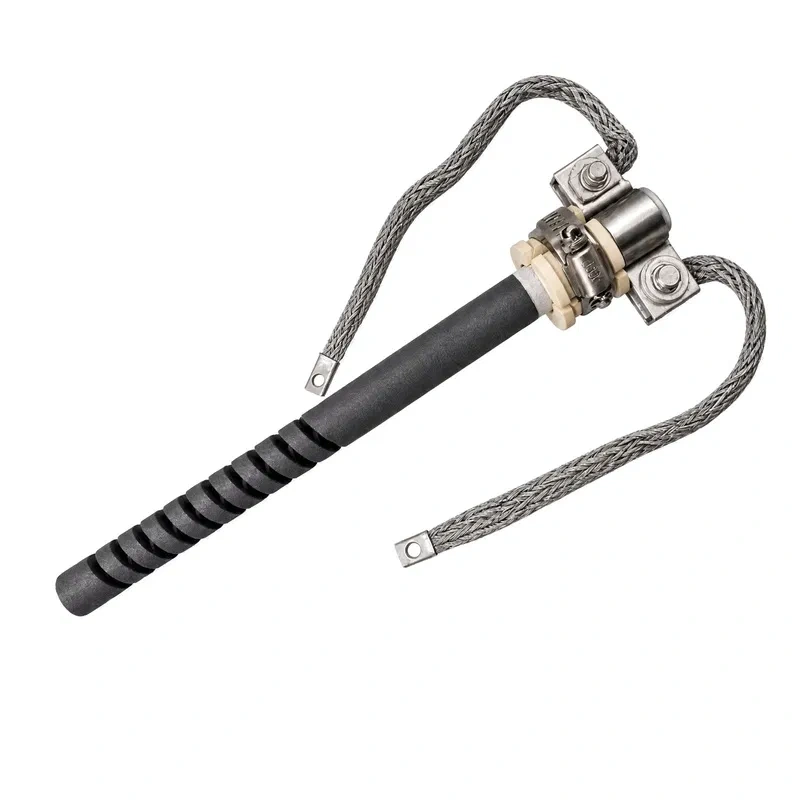
A SiC heating element is part of a complete heating system. The system can also include a power supply, SCR power controller, aluminium braid, clamps, insulators, supports and furnace-wall penetrations. Correct selection therefore requires the outside diameter, overall length, hot-zone length, cold-end lengths, nominal resistance, voltage, power, atmosphere, mounting orientation and operating cycle.
This silicon carbide furnace heating element is intended for furnace builders, industrial maintenance teams, process engineers and plants that require a non-metallic heat source for heat treatment, sintering, ceramics, glass, metallurgy, melting or other high-temperature processes. A spiral-type construction may be considered where the available space, terminal arrangement or required heated length makes a conventional straight element unsuitable.
The final selection should be made by technical quotation rather than by a generic product name. Provide the furnace type, process temperature range, chamber dimensions, element geometry, hot-zone and cold-end lengths, voltage, phases, power or resistance target, atmosphere, mounting position, quantity and operating conditions.
|
Application |
Typical process requirement |
Selection focus |
|
Heat-treatment furnaces |
Controlled heating of metal or ceramic loads |
Thermal cycle, atmosphere, uniformity and power control |
|
Sintering furnaces |
Long high-temperature cycles |
Vapours, powders, load density and contamination control |
|
Ceramic kilns |
Firing, calcination and maturation |
Chamber geometry, load distance and thermal uniformity |
|
Glass furnaces |
Melting, forming or glass conditioning |
Chemical exposure, zone control and temperature stability |
|
Crucible furnaces |
Melting metals and alloys |
Radiant heat, clearances, supports and terminal protection |
|
Rotary kilns |
Uniform heating in a rotating process |
Vibration, expansion and mounting stability |
|
Metallurgical equipment |
Annealing, tempering, alloying or thermal treatment |
Power density, atmosphere and duty cycle |
|
Replacement projects |
Replacing worn or failed elements |
Matching dimensions, resistance, terminals and controller |
Technical features
•Non-metallic ceramic construction based on silicon carbide.
•Spiral or double-spiral geometry where confirmed by the selected drawing.
•Defined hot zone and cold ends for the relevant element construction.
•Temperature-dependent electrical behaviour that requires suitable power control.
•Configurable dimensions and resistance when custom manufacture is available.
•Compatibility with industrial furnace designs when clearances and electrical data are matched.
Potential benefits
•Suitable for demanding industrial heating processes.
•Compact active length in spiral-cut configurations.
•Strong thermal-shock and chemical-stability potential in suitable atmospheres.
•Reduced unplanned maintenance when the element is correctly selected and operated.
•Integration with SCR power control where the electrical design confirms compatibility.

|
Parameter |
Specification |
Technical basis |
|
Material |
Silicon carbide (SiC) |
Silicon carbide ceramic material |
|
Element type |
Single spiral, double spiral or exact catalogue type |
Defined by the selected reference and furnace design |
|
Outside diameter |
mm |
Specified by the selected reference |
|
Overall length |
mm |
Specified by the selected reference |
|
Hot-zone length |
mm |
Specified by the selected reference |
|
Cold-end length |
mm per end |
Specified by the selected reference |
|
Electrical resistance |
Ohms and measurement condition |
Specified by the selected reference |
|
Rated voltage |
V |
Specified by the selected reference |
|
Rated power |
W or kW |
Specified by the selected reference |
|
Rated current |
A |
Determined from |
|
Terminal configuration |
Same-end, both-end, side terminal or other |
Specified by the selected reference |
|
Furnace atmosphere |
Oxidising, inert, reducing or specified gas |
Selected for the process atmosphere |
|
Mounting |
Horizontal, vertical or drawing-specific |
Selected for the furnace architecture |
|
Service temperature |
Design- and load-dependent |
Established for each design and loading condition |
|
Accessories |
Aluminium braid, clamps, insulators and supports |
Supplied according to the selected configuration |
|
Customisation |
Drawing-based dimensions and resistance |
Available according to the requested drawing and configuration |
Heatecx’s SiC category presents the product family for industrial furnaces and includes a family-level reference to temperatures up to 1625°C. The service value is determined by the selected design, loading and atmosphere. The same category explains that SiC resistance changes through service ageing and that the power system must allow for this behaviour. Read the technical SiC family page for technical context.
|
Configuration |
Typical strength |
Main caution |
Suitable investigation |
|
Double spiral |
Compact effective electrical length and possible same-end arrangement |
SCR terminology and terminal layout is defined |
Space-limited chambers and special terminal requirements |
|
Single spiral |
Flexible heated length in a compact body |
Electrical and mechanical layout may differ from double spiral |
Compact furnace chambers |
|
Straight rod |
Simple geometry and straightforward dimensional matching |
May require two wall penetrations and more linear space |
Furnaces with straight-element access |
|
U/L angle |
Useful for angular furnace layouts and selected replacements |
Not interchangeable with spiral |
Crucible and rotary furnace designs |
|
H-type |
May provide a single-end arrangement and dual heating zone |
Exact construction and application is defined |
Rotary and selected glass-furnace applications |
|
Double heating zone |
Independent thermal sections may be controlled separately |
More complex electrical architecture |
Glass processes with separate channels |
|
NiCr or FeCrAl metallic element |
Familiar electrical behaviour and broad availability |
Oxidation, deformation and temperature limits may apply |
Lower-temperature or metallic-wire-compatible systems |
|
MoSi₂ element |
Very high-temperature capability in suitable furnaces |
Cost, brittleness and start-up requirements |
Dedicated high-temperature furnace designs |
FAQ
What is a spiral-type silicon carbide (SiC) heating element?
A spiral-type silicon carbide (SiC) heating element is a high-density ceramic resistor used for extreme temperature electric heating applications. The defining feature of the SCR configuration is that it has all electrical terminals on a single end. This design allows for single-hole installation, greatly simplifies furnace wiring, and minimizes thermal losses compared to double-ended rods.