Industrial Annealing Machines
what they are and how they work
Annealing machines — sometimes referred to as heat-softening or tempering equipment — are industrial systems designed to restore ductility to metal that has become work-hardened during cold-forming. In the manufacturing of tubular electric heating elements, metal tubing and wire/cable, this hardening is a normal side effect of processes such as swaging (diameter reduction), rolling, wire drawing, or pre-bending.
The underlying physics is the same across all of them, though the way it's applied differs by machine: the metal is heated above its recrystallization temperature for a controlled period, then cooled gradually or in a controlled manner. This reorganizes the internal grain structure, releases stresses built up during cold-forming, and restores the workable ductility the metal needs for the next stage — without the risk of microfractures, cracking, or structural weakness at bend points.
Our catalog covers this with three distinct heating technologies, each handled by a dedicated machine:
|
Technology
|
Physical principle
|
Equipment
|
|
Short-circuit (resistive) annealing
|
The metal itself acts as the resistive load for a low-voltage, high-amperage DC current, generating heat via the Joule effect along the entire piece.
|
RT-01 (tubes/heating elements), RT-04 (copper wire)
|
|
High-frequency induction annealing
|
A coil generates an electromagnetic field that induces eddy currents inside the metal, heating it from within with no physical contact.
|
RT-02 (large-diameter tubing), RT-03 (multi-purpose)
|
|
In-line wire drawing + annealing
|
Combines mechanical wire drawing with a short-circuit annealing module installed immediately after, in a single continuous line.
|
RT-04
|
Annealing vs. tempering vs. normalizing: avoiding the mix-up
These terms get confused often, and the distinction matters because it directly affects which machine you need:
- Annealing: softens the metal through controlled heating followed by slow cooling. This is almost always what's needed in heater, tube, and cable manufacturing, since the goal is to prepare the material for further forming (bending, diameter reduction, extrusion) — not to harden it.
- Tempering (quenching): does the opposite — hardens the material through rapid cooling right after heating. Used on parts that need surface hardness, such as gears or cutting tools.
- Normalizing: a middle-ground treatment with air cooling that homogenizes the grain structure without softening as much as a full anneal.
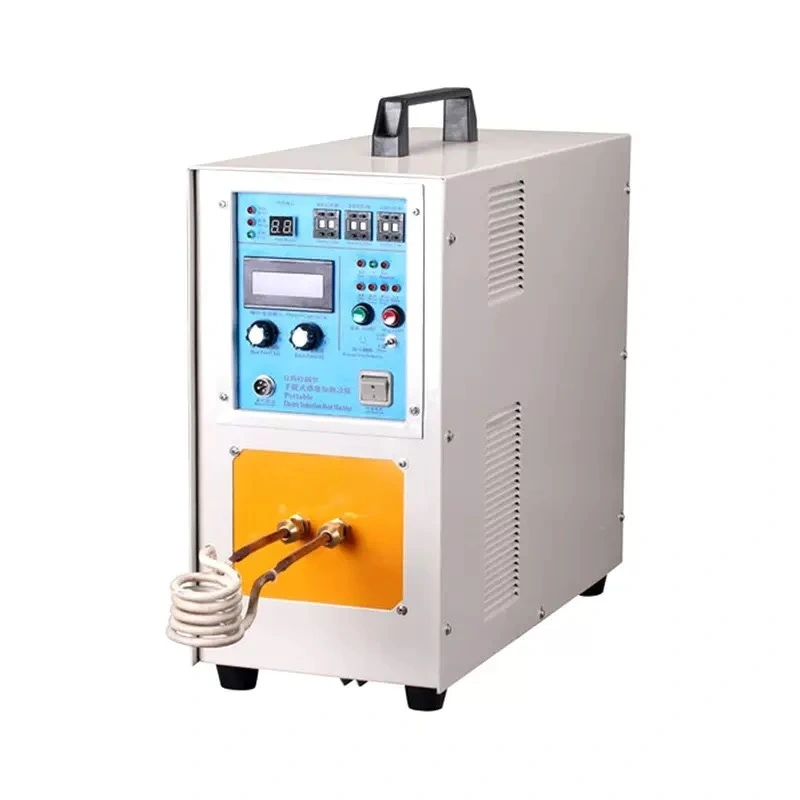
Interestingly, the same high-frequency induction technology (like our RT-03) can be used for either annealing or tempering — the only thing that changes is the cooling cycle programmed after heating. That's why it's worth defining the metallurgical result you need before choosing the equipment.
Types of annealing machines in our catalog
RT-01 — Tubular Heater Annealing Machine (short-circuit annealing)
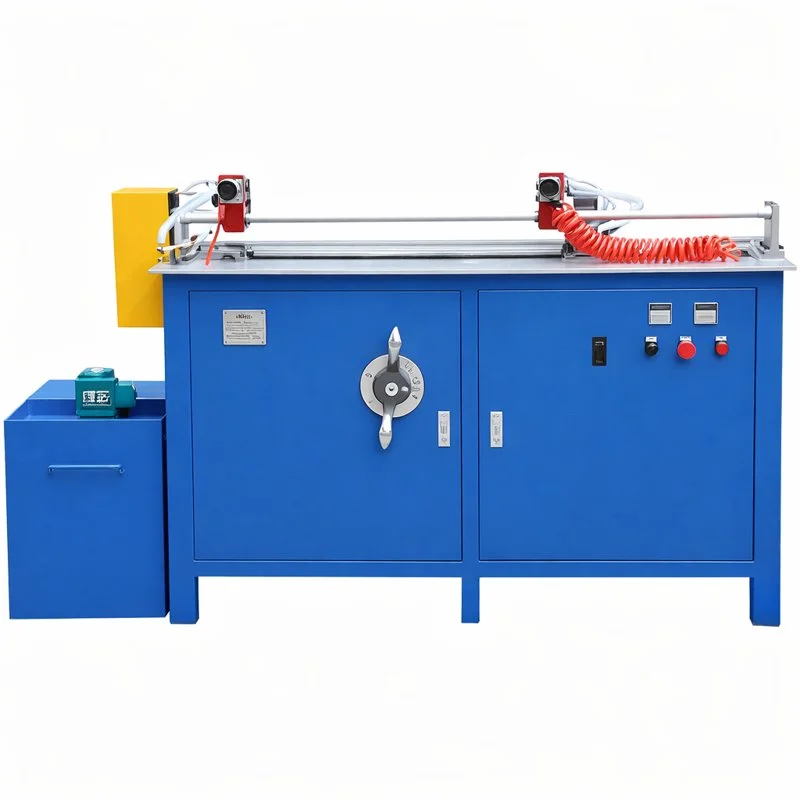
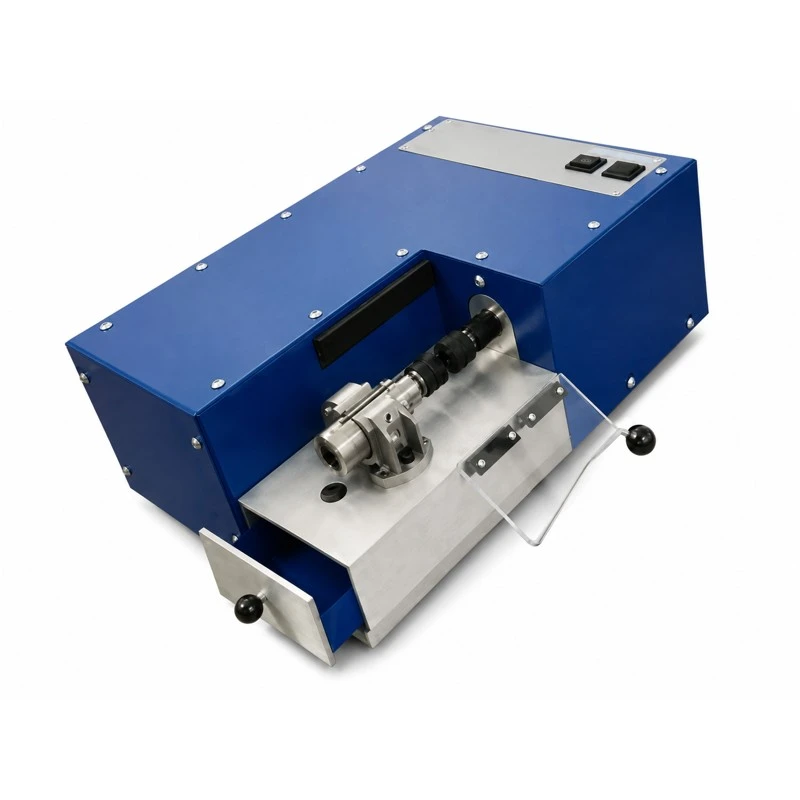
Purpose-built for annealing tubular heating elements and other metal components using real-time temperature control rather than a fixed time cycle, which makes it immune to variations in wall thickness or material. It features two pairs of adjustable electrodes, PLC control, and foot-pedal activation, allowing for localized or full-length annealing.
- Rated power: 40 KW | Supply: two-phase 380V/50Hz
- Tube diameter: Φ5–Φ20 mm | Tube length: 100–1500 mm
- Reference temperatures: 740 °C (copper) / 1200 °C (stainless steel/Incoloy)
- Cooling: 7.6 L/min water | Air supply: 5–7 kg/cm²
- Dimensions: 1500×600×1500 mm | Weight: 500 kg
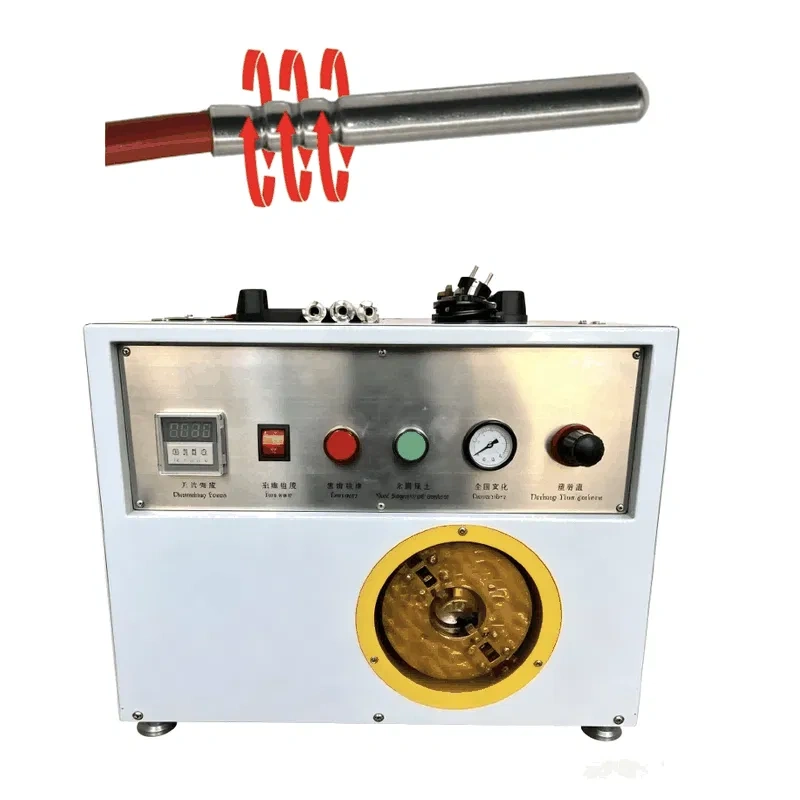
RT-02 — High-Frequency Annealing Machine (induction for tubing)
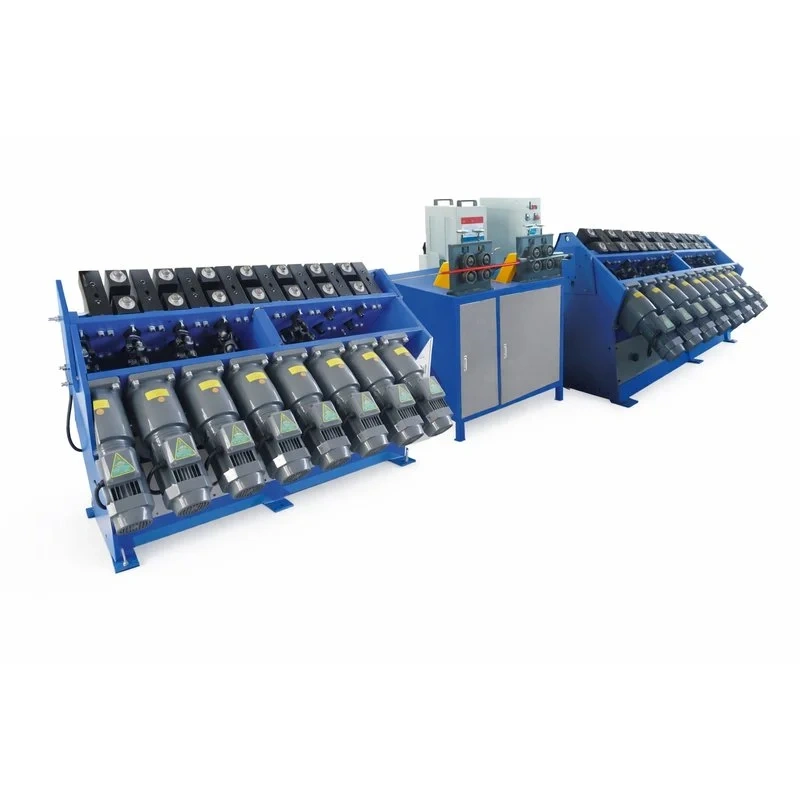
Built for tube swaging of large-diameter electrical heating element tubing, where the material reaches its mechanical compression limit and needs localized softening before further diameter reduction or bending. It generates heat through electromagnetic induction (eddy currents) directly inside the workpiece, allowing for very localized, energy-efficient annealing.
- Power: 35–45 KW | Voltage: three-phase 380V
- Air supply: 0.6 MPa | Water-cooled circuit (IGBTs and induction coils)
- Dimensions: 1700×1200×1650 mm | Weight: 300 kg
RT-03 — High-Frequency Induction Heating Machine (multi-purpose)
A broader-purpose induction system: beyond annealing, it also covers melting and casting, industrial forging, interference-fit thermal assembly, hot forming, and tempering. Available in 7 power configurations (15 to 80 KW) and in integrated or "split" versions (induction head separate from the power source), making it especially versatile for workshops handling multiple heat-treatment needs.
|
Model
|
Power
|
Voltage
|
Output current
|
|
RT03-15A
|
15 KW
|
220V/110V (1-phase)
|
200–600 A
|
|
RT03-25A
|
25 KW
|
380V (3-phase)
|
200–1200 A
|
|
RT03-40AB
|
40 KW
|
380V (3-phase)
|
400–1800 A
|
|
RT03-60AB
|
60 KW
|
380V (3-phase)
|
—
|
|
RT03-80AB
|
80 KW
|
380V (3-phase)
|
400–3200 A
|
RT-04 — Fine Wire Drawing and Continuous Annealing Machine
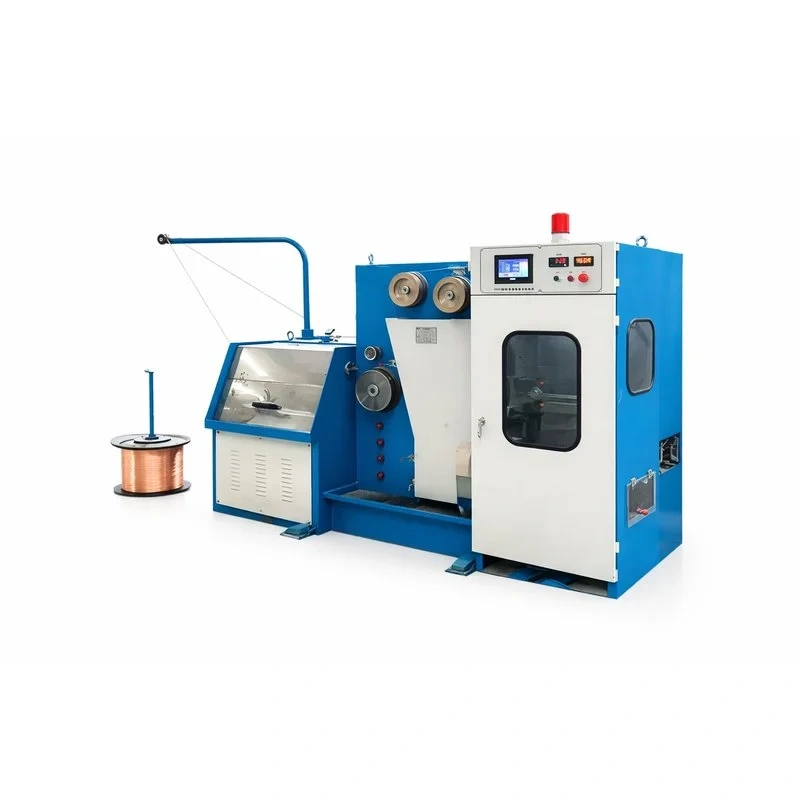
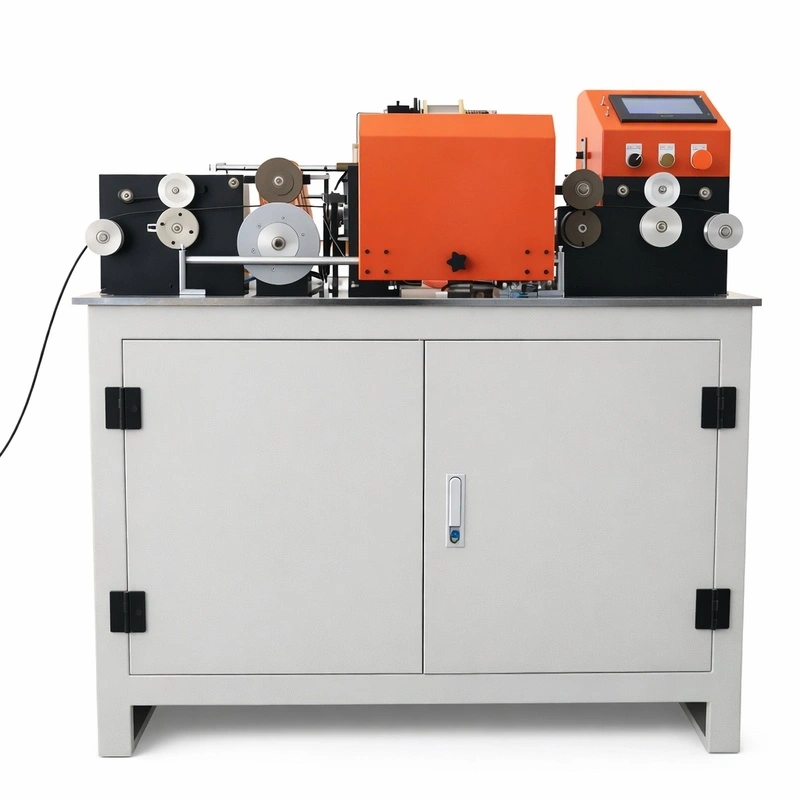
An integrated system combining continuous copper wire drawing with in-line short-circuit annealing, typically installed between the drawing machine and the extruder for an uninterrupted workflow. It transforms input copper wire into soft, annealed wire ready for extrusion or coating, with steam-atmosphere protection to prevent surface oxidation.
- Input diameter: Φ0.5–Φ1.2 mm → Output diameter: Φ0.10–Φ0.40 mm
- Maximum line speed: 2000 m/min | Up to 24 drawing dies
- Annealing voltage/current: DC 0–60V / DC 0–300A | Protection: steam atmosphere
- Main motor: 15 KW | Take-up motor: 3.7 KW | Weight: 2800 kg
Which one do you need? Quick reference
|
If you need to...
|
Recommended machine
|
|
Soften small/medium-diameter tubular heating elements before CNC bending
|
RT-01
|
|
Anneal large-diameter tubing in intensive swaging processes
|
RT-02
|
|
A multi-purpose solution for annealing, tempering, forging, or melting in the same shop
|
RT-03
|
|
Anneal copper wire in-line, integrated with drawing, before extrusion/coating
|
RT-04
|
How annealing fits into the full production line
Annealing is rarely a standalone process — its position in the line determines which machine you need:
- Tubular heating element manufacturing: tube → MgO filling → rolling/swaging (diameter reduction) → annealing (RT-01 or RT-02) → CNC bending → cutting and finishing. Skipping annealing at this stage is the most common cause of invisible microfractures that later show up at bend points.
- Copper wire and cable manufacturing: input copper wire → wire drawing (diameter reduction by stretching) → in-line annealing (RT-04) → insulation extrusion or coating → take-up winding.
- General metal heat treatment: being multi-purpose, the RT-03 can anneal, temper, or heat for forging depending on the thermal cycle programmed, making it useful outside a linear production line — as a flexible workshop unit for multiple processes.
Industrial applications
- Tubular and cartridge heater manufacturing: pre-bending annealing to prevent microfractures at bend points and preserve tube integrity after magnesium oxide (MgO) filling.
- Wire and electrical conductor manufacturing: in-line annealing of copper wire immediately before extrusion or coating, ensuring optimal flexibility and conductivity.
- Automotive industry: annealing of copper cord for automotive wiring, where conductor flexibility is a demanding technical requirement.
- General metalworking: treatment of stainless steel vessels, steel cables, reinforcement bars, and component ends (a typical RT-03 application).
- Forging and hot forming: induction heating prior to forging of bolts, bars, and parts requiring elevated temperature before mechanical forming.
- Quality assurance on high-volume lines: integrating annealing modules to avoid downtime and keep production flowing continuously.
Maintenance and best practices by machine type
- Induction equipment (RT-02, RT-03): periodic inspection of the water-cooling circuit (ideally demineralized water, 20–35 °C inlet), checking coil insulation to prevent electrical arcing, and verifying three-phase connection torque every 6 months.
- Short-circuit equipment (RT-01, RT-04's annealing module): checking temperature-control calibration (not time-based), cleaning electrodes/conductive pulleys, and verifying the protective atmosphere (steam) where applicable, to prevent surface oxidation of the annealed metal.
- General: maintain a stable compressed-air supply (free of moisture and oil) on equipment that requires it, and document the temperature parameters used per material (copper, stainless steel, Incoloy) to ensure repeatability between batches.
Why choose Heatecx
- Direct manufacturer, not a reseller: we design and build our own machinery for the electrical heating element, tubing, and cable industry, which means competitive pricing and direct technical support with no intermediaries.
- Specialized catalog, not a one-size-fits-all approach: under "annealing" we don't offer a single universal machine, but 4 pieces of equipment built on different technologies (short-circuit, induction, multi-purpose, and in-line wire drawing), because each stage of the production process calls for a different approach.
- Full-process expertise: we understand how annealing fits with MgO filling, rolling/swaging, CNC bending, and wire drawing, because we manufacture that equipment too — so we can recommend the most efficient complete line configuration, not just a single machine.
- Technical support in English, Spanish, and Portuguese: our engineering team handles technical inquiries and machine customization requests (voltage, spool dimensions, PLC integration, etc.) directly.
- Industrial customization: parameters like voltage, power, spool size, or control configuration can be adapted to your plant's standards.