In the complex ecosystem of industrial heating, the configuration of electric heaters is not merely a wiring issue but a strategic engineering decision that directly impacts operational efficiency, equipment longevity, and process profitability. Heatecx Limited, a global leader in manufacturing high-precision industrial heaters and advanced thermal solutions, presents this comprehensive guide designed to delve into the practical implications of series and parallel connections, eliminating mathematical complexity to focus on the operational and design concepts that truly matter on the plant floor.
I. The Architecture of Series Connection: Control and Limitation
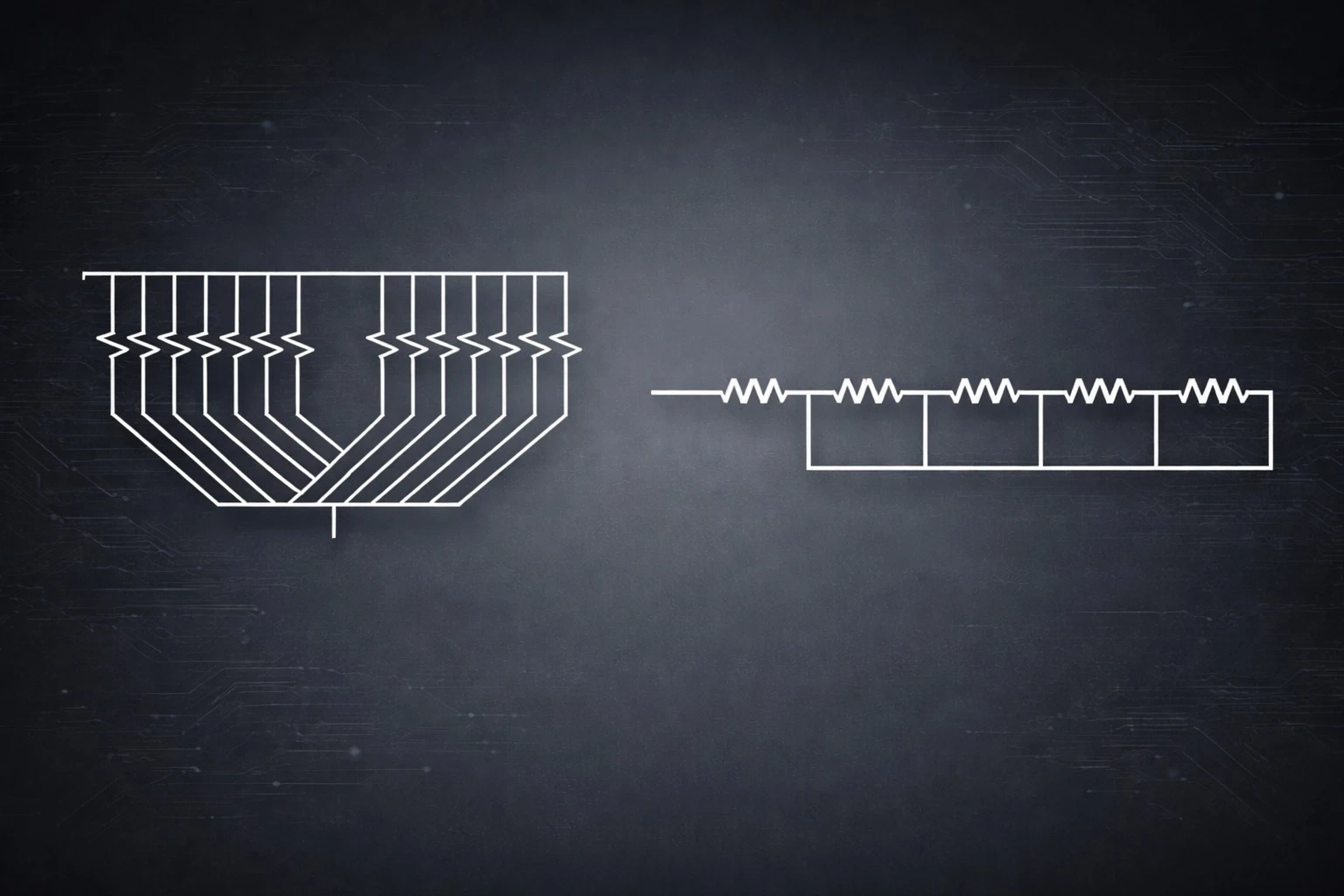
The series connection is defined by a sequential arrangement where energy flows through each electric heater one after the other. In operational terms, this configuration creates total interdependence between components. As a single path, any alteration at one point in the circuit inevitably affects the rest, giving this configuration unique control and limitation properties.
Operational Dynamics and Current Control
In a series system, the current intensity remains constant throughout the entire path. This characteristic is fundamental when the primary objective is to protect precision heating elements from current surges that could compromise their structural integrity. Acting as a natural limiter, the series connection allows for more conservative energy management, ideal for processes requiring gradual heating or where current stability is more critical than raw power.
The Challenge of Operational Continuity
The main vulnerability of this architecture lies in its lack of redundancy. If a single tubular heater or flat heater suffers a failure that interrupts the circuit, the entire heating system will cease operation. In continuous production environments, this “single point of failure” can represent a significant downtime risk. Therefore, at Heatecx Limited, we recommend this configuration primarily for control systems, voltage dividers, or applications where safety through interruption is a desired design feature.
II. The Power of Parallel Connection: Redundancy and Maximum Performance
Unlike the series connection, the parallel connection offers multiple paths for energy flow. Each industrial heater connects independently to the power source, ensuring all operate under the same electrical potential. This independence is the cornerstone of high-power efficient industrial heating systems.
Reliability and Redundancy in Critical Processes
The most evident competitive advantage of the parallel connection is its ability to maintain operation despite individual failures. If a heater on one parallel branch reaches the end of its service life or fails prematurely, the other branches continue to dissipate heat without interruption. This redundancy is vital in applications such as industrial furnaces, immersion systems, or thermoforming processes, where a total temperature drop could ruin entire production batches.
Uniform Distribution and Thermal Load Optimization
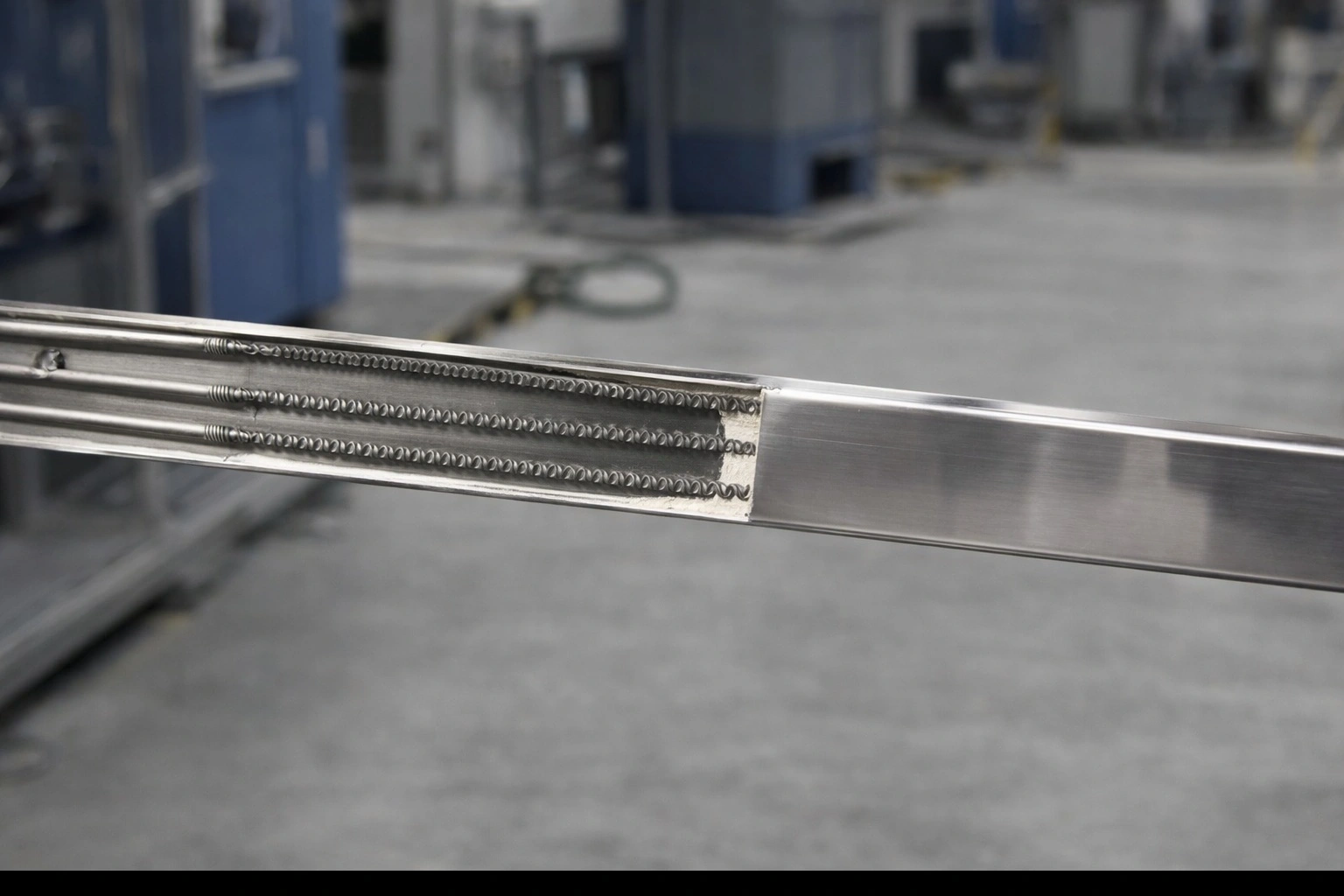
By ensuring that each element receives the full nominal voltage, the parallel connection facilitates uniform heating over large surfaces or volumes. This allows plant engineers to design heat zones with millimeter precision, ensuring no cold spots affect final product quality. At Heatecx Limited, our tubular heaters and MoSi2 heaters are optimized to perform at their maximum in these configurations, enabling thermal load optimization that maximizes heat transfer to the process medium.
III. Mixed Circuits: The Synergy of Advanced Engineering
In practice, the most sophisticated systems in thermal engineering often employ mixed configurations. These combine groups of heaters in series, which are then interconnected in parallel. This approach allows designers to balance the need for current control with the demand for high power and redundancy. It is a compromise solution that allows adjusting the total system impedance to perfectly match the capabilities of the power source and the requirements of industrial temperature control.
IV. Industrial Applications and Heatecx Limited Selection Criteria
The choice of the appropriate configuration depends on a rigorous assessment of process objectives. At Heatecx Limited, we work closely with our clients to determine the optimal architecture based on purely operational and performance criteria.
Fluid and Gas Heating
In immersion heaters and flow systems, the parallel connection is usually the standard. The need to transfer large amounts of energy quickly and safely demands that each immersion heater operates at its maximum capacity. Furthermore, the ease of maintenance in these configurations allows replacing individual elements without redesigning the entire electrical system.
High-Temperature Processes and Furnaces
For applications using MoSi2 heaters or ceramic elements in high-temperature furnaces, the configuration must consider thermal expansion and changes in the material’s resistivity with temperature. Here, mixed configurations often offer the best balance, allowing for safe system startup and stable operation at extreme temperatures, ensuring precise and reliable industrial temperature control.
V. Safety, Maintenance, and Energy Efficiency
Beyond the electrical connection, system integrity depends on a holistic vision that includes safety and preventive maintenance.
Risk Management and Protections
In parallel configurations, it is imperative to have individual protection devices for each branch. This prevents a failure in one element from overloading the rest of the system or causing damage to the main wiring. Electrical safety is a non-negotiable priority in all designs incorporating Heatecx Limited products.
The Role of Magnesium Oxide (MgO) and Material Quality
The efficiency of any connection, whether series or parallel, is intrinsically linked to the quality of the internal materials of the heater. The use of high-purity magnesium oxide (MgO) in tubular heaters ensures superior electrical insulation and exceptional thermal conductivity. This minimizes energy losses and ensures that the chosen electrical configuration effectively translates into useful process heat.
Conclusion: Informed Choice as a Competitive Advantage
Understanding the operational and practical implications of series and parallel connections allows plant managers to make decisions that transcend the technical to impact the economic. While series offers simplicity and control, parallel provides power and reliability. The correct choice, backed by Heatecx Limited’s industrial heater technology, guarantees a robust, efficient heating system ready for the challenges of modern industry.
Are you looking to optimize the thermal configuration of your plant? At Heatecx Limited, we don’t just manufacture components; we design custom thermal engineering solutions. Contact our team of experts for personalized advice on how your heater configuration can transform your production efficiency.
Intellectual Property and Copyright (Heatecx Limited)
This document is the exclusive intellectual property of Heatecx Limited. Copying, reproduction, distribution, or multiplication in whole or in part is strictly prohibited without the express written consent of Heatecx Limited. All rights reserved.