Introduction: The Silent Revolution of Electric Heating
The electric heater industry is on the verge of an unprecedented transformation, driven by global megatrends such as decarbonization, the digitalization of heat systems, and miniaturization. As the world advances towards a cleaner energy transition, the demand for high-efficiency electric heating solutions is soaring, positioning electric heaters as crucial components in a sustainable future. This article will explore in depth the pillars that will define the course of this sector between 2025 and 2035, from the exponential market growth to innovations in materials and the critical applications that are redefining entire industries.
The urgency to reduce carbon emissions has catalyzed a fundamental change in the way industries and households generate heat. Fossil combustion processes are being systematically replaced by high-efficiency electric systems, a trend backed by global initiatives like the UNDP Climate Promise. This change not only responds to environmental imperatives but also offers significant operational advantages, such as lower maintenance and greater reliability. High-efficiency electric heating is not just an alternative, but the cornerstone of a cleaner, more efficient energy future.
1. Market Growth and Electrification: An Inevitable Drive
The global market for electric heating elements is experiencing notable growth, with projections placing it at $12,208 million by the end of 2025. This growth is a direct reflection of the increasing demand for cleaner industrial processes and the unstoppable expansion of consumer electronics. Electrification is not just an option, but a strategic necessity for industries seeking to optimize their operations and comply with strict environmental regulations.
Industrial Decarbonization: Farewell to Fossil Fuels
One of the most powerful drivers of this growth is industrial decarbonization. The replacement of traditional gas-fired furnaces with industrial electric furnaces is a rising trend. “All-electric” systems offer compelling advantages: they are easier to maintain, reduce operational complexity, and, crucially, align with new environmental regulations that penalize carbon emissions. Companies like Wattco highlight the efficiency and sustainability of these solutions, which not only minimize environmental impact but also optimize long-term operating costs.
The 2025-2035 energy transition implies a deep reconfiguration of global energy infrastructure. The growth in electricity demand is projected at 40% by 2035, according to MIT experts, driven by population growth and economic expansion. This scenario underscores the critical importance of electric heaters as fundamental components in the efficient generation and distribution of heat in an increasingly electrified world.
2. Material Innovation and Efficiency: The Quest for Thermal Perfection
The efficiency and performance of electric heaters are being revolutionized by material innovation. Research and development are focused on creating composites that not only improve thermal conductivity but also offer greater durability and resistance in demanding operating environments. The goal is clear: to transform almost all electrical energy into useful heat, minimizing losses and maximizing energy savings.
Advanced Ceramics and Graphene: The Vanguard of Thermal Conduction
The integration of advanced ceramics with cutting-edge materials like graphene is opening new frontiers in heater design. Ceramic coatings and materials, often enriched with white graphene (hexagonal boron nitride), are being developed that exhibit superior thermal conductivity and greater mechanical strength. This combination allows heaters to heat faster and more uniformly, translating into a significant reduction in energy waste and an improvement in operational stability. The ability of these materials to withstand extreme temperature and humidity conditions makes them ideal for critical and high-precision industrial applications.
Research on materials like graphene and advanced ceramics is not limited to heat resistance but also addresses durability. Recent studies demonstrate that adding white graphene to zirconia ceramic notably improves its aging resistance, even in humid conditions, which is crucial for component longevity. This material innovation is fundamental for the development of more robust and efficient industrial electric heaters.
Near 100% Efficiency: The Energy Ideal
The goal of near 100% efficiency in converting electrical energy to heat is increasingly close to reality. New heaters for radiant and convection panels are designed to maximize the properties of materials with high thermal retention capacity. This not only optimizes energy consumption but also allows for more homogeneous and controlled heat distribution. Energy efficiency in heating is a key factor for sustainability and operational cost reduction, and innovations in this field are a fundamental pillar for the industry’s future.
3. Smart Heating and Connectivity (IoT): The Era of Predictive Efficiency
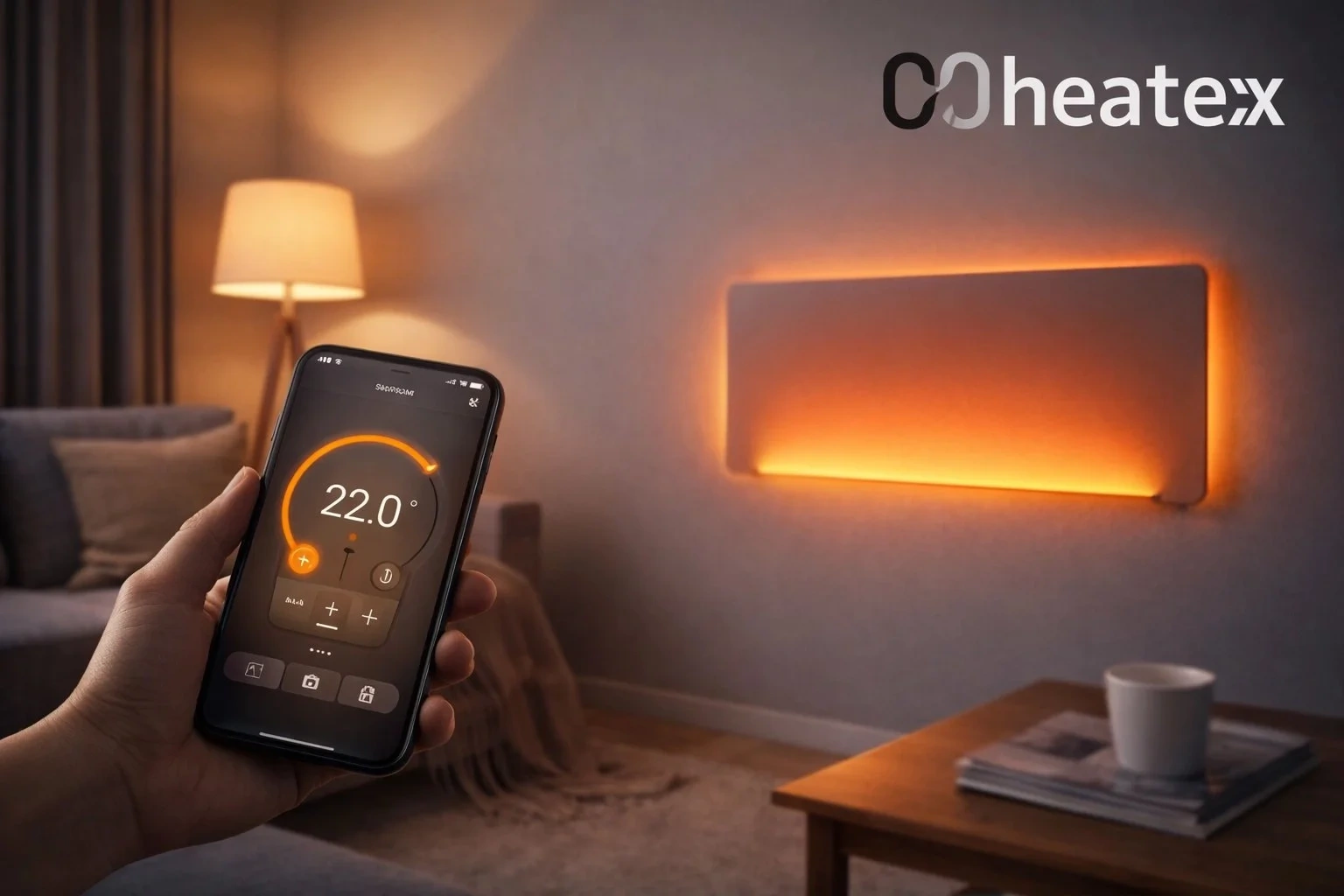
The integration of artificial intelligence (AI) and the Internet of Things (IoT) is transforming electric heaters from passive components into smart, proactive heating systems. The digitalization of heat systems allows for unprecedented energy management, optimizing performance and anticipating needs and potential failures. This evolution towards smart heating is a fundamental pillar for efficiency and sustainability in the future.
Predictive Systems: Anticipating the Future of Heat
By 2025, the integration of AI and Machine Learning into heating systems will allow for dynamic adjustment of heater performance. These systems will be capable of analyzing occupancy patterns, environmental conditions, and historical data to optimize energy consumption. The ability to predict failures before they occur not only improves reliability and safety but also reduces maintenance costs and prolongs equipment lifespan. Predictive maintenance of heat systems thus becomes an essential tool for efficient energy management.
Miniaturization: Power in a Compact Space
Advancements in the miniaturization of heating elements is another crucial aspect of this revolution. The development of microscopic-sized electric heaters allows their integration into increasingly compact devices without sacrificing power or efficiency. This capability is vital for the expansion of electric heating into new applications, from implantable medical devices to next-generation consumer electronics. Miniaturization not only opens doors to new functionalities but also contributes to the spatial and energy efficiency of systems.
4. New Critical Applications: Expanding the Horizons of Electric Heating
The versatility and efficiency of electric heaters are driving their adoption in an increasingly wide range of new critical applications, from the thermal management of electric vehicles to ultra-precise control in high-tech sectors. These applications not only demonstrate the technology’s adaptability but also underline its indispensable role in the advancement of various industries.
Electric Vehicles (EVs): Thermal Management for Optimal Performance
The proliferation of electric vehicles (EVs) has generated significant demand for specialized heating solutions. The industry is developing high-voltage heaters specifically to regulate the temperature of EV batteries. Keeping batteries within an optimal temperature range is crucial to ensuring their efficiency, prolonging their lifespan, and guaranteeing reliable performance, especially in extreme climates. PTC (Positive Temperature Coefficient) heaters are a key technology in this field, capable of rapidly increasing the battery pack temperature and operating over a wide voltage range, up to 999V. Companies like BorgWarner and Webasto are at the forefront of developing EV battery thermal management systems, utilizing waste heat from electronic components to optimize battery and vehicle interior temperature.
High-Precision Sectors: Tailored Thermal Control
Sectors like semiconductors and pharmaceuticals demand an unprecedented level of temperature control. For complex chemical processes and the manufacturing of sensitive electronic components, heaters with ultra-precise temperature control are required. The ability to maintain temperatures with extreme accuracy is fundamental for product quality, process efficiency, and failure prevention. This need drives innovation in the design and manufacturing of precision heating elements, which are essential for technological advancement in these critical industries.
An Electrified and Sustainable Future
The landscape of the electric heater industry is undergoing a profound and exciting transformation. The pillars of decarbonization, digitalization, and miniaturization are not mere trends, but driving forces that are redefining the role of these essential components in an increasingly electrified world. From the exponential market growth, driven by the need for cleaner industrial processes and the expansion of consumer electronics, to revolutionary innovations in materials like graphene and advanced ceramics, the industry is laying the groundwork for a more efficient and sustainable future.
The integration of artificial intelligence and the Internet of Things (IoT) is taking smart heating to new heights, enabling predictive systems that optimize performance and anticipate failures. At the same time, the miniaturization of heating elements is opening doors to applications in compact, high-tech devices. The new critical applications, especially in electric vehicles (EVs) with their high-voltage PTC heaters and battery thermal management, as well as in high-precision sectors like pharmaceuticals and semiconductors, demonstrate the versatility and growing importance of electric heaters.
Ultimately, the future of electric heaters is one of high energy efficiency, sustainability, and continuous innovation. As global society commits to the 2025-2035 energy transition, these discreet but vital components will play an increasingly central role in shaping a cleaner, smarter, and more connected world. Investment in research and development in this sector not only promises technological advances but also contributes directly to building a more resilient and environmentally friendly energy future.
5. Impact on the Supply Chain and Circular Sustainability: A Holistic Approach
The growing demand for electric heaters and the need for a sustainable energy transition are driving a fundamental change in the sector’s supply chain. The focus is now on circular sustainability, a model that seeks to maximize the lifecycle of materials and reduce environmental impact from extraction to the end of the product’s life. This approach is crucial to ensuring that electrification is not only efficient but also truly green.
Critical Materials and Recycling: Closing the Loop
The manufacturing of electric heaters often depends on critical materials like nickel, chromium, and various rare earths. Sustainability in this area implies responsible management of these resources, which includes developing more efficient recycling processes and seeking alternatives. The circular economy model promotes the reuse of products and the recycling of materials to reduce waste and dependence on virgin raw materials. Initiatives like the RECRITIC project, which focuses on recycling plastic materials and recovering complex waste, are examples of how the industry is moving towards a circular design. Circular manufacturing seeks to extend component lifespan and minimize the carbon footprint associated with their production.
Green Logistics and Carbon Footprint Reduction
Beyond materials, green logistics is becoming an essential component of a sustainable supply chain. This involves optimizing transport routes, using more efficient transport means, and reducing emissions associated with component distribution. Integrating sustainable practices at every stage of the value chain not only improves a company’s image but also contributes to global decarbonization and energy efficiency goals.
6. Regulations and Global Standards: Driving the Transformation
The future of the electric heater industry is intrinsically linked to an evolving regulatory framework. Global regulations and standards are designed to accelerate the energy transition, foster efficiency, and ensure product safety and quality. These regulations act as catalysts, pushing the industry towards more innovative and sustainable solutions.
European Union Directives: Leading the Way
The European Union, through directives like the Energy Efficiency Directive (EU) 2024/1275, is setting a clear course towards reducing energy consumption and greenhouse gas emissions in buildings and industry. This directive establishes ambitious goals for 2030 and 2050, driving the adoption of high-efficiency electric systems and the electrification of heating. Updates to climate control regulations for 2025 are also encouraging renewable electrification and reducing heating demand through energy efficiency. These regulations affect not only heater manufacturers but also guide end-users towards more sustainable solutions.
International Standards (IEEE and Others): Ensuring Quality
In addition to governmental directives, international standards established by organizations like the IEEE (Institute of Electrical and Electronics Engineers) play a crucial role in standardizing and guaranteeing the quality of electrical components. These standards ensure that electric heaters meet rigorous performance, safety, and compatibility criteria, facilitating their integration into complex systems and promoting trust in the technology. Adherence to these standards is fundamental for competitiveness and innovation in the global market.
7. Industry Case Studies: Electrification in Action
The versatility of electric heaters is manifested in their growing adoption in a variety of industrial sectors, where they are proving to be key tools for decarbonization and improving operational efficiency. These case studies illustrate how electrification is transforming processes traditionally dependent on fossil fuels.
Food and Chemical Industry: Sustainable Thermal Processes
In the food industry, the electrification of thermal processes, like ovens and dryers, is gaining ground. A UC Santa Barbara study suggests that electrifying food, paper, and chemical product factories in the U.S. could avoid 1.3 billion tons of CO2. Replacing gas-fired ovens with industrial electric ovens and integrating green hydrogen as an energy source for heat processes are examples of this transformation. Green hydrogen, produced via electrolysis, can partially replace natural gas in furnaces, significantly reducing the sector’s carbon footprint.
The chemical sector also benefits greatly from electric heaters, especially in processes requiring ultra-precise temperature control. The electrification of reactors and heating systems allows for greater efficiency, safety, and a lower environmental impact in the production of a wide range of chemicals.
Green Hydrogen Generation: A Pillar of the Energy Transition
The production of green hydrogen via electrolysis is an energy-intensive process that depends heavily on thermal management. Electric heaters are essential for maintaining optimal temperature conditions in electrolyzers, which is crucial for the efficiency of water decomposition into hydrogen and oxygen. Optimizing these thermal systems is a key factor in reducing the production cost of green hydrogen and accelerating its adoption as a clean energy vector.
8. Detailed Technical Comparison: Electric Heaters vs. Traditional Combustion
To fully understand the impact of electrification, it is fundamental to perform a technical comparison between heating systems based on electric heaters and traditional combustion methods. This table highlights the inherent advantages of electric solutions in terms of efficiency, environmental impact, and operational control.
| Characteristic | Traditional Combustion Systems (Gas/Oil) | Electric Heating Systems (Heaters) |
|---|---|---|
| Energy Efficiency | 70-85% (with combustion and exhaust losses) | >98% (direct conversion of electricity to heat) |
| GHG Emissions | High (CO2, NOx, SOx) | Zero direct emissions (depends on electricity source) |
| Maintenance | Complex (burner cleaning, chimneys, etc.) | Low (fewer moving parts, longer lifespan) |
| Temperature Control | Less precise, higher thermal inertia | Ultra-precise (±0.1°C), fast response |
| Integration with IoT/AI | Limited, requires additional systems | High, native for monitoring and predictive control |
| Safety | Risks of leaks, explosions, carbon monoxide | Lower risk, no flammable fuels |
| Design Flexibility | Restricted by the need for ventilation and ducts | High, allows miniaturization and complex shapes |
| Operational Cost | Variable (depends on fuel price) | Variable (depends on electricity price), high efficiency reduces consumption |
This table underscores that electric heaters are not only a cleaner alternative but also a technologically superior solution in many aspects, offering more precise control, greater safety, and easier integration with Industry 4.0 technologies.