BGR 500°C High-Temperature Cable
Looking for a heat-resistant cable that won’t fail under the most demanding conditions? The BGR 500°C model is the answer. This high-temperature cable has been developed with maximum efficiency and safety in mind for a wide range of industrial applications. Thanks to its fiberglass and mica insulation, this cable offers an unparalleled thermal barrier, protecting the copper conductor and ensuring stable power transmission even at 500°C. It is the ideal solution for the oil and gas industry, as well as any installation requiring electrical wiring for high temperatures with long-term reliability and minimal maintenance.
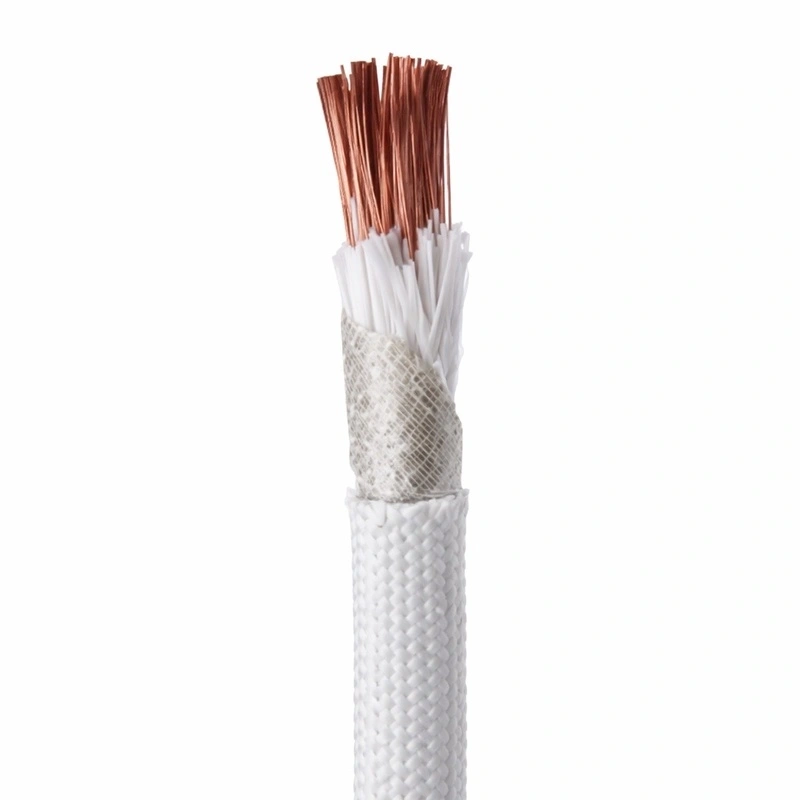
The BGR 500°C high-temperature cable is a premium industrial wiring solution, specifically designed to operate reliably in environments with extreme temperatures of up to 500°C. Its robust construction, incorporating a bare copper conductor and a multilayer insulation system with mica tape and fiberglass, guarantees exceptional electrical conductivity and superior resistance to heat and mechanical wear. This cable is the perfect choice for engineers and technicians looking for wiring for industrial ovens or high-power heating systems that offer safety, durability, and consistent performance. Its design not only meets but exceeds expectations in critical applications where a wiring failure could have significant consequences.
The BGR 500°C cable is designed for a wide variety of applications in industrial sectors where high temperatures are a constant factor. Its performance is optimal in:
-
Industrial Ovens and Dryers: Ideal for internal wiring of heat treatment ovens, smelting furnaces, industrial dryers, and sintering equipment.
-
Heating Systems: Widely used in the connection of electric heaters, cartridge heaters, heating bands, and other high-power heating elements.
-
Oil & Gas Industry: Perfect for installations in refineries, oil platforms, and processing plants where equipment operates at elevated temperatures.
-
Industrial Kitchen Equipment: Its heat resistance makes it suitable for convection ovens, fryers, and other high-performance cooking appliances.
-
Glass and Ceramic Manufacturing: Used in the wiring of melting and annealing furnaces, where high-temperature reliability is crucial for the quality of the final product.
|
Feature |
Advantage |
|---|---|
|
Multilayer Insulation |
The combination of fiberglass and mica tape provides an excellent thermal and electrical barrier, increasing the safety and lifespan of the cable. |
|
Bare Copper Conductor |
Offers superior electrical conductivity and low resistance, translating to greater energy efficiency and less heat generation. |
|
500°C Temperature Range |
Allows for use in a wide range of high thermal demand applications, guaranteeing stable and safe operation. |
|
High Insulation Resistance |
With ≥1500MΩ·KM at 20°C, it minimizes the risk of current leakage and short circuits, protecting both personnel and equipment. |
|
Fixed Installation |
Its design is optimized for fixed installations, ensuring a robust and durable connection that does not degrade over time. |
|
Characteristic |
Detail |
|---|---|
|
Type |
BGR |
|
Conductor |
Bare Copper Wire |
|
Insulation |
Fiberglass Braid + Mica Tape + Fiberglass Braid |
|
Temperature Range |
Up to 500°C |
|
Rated Voltage |
300V / 500V |
|
Test Voltage |
2000V |
|
Insulation Resistance |
≥1500 MΩ·km (at 20°C) |
|
OD Tolerance |
±0.1mm |
|
Standard |
Q321281KLA02-2009 |
|
Color |
White (other colors customizable) |
Dimensions and Electrical Properties Table (BGR)
|
Section (mm²) |
Conductor Construction (No. x φmm) |
Insulation Thickness (mm) |
Outer Diameter (O.D.) (mm) |
Max. Resistance at 20°C (Ω/km) |
Packaging (m/roll) |
|---|---|---|---|---|---|
|
0.5 |
7 x 0.30 |
0.5 |
2.3 ± 0.3 |
40.8 |
100 |
|
0.75 |
11 x 0.30 |
0.5 |
2.5 ± 0.3 |
24.3 |
100 |
|
1.0 |
14 x 0.30 |
0.5 |
2.6 ± 0.3 |
20.0 |
100 |
|
1.5 |
21 x 0.30 |
0.5 |
2.9 ± 0.3 |
12.6 |
100 |
|
2.0 |
28 x 0.30 |
0.6 |
3.3 ± 0.5 |
9.84 |
100 |
|
2.5 |
35 x 0.30 |
0.6 |
3.6 ± 0.5 |
7.37 |
100 |
|
4.0 |
56 x 0.30 |
0.8 |
4.7 ± 0.5 |
4.83 |
100 |
|
6.0 |
84 x 0.30 |
0.8 |
5.5 ± 0.5 |
3.26 |
100 |
|
10.0 |
84 x 0.40 |
0.8 |
6.6 ± 0.5 |
1.80 |
100 |
|
16.0 |
228 x 0.30 / 126 x 0.40 |
0.8 |
7.8 ± 0.5 |
1.31 |
100 |
|
25.0 |
196 x 0.40 / 361 x 0.30 |
0.8 |
9.5 ± 0.5 |
0.758 |
100 |
|
35.0 |
394 x 0.30 |
1.0 |
11.2 ± 1.0 |
0.548 |
100 |
|
50.0 |
396 x 0.40 / 703 x 0.30 |
1.2 |
13.2 ± 1.0 |
0.384 |
100 |
To facilitate the selection and highlight the advantages of the BGR 500°C cable against other high-temperature options, we present the following comparison table:
|
Characteristic |
BGR Cable (500°C) |
AGRP Cable (800°C) |
GN 500 Cable (1000°C) |
|---|---|---|---|
|
Max Temperature |
500°C |
800°C |
1000°C |
|
Conductor |
Bare Copper |
Nickel-Plated Copper Braided |
Pure Nickel |
|
Primary Insulation |
Fiberglass + Mica |
Fiberglass + Mica |
Fiberglass + Mica |
|
Typical Applications |
Industrial ovens, heating systems, Oil & Gas |
Heat treatment furnaces, foundries, petrochemical |
Sintering furnaces, metallurgy, aerospace |
|
Key Advantage |
Balance between performance and cost for 500°C |
Higher oxidation resistance and flexibility for 800°C |
Extreme oxidation resistance and stability for 1000°C |
FAQ
What is the difference between a silicone cable and a fiberglass cable?
The main difference lies in their properties and temperature ranges. Silicone cables are very flexible and suitable for temperatures up to 250°C, ideal for applications with movement or vibration, and offer good resistance to moisture and chemicals. However, their mechanical strength is moderate. Fiberglass cables are more rigid but support much higher temperatures, up to 1000°C, and offer excellent mechanical strength and fire resistance. They are perfect for industrial ovens and static environments with extreme heat. The choice depends on the maximum temperature and the need for flexibility.