Ceramic Spool-Type Insulators
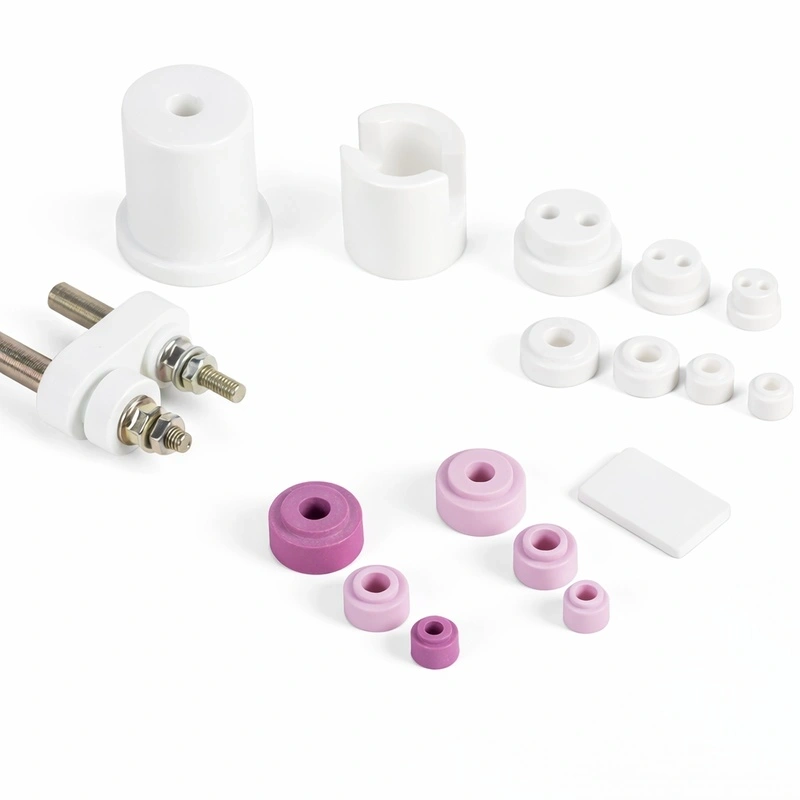
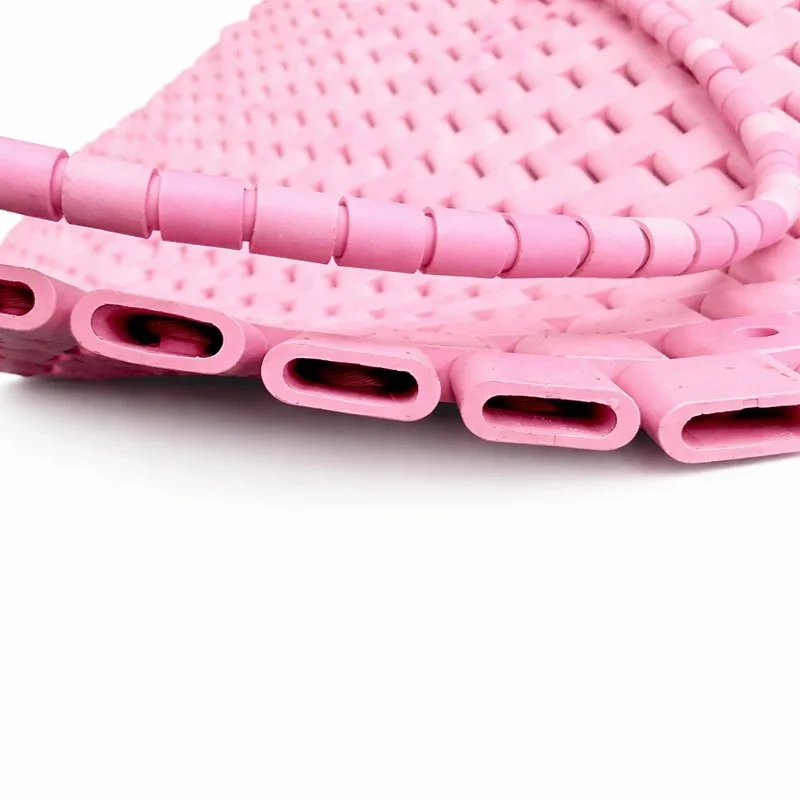
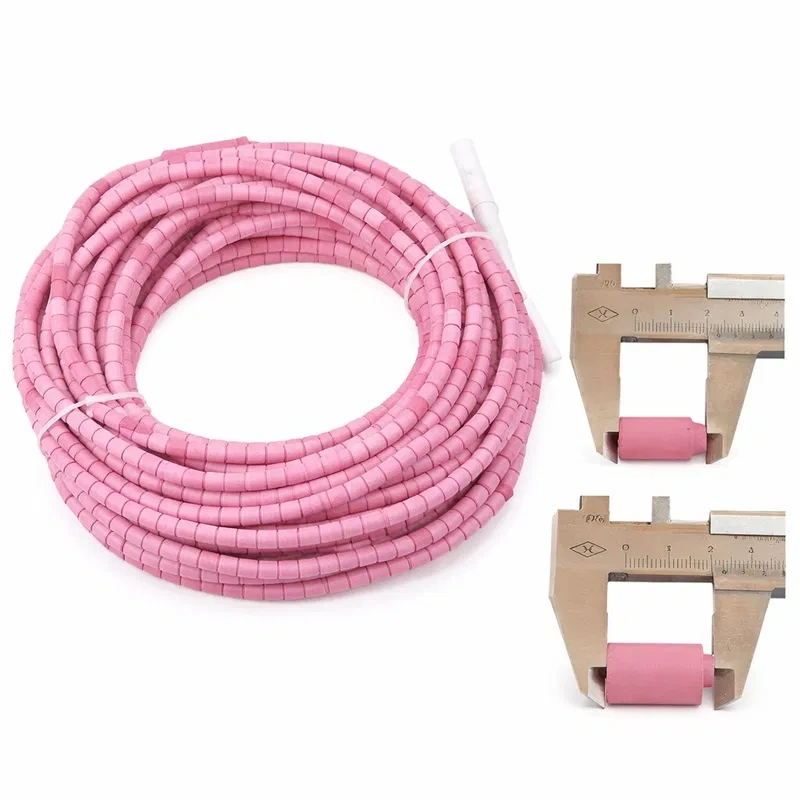
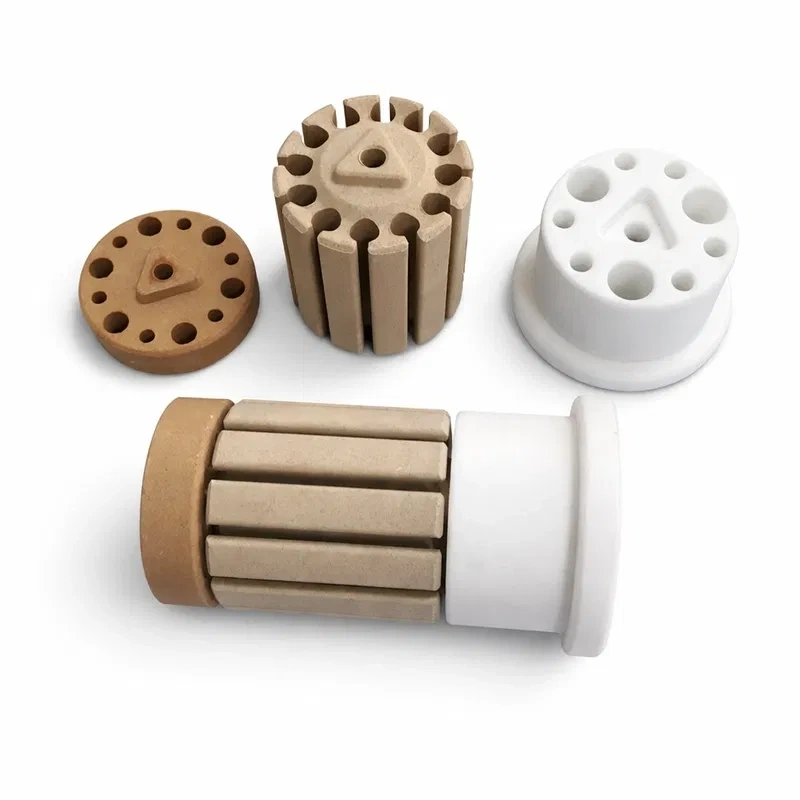
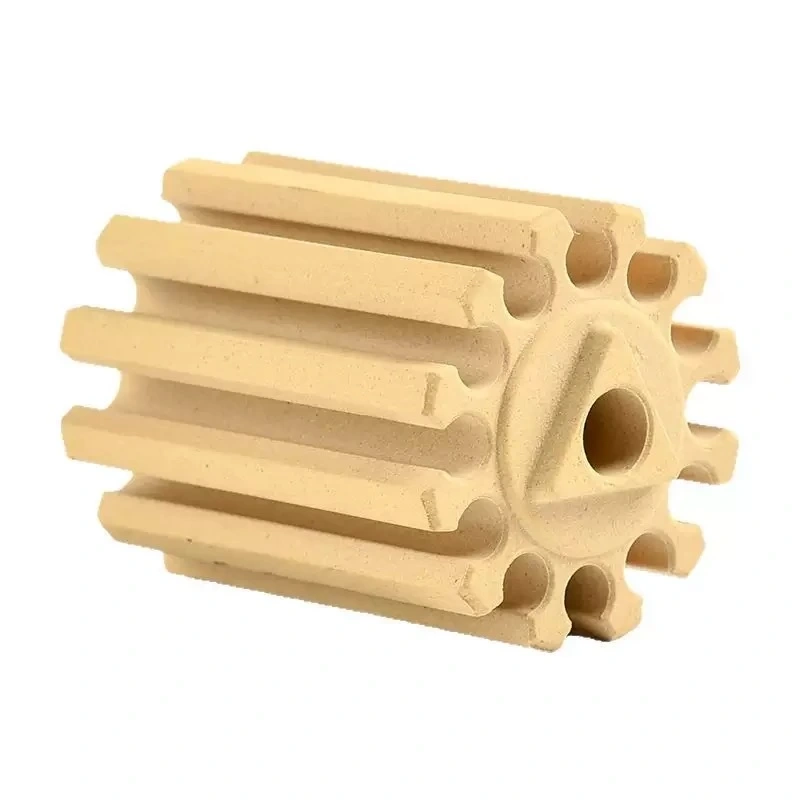
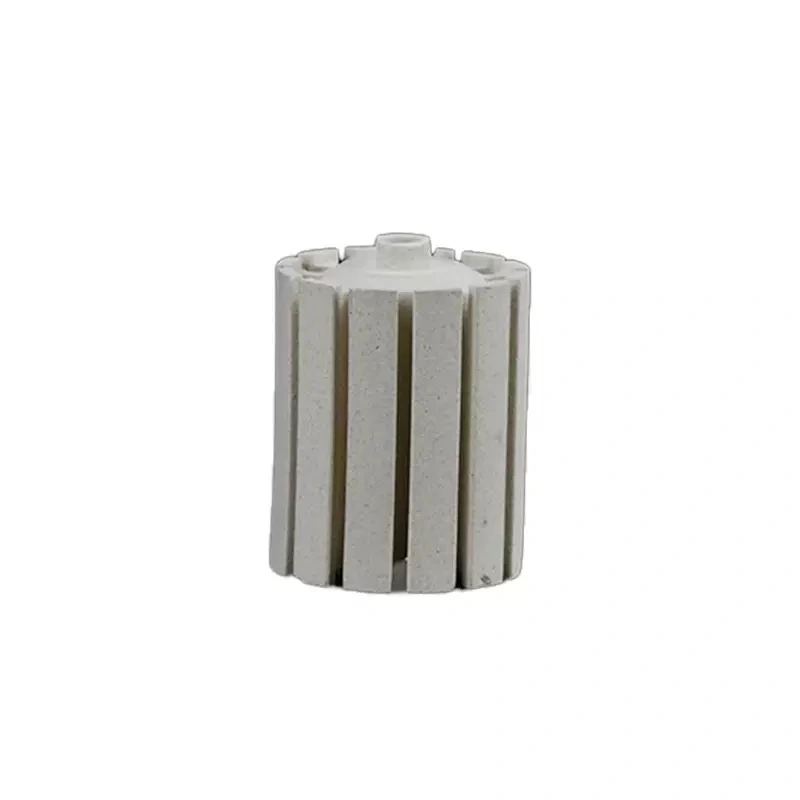
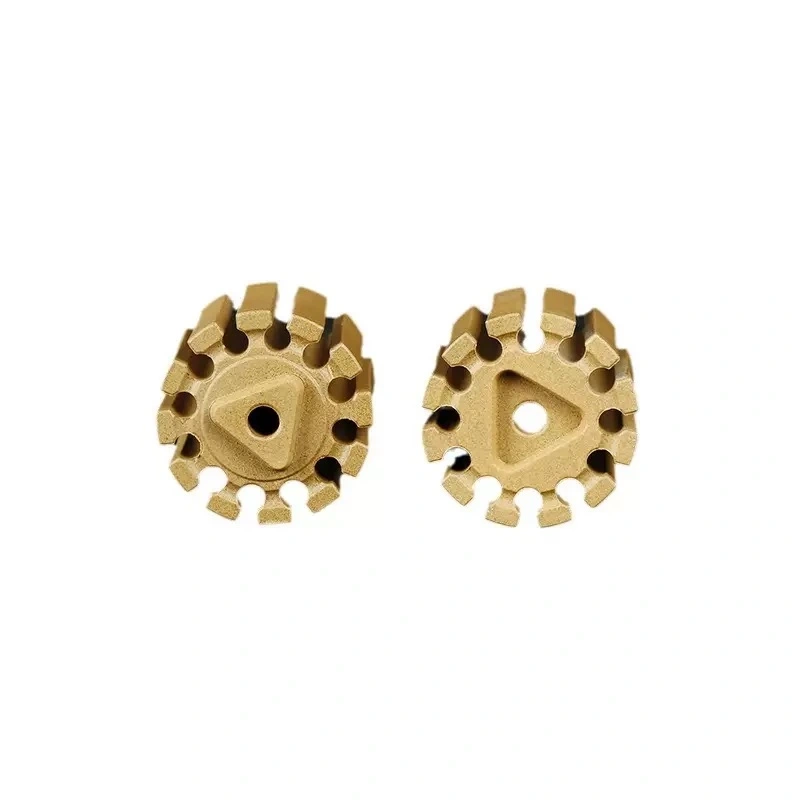
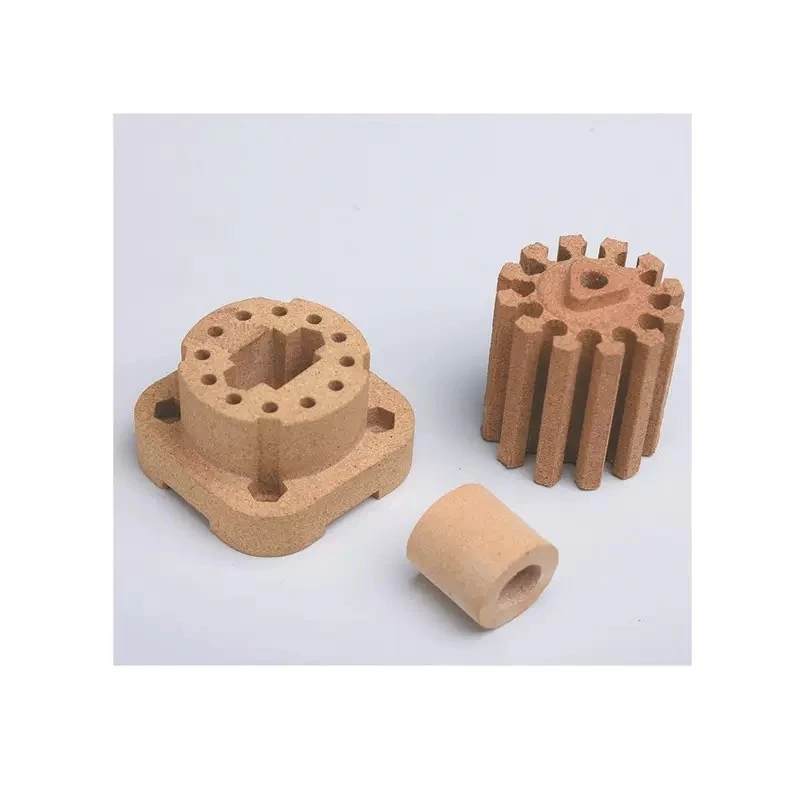
Industrial ceramic insulators are essential components manufactured from advanced ceramic materials, designed to provide high-frequency electrical insulation and thermal resistance in demanding environments. These include Cordierite, known for its low coefficient of thermal expansion and resistance to thermal shock; Spool-Type Ceramics (often based on Steatite), which function as heater supports and industrial porcelain insulators; and ceramic duct insulators, such as mullite ceramic ducts or alumina ceramic insulating tubes. Their primary function is to electrically separate conductive components and support heating elements, ensuring operational safety and efficiency. They are available in various forms, such as multi-wire ceramics, two-way (or multi-way) insulators, ceramic beads, “bone-shaped” insulators, and grooved ceramics, adapting to specific wiring and heating configurations.
Our range of industrial ceramic insulators represents the forefront of technical ceramic solutions for high-temperature and high-voltage applications. These components are crucial for the integrity and performance of electrical and thermal systems, from air heaters to complex industrial equipment. Manufactured with materials such as Cordierite, Steatite, and alumina ceramics (Alumina and Mullite), our insulators offer an unparalleled combination of mechanical, thermal, and electrical properties. Their design and composition are optimized to withstand extreme conditions, providing reliable power terminal insulation and acting as durable ceramic spacers. Precision in their manufacture ensures a perfect fit and optimal functionality, extending equipment lifespan and improving energy efficiency.
Industrial ceramic insulators are versatile and indispensable components across a wide range of sectors where high-frequency electrical insulation and high-temperature resistance are critical:
-
Electric Heaters and Air Heaters: Used as heater supports and ceramics for air heaters, where Cordierite and Steatite provide thermal and electrical stability for heating elements.
-
Industrial Furnaces and High-Temperature Equipment: In the construction of furnaces, stoves, and heat treatment equipment, where mullite ceramic duct insulators or alumina ceramics protect cables and terminals from extreme temperatures.
-
Wiring and Connection Systems: As power terminal insulation, ceramic spacers, multi-wire ceramics, two-way (or multi-way) insulators, ceramic beads, and "bone-shaped" insulators to organize and isolate electrical conductors in control panels, heaters, and other equipment.
-
Electronics and Telecommunications Industry: Where high-frequency electrical insulation is required for sensitive components, leveraging the dielectric properties of Steatite and Alumina.
-
Industrial Machinery and Process Equipment: In sensors, thermocouples, and ignition systems, where grooved ceramics or insulating tubes protect internal elements from abrasion, corrosion, and high temperatures.
-
Household Appliances: In toasters, hair dryers, and other appliances requiring safe thermal and electrical insulation.
Our industrial ceramic insulators offer a set of superior properties that make them ideal for the most demanding applications:
-
Excellent Electrical Insulation: Provide exceptional high-frequency electrical insulation, with high dielectric strength and low dielectric constant—crucial for circuit and personnel protection. Alumina ceramics stand out in this aspect.
-
High Temperature Resistance: Capable of continuous operation at extremely high temperatures, exceeding 1500°C for Alumina and 1600°C for Zirconia, making them ideal for industrial furnaces and air heaters.
-
Thermal Shock Resistance: Cordierite exhibits a low coefficient of thermal expansion and remarkable resistance to thermal shock, allowing it to withstand sudden temperature changes without fracturing.
-
High Hardness and Mechanical Strength: Materials like Alumina and Zirconia offer very high hardness, compressive strength, and flexural strength, ensuring durability as heater supports and ceramic spacers.
-
Chemical Inertia: Chemically inert to most acids, alkalis, and gases at high temperatures, ensuring a long service life in corrosive environments.
-
Low Water Absorption: With 0% water absorption, they guarantee the stability of their dielectric properties even in humid environments, maintaining the efficacy of industrial porcelain insulators.
-
Versatility of Shapes: The ability to manufacture multi-wire ceramics, two-way (or multi-way) insulators, ceramic beads, "bone-shaped" insulators, and grooved ceramics allows precise adaptation to any power terminal insulation design or need.
The properties of our industrial ceramic insulators vary by material, offering optimized solutions for each need. The table below details key specifications for alumina ceramics (99% and 95% Alumina) and Zirconia—fundamental materials in the manufacture of mullite ceramic ducts, insulating tubes, and other technical ceramic components.
|
Characteristic |
Unit |
Alumina 99% |
Alumina 95% |
Zirconia (ZrO₂ ≥ 94%) |
|---|---|---|---|---|
|
Main Component |
% |
Al₂O₃ ≥ 99% |
Al₂O₃ ≥ 95% |
ZrO₂ ≥ 94% |
|
Density |
g/cm³ |
3.85 |
3.6 |
5.9 |
|
Water Absorption |
% |
0 |
0 |
0 |
|
Sintering Temperature |
°C |
1690 |
1670 |
1650 |
|
Hardness HV |
HV |
1700 |
1600 |
1400 |
|
Flexural Strength (4pt) |
MPa |
>3500 |
>2900 |
>11000 |
|
Compressive Strength |
Kgf/cm² |
30000 |
25000 |
25000 |
|
Maximum Operating Temperature |
°C |
1500 |
1400 |
1600 |
|
Thermal Expansion Coefficient (0–1000°C) |
10⁻⁶/°C |
8 |
7.8 |
10 |
|
Thermal Shock Resistance ΔT |
°C |
200 |
220 |
350 |
|
Thermal Conductivity |
W/m·K |
31 |
22 |
3 |
|
Volume Resistivity |
Ω·cm |
>10¹² |
>10¹² |
>10¹² |
|
Dielectric Strength |
KV/mm |
18 |
16 |
15 |
|
Dielectric Constant (1MHz) |
E |
9.2–10.5 |
9.0–10 |
12.5 |
Note: Cordierite properties include a very low coefficient of thermal expansion (typically 1–3 x 10⁻⁶/°C) and excellent thermal shock resistance. Steatite (Spool-Type Ceramic) offers good dielectric properties and mechanical strength at moderate temperatures.
Understanding the diversity of industrial requirements, we offer a wide range of options and customization capabilities for our industrial ceramic insulators, ensuring an optimal solution for every application:
-
Specific Materials: In addition to alumina ceramics and Zirconia, we offer Cordierite for thermal shock resistance applications and Steatite for high-frequency electrical insulation and heater support in moderate-temperature environments.
-
Custom Designs: We manufacture spool-type ceramic insulators, ceramic duct insulators, insulating tubes, multi-wire ceramics, two-way (or multi-way) insulators, ceramic beads, "bone-shaped" insulators, and grooved ceramics according to customer drawings and specifications, adapting to complex geometries and strict tolerances.
-
Surface Finishes: Availability of different surface finishes, from polished for high-precision applications to rough finishes to improve adhesion or heat dissipation.
-
Precision Tolerances: Capability to produce components with very tight tolerances, crucial for power terminal insulation and ceramic spacers in sensitive equipment.
-
Additional Treatments: Possibility of applying glazes or special coatings to improve resistance to abrasion, corrosion, or dielectric properties under specific conditions.
-
Assembly & Integration: We offer assembly and integration solutions for ceramic components with other materials, facilitating integration into complex systems like air heaters.
Our expertise in technical ceramics allows us to collaborate closely with clients to develop customized solutions that meet the highest standards of performance and reliability.
FAQ
Which ceramic is better for a ceramic or glass furnace?
For industrial ceramic or glass furnaces, Cordierite is the superior choice. The technical reason is its low coefficient of thermal expansion, which gives it excellent resistance to thermal shock. In ceramic or glass processes—where heating and cooling cycles are constant—Cordierite will not crack or deform. If the furnace operates at extreme temperatures (above 1300°C), high-purity alumina is recommended, as it offers greater structural stability and dielectric insulation.