Copper Tubes for HVACR and Heat Exchange – Heatecx Limited

Heatecx Limited

Copper Tubes for HVACR and Heat Exchange

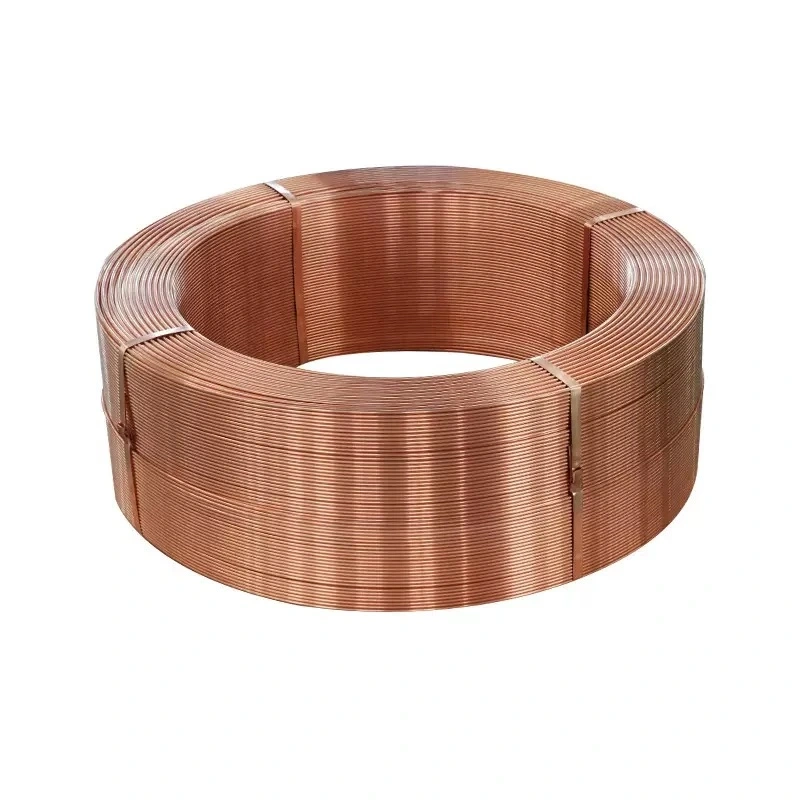
Copper tubes for refrigeration and air conditioning are essential components in the HVACR (heating, ventilation, air conditioning, and refrigeration) industry, specifically designed for the efficient and safe conveyance of refrigerants, oils, and fluids. These seamless copper tubes are the global standard due to their exceptional thermal conductivity, high corrosion resistance, and superior durability. They are fundamental in the construction of copper heat exchangers, where they facilitate energy transfer in evaporators and condensers, optimizing the performance of industrial climate control and refrigeration systems. Brazing is the preferred method for joining these tubes, guaranteeing hermetic and robust connections that withstand the operational demands of modern equipment.

Copper, as a material, offers an unparalleled solution to the challenges of heat transfer in critical applications. Our copper tubes for HVACR represent the forefront of material technology, providing a solid foundation for high-efficiency refrigeration systems and sustainable climate control solutions. Choosing copper not only ensures long-term system reliability but also significantly contributes to equipment energy efficiency. From residential air conditioning installations to complex VRV/VRF systems and commercial refrigeration, copper tubes guarantee optimal performance, minimizing energy losses and maximizing component lifespan. Their versatility and adaptability to diverse operating conditions make them the preferred choice for engineers and technicians worldwide.

Copper tubes are indispensable across a wide range of HVACR and heat exchange applications, spanning from residential environments to complex industrial settings. Their superior performance makes them ideal for:

Residential and Commercial Air Conditioning: Including split, multisplit, and inverter systems, where efficiency and durability are key to environmental comfort.

Centralized Climate Control Systems: In office buildings, shopping centers, and large infrastructure, ensuring uniform and efficient distribution of air conditioning.

VRV and VRF Installations: Used in hotels, hospitals, and other large complexes requiring precise temperature control and high energy efficiency.

Commercial Refrigeration: In supermarkets, refrigerated display cases, and cold rooms, where product preservation is critical.

Industrial Refrigeration: In food processing plants, pharmaceutical facilities, and chemical plants, withstanding demanding operational conditions.

Heat Pumps and Geothermal Systems: Leveraging copper’s high thermal conductivity for efficient renewable energy transfer.

Heat Exchangers: In various configurations, such as shell-and-tube designs, for industrial processes requiring precise thermal control.

Our copper tubes offer a combination of features and advantages that position them as the optimal solution for HVACR and refrigeration systems:

Feature

Description

Key Advantage

High Thermal Conductivity

Copper is one of the metals with the highest capacity for heat transfer.

Significantly improves heat transfer in evaporators, condensers, and heat exchangers, optimizing system energy efficiency.

Ductility and Malleability

Allows the tube to be curved and shaped without breaking.

Facilitates installation, reduces the need for joints, and minimizes leak points—translating to lower leak risk and higher reliability.

Corrosion Resistance

Withstands humid, saline, and industrial environments.

Guarantees longer system lifespan even in extreme conditions and reduces maintenance costs.

Mechanical Strength

Capable of tolerating high pressures and temperature variations.

Ensures structural integrity under diverse operating conditions, providing safety and consistent performance.

Chemical Compatibility

Suitable for all modern refrigerants.

Offers universal compatibility with HFC, HCFC, HFO, CO₂, and hydrocarbons, adapting to new regulations and refrigeration technologies.

Ease of Brazing

Allows for secure and durable unions.

Secure copper brazing minimizes leak risk—crucial for refrigeration system efficiency and safety.

Fast and Reliable Installation

Thanks to its malleability and ease of joining.

Reduces installation time and errors, resulting in time and cost savings for large-scale projects.


Our refrigeration copper tubes meet the highest quality standards and international regulations, ensuring exceptional performance and safety:

Outer Diameters: Available in a wide range, from 2 mm to 159 mm, to adapt to diverse design needs and flow capacities.

Wall Thicknesses: Vary from 0.3 mm to 3.0 mm, selected according to required working pressure and refrigerant type, guaranteeing appropriate resistance.

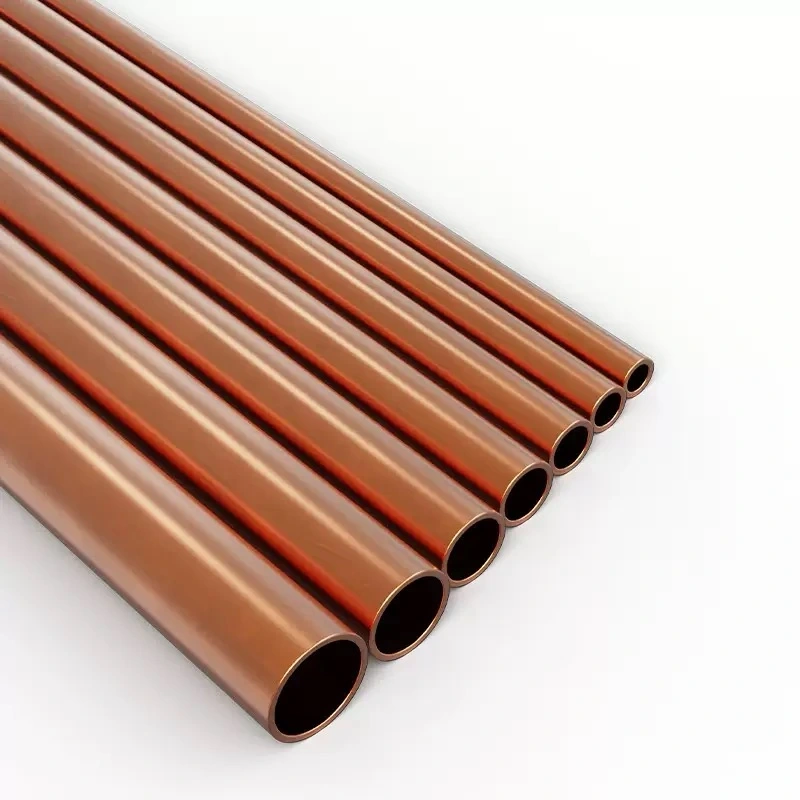
Presentation: Offers various configurations, including coil copper tubes, straight copper tubes, insulated copper tubes, PVC-coated copper tubes, and capillary microtubes.

Working Pressure: Suitable for high- and low-pressure systems, designed to withstand the most demanding operational conditions in HVACR.

Finishes: Available in bright, deoxidized, annealed, and phosphated finishes to meet specific application and aesthetic requirements.

Regulations and Standards: Manufactured under strict standards such as ASTM B280 (standard for seamless copper tubes in refrigeration and air conditioning) and EN 12735-1/2 (European regulation for copper tubes in refrigeration and climate control systems). We hold ISO 9001 certification and comply with RoHS and REACH, guaranteeing materials free from harmful substances.

We offer a complete range of copper tubes to cover all HVACR and heat exchange industry needs, with customization options for specific projects:

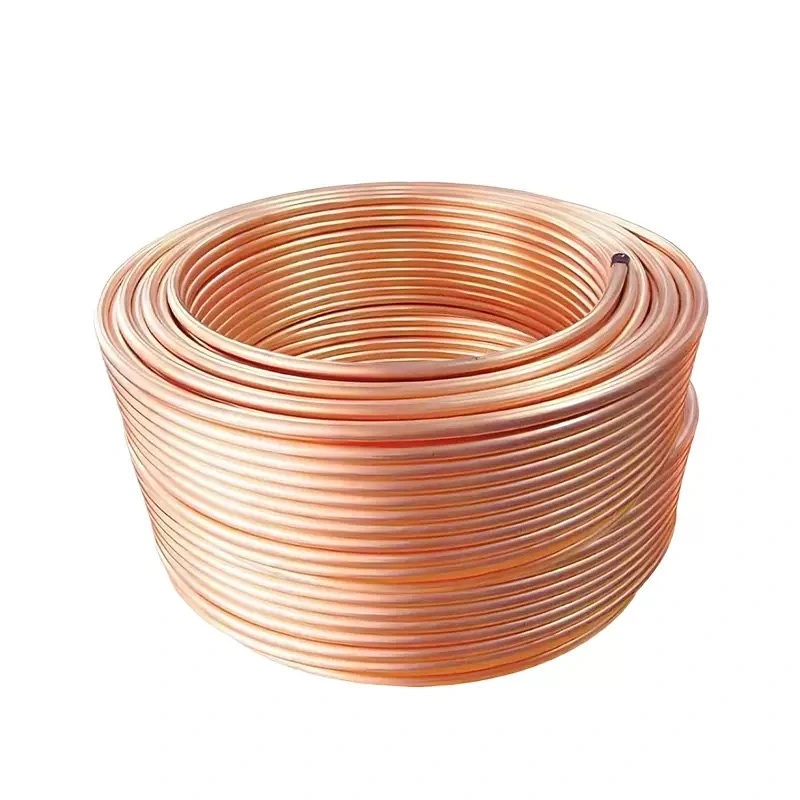
Coil Copper Tube: Flexible and easy to install, ideal for split and inverter equipment. Available in 15-, 30-, and 50-meter coils, with common diameters of 1/4”, 3/8”, 1/2”, 5/8”, and 3/4”.

Straight Copper Tube: Supplied in 5 m and 6 m lengths, perfect for VRV/VRF systems, central climate control, and industrial refrigeration, where greater control is required in large-scale installations.

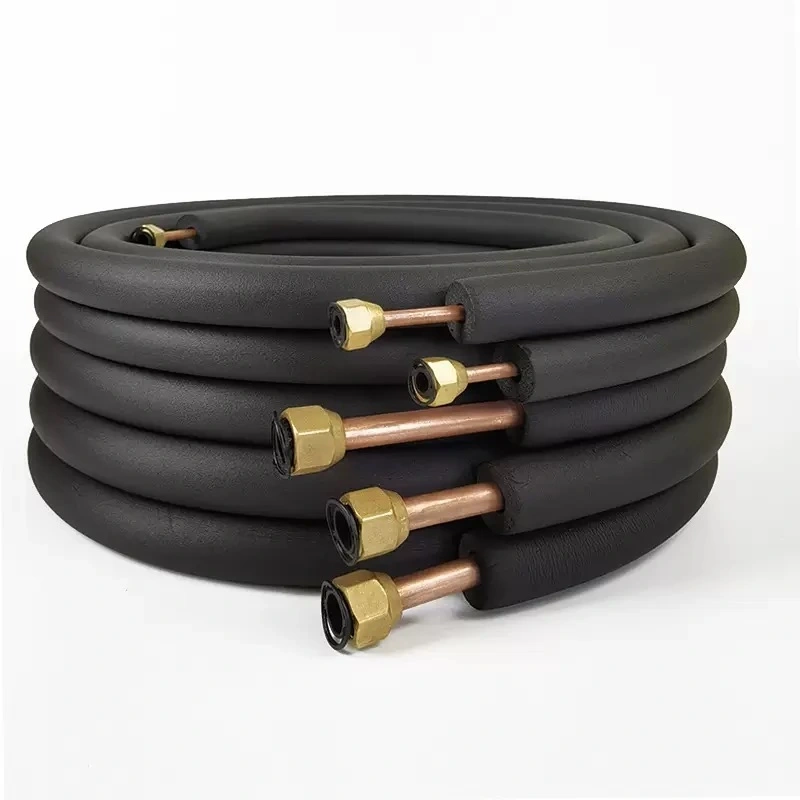
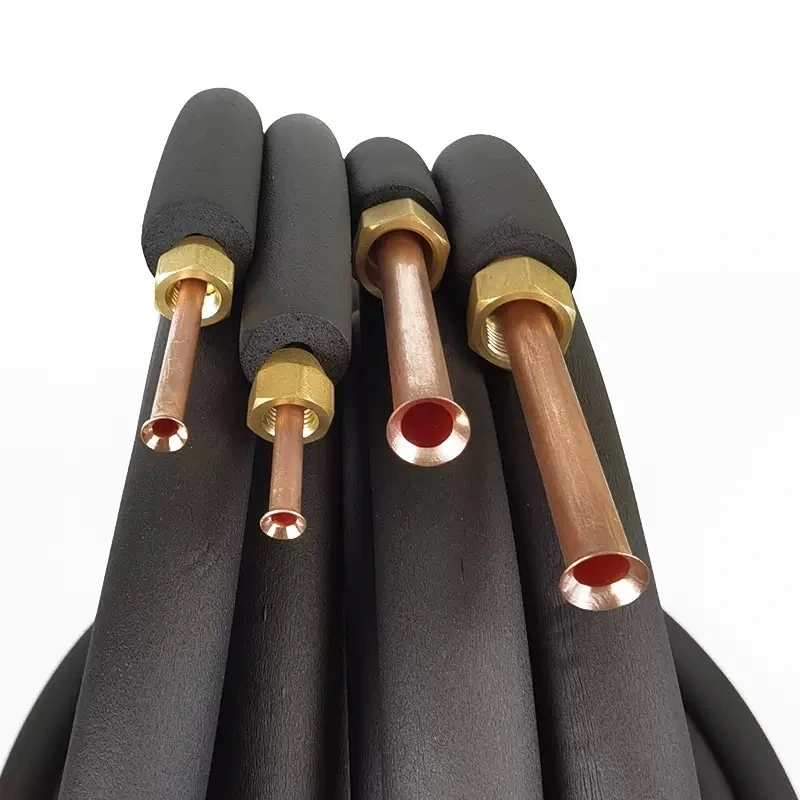
Insulated Copper Tube: Coated with elastomeric foam or expanded polyethylene to reduce energy losses and prevent condensation. Ideal for visible installations or those exposed to temperature changes.

Capillary Copper Tube (Microtube): With very small diameters (0.5 mm – 5 mm), used as an expansion device in refrigerators and air conditioners to ensure a constant, controlled refrigerant flow.

PVC-Coated Copper Tube: Offers additional protection against UV rays, impacts, or chemicals, widely used in outdoor installations.

Inner Grooved Copper Tube: Features internal microchannels that increase the heat exchange surface, improving the energy efficiency of modern equipment.

Customization

We understand that every project has unique requirements. Therefore, we offer customization of copper tubes in terms of diameters, thicknesses, lengths, and special finishes. Our technical team is available to advise and develop tailored solutions that perfectly adapt to your application specifications, guaranteeing maximum efficiency and performance.

FAQ

The main distinction between Type K, L, and M copper tubes lies in their wall thickness, which directly influences their maximum working pressure and, consequently, their recommended applications within HVACR and plumbing systems:

Type K Copper: This is the copper tube with the thickest wall and, therefore, the most resistant. It is identified by a green mark. Its high durability makes it ideal for high-pressure applications and demanding environments, such as main water lines, underground services, industrial refrigeration systems, and vacuum lines.

Type L Copper: With an intermediate wall thickness (identified by a blue mark), Type L copper tube is the most versatile and commonly used. It offers an excellent balance between strength and flexibility, making it suitable for a wide range of plumbing, heating, natural gas, and LPG applications—and crucially, for most air conditioning and refrigeration (HVACR) installations.

Type M Copper: This is the copper tube with the thinnest wall (identified by a red mark). Although it is the most economical, its lower thickness makes it suitable for low-pressure applications and residential use, such as indoor potable water lines and low-risk heating systems. In HVACR, its use is more limited to certain low-pressure applications where cost is a critical factor and operating conditions are not extreme.

Customers also viewed