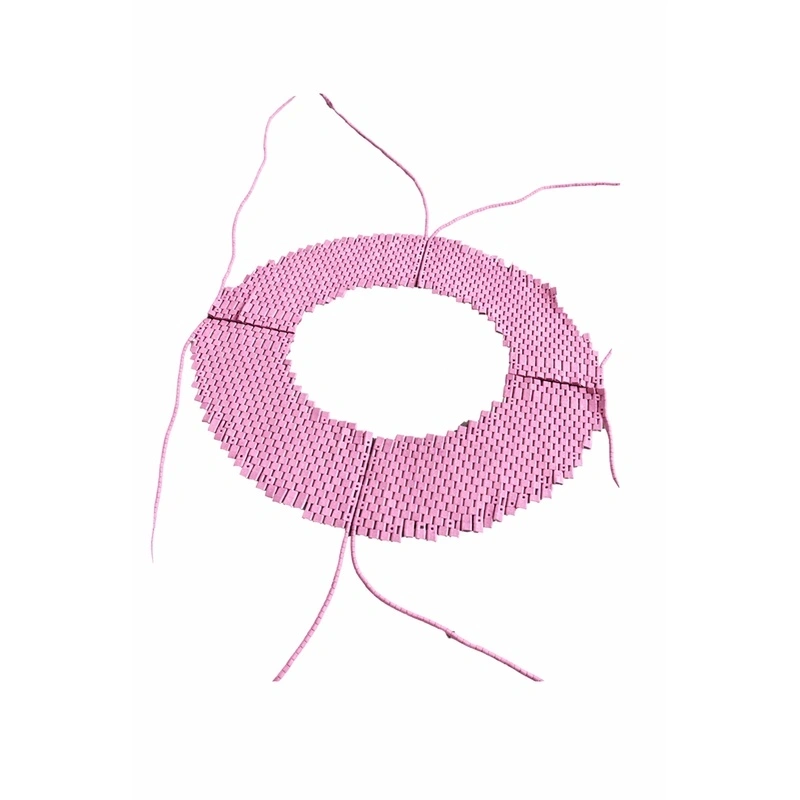
LCD-S Type Fan-Shaped Flexible Ceramic Heater
This custom industrial heater is essential in sectors where standardization is not an option, such as the manufacturing of specialized components, the aerospace industry, automotive, and precision metallurgy. With the ability to operate at temperatures up to 1000°C, the LCD-S flexible ceramic heater is a robust solution for high-temperature heat treatment, including weld preheating, annealing, normalizing, and quenching. The ability to design the voltage and power in direct proportion to the size of the workpiece ensures optimal energy efficiency and superior thermal performance, positioning it as a high-value flexible ceramic heater for critical applications.
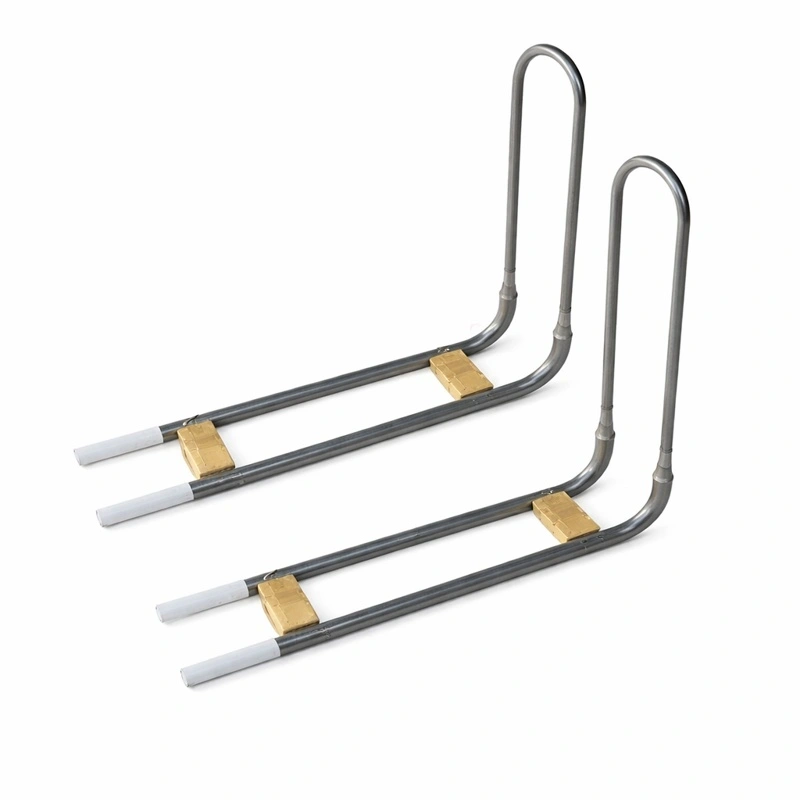
The LCD-S Flexible Ceramic Heater, also known as a fan-shaped or custom-made cylindrical heater, represents the ultimate expression of adaptability in industrial heating solutions. This model is designed to be manufactured specifically according to the diameter and shape of the workpiece, offering a perfectly tailored thermal solution for the most demanding needs. Its inherent flexibility allows for the creation of custom ceramic heaters that adapt to complex geometries, guaranteeing uniform and efficient heating. It is the ideal choice for processes requiring precise thermal control and seamless integration with irregularly shaped or non-standard sized components.
The LCD-S custom heating solution is applied in a vast range of industrial scenarios:
-
Heat treatment of components with complex geometries: Ideal for parts with irregular shapes or non-standard diameters that cannot be covered by conventional heaters.
-
Preheating and PWHT in the manufacture of specialized equipment: Used in the production of turbines, reactor components, aircraft structures, and other critical elements requiring exact thermal control.
-
Automotive and aerospace industry: For the heat treatment of engine parts, chassis, and structural components demanding high precision and uniformity.
-
Mold and die heating: Ensures a constant and uniform temperature in forming, injection molding, or vulcanization processes.
-
Research and development: Provides customized heating solutions for experiments and material testing that require specific thermal conditions.
-
Repair and maintenance of heavy machinery: Allows for localized heating of large components to facilitate disassembly, assembly, or repair.
-
Fully Customizable Design: Made to measure according to the specific drawings and requirements of the client, ensuring a perfect fit and optimal thermal performance.
-
Geometric Adaptability: Capable of taking on fan shapes, cylindrical shapes, or any other configuration needed to efficiently wrap around the workpiece.
-
Precise Temperature Control: Allows reaching and maintaining temperatures up to 1000°C with great accuracy, crucial for advanced heat treatment processes.
-
Energy Efficiency: The voltage and power are dimensioned proportionally to the size of the part, optimizing energy consumption and reducing operational costs.
-
Robust and Durable Construction: Uses high-quality ceramic materials that guarantee a long service life and resistance in demanding industrial environments.
-
Versatility of Application: Suitable for a wide variety of materials and processes, from metals to ceramics and composites.
|
Characteristic |
Detail |
|---|---|
|
Model |
LCD-S |
|
Type |
Fan-Shaped / Cylindrical Heater (Custom Made) |
|
Heating Material |
Flexible ceramic heater |
|
Maximum Temperature |
1000°C or lower |
|
Voltage |
Customizable (proportional to the part size) |
|
Power |
Customizable (proportional to the part size) |
|
Main Application |
Heat treatment of parts with complex or non-standard geometries, weld preheating, annealing, normalizing, quenching. |
The LCD-S Flexible Ceramic Heater stands out for its ability to be made to measure, offering unparalleled flexibility to adapt to the specific requirements of each project. We understand that standard solutions are not always sufficient for the most innovative and challenging industrial applications. Therefore, our custom ceramic heater service allows our clients to obtain a thermal solution that perfectly integrates with their processes and equipment.
Customization options include:
-
Geometric Design: We can manufacture the heater in any shape (fan, cylindrical, rectangular, etc.) and size to precisely fit the workpiece, based on the drawings or specifications provided by the client.
-
Specific Voltage and Power: We adjust the operating voltage (e.g., 110V, 220V, 380V) and power (kW) to meet the requirements of your power supply and the exact thermal needs of your application.
-
Integrated Temperature Control: Possibility of integrating thermocouples or temperature sensors directly into the heater for more precise process monitoring and control.
-
Special Materials: We offer the option to use different types of ceramic materials or heating alloys to optimize performance in specific environments (e.g., corrosion resistance, greater durability).
-
Connections and Terminals: Customization of the types of electrical connections and the location of the terminals to facilitate installation and integration into your system.
Our team of experts is ready to collaborate with you from the design phase through to manufacturing, ensuring that your custom-made LCD-S ceramic heater meets the highest standards of quality and performance. Contact us to explore the possibilities of customized heating solutions and how we can help you optimize your heat treatment processes.

FAQ
How is temperature monitored and recorded during preheating and PWHT?
Temperature monitoring in PWHT and preheating is essential to ensure the process is performed in accordance with specifications. Industrial thermocouples (usually type K) are used, fixed to the workpiece at strategic points to measure temperature. These thermocouples are connected to temperature controllers and data loggers that allow for real-time visualization and recording of the complete thermal cycle. Welding thermal recording is a regulatory requirement in many applications, providing a documented history that heating rates, hold times, and cooling rates have been met. This ensures the traceability and quality of the heat treatment.