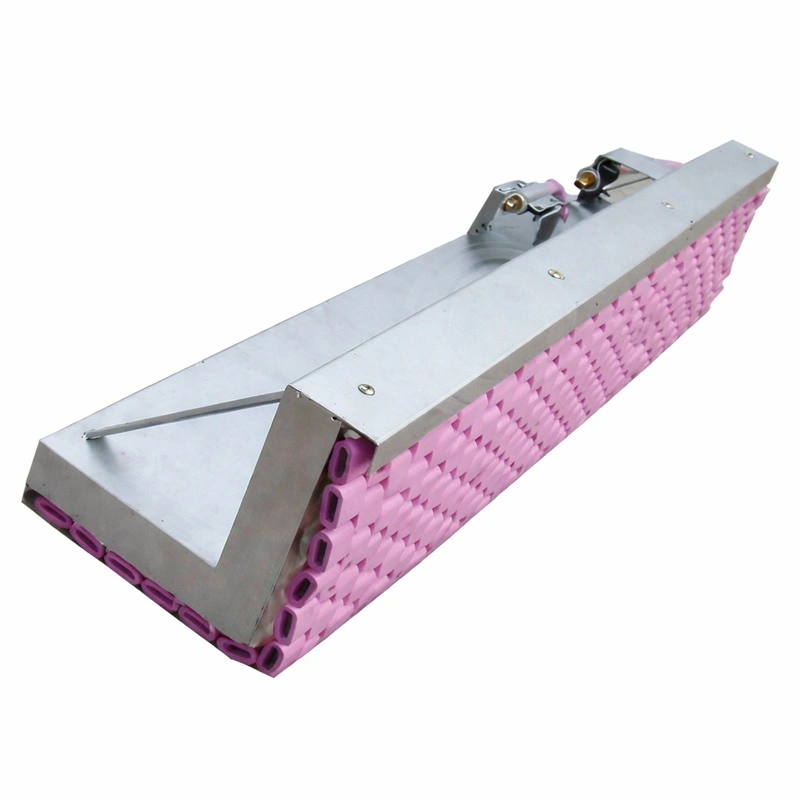
LCD-Z Internal and External Angle Ceramic Heater
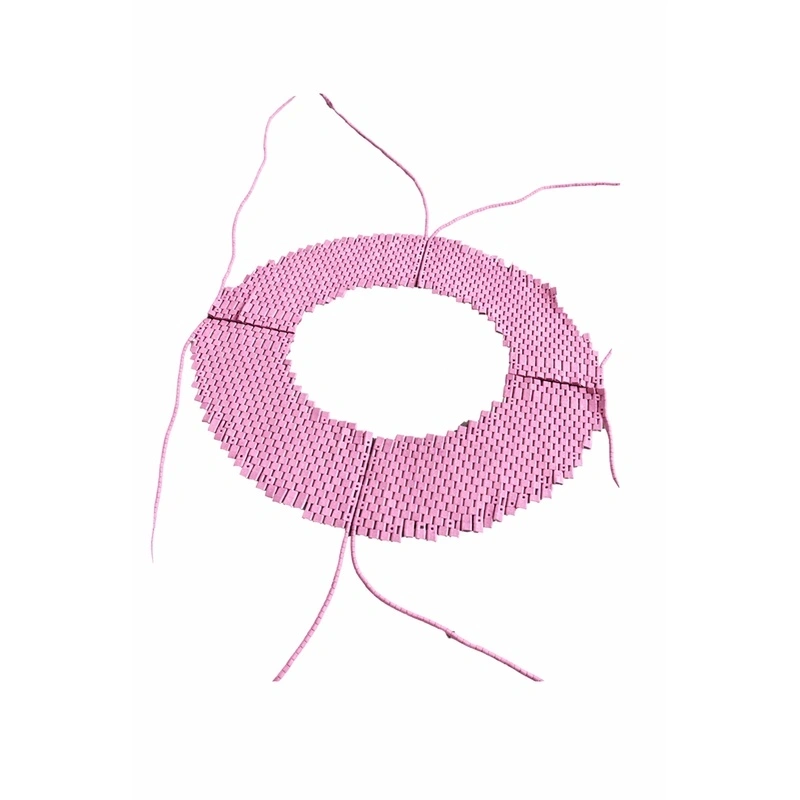
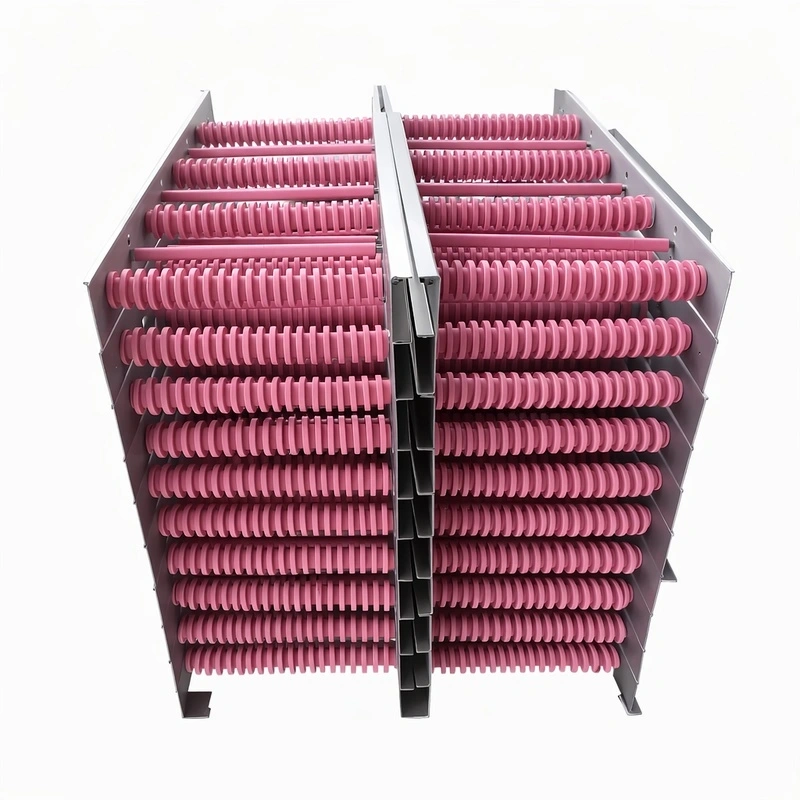
The LCD-Z Flexible Ceramic Heater is an industrial heater of innovative design, specifically conceived for the local preheating and heat treatment of right-angle welds in various steel structures. This belt-type heater is distinguished by its ease of installation and its ability to adapt to complex geometries, thanks to its configuration as an internal and external right-angle heater. It incorporates high-quality insulating material and a robust outer casing that guarantee efficient and safe thermal performance. It is an essential solution for welding engineering that seeks to optimize the quality and durability of joints, minimizing residual stresses and structural defects.
This flexible ceramic heating element is an indispensable tool in sectors such as shipbuilding, metal structure fabrication, and the energy industry, where right-angle welds are common and critical. The versatility of the LCD-Z model allows its application on both internal and external angles, providing uniform and controlled heating. Its modular design and availability in different voltages and powers make it an adaptable option for a wide range of projects. By using the LCD-Z Heater, companies can ensure effective heat treatment, improving the mechanical properties of materials and prolonging the service life of structures, which translates into greater operational efficiency and reduced maintenance costs.
The LCD-Z ceramic heater is designed for specific applications where thermal control in right-angle welds is crucial:
-
Right-Angle Weld Preheating: Fundamental for preparing the base material before welding, reducing the risk of cracks and improving penetration and the quality of the joint in corners and T-joints.
-
Local Heat Treatment of Steel Structures: Ideal for stress relief and improvement of mechanical properties in specific areas of metal structures, such as bridges, frames, and heavy machinery components.
-
Shipbuilding and Offshore Industry: For the heat treatment of welded joints in ship hulls, oil platforms, and other marine structures exposed to demanding conditions.
-
Vessel and Tank Manufacturing: Application on corner joints and internal/external reinforcements that require precise thermal control to ensure structural integrity.
-
Industrial Maintenance and Repair: For the heat treatment of on-site repairs, where flexibility and ease of installation are paramount.
-
Design Specific for Right Angles: Optimized for efficient and uniform heating in internal and external right-angle configurations.
-
Easy Installation and Adaptability: Its belt-type design and flexibility allow for quick placement and adjustment to various weld geometries, reducing setup time.
-
Precise Thermal Control: Provides localized and controlled heating, essential for complying with welding code requirements and quality standards.
-
Robust Construction: Manufactured with durable materials and high-quality insulation to withstand severe industrial environments and guarantee a long service life.
-
Improved Weld Quality: Contributes to the reduction of defects such as hydrogen embrittlement and residual stresses, increasing the strength and reliability of joints.
-
Voltage and Power Versatility: Available in different configurations to adapt to the energy and heating needs of each project.
|
Characteristic |
Detail |
|---|---|
|
Model |
LCD-Z |
|
Type |
Internal and External Right Angle Heater |
|
Heating Material |
Flexible belt-type ceramic heater |
|
Primary Application |
Local preheating and heat treatment of right-angle welds in steel structures. |
|
Available Configurations |
|
|
Voltage |
220V / 110V |
|
Power |
10kW / 5kW |
|
Dimensions (L×W×H) |
1000×100×100 mm, 860×130×130 mm, 680×170×170 mm, 520×100×100 mm |
To ensure the safe and efficient operation of the LCD-Z Flexible Ceramic Heater, it is essential to follow these instructions:
-
Prior Inspection: Before each use, visually inspect the heaters for any damage to the insulating material, casing, or electrical connections. Do not use the equipment if it shows signs of deterioration.
-
Electrical Connection: Ensure that the voltage and power of the heating element match the available power supply. Make electrical connections in accordance with local regulations and always use qualified personnel. Verify that all connections are tight and secure.
-
Positioning: Place the LCD-Z heater so that it uniformly covers the right-angle weld zone to be treated. Secure the heater firmly to the workpiece to ensure optimal contact and efficient heat transfer. Use appropriate fastening systems to prevent movement during the process.
-
Temperature Control: Use an external temperature control system (thermoregulator) to monitor and regulate the process temperature. Avoid exceeding the maximum recommended temperature for the material and the ceramic heater.
-
Personal Protection: During operation, always use appropriate personal protective equipment (PPE), including heat-resistant gloves, safety glasses, and protective clothing. The heater reaches high temperatures that can cause serious burns.
-
Ventilation: Ensure adequate ventilation in the work area to dissipate heat and prevent the accumulation of gases or fumes.
-
Disconnection and Cooling: Once the process is finished, disconnect the heater from the power source and allow it to cool completely before handling or storing it. Do not touch the heater while it is hot.
-
Storage: Store the element in a dry and clean place, protected from moisture and mechanical damage. Proper storage extends the service life of the equipment.
FAQ
Are they suitable for outdoor use or in corrosive environments?
Flexible ceramic heaters are designed to be robust, but their suitability for outdoor use or corrosive environments depends on their specific construction and additional protective measures. Many models are manufactured with materials resistant to moisture and certain chemical agents. However, for applications in extreme conditions, the use of industrial heaters with special coatings or protective casings that offer greater resistance to corrosion and environmental elements is recommended. It is vital to consult the manufacturer's specifications and, if necessary, implement protective solutions for flexible heaters that guarantee their integrity and operational safety in such environments.