Pure Nickel Wire
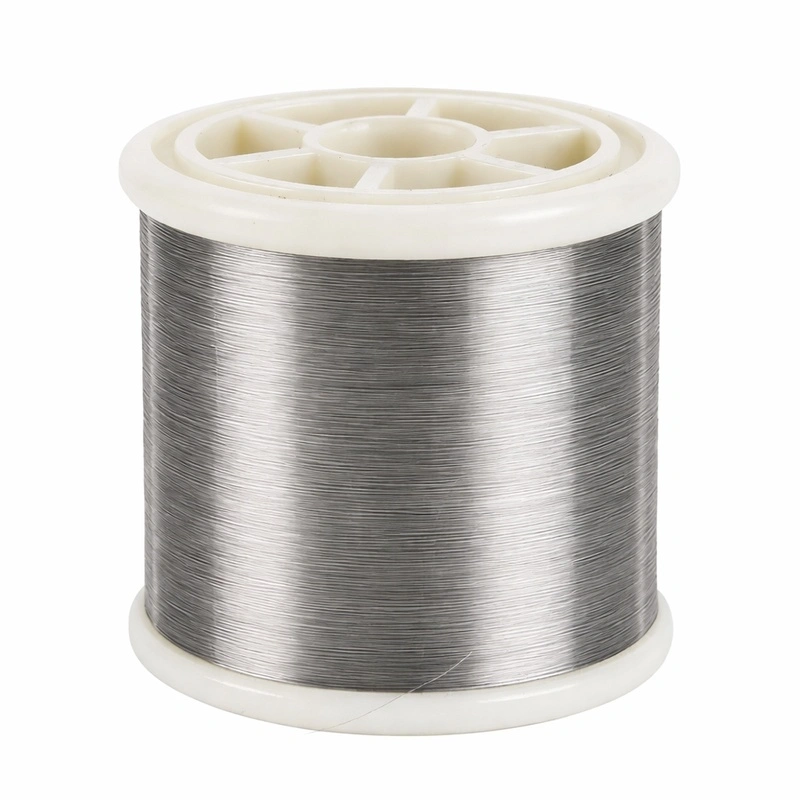
Pure Nickel Wire is a high-quality metallic material, recognized for its exceptional purity and unique properties. This product is manufactured mainly in grades such as Nickel 200 and Nickel 201, which correspond to the designations UNS N02200 and UNS N02201, respectively. Characterized by a purity of 99.6% (or up to 99.9% depending on the specific standard and grade, even reaching 99.99% in its purest forms), this wire is fundamental in applications where corrosion resistance and electrical properties are critical. Its composition guarantees superior resistance to alkaline corrosion, high thermal conductivity, and low electrical resistivity, making it an optimal choice for demanding environments and precision components.
Beyond its purity, pure nickel wire exhibits a combination of physical and mechanical properties that make it indispensable in various industries. It is notable for its magnetostriction, a property that allows its use in ultrasonic transducers, and its excellent resistance to oxidation at high temperatures. Its inherent ductility facilitates its processing and shaping into complex forms, while its stability in acidic, neutral, and alkaline media broadens its range of application. This material is a vital component in the aerospace and chemical industries, as well as in the manufacturing of high-end electronic devices, where reliability and performance are paramount. The ability of this electronic-grade nickel wire to maintain its properties under extreme conditions positions it as a strategic material for technological advancement.
Pure Nickel Wire is a versatile material with a wide range of applications in high-tech and demanding sectors, thanks to its electrical, thermal, and corrosion resistance properties. Some of its main applications include:
-
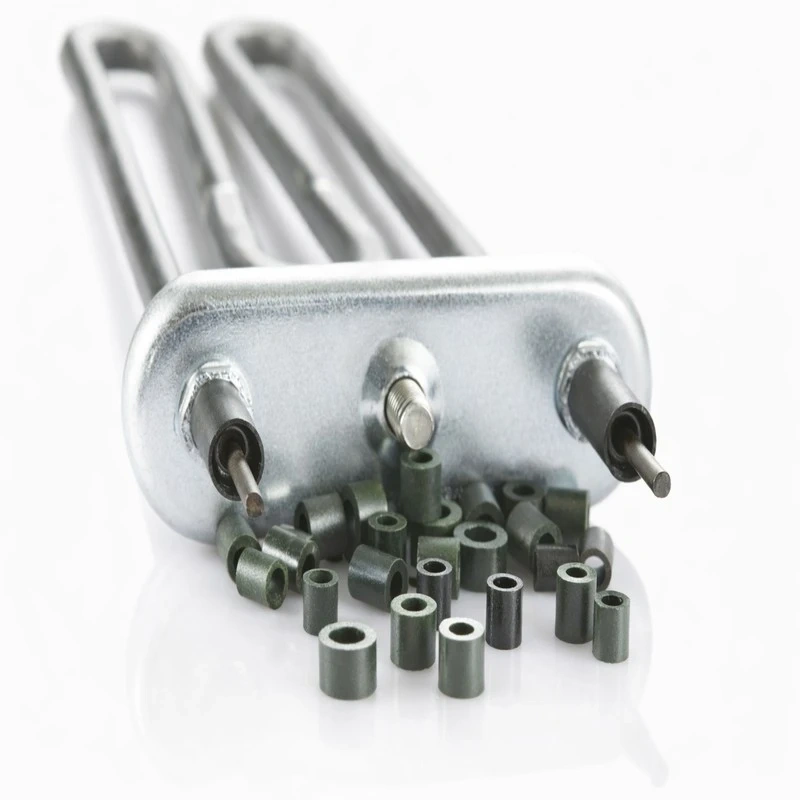
Electrical heater terminals: Its low electrical resistivity and high thermal conductivity make it ideal for manufacturing terminals in heaters, ensuring efficient current transmission and adequate heat dissipation.
-
Vacuum tube cathodes: The purity and stability of nickel are crucial for the performance and longevity of cathodes in vacuum tubes, where consistent electron emission is required.
-
Battery components: Used in the manufacture of internal battery components, especially in those requiring high reliability and corrosion resistance, such as nickel-cadmium and nickel-metal hydride batteries.
-
Heat exchangers: Its high thermal conductivity makes it an efficient material for constructing heat exchangers in corrosive environments, such as the chemical industry.
-
Aerospace and chemical industry: Used in the manufacture of components that must withstand extreme environments, high temperatures, and corrosive substances, such as chemical reactors, pipes, and processing equipment.
-
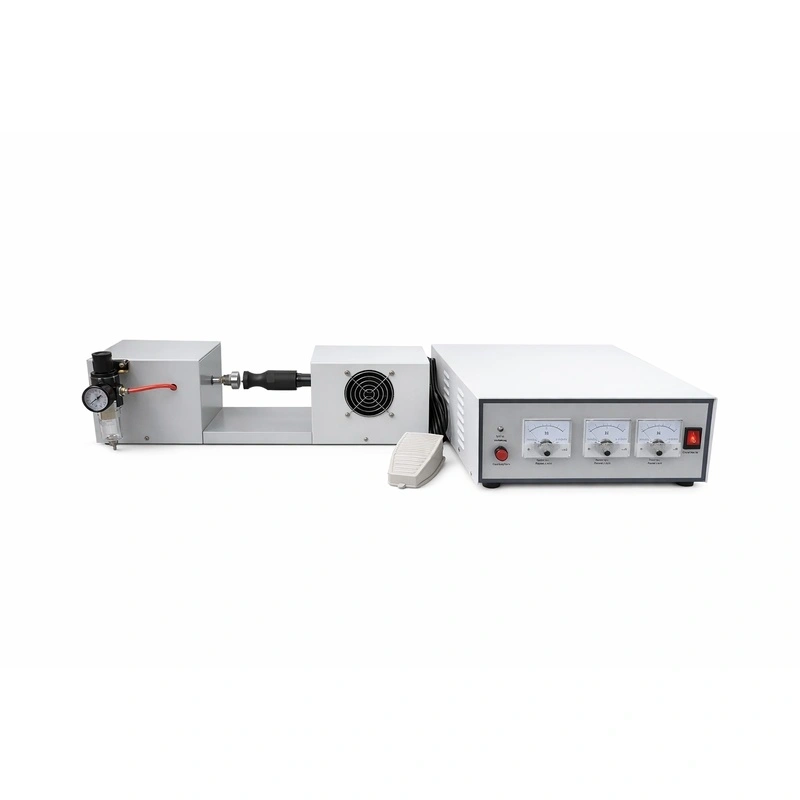
Ultrasonic transducers: Thanks to its magnetostriction property, pure nickel wire is a key material in the production of ultrasonic transducers for various applications, from medicine to industrial inspection.
-
Electronics and telecommunications: Components in electronic devices, lamp filaments, and elements in telecommunications equipment due to its conductivity and resistance.
-
Machinery manufacturing: Parts and components requiring corrosion resistance and stable mechanical properties.
-
Chemical industry: Filters and meshes resistant to alkalis and acids, as well as equipment for processing corrosive substances.
Pure Nickel Wire offers an exceptional combination of characteristics that translate into significant advantages for a multitude of industrial and technological applications. These properties distinguish it as a high-performance material:
-
Corrosion Resistance: Exhibits excellent resistance to alkaline corrosion and corrosion in reducing environments, forming a protective oxide layer in concentrated alkali atmospheres. It is also stable in neutral, acidic, and alkaline solutions, as well as in fresh and salt water. This characteristic is vital for the longevity of components in aggressive environments.
-
High Thermal Conductivity: Its ability to transfer heat efficiently makes it ideal for applications requiring rapid thermal energy dissipation or transfer, such as in heat exchangers.
-
Low Electrical Resistivity: Allows efficient electrical conduction with minimal energy loss, which is crucial for precision electronic and electrical components.
-
Magnetostriction: Possesses the property of changing shape in the presence of a magnetic field, making it suitable for manufacturing ultrasonic transducers and other sensitive devices.
-
Oxidation Resistance: Maintains its structural integrity and properties at high temperatures, resisting oxidation and prolonging the service life of components.
-
Ductility: Its high ductility facilitates the forming and fabrication of fine wires and complex components without compromising the integrity of the material.
-
Good Weldability: Allows for reliable and durable joints with other metals, simplifying assembly and manufacturing processes.
-
High Tensile Strength at High Temperatures: Maintains significant mechanical strength even under extreme heat conditions, which is essential for aerospace and high-temperature applications.
-
Excellent Hot and Cold Workability: Can be processed and formed efficiently both hot and cold, offering flexibility in manufacturing methods.
-
Chemical Stability: Resistant to most acids (sulfuric, nitric, phosphoric), alkalis, and salts, making it suitable for the chemical industry.
Pure Nickel Wire is manufactured under strict quality standards to ensure its performance and reliability in the most demanding applications. The key technical specifications are detailed below:
-
Execution Standard: GB5235-85
-
Purity: Nickel purity can reach up to 99.99%, with common grades like Nickel 200 and Nickel 201 (UNS N02200 / UNS N02201) guaranteeing a minimum purity of 99.6%.
-
Minimum Diameter: The finest available diameter is 0.025mm, allowing its use in microelectronics and high-precision applications.
-
Condition: Available in different hardness conditions to adapt to various processing and application needs: hard, semi-hard, and soft.
-
Production Cycle: The estimated production time is 3 to 7 days, depending on the specifications and order volume.
Chemical Composition of Pure Nickel Material (%)
|
Nickel Grade |
Ni+Co (Not less than) |
Cu (Not more than) |
Si (Not more than) |
Mn (Not more than) |
C (Not more than) |
Mg (Not more than) |
S (Not more than) |
Fe (Not more than) |
Total Impurities (Not more than) |
|---|---|---|---|---|---|---|---|---|---|
|
N2 |
99.98 |
0.001 |
0.003 |
0.002 |
0.005 |
0.003 |
0.001 |
0.007 |
0.02 |
|
N4 |
99.9 |
0.015 |
0.03 |
0.002 |
0.01 |
0.005 |
0.001 |
0.04 |
0.1 |
|
N6 |
99.5 |
0.06 |
0.10 |
0.05 |
0.10 |
0.10 |
0.005 |
0.10 |
0.5 |
|
N8 |
99.0 |
0.15 |
0.15 |
0.20 |
0.20 |
0.10 |
0.015 |
0.30 |
1.0 |
|
DN |
99.35 |
0.06 |
0.02-0.10 |
0.05 |
0.2-0.10 |
0.005 |
0.005 |
0.10 |
0.35 |
|
NY1 |
99.7 |
0.1 |
0.10 |
- |
0.02 |
0.10 |
0.002-0.01 |
0.10 |
0.6 |
|
NY2 |
99.4 |
0.01-0.10 |
0.10 |
- |
- |
0.10 |
0.005 |
0.25 |
1.0 |
|
NY3 |
99.0 |
0.15 |
0.2 |
- |
0.1 |
0.10 |
0.005 |
0.07 |
0.40 |
|
NMg0.1 |
99.6 |
0.05 |
0.02 |
0.05 |
0.05 |
0.07-0.15 |
0.005 |
0.07 |
0.40 |
|
NSi0.19 |
99.4 |
0.05 |
0.15-0.25 |
0.05 |
0.10 |
0.05 |
0.005 |
0.07 |
0.50 |
Pure Nickel Wire is classified into different grades, the most common being N4 and N6, which are distinguished by subtle variations in their chemical composition and, consequently, in their mechanical and resistance properties. These differences allow the material to be optimized for specific applications, guaranteeing the desired performance.
N4 Pure Nickel (also known as Nickel 4)
N4 grade Pure Nickel is characterized by its excellent mechanical strength and notable resistance to corrosion and heat. These properties make it particularly suitable for the manufacture of:
-
Vacuum tube components: Where structural integrity and resistance to high temperatures are critical.
-
Electronic components: In devices that require high reliability and durability.
-
Chemical production filters: Especially in alkali production, where corrosion resistance is fundamental.
This grade is an important structural material in the radio, electric lighting, machinery manufacturing, and chemical industries, as well as in key components of electronic devices.
N6 Pure Nickel (also known as Nickel 6)
N6 grade Pure Nickel not only possesses the inherent physical and chemical properties of nickel metal, but also stands out for its superior resistance to alkalis, acids, and its stability in neutral environments. It is particularly stable in the atmosphere, fresh water, and seawater. Its main applications include the manufacture of:
-
Tubes, rods, plates, and strips: For various structures and components.
Furthermore, N6 Pure Nickel exhibits excellent resistance to corrosion by concentrated hot hydroxide solutions. It is highly resistant to alkaline, neutral, and saline media of acids such as sulfuric, nitric, phosphoric, and organic, making it the material of choice for highly corrosive chemical environments.
The choice between N4 and N6 will depend on the specific requirements of the application, considering factors such as the necessary mechanical strength, exposure to corrosive environments, and operating temperatures.

FAQ
Can nickel wire be used for welding lithium batteries?
Yes, pure nickel is the preferred material for welding lithium batteries due to its excellent electrical conductivity and corrosion resistance. It is mainly used in the manufacture of battery packs via spot welding to join 18650 or 21700 cells. Unlike other materials, pure nickel (minimum 99.6%) guarantees stable connections, does not oxidize over time, and allows efficient energy transfer without overheating the terminals.