Self-Regulating Electrical Heat Trace
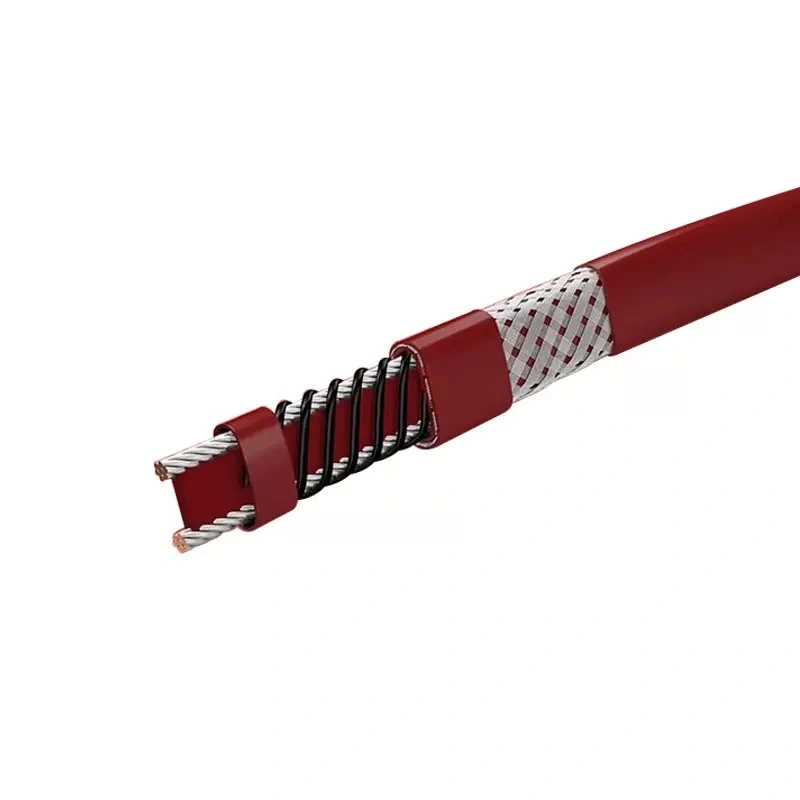
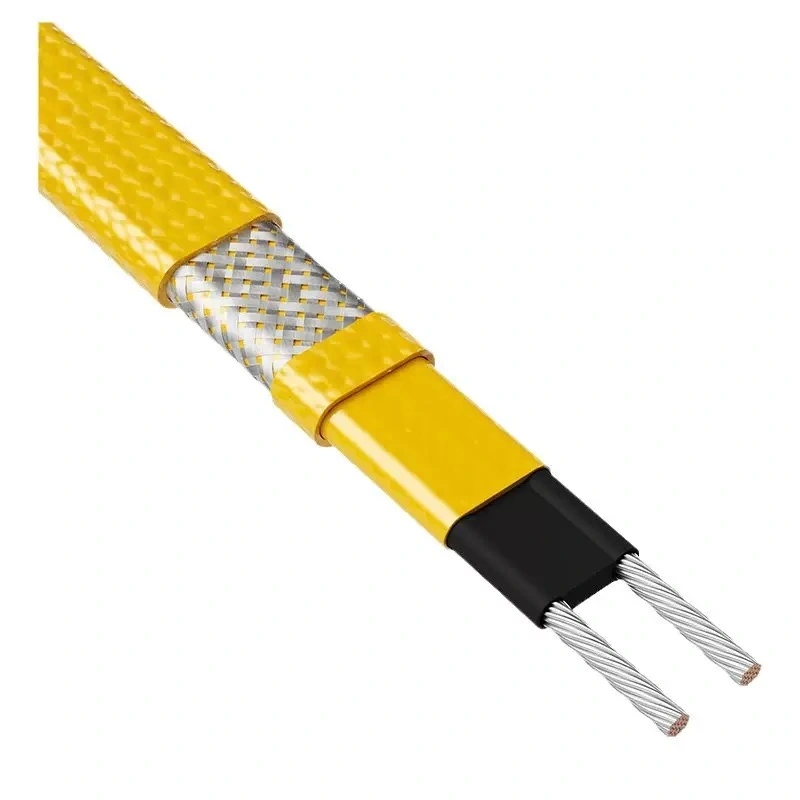
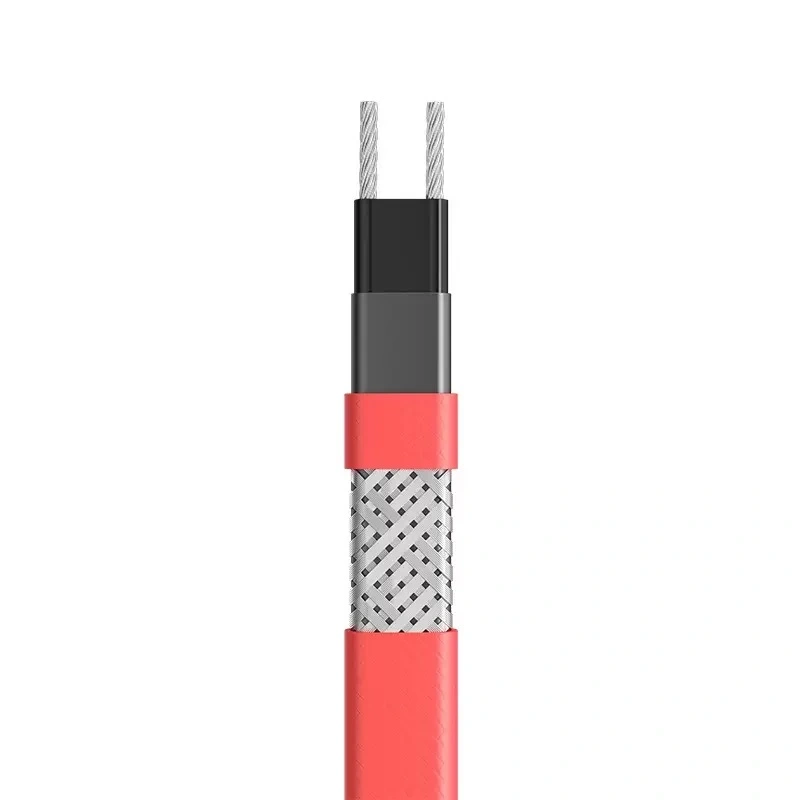
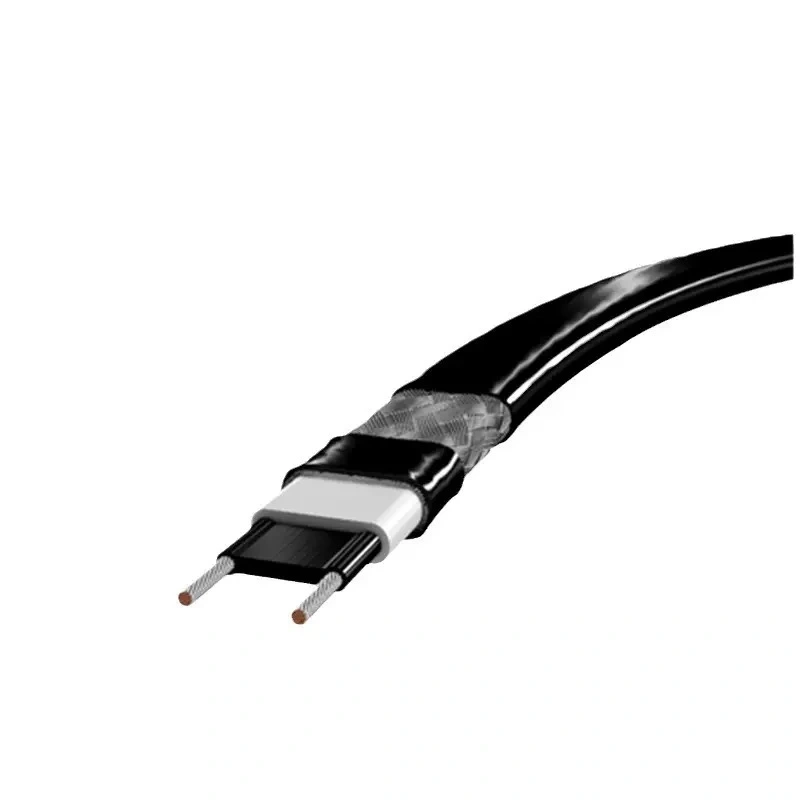
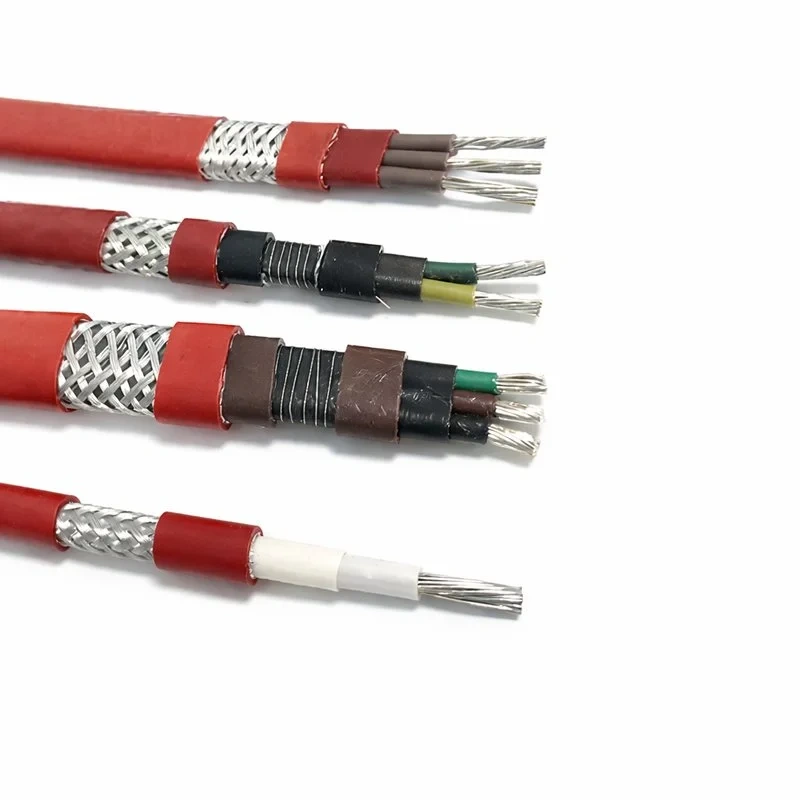
Medium-Temperature Self-Regulating Electrical Heat Trace Cable is an advanced and efficient solution for thermal control in a wide range of industrial and commercial applications. This self-regulating cable is designed with a special conductive polymer and two parallel metal conductors, encapsulated in a protective insulating layer. Its most outstanding feature is the ability to automatically adjust its power output in response to changes in the temperature of the environment or the element to be heated. This makes it an ideal electric heat trace for maintaining specific process temperatures or for freeze protection. Unlike conventional heating systems, this heating cable does not require complex thermostats along its entire length, simplifying installation and reducing operating costs. It is one of the most versatile solutions among the industrial heating cables available on the market, offering reliable and safe performance.
The operation of the Self-Regulating Cable is based on the Positive Temperature Coefficient (PTC) principle. The cable core is composed of a semiconductor material that increases its electrical resistance as its temperature rises. When the ambient or pipe temperature decreases, the resistance of the PTC material lowers, allowing more current to flow and, consequently, generating more heat. Conversely, if the temperature increases, the resistance rises, reducing the current and heat production. This intrinsic self-regulating mechanism ensures that the cable never overheats and that the temperature is maintained uniformly and efficiently along its entire length. This technology is superior to mineral insulation heat traces in certain applications due to its flexibility and ease of on-site cutting to length, allowing precise adaptation to project needs. Furthermore, it integrates seamlessly with heating tapes for more complex heating solutions.

The Medium-Temperature Self-Regulating Electrical Heat Trace Cable is exceptionally versatile and is used in a multitude of sectors for various critical applications. Its ability to adapt to changing conditions makes it indispensable in:
-
Pipe Freeze Protection: It is the ideal solution to prevent freezing of water pipes, fire sprinkler systems, fuel lines, and other conduits exposed to low temperatures in industries such as petrochemical, chemical, electric power, metallurgy, and construction. It guarantees continuous fluid flow, even in the coldest environments.
-
Process Temperature Maintenance: Essential for maintaining process temperature in pipes carrying viscous liquids, oils, chemicals, and food products, where the temperature must be constant to prevent solidification or alteration of the material's properties. This includes production lines, storage tanks, and processing equipment.
-
Tank and Vessel Heating: Effectively used in heating storage tanks, hoppers, and vessels to maintain product viscosity, prevent condensation, or ensure the optimal temperature for specific processes. Its design allows for uniform heat distribution, avoiding hot spots and product damage.
-
Industrial Heat Tracing: As an integral part of industrial heat tracing, this cable is used on oil platforms, refineries, chemical plants, and other facilities where safety and energy efficiency are paramount. It provides a robust and reliable solution for thermal control in demanding environments, including areas classified as hazardous or corrosive.
-
Construction Industry: Applied in the protection of potable water pipes and drainage systems in buildings, as well as in preventing ice formation in gutters and downspouts.
-
Agriculture: Used to protect irrigation systems and water pipes on farms and nurseries during cold months.
The Self-Regulating Electrical Heat Trace Cable offers a series of features and advantages that position it as a superior solution for thermal control in various applications. These properties not only guarantee optimal performance but also contribute to operational efficiency and safety.
Main Features:
-
Power Self-Regulation: The most distinctive feature of this self-regulating cable is its ability to automatically adjust its heat output based on the ambient temperature. This eliminates the need for complex heat trace thermostats along the line, simplifying design and installation. The output power decreases as the temperature increases and vice versa, which prevents overheating and optimizes energy consumption.
-
Energy Efficiency: By generating heat only where and when it is needed, this heating cable significantly reduces energy consumption compared to constant power heating systems. This translates into substantial savings in operational costs, especially in large-scale industrial heat tracing applications.
-
Enhanced Safety: The self-regulating property prevents overheating, even when cables cross or overlap, minimizing the risk of damage to the cable, insulation, or the product being heated. It is an inherently safe solution for electric heat trace.
-
Installation Flexibility: The self-regulating cable can be cut to any length on-site without affecting its performance characteristics, facilitating its adaptation to pipes of different sizes and configurations. This flexibility reduces waste and simplifies installation logistics.
-
Long Service Life: Manufactured with high-quality materials and designed to withstand adverse environmental conditions, this cable offers exceptional durability and a long service life, reducing the need for frequent replacements and maintenance.
-
Chemical and Moisture Resistance: The protective outer layer provides excellent resistance to chemical corrosion and moisture penetration, making it suitable for aggressive industrial environments.
-
Reduced Maintenance: Thanks to its self-regulating design and robustness, the system requires minimal maintenance, lowering associated costs and downtime.
-
Simple Installation: The ability to cut the cable to length and the absence of complex temperature control requirements greatly simplify the installation process, reducing time and labor costs.
-
Versatility: Suitable for a wide range of applications, from pipe freeze protection to process temperature maintenance in various industries.
-
Controller Compatibility: Although the cable is self-regulating, it can be integrated with temperature controllers and monitoring systems for even more precise and efficient management, especially in critical applications.
-
Thermal Insulation: To maximize system efficiency, the use of adequate thermal insulation in conjunction with the cable is recommended, which optimizes heat retention and reduces energy losses.
Below are the detailed technical specifications of the Medium-Temperature Self-Regulating Electrical Heat Trace Cable. This data is crucial for the selection and design of industrial heat tracing systems and ensures optimal and safe performance. To know the heat trace price and obtain a personalized quote, contact our heat trace sales team.
|
Characteristic |
Specification |
|---|---|
|
Available Models |
ZKW, ZBW, ZWK, ZHR, ZBR (equivalent to the international BTV series) |
|
Structure Types |
Basic (ZXW-J), Explosion-proof with screen (ZXW-J-P), Reinforced explosion-proof (ZXW-P-H), Explosion-proof and anti-corrosion (ZXW-P-HF) |
|
Conductor Composition |
Braided tinned copper wire: 70.42, 70.5, 190.32, 190.41 |
|
Conductive Layer |
PTC Polymer, with flame retardant and fluorine content options |
|
Insulation Layer |
Polyolefin, Flame Retardant Polyolefin, Fluoroplastic |
|
Screen Layer |
Tinned copper wire braid or aluminum-magnesium alloy braid (coverage > 80%) |
|
Outer Protective Layer |
Polyolefin, Flame Retardant Polyolefin, Fluoroplastic |
|
Standard Colors |
Insulation layer: Green |
|
Temperature Range |
Maximum maintenance temperature: 130°C |
|
Start-up Current |
≤ 0.6 A/m |
|
Thermal Stability |
Maintains >90% of heat generation after 300 cycles from 10°C to 149°C |
|
Minimum Bending Radius |
25.4 mm at 20°C |
|
Insulation Resistance |
Minimum 20 MΩ (with screen or explosion-proof protection) |
|
Operating Voltage |
220V, 380V |
|
Power Output at 10°C |
40W/m, 45W/m, 50W/m, 60W/m |
|
Cold Resistance Limit |
-60°C |
Note: These specifications may vary depending on the heating cable manufacturer and the specific model. Consult the product data sheet for accurate information.
The installation of the Self-Regulating Electrical Heat Trace Cable is a relatively simple process but requires attention to detail to ensure optimal performance and system safety. It is essential to follow local regulations and the recommendations of the heating cable manufacturer.
General Installation Steps:
-
Planning and Design: Before installation, a detailed design must be carried out that includes the total length of the heating cable, the required power, the location of connection boxes, and temperature controllers if used. Consider the minimum ambient temperature, the desired maintenance temperature, and the type of thermal insulation to be used.
-
Surface Preparation: Ensure that the surface of the pipe or equipment is clean, dry, and free of sharp edges that could damage the cable. If necessary, apply a layer of primer or protective tape.
-
Cable Fixation: The self-regulating cable must be firmly fixed to the pipe or surface using heat-resistant fiberglass tape or stainless steel clamps. Fixation every 30-50 cm is recommended to ensure adequate and uniform contact. For larger diameter pipes, it may be necessary to apply the cable in a spiral or in multiple passes to achieve the desired thermal coverage.
-
Electrical Connection: Make electrical connections in suitable junction boxes, using specific connection and termination kits for industrial heat traces. Ensure all connections are sealed and protected against moisture and corrosion. It is crucial that a qualified electrician performs these connections.
-
Thermal Insulation Installation: Once the self-regulating electrical heat trace cable is installed and connected, adequate thermal insulation must be applied over the cable and pipe. This is essential to minimize heat loss and maximize the energy efficiency of the system. The insulation must be resistant to moisture and operating temperatures.
-
Testing and Commissioning: Before commissioning, perform continuity and insulation resistance tests to verify system integrity. Once tests are completed, energize the system and verify that the cable is heating correctly and that temperature controllers function as intended.
Additional Considerations:
-
Maximum Length: Although the self-regulating cable can be cut to length, there is a maximum circuit length that should not be exceeded to avoid excessive voltage drops. Consult the heating cable manufacturer's specifications.
-
Electrical Protection: It is essential to install overcurrent and ground fault protection devices (residual-current devices) to ensure the electrical safety of the system.
-
Maintenance: Although the system requires little maintenance, periodic inspections are recommended to check the condition of the cable, connections, and insulation.
For detailed information on heat trace price and personalized solutions, do not hesitate to contact our heat trace sales team.
FAQ
How to calculate the required power (W/m)?
The goal of the calculation is to compensate for the heat loss of the pipe to maintain a stable temperature. To determine the required Watts per meter (W/m), the following key factors must be considered:
Temperature Differential (ΔT): The difference between the temperature you want to maintain and the minimum ambient temperature.
Pipe Diameter: A larger surface area means greater heat loss.
Thickness and type of thermal insulation: The most critical factor; good insulation drastically reduces the power required.
Safety factor: Typically, an additional 10% or 20% is added to the theoretical calculation.
Simplified formula: Manufacturer tables or thermal design software are used, which cross-reference ΔT with the pipe diameter to give you the exact heat loss in W/m.