Silicon Carbide Gun Type Heater
Optimize your processes in the glass industry with the Silicon Carbide Gun Type Heater. This SiC heating element is specifically formulated to withstand the demanding conditions of glass processing furnaces, offering rapid heating speed and excellent thermal stability. Its design allows for easy integration into glass manufacturing equipment and glass bowl production lines, ensuring reliable performance and greater operational efficiency. Choose the SiC Gun Type Heater for superior glass heating and consistent results.
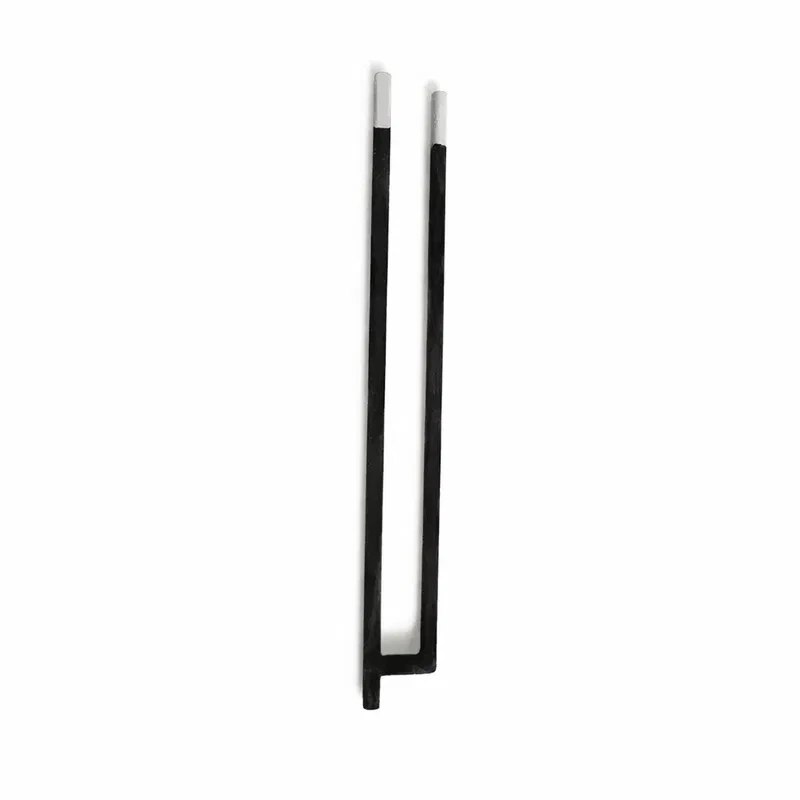
The Silicon Carbide (SiC) Gun Type Heater is a specialized heater designed for the processing of glass bowls. Its unique, gun-like shape allows for precise and efficient heat application in specific areas, which is crucial for the forming and heat treatment of glass products. This SiC heater for glass ensures uniform temperature distribution and high resistance to corrosion from glass vapors, extending the element's service life and improving final product quality. Ideal for industrial glass furnaces and glass molding equipment.
-
Glass bowl processing: Precise heating for molding and shaping glass containers.
-
Glass melting and annealing furnaces: Maintaining elevated temperatures for glass handling.
-
Glass fiber manufacturing equipment: Applications requiring localized and controlled heat.
-
Lighting industry: Production of glass components for lamps and luminaires.
-
Glass laboratories: For small-scale glass blowing and forming work.
Features:
-
Gun-type design: Enables localized and efficient heat application.
-
High corrosion resistance: Withstands aggressive environments in the glass industry.
-
Uniform heat distribution: Ensures homogeneous heating of the glass.
-
Long service life: Manufactured to withstand the extreme conditions of glass processing.
-
Fast heating speed: Optimizes production cycle times.
Advantages:
-
Improves glass product quality: Prevents stresses and defects from uneven heating.
-
Increases production efficiency: Reduces downtime and improves throughput.
-
Reduces operational costs: Less frequent heater replacement.
-
Versatility in furnace design: Facilitates integration into different glass equipment configurations.
-
Reliable operation: Stable performance in high-temperature environments.
|
Parameter |
Value |
|---|---|
|
Heater Type |
Gun Type Silicon Carbide |
|
Primary Application |
Glass bowl processing |
|
Size Annotation Method |
d/l/m x 2 x F x E |
|
Material |
Silicon Carbide (SiC) |
|
Shape |
Gun Type |
-
Prior Inspection: Check that the heater shows no physical damage before installation. Ensure dimensions match those of the equipment.
-
Secure Mounting: Install the gun-type heater in its designated position inside the glass furnace, ensuring a firm fit to prevent movement during operation.
-
Electrical Connections: Securely connect the electrical terminals using high-temperature resistant materials. Avoid mechanical stress on the terminals.
-
Proper Insulation: Ensure insulation around the element is correct to prevent heat loss and protect other components.
-
Calibration and Test: Perform temperature calibration and a gradual heating test to ensure the heater operates correctly and the heat distribution is as expected for glass processing.
FAQ
How does the on/off cycle affect the element's durability?
The on/off cycle is one of the factors that most reduces the service life of a Silicon Carbide (SiC) heater due to the stress caused by thermal expansion.
Expansion and Contraction: Each time the heater heats up and cools down, the SiC material expands and contracts. Although SiC has a low thermal expansion coefficient, repetitive cycles can generate structural microcracks that weaken the heater.
Technical Recommendation: To maximize durability, it is preferable to keep the furnace at a "standby" temperature rather than turning it off completely. If it must be turned off, a power controller (SCR) with a gradual heating ramp should be used to minimize thermal shock and extend the heating element's service life.