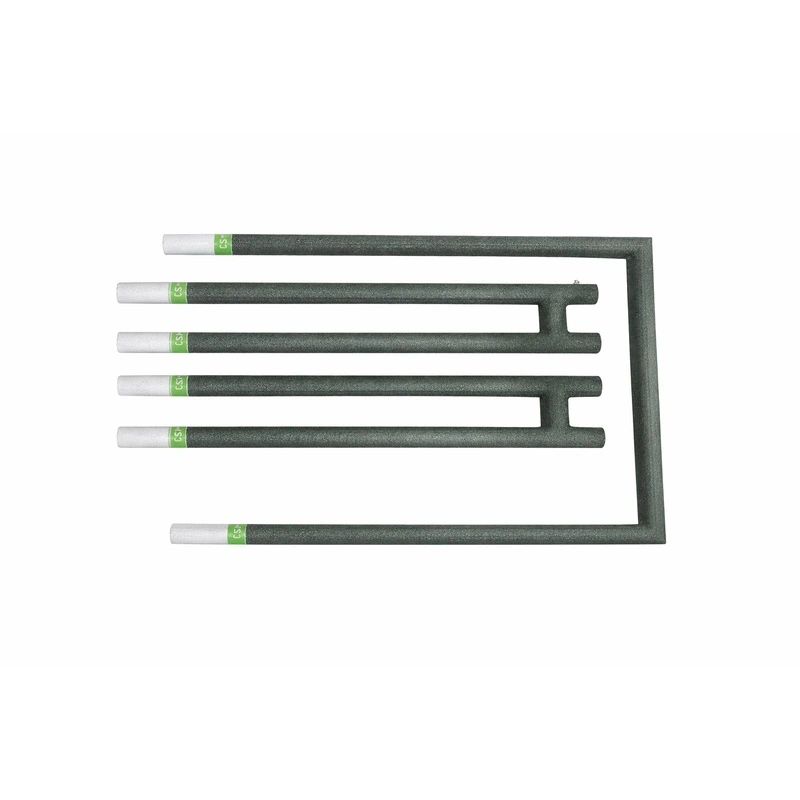
Silicon Carbide H-Type Heater
Optimize your processes with the Silicon Carbide H-Type Heater, a compact and effective solution for rotary kilns and heating applications in the glass industry. This SiC heating element is characterized by its single-terminal design, which facilitates installation and reduces wiring complexity. It provides fast thermal response and superior temperature stability, crucial for processes requiring precise heat control. The inherent durability of silicon carbide ensures consistent performance and reduced operational costs, making the SiC H-Type Heater a smart choice for high-efficiency industrial heating.
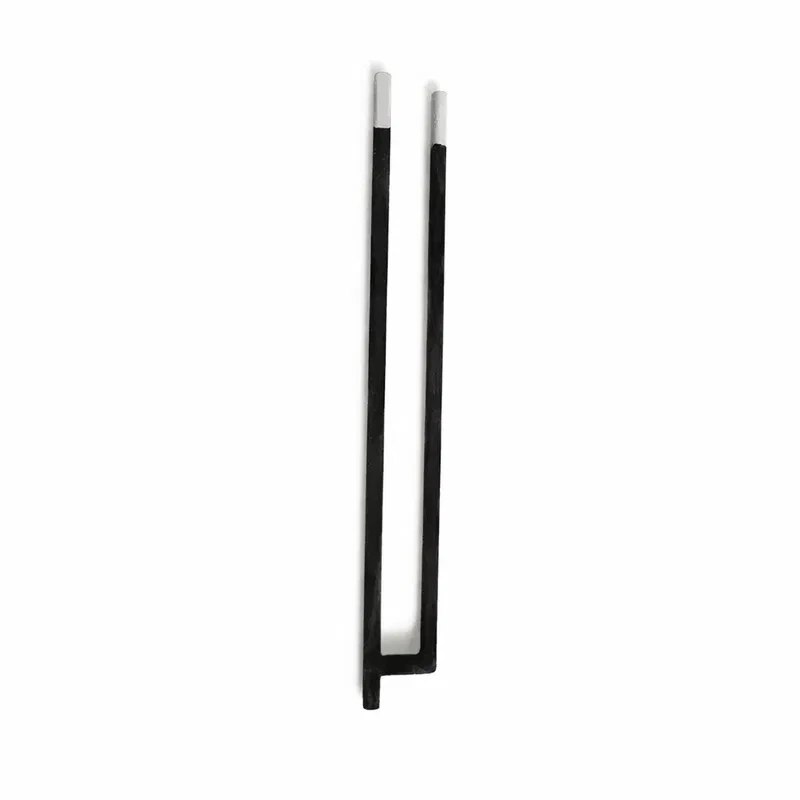
The Silicon Carbide (SiC) H-Type Heater is an innovative heating element designed for single-terminal heating in the glass industry, as well as for various rotary kilns. Its 'H' configuration allows for an electrical connection from a single end, simplifying installation and maintenance in glass processing equipment and industrial furnaces. This high-temperature SiC heater offers efficient heat distribution and excellent corrosion resistance, ensuring reliable performance and a long service life in demanding environments. Ideal for glass heating applications where space or accessibility is limited.
-
Glass industry: Single-terminal heating in material channels.
-
Rotary kilns: For applications requiring uniform heating in a rotating process.
-
Glass processing equipment: Where space is limited or a single-end connection is preferred.
-
Heat treatment furnaces: For processes that benefit from a simplified installation.
-
General industrial heating applications: Where the 'H' shape and single-terminal connection are advantageous.
Features:
-
H-type design: Configuration that optimizes heat distribution.
-
Single-terminal connection: Simplifies installation and wiring.
-
Suitable for the glass industry and rotary kilns: Application versatility.
-
High corrosion resistance: Withstands aggressive environments.
-
Long service life: Superior durability in high-temperature conditions.
Advantages:
-
Ease of installation and maintenance: Reduces downtime.
-
Space saving: Compact design for limited furnace configurations.
-
Efficient heat distribution: Uniform heating in the desired zones.
-
Reliable performance: Stable and consistent operation in demanding environments.
-
Reduced operating costs: Lower energy consumption and fewer replacements.
|
Parameter |
Value |
|---|---|
|
Heater Type |
H Type Silicon Carbide |
|
Primary Application |
Glass industry (single-terminal heating), various rotary kilns |
|
Material |
Silicon Carbide (SiC) |
|
Shape |
H Type |
|
Connection |
Single terminal |
-
Mounting Planning: Identify the optimal location for the H-type heater, considering heat distribution and accessibility for the single-terminal connection.
-
Careful Insertion: Insert the element into the furnace, ensuring it is well-supported and the heating portion is correctly positioned.
-
Single Terminal Connection: Make the electrical connection to the single terminal, using suitable cables and connectors for high temperature. Ensure a firm contact.
-
Insulation Verification: Check that the insulation around the element is sufficient to prevent heat loss and protect surrounding components.
-
Operational Test: Perform a heating test to confirm that the H-type heater operates correctly and that the temperature is distributed uniformly in the heating zone.
FAQ
How to prevent electrical arcing in the terminals of an H-type heater?
H-type (or single-terminal) heaters are common in space-limited applications, but as both poles are at the same end, the risk of arc formation is higher.
Thermal and Electrical Insulation: It is essential to use ceramic support blocks (usually alumina) that maintain a constant physical separation between the two terminals. Never allow the furnace insulation material (ceramic fiber) to directly touch the electrified zones, as at high temperatures the fiber can become slightly conductive.
Surface Cleaning: The buildup of metal powders, moisture, or carbon deposits on the heater head acts as a conductive bridge. Periodic cleaning of the terminals with dry compressed air should be performed.
Braid Tightening: A loose contact generates micro-arcs that carbonize the terminal. Use stainless steel clips with adequate tension to ensure the aluminum braid is in full contact with the surface of the cold zone.