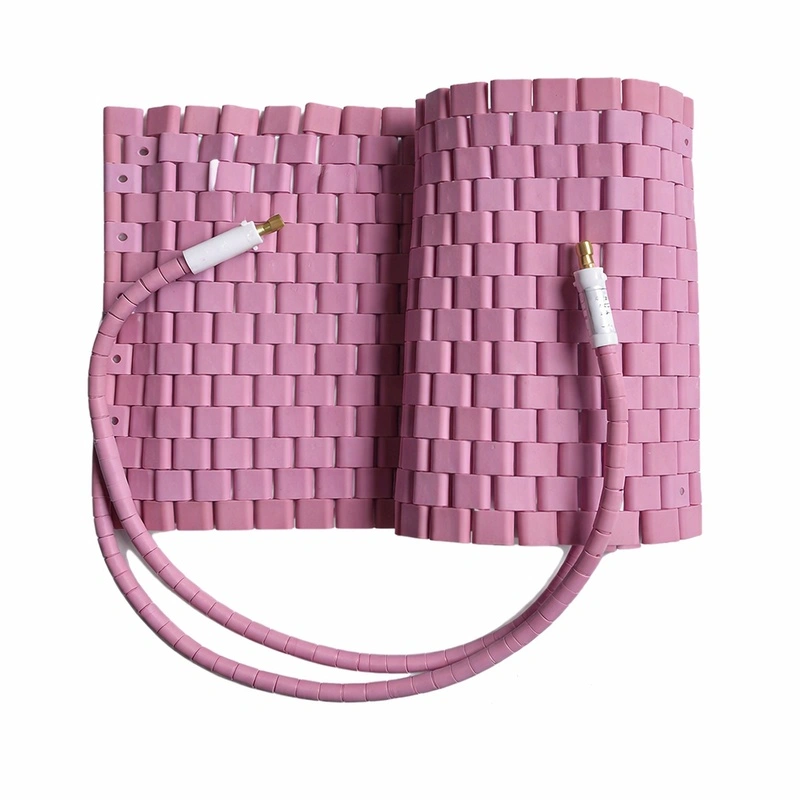
Steatite Ceramic Components for Heaters
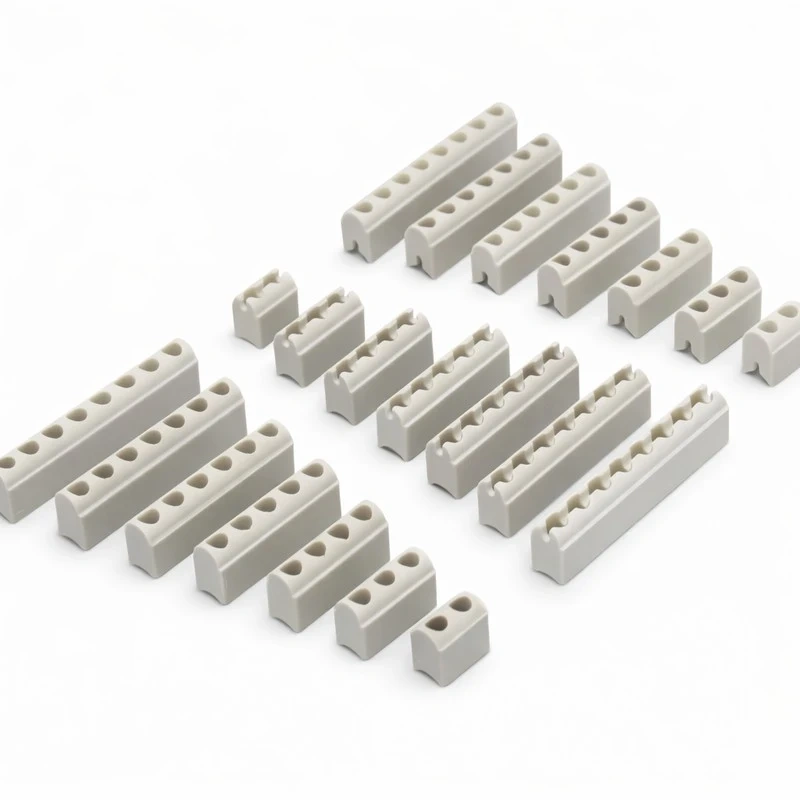
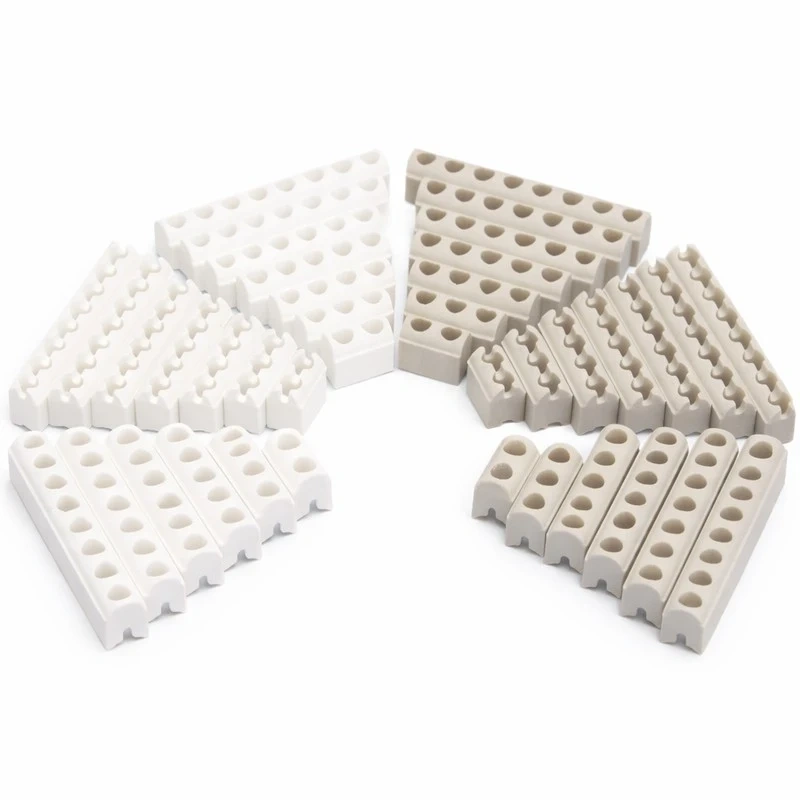
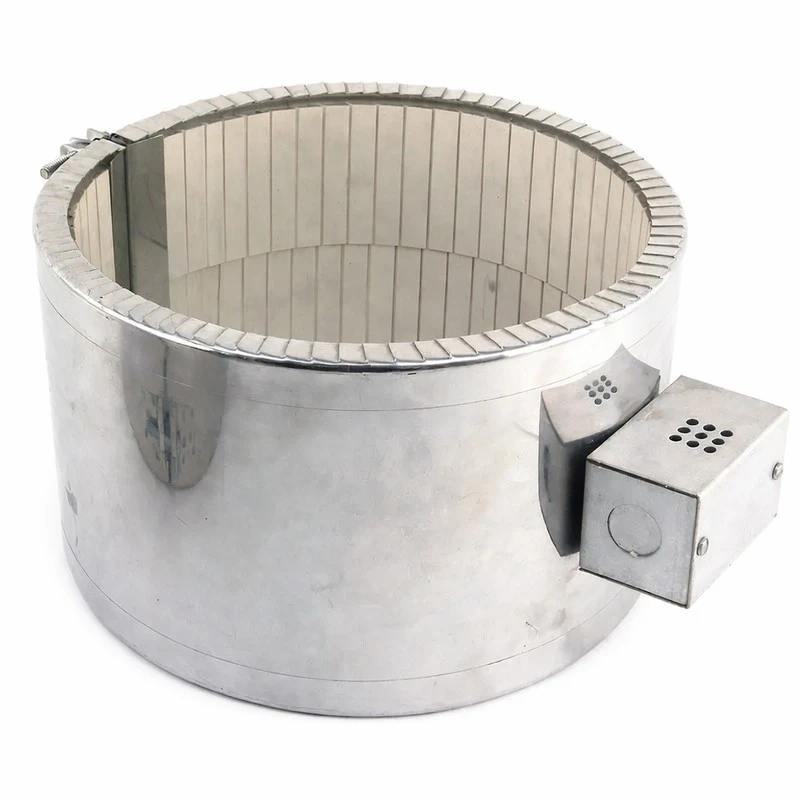
Our high-quality refractory ceramic train-type components and ceramic tiles are specifically designed for the manufacturing of ceramic band heaters, clamp heaters, and strap heaters. These components, made from materials such as steatite (talc) and alumina, ensure superior electrical insulation and exceptional thermal resistance in critical industrial processes.
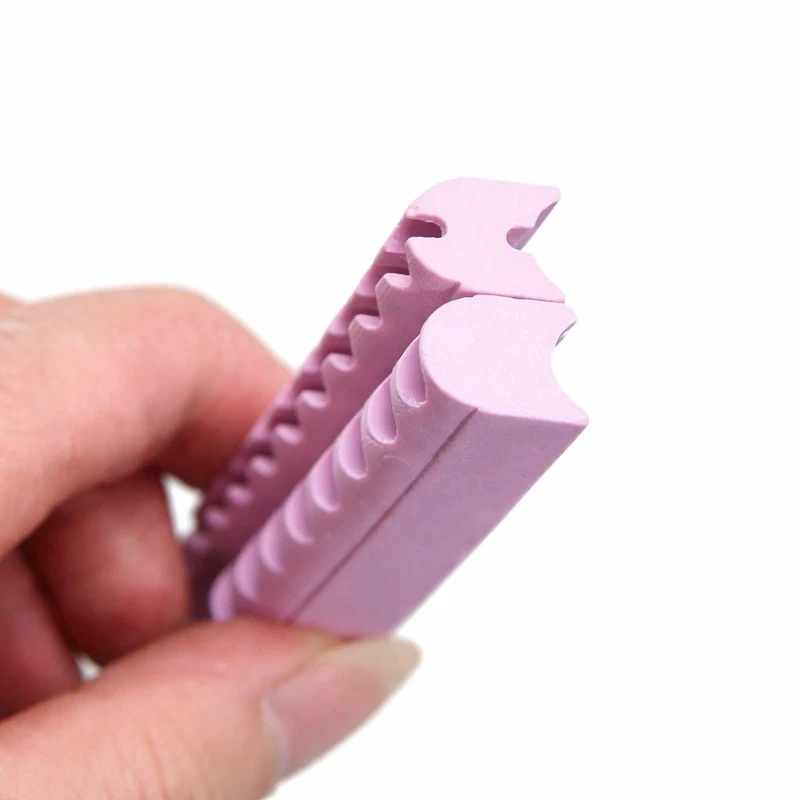
Our train-type ceramic components for band heaters represent the most advanced solution for insulating and supporting heating elements. These parts, also known as ceramics for clamp heaters and strap heaters, guarantee superior electrical insulation and exceptional thermal resistance in critical industrial processes.
Ceramic for ceramic band heaters is manufactured using high-precision dry pressing and extrusion processes, utilizing high-purity steatite (talc) and alumina compounds. This train-type ceramic design not only facilitates heater assembly but also protects the heating wire (Kanthal or Nichrome) against short circuits and mechanical damage, ensuring uniform heat distribution and a prolonged heater service life.
Our train-type ceramic parts stand out for their superior physical and chemical properties, optimized to withstand extreme operating conditions. Below are the detailed technical parameters according to the manufacturing material:
|
Technical Property |
Alumina 99% |
Alumina 95% |
Zirconia (ZrO2) |
Steatite (Talc) |
Cordierite |
|
Density (g/cm³) |
3.85 |
3.60 |
5.90 |
2.60 |
2.00 |
|
Max. Use Temp. (°C) |
< 1500 |
< 1400 |
< 1600 |
< 1100 |
< 1200 |
|
Water Absorption (%) |
0 |
0 |
0 |
0 |
0 |
|
Dielectric Strength (KV/mm) |
18 |
16 |
15 |
> 20 |
> 15 |
|
Hardness (HV) |
1700 |
1600 |
1400 |
- |
- |
|
Thermal Conductivity (W/m.k) |
31 |
22 |
3 |
- |
- |
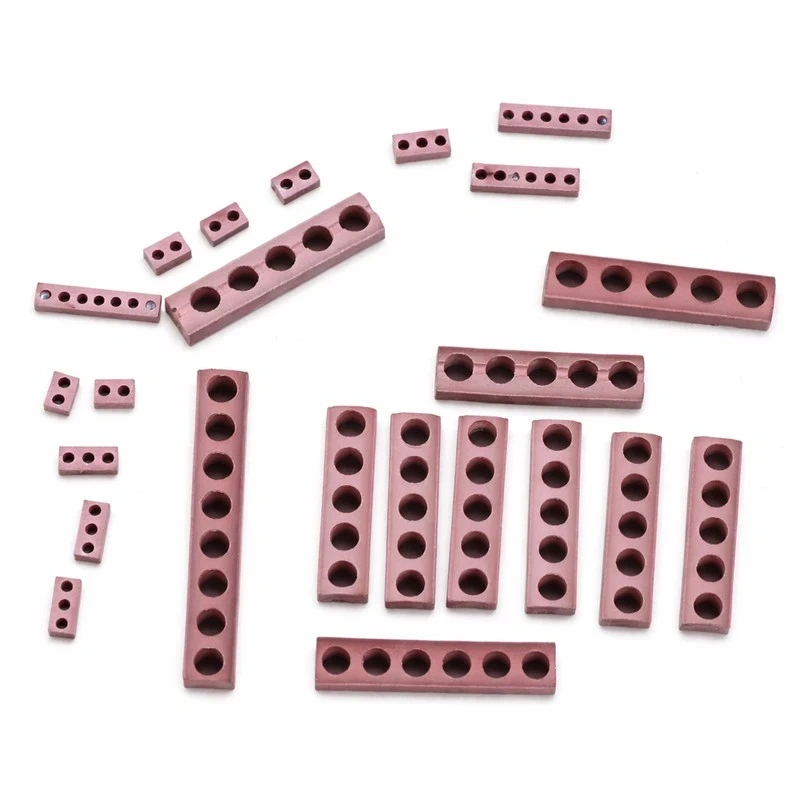
The following table presents a detailed breakdown of our train-type ceramic components for band heaters, allowing engineers to select the exact configuration based on the heating wire gauge and required power.
|
Hole Configuration |
Diameter 4.0 mm |
Diameter 4.5 mm |
Diameter 5.0 mm |
Diameter 5.5 mm |
Diameter 6.0 mm |
|
1 Hole |
Available |
Available |
Available |
Available |
Available |
|
2 Holes |
Available |
Available |
Available |
Available |
Available |
|
3 Holes |
Available |
Available |
Available |
Available |
Available |
|
4 Holes |
Available |
Available |
Available |
Available |
Available |
|
5 Holes |
Available |
Available |
Available |
Available |
Available |
|
6 Holes |
Available |
Available |
Available |
Available |
Available |
|
7 Holes |
Available |
Available |
Available |
Available |
Available |
|
8 Holes |
Available |
Available |
Available |
Available |
Available |
|
9 Holes |
Available |
Available |
Available |
Available |
Available |
|
10 Holes |
Available |
Available |
Available |
Available |
Available |
We understand that each industrial process has unique requirements. Therefore, we offer a specialized custom manufacturing service for all our refractory ceramic components and tiles. We can adjust dimensions, complex geometries, and specific chemical compositions to meet the demands of special applications.
Our technical team works closely with clients to develop ceramics for clamp and strap heaters that optimize heat transfer and minimize energy losses. Whether you need a non-standard hole configuration or a material with customized thermal properties, we guarantee millimeter precision and compliance with the highest international quality standards.
FAQ
What is the maximum temperature that refractory ceramic tiles and components can withstand?
Thermal resistance capacity is the most critical factor when selecting refractory ceramic components and tiles for industrial applications. Not all ceramic materials are equal; their temperature limit directly depends on their chemical composition and purity.
For ceramic band heaters, the most common materials are steatite (talc-based) and alumina. Steatite is ideal for standard applications, continuously withstanding temperatures up to 1100°C. However, for more demanding processes, 95% or 99% alumina is the preferred choice, as it can operate safely in ranges from 1400°C to 1500°C.
It is important to note that the maximum operating temperature does not only depend on the ceramic material but also on the environment. Factors such as thermal shock, furnace atmosphere (oxidizing or reducing), and direct contact with chemical elements can affect the integrity of the heater tiles. Therefore, choosing a material with an adequate thermal safety margin is essential to prevent premature cracks or failures in the heating system.