Thermocouple Welding Machine ST-03 – Heatecx Limited

Heatecx Limited

Thermocouple Welding Machine ST-03

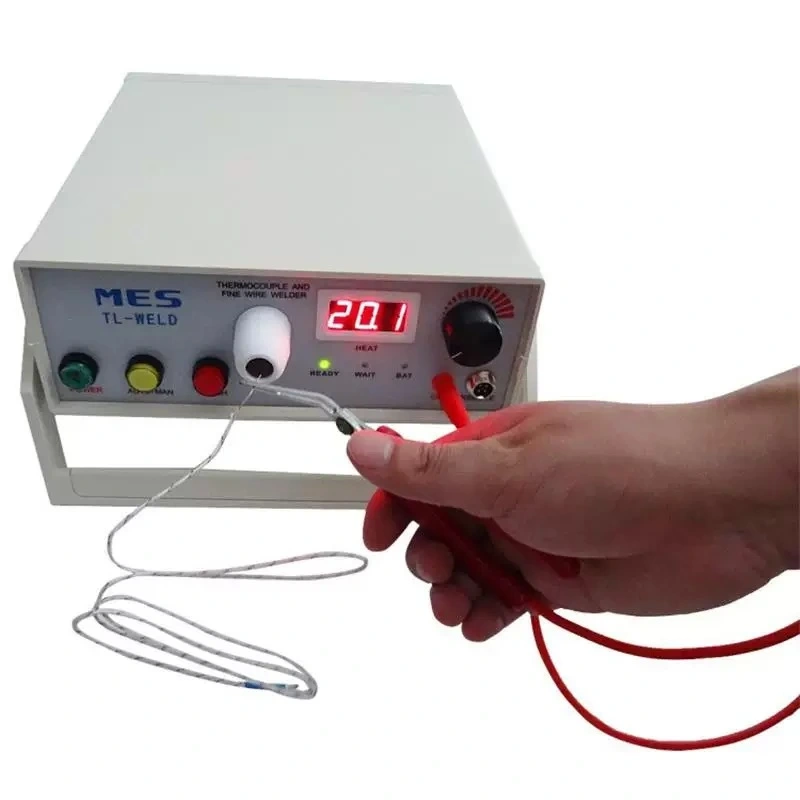
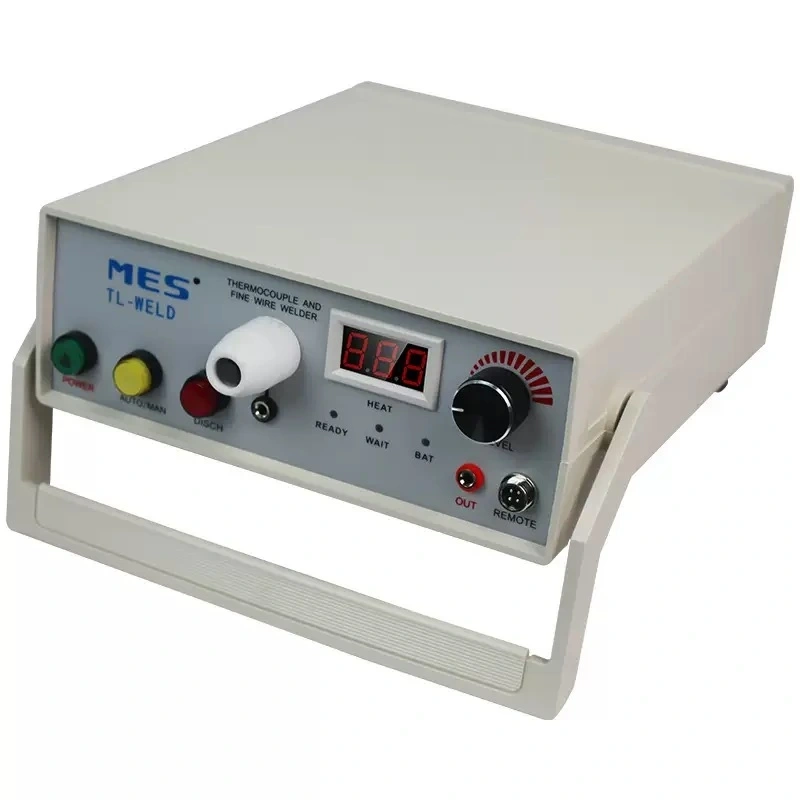
The capacitive discharge thermocouple welding machine is a specialized piece of equipment that utilizes the principle of resistance welding or contact welding to join thermocouple wires. Its operation is based on the controlled discharge of energy stored in capacitors, allowing it to generate a high-intensity, short-duration current pulse. This method is ideal for the precision welding of delicate materials like those used in thermocouples, minimizing the heat-affected zone and ensuring the integrity of the joint. It incorporates high-frequency technology and an inversion action principle, which translates to superior energy efficiency and precise control of the welding process. It is a portable thermocouple welder and also adaptable for bench use, offering versatility in any work environment.

Discover the ultimate thermocouple welder, an essential tool for professionals seeking precision welding equipment and state-of-the-art thermocouple joining solutions. Our capacitive discharge welding machine is designed to optimize your processes, offering fast, clean welds on a variety of metals. Ideal for thermocouple manufacturing, temperature sensor repair, and instrumentation applications, this equipment guarantees exceptional performance. With its compact and robust design, it is perfect for both the workshop and field work. Search for "industrial thermocouple welder," "thermocouple welding equipment," or "resistance welding machine for thermocouples" and you will find this leading market solution. We offer customized electric welding machines to meet your specific needs, ensuring maximum welding precision and durability.

This thermocouple welding machine is indispensable in a wide range of sectors and applications where precise temperature measurement is critical. Its capabilities make it ideal for:

  • Temperature Sensor Manufacturing:​ Creation of Type K, J, T, E, N, R, S, B, and other thermocouples for various industries.

  • Automotive Industry:​ Production and maintenance of sensors for engines, exhaust systems, and climate control.

  • Aerospace:​ Assembly of thermocouples for temperature monitoring in turbines, engines, and critical components.

  • Research and Development Laboratories:​ Creation of custom thermocouples for high-precision experiments and testing.

  • Industrial Processes:​ Welding of thermocouples for temperature control in furnaces, boilers, extruders, and production lines.

  • HVAC/R:​ Installation and repair of heating, ventilation, air conditioning, and refrigeration systems.

  • Petrochemical:​ Manufacturing of durable sensors for corrosive and high-temperature environments.

  • Electronics:​ Welding of sensitive components and thermocouples on printed circuit boards and electronic devices.

Key Features:

  • Capacitive Discharge Technology:​ Provides controlled, high-energy welding pulses.

  • Resistance/Contact Welding Principle:​ Ensures strong, low-resistance joints.

  • Electric Operation:​ Efficient and reliable power source.

  • Style Versatility:​ Available in portable and bench configurations.

  • High Processing Precision:​ Ideal for delicate and demanding work.

  • DC Spot Welding Current:​ Offers superior stability and control.

  • Manual Control:​ Allows the operator fine and direct adjustment of the process.

  • Wide Thickness Range:​ Capable of welding wires from 0.1 mm to 3.0 mm in diameter.

  • Robust Design:​ Built for durability and performance in industrial environments.

Advantages:

  • High-Quality Welds:​ Produces clean, strong joints with minimal metallurgical alteration.

  • Energy Efficiency:​ Capacitive discharge technology optimizes energy consumption.

  • Versatility:​ Suitable for a wide range of thermocouple types and sizes.

  • Ease of Use:​ Intuitive interface and manual control simplify operation.

  • Portability:​ The portable design option facilitates transportation and use in different locations.

  • Cost Reduction:​ Minimizes material waste and downtime thanks to precision and reliability.

  • Enhanced Safety:​ Includes protective goggles and a foot pedal switch for safer operation.

  • Simple Maintenance:​ Durable and easily replaceable components, such as the spare carbon electrode.

Technical Characteristic

Detail

Welding Principle

Resistance Welding / Contact Welding

Action Principle

Inversion

Frequency

High Frequency

Maximum Weldable Thickness

0.1 - 3.0 mm

Drive Method

Electric

Action Object

Metal

Style

Portable / Bench

Processing Precision

Precise

Power Form

High Frequency

Welding Current

Direct Current (DC)

Primary Use

Thermocouple Welding

Control Method

Manual

Welding Method

Arc Welding (for general use) / Contact Welding (for thermocouples)

Standard Configuration:

  • 1 x Electric Welding Clamp

  • 1 x Safety Goggles

  • 1 x Power Cable

  • 1 x Spare Carbon Electrode

  • 1 x Fuse and Adjustment Batch (adjustment parts)

  • 1 x Additional Foot Pedal Switch


To ensure optimal performance and extend the service life of your thermocouple welding machine, follow these key recommendations:

Battery Charging and Maintenance

The thermocouple welding machine is a capacitive discharge equipment with an internal battery. It is crucial to keep the battery in optimal condition to ensure its durability and efficiency. When the machine has been used for a period of time (especially if it came with a factory charge), it is imperative to recharge the battery promptly to avoid damage. The charging process is simple:

  1. Connect the external power cable to the machine and a power outlet.

  2. Ensure the POWER switch is in the ON position.

  3. The switch light will illuminate, indicating the machine is in charging state.

  4. The recommended minimum charging time is 20 minutes to ensure adequate charge and protect the battery's service life.

Practical Tips for Thermocouple Welding

Thermocouple welding requires precision and proper adjustment of the force to obtain quality joints. Consider the following points:

  • Thermocouple Preparation:​ Use a clamp to gently hold the two stripped ends of the thermocouple. It is essential that the clamp's gripping point is at a minimum distance of 5 mm from the end to be welded. This prevents the thermocouple wires from contracting and sticking to the clamp during the welding process.

  • Adjusting Welding Force (Level):​ The welding force should be adjusted gradually, starting from a low level and increasing until the optimal point is found. For example, for a 0.254 mm wire, a force of 35 is usually suitable, while for a 0.3 mm wire, a force of 37 is recommended.

  • Screen Monitoring and Energy Release:​ If, when welding fine wires, the screen shows an excessively high force value (e.g., 65 for a 0.3 mm wire), do not proceed with the weld, as excessive force will damage the wire. Instead, you must reduce the force using the LEVEL potentiometer.

  • Rapid Energy Release:​ Note that when adjusting the LEVEL potentiometer, the value on the screen will not decrease instantly. For the screen value to drop rapidly and reflect the new adjustment, you must press the red power button to release the accumulated energy. It is important not to hold the red button down continuously; press it briefly to release the energy and allow the screen to update.

By following these guidelines, you will ensure safe, efficient, and prolonged operation of your capacitive discharge thermocouple welding machine, obtaining consistent, high-quality welding results.

FAQ

Our capacitive discharge thermocouple welder is highly versatile and designed for the precision joining of a wide range of temperature sensors. It is compatible with Type K, J, T, E, N, R, S, and B thermocouples, allowing the welding of dissimilar metal wires with diameters ranging from 0.1 mm to 3.0 mm. Thanks to its high-frequency resistance welding technology, it guarantees a homogeneous metallurgical joint with low electrical resistance, ideal for industrial, aerospace, and laboratory applications where precision in thermal measurement is critical.

Customers also viewed