How to Reduce the Power Consumption of Electric Heaters: A Comprehensive Guide for Industrial Efficiency
In today’s industrial landscape, marked by volatile industrial energy costs and growing environmental awareness, optimizing the power consumption of electric heaters has become a strategic priority. This article delves into the most advanced solutions for achieving efficient heating, exploring everything from precision heating and advanced insulation to material selection and integration with Industry 4.0. Our goal is to provide a comprehensive guide to reducing the power consumption of electric heaters and maximizing operational profitability.
1. The Imperative of Energy Efficiency in Heating Systems
Energy efficiency in heaters is not merely a trend, but an economic and operational necessity. Excessive power consumption not only directly impacts profit margins but also contributes to a larger carbon footprint. Investing in efficient electric heaters and energy-saving technologies for industrial heating translates into:
- Reduction of Operational Costs: Lower electricity expenditure, which improves competitiveness.
- Greater Sustainability: Contribution to emission reduction targets and corporate social responsibility.
- Improved Process Performance: Greater thermal stability and control, which can lead to better final product quality.
- Prolonged Equipment Service Life: Reduced thermal and operational stress on the heaters and associated components.
2. Precision Heating: The Art of Thermal Management
Precision heating is the cornerstone of efficiency, ensuring that every watt of energy is converted into useful heat and applied exactly where it is needed. This is achieved through a combination of technologies and strategies:
2.1. Advanced Control Systems
- PID Control (Proportional-Integral-Derivative): Beyond basic ON/OFF control, PID controllers for heaters continuously adjust the power output based on the difference between the desired and actual temperature, the duration of that difference, and the rate at which it changes. This minimizes oscillations and overheating, achieving superior thermal stability and significant energy savings in heaters.
- SCR Control (Silicon Controlled Rectifier): For high-power applications, SCR controllers modulate power continuously, allowing for very fine temperature control and avoiding the current spikes associated with contactors, which prolongs the service life of heaters and improves efficiency.
- Predictive and Adaptive Control: Advanced algorithms that learn the thermal behavior of the system and anticipate heat needs, adjusting power proactively. This is crucial for processes with variable thermal loads or rapid temperature changes.
2.2. High-Resolution Temperature Sensors
Control precision depends directly on measurement quality. Strategic sensor placement and type are vital:
- Thermocouples and RTDs (Resistance Temperature Detectors): Offer precise measurements over a wide temperature range. Their correct installation, in direct contact with the critical measurement point, is fundamental for accurate feedback to the controller.
- Infrared Sensors (PIR): Ideal for measuring surface temperatures without contact, especially useful in applications where physical contact is unfeasible or in aggressive environments. They enable non-contact temperature monitoring and fast response.
2.3. Zonal Heating and Power Modulation
- Intelligent Zonal Heating: Instead of heating an entire system, it is divided into independent zones, each with its own heater and control. This allows heat to be applied only where and when needed, drastically reducing consumption in inactive areas or those with lower thermal requirements. It is a key strategy for optimizing industrial heating.
- Power Modulation: Adjusting the power of the heaters based on the actual demand of the process, rather than operating them at full capacity at all times. This is achieved with the advanced control systems mentioned above.
3. Advanced Insulation: A Barrier Against Energy Loss
Deficient thermal insulation for heaters is one of the main causes of energy loss. Investing in better insulation is one of the most cost-effective ways to reduce the power consumption of electric heaters.
3.1. Magnesium Oxide (MgO) in Tubular Heaters
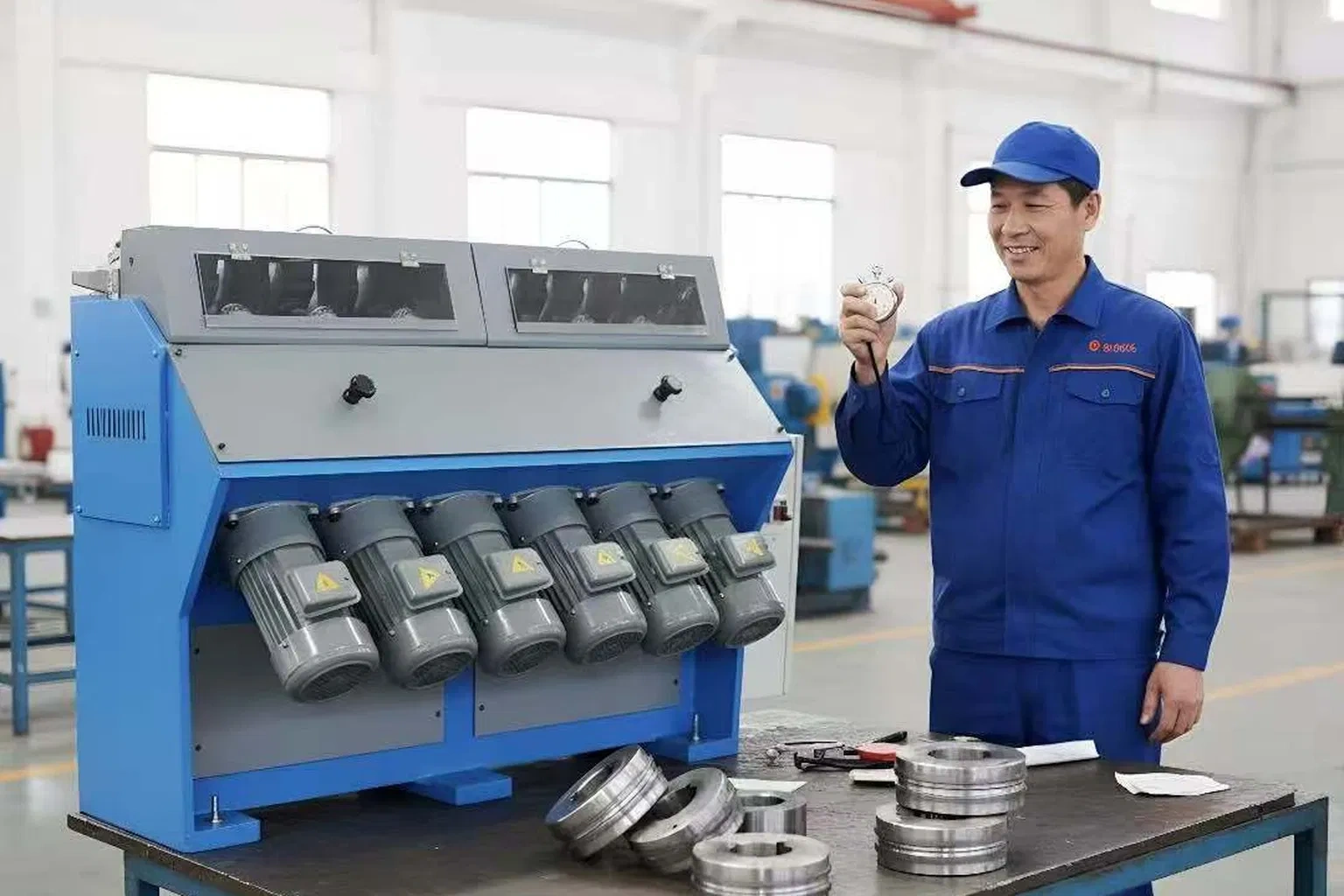
- MgO Quality and Compaction: In tubular heaters, MgO not only provides electrical insulation but also facilitates heat transfer from the resistive wire to the sheath. High-purity MgO and optimal compaction (achieved with machines like the QUWM (HT-B6) Tube Bending Machine) ensure efficient thermal conductivity and minimize internal losses, avoiding hot spots and prolonging the heater’s service life. It is fundamental for the efficiency of tubular heaters.
3.2. High-Performance External Insulating Materials
- Ceramic Fiber and Mineral Wool: Excellent for high temperatures, they reduce heat transfer by conduction and radiation from the hot surfaces of equipment (ovens, pipes, tanks). They are effective solutions for industrial equipment insulation.
- Microporous Insulation: Advanced materials with an extremely fine pore structure that minimize conduction and convection, offering superior insulating performance in confined spaces.
- Custom Insulation Jackets: Designed to fit the specific shape of equipment and pipes, these removable jackets provide effective insulation and facilitate maintenance.
3.3. Enclosure Design and Thermal Barriers
An intelligent design of the enclosures housing the heaters or heating processes, incorporating air gaps, radiant barriers, or multi-layer insulating materials, can significantly reduce heat loss to the environment, improving the system’s thermal efficiency.
4. Heater Materials and Design for Maximum Efficiency
The choice of materials and the design of the heater have a direct impact on its efficiency and durability.
- Sheath Material:
- Incoloy and Stainless Steel (Inox): Ideal for high temperatures and corrosive environments, offering good mechanical strength and durability. Their selection impacts heat transfer and service life.
- Copper: Excellent thermal conductor, preferred for low-temperature applications and liquid heating, where rapid heat transfer is crucial.
- Resistive Wire Material: Nichrome (Nickel-Chrome) alloys are the most common due to their high resistivity, oxidation resistance, and stability at high temperatures. The quality and diameter of the wire are critical for the heater’s power and service life.
- Optimal Design: Finned heaters to improve heat dissipation in air, cartridge heaters for insertion heating, or band heaters for surface heating. Each design is optimized for a specific application, maximizing efficient heat transfer.
5. Predictive Maintenance and Intelligent Monitoring: The Era of Industry 4.0
The integration of Industry 4.0 technologies offers new opportunities for optimizing heater power consumption.
- Predictive Maintenance: Instead of waiting for a heater to fail (corrective maintenance) or replacing it at fixed intervals (preventive maintenance), predictive maintenance uses real-time data to predict when a failure is likely to occur. This includes:
- Power Consumption Monitoring: Detecting anomalous increases in a heater’s consumption can indicate insulation degradation or a problem with the resistive element.
- Thermographic Analysis: Thermographic cameras can identify anomalous hot or cold spots on the heaters or surrounding insulation, revealing heat losses or impending failures. It is a key tool for detecting thermal losses.
- Vibration Analysis: In systems with moving components associated with heating, it can indicate mechanical problems affecting efficiency.
- IoT (Internet of Things) and Smart Sensors: The implementation of connected sensors that transmit temperature, current, voltage, and consumption data in real-time to cloud platforms enables remote monitoring of heaters and comprehensive analysis. This facilitates informed decision-making and continuous optimization.
- Data Analysis and Machine Learning: Processing large volumes of operational data allows for identifying patterns, predicting failures, optimizing heating cycles, and adjusting parameters for maximum energy efficiency.
6. Process Optimization and Heat Recovery
Efficiency lies not only in the heater itself but in how it is integrated into the overall process.
- Reduction of Downtime: Minimizing periods when heaters are on but not performing a productive function.
- Optimization of Production Cycles: Adjusting production schedules and volumes to take advantage of times of lower energy demand or to group processes requiring similar heating.
- Heat Recovery Systems: Capturing waste heat from exhaust gases, hot liquids, or equipment surfaces and reusing it to preheat air, water, or other materials. Heat recuperators and regenerators are examples of technologies that can significantly reduce the thermal load on primary heaters.
Conclusion: Towards a Future of Sustainable Heating
Reducing the power consumption of electric heaters is a multifaceted effort that requires a holistic vision. By combining precision heating with better insulation systems, intelligent material selection, advanced predictive maintenance, and process optimization, industries can achieve substantial energy savings. Adopting these strategies not only mitigates the impact of industrial energy costs but also positions companies at the forefront of innovation and sustainability, building a future where heating is as powerful as it is efficient.