High-Temperature Industrial Plugs and Connectors – Heatecx Limited

Heatecx Limited

High-Temperature Industrial Plugs and Connectors

Our High-Temperature Plugs and High-Temperature Connectors are specifically designed to operate in the most demanding industrial environments, where thermal conditions exceed the capabilities of standard connectors. Manufactured with first-rate ceramic and metallic materials, these Industrial Plugs guarantee a secure and stable electrical connection, even when exposed to extreme heat and constant thermal fluctuations. Their robust construction ensures exceptional durability and superior resistance to corrosion and mechanical wear, making them the ideal solution for maintaining operational continuity in critical processes. They are essential components for any system requiring reliable power transmission under thermal stress.

The range of High-Temperature Connectors we offer represents the pinnacle of electrical connectivity engineering for intense thermal applications. Each plug is meticulously designed to withstand high temperatures without compromising its structural integrity or electrical performance. The selection of advanced metal alloys and ceramic insulators confers unmatched resistance upon these connectors, minimizing the risk of failure due to overheating or material degradation. They are the preferred choice for industries that cannot afford interruptions, providing a safe and long-lasting solution for powering equipment in extreme heat environments, ensuring the protection of both personnel and machinery.

These Industrial Plugs and High-Temperature Connectors are indispensable in a wide variety of sectors and equipment operating under severe thermal conditions. Their applications include, but are not limited to:

  • Industrial Electric Furnaces:​ Secure and durable connection for heater elements and control systems in heat treatment furnaces, foundries, and baking ovens.

  • Plastic Processing Machinery:​ Power supply for heater collars​ and other heating components in extruders, injection molding machines, and blow molders.

  • Drying and Curing Equipment:​ Connectors for heating systems in industrial dryers for food, wood, or coatings.

  • Metallurgical Industry:​ Used in welding equipment, induction heating, and metal forming processes where high temperatures are generated.

  • Trace Heating Systems:​ Connection of heating cables and heater strips​ on pipes and tanks to maintain fluid temperature.

  • Laboratory and Testing Equipment:​ Connectors for climatic chambers, ovens, and other devices requiring precise temperature control.

  • Mounting and Fixing Systems:​ Integration with clamps and other mounting elements that require heat resistance to secure electrical components in place.

Features:

  • Superior Thermal Resistance:​ Capable of continuous operation in extremely high-temperature ranges, exceeding 300°C, with even higher peaks.

  • High-Quality Materials:​ Manufactured with alumina or steatite ceramic bodies and metal alloy contacts resistant to oxidation and heat deformation.

  • Robust Design:​ Metal housings or high-mechanical-resistance thermoset polymers, designed to withstand vibrations and impacts.

  • Optimal Electrical Insulation:​ Stable dielectric properties at high temperatures to prevent short circuits and current leaks.

  • Secure Connection:​ Firm coupling mechanisms and low-resistance contacts for efficient and uninterrupted power transmission.

Advantages:

  • Longer Service Life:​ Reduces the need for frequent replacements, lowering maintenance costs and downtime.

  • Enhanced Safety:​ Minimizes the risks of fire and electrical failures associated with overheating in standard connectors.

  • Consistent Performance:​ Ensures a stable and reliable power supply, crucial for the precision and efficiency of industrial processes.

  • Versatility:​ Compatible with a wide range of equipment and heating systems, including heater collars​ and electric furnaces.

  • Easy Installation:​ Designed for simple connection and disconnection, facilitating maintenance and equipment configuration.

Technical Characteristic

Typical Value / Range

Rated Voltage

250V - 600V AC

Rated Current

10A - 35A

Maximum Operating Temperature

300°C - 500°C (depending on model)

Body Material

Ceramic (Alumina, Steatite) / Thermoset Polymer

Contact Material

Nickel-Plated Copper Alloy / Silver

Insulation Resistance

> 100 MΩ (at 500V DC)

Dielectric Strength

2000V AC / 1 minute

Connection/Disconnection Cycles

> 500

Certifications

CE, RoHS (Optional: UL, VDE)

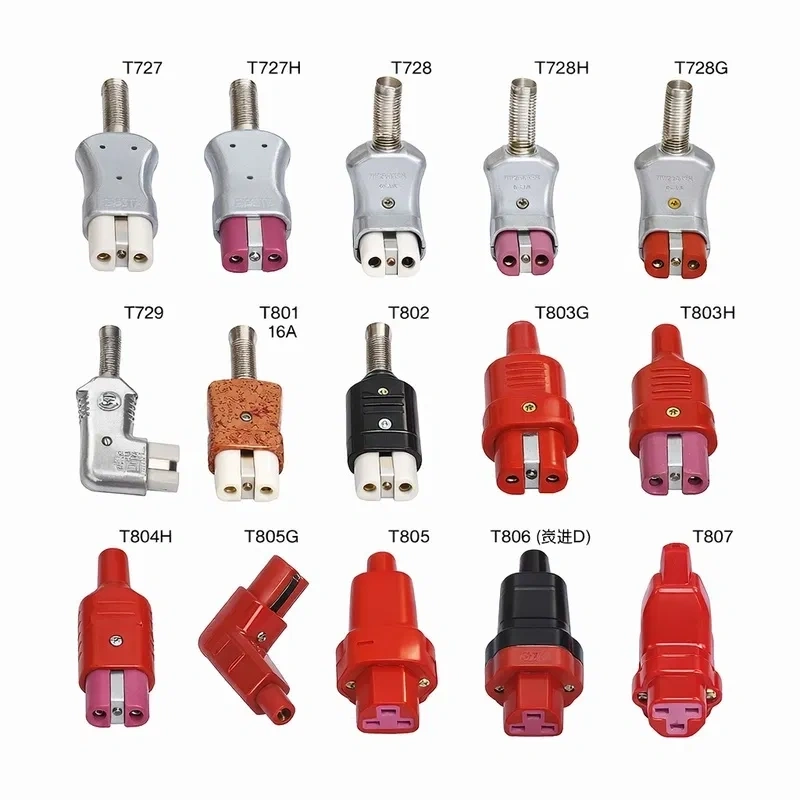
Our line of High-Temperature Plugs and High-Temperature Connectors comes in various configurations to adapt to the specific needs of each industrial application. Models vary in size, number of poles, terminal type, and current capacity, guaranteeing a suitable solution for every requirement. Some of the available model types include:

  • T7xx Series:​ Compact connectors with 2 and 3 poles, ideal for reduced spaces and applications up to 300°C.

  • T8xx Series:​ High-resistance plugs and receptacles, available in 2, 3, and 4-pole configurations, designed for temperatures up to 500°C and high currents.

  • Angular Connectors (Type L):​ For installations where space or cable routing is critical, facilitating connection in tight angles.

  • Connectors with Metal Housing:​ Offer additional protection against mechanical impact and aggressive environments, often used with clamps for robust fixing.

  • Connectors with Screw or Crimp Terminals:​ Flexibility in cable connection, adapting to different installation methods.

Each model is designed to integrate perfectly with heater collars, electric furnaces, and other components, ensuring optimal performance and a long service life under the most demanding conditions. For specific details on a particular model or for assistance in selecting the appropriate connector, please consult our catalog or contact our technical team.

FAQ

To choose the right connector, the most important thing is to validate that its temperature range (e.g., 300°C-500°C) exceeds the heat peaks of your equipment. Additionally, you must ensure voltage and amperage compatibility, opt for high-quality materials such as ceramic bodies and nickel-plated contacts, and verify that it has international certifications (CE, UL) and an adequate IP rating for protection against dust and moisture.

Customers also viewed