1. Introduction: The Importance of Choosing the Correct Cartridge Heater
Cartridge heaters are highly efficient cylindrical heating elements designed to provide precise, localized heat in a wide range of industrial applications. Their compact format and rapid heating capability make them ideal for directly heating metal parts, ensuring consistent temperature control where it’s most needed. They play a fundamental role in industries such as plastics, packaging, food processing, and aerospace, where reliability and concentrated heat are essential for product performance and quality. However, the choice between a high-density and a low-density cartridge heater is a critical decision that can significantly impact equipment performance, energy efficiency, and longevity. An inadequate selection can lead to overheating, prolonged heating times, or premature component failure. This comprehensive guide will explore the fundamental differences between both types, their technical characteristics, ideal applications, and a selection process to ensure the most suitable choice for each specific need.
2. Internal Anatomy: High Density (Swaged) vs. Low Density (Loose Fill)
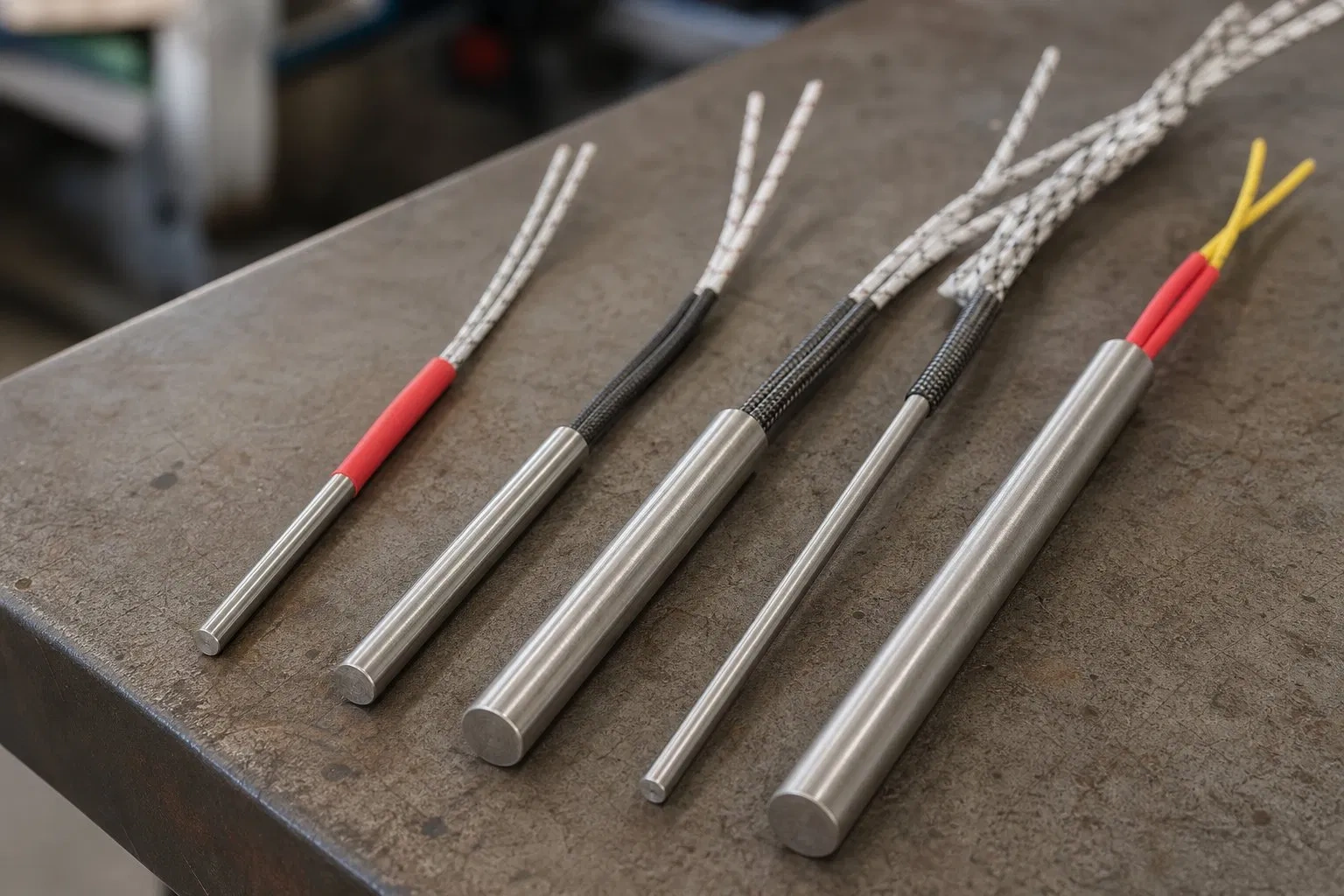
The primary distinction between high- and low-density cartridge heaters lies in their internal architecture and manufacturing process, although externally they may appear similar. This structural difference defines their thermal capabilities and durability.
High-Density Cartridge Heaters: The Secret of “Swaging”
High-density heaters are not simply “filled”; they are forged through a process known as swaging. This method involves:
1.Precise Winding: The Nickel-Chromium (NiCr 80/20) resistance wire is precisely wound around a high-hardness Magnesium Oxide (MgO) core.
2.Insertion: This assembly is then inserted into a metal tube, typically Incoloy or 304 stainless steel (SS304).
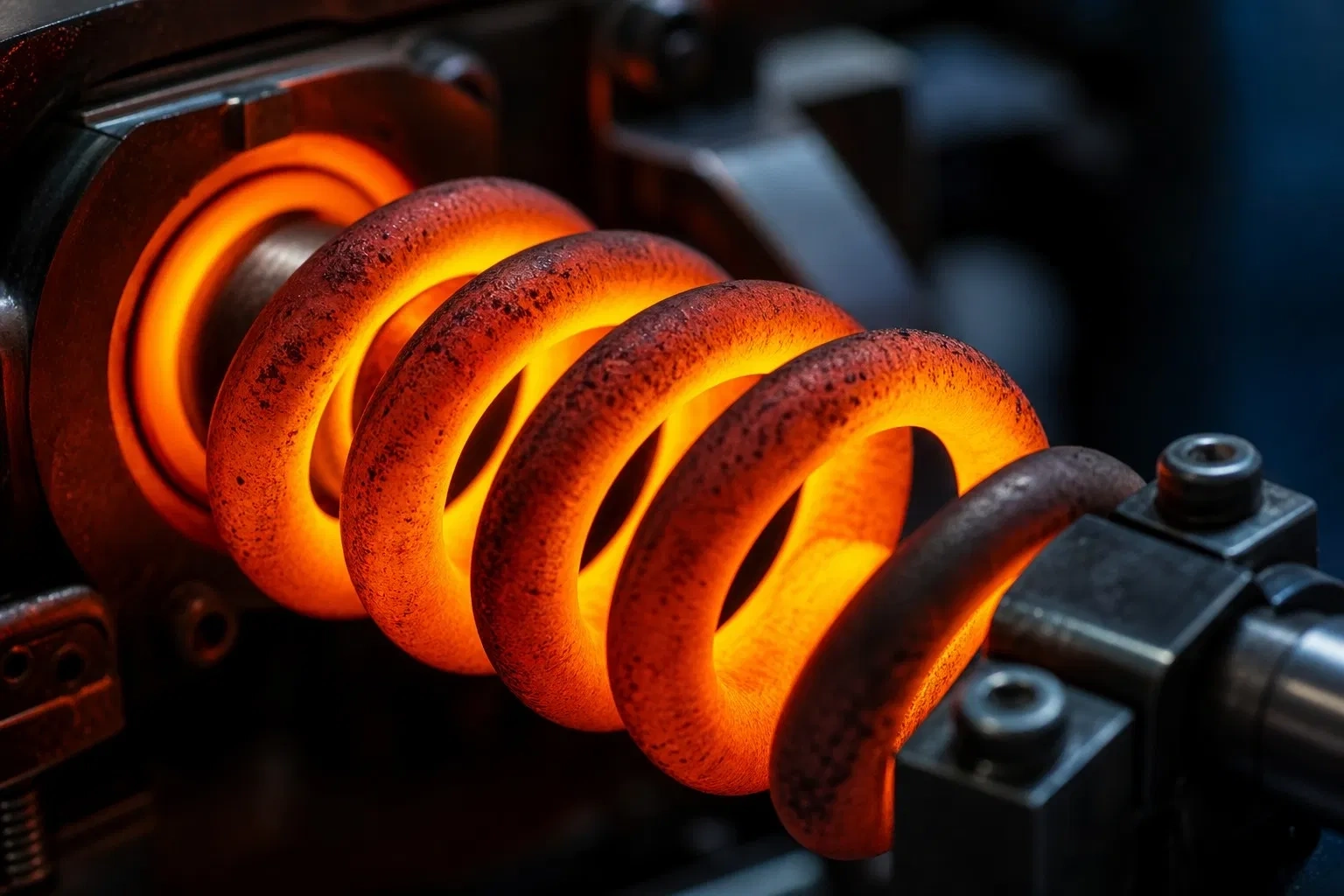
3.Swaging (Critical Step): The entire assembly is passed through a swaging machine, which mechanically hammers and compresses the tube’s diameter by 15% to 20%.
The result of this process is an extreme compaction of the MgO powder, which transforms into a solid, hard mass. This completely eliminates internal air pockets, immobilizes the resistance wire, and “cold welds” it to the insulation. The absence of air, a thermal insulator, allows for exceptionally efficient heat transfer from the wire to the outer sheath.
Low-Density Cartridge Heaters: The “Loose Fill” Method
Low-density heaters, often referred to as “tubular heaters,” represent a more traditional technology and are manufactured using the “loose fill” method. This process is characterized by:
1.Ceramic Core: A pre-molded ceramic cylinder with holes is inserted into the metal tube.
2.Wire Insertion: The resistance wire is threaded through these holes, similar to a loose spring.
3.Filling: Loose MgO powder is poured in to fill the remaining spaces, but no compression is performed.
Consequently, the resistance wire “floats” within the ceramic channels, and microscopic air gaps exist between the wire, ceramic, and sheath. These air gaps act as thermal barriers, hindering efficient heat transfer and limiting the overall performance of the heater.
3. Field Performance: Watt Density, Temperature, and Service Life
The differences in internal construction directly translate into significant variations in the performance of high- and low-density cartridge heaters. The presence or absence of internal air gaps is a determining factor, as air is a thermal insulator.
Watt Density Limits
Watt density refers to the amount of power generated per unit surface area of the heater and is a key indicator of its heating capacity.
•High Density (20-30 W/cm²): Thanks to the compaction of MgO into a solid mass, it acts as a “thermal superhighway.” The heat generated by the wire is instantly transferred to the sheath, allowing the wire to operate at lower temperatures and more power to be applied in a confined space. They can achieve watt densities of up to 200 W/square inch or more.
•Low Density (3-5 W/cm²): Internal air gaps act as a barrier, hindering heat dissipation to the sheath. This causes a significant increase in the internal temperature of the wire. Attempting to operate a low-density heater at a high watt density (e.g., 10 W/cm²) would result in the melting of the core while the sheath barely heats up.
Maximum Operating Temperature
The maximum temperature the heater sheath can safely reach is another critical factor:
•High Density: With Incoloy 800 sheaths and high-purity compaction, these heaters can operate at sheath temperatures up to 800°C (1472°F).
•Low Density: Generally limited to 400°C (750°F). Above this temperature, the loose internal structure can expand unevenly, potentially causing short circuits.
Service Life Under High Load
The durability and service life of the heater under high load conditions also vary considerably:
•High Density: Offer an extended service life, exceeding 3000 hours in high-load applications, due to their robust construction and efficient heat dissipation.
•Low Density: Their service life is significantly shorter, often less than 500 hours under similar conditions, due to inefficient heat transfer and susceptibility to internal failures.
4. Resistance to Harsh Environments: Vibration and Thermal Shock
In many industrial applications, cartridge heaters are exposed to demanding environmental conditions, including constant vibrations and rapid thermal cycles. A heater’s ability to withstand these factors without failure is crucial for system reliability.
Resistance to Shocks and Vibrations
In equipment such as packaging blades or reciprocating pistons, where the heater is subject to constant G-forces, vibration resistance is a key differentiator.
•Low-Density Failure: The loose wire within the ceramic core of a low-density heater can vibrate and rattle. Over time, gravity and heat can cause the hot (softer) wire to deform, touch the sheath, and cause a short circuit.
•High-Density Survival: The swaging process secures the wire in place, immobilizing it. The entire unit vibrates as a solid, compact mass, leaving no room for wire movement, which gives it excellent resistance to shocks and vibrations.
Resistance to Thermal Cycling
Applications requiring rapid on-off cycles or abrupt temperature changes can subject heaters to considerable thermal stress.
•High Density: Their compact construction and the excellent thermal conductivity of compressed MgO allow high-density heaters to efficiently handle frequent and rapid thermal cycles, minimizing the risk of material fatigue and extending their service life.
•Low Density: Internal air gaps and lower heat transfer efficiency make low-density heaters less suitable for applications with intense thermal cycles, as they can experience differential stress that accelerates their degradation.
5. Forensic Identification: How to Distinguish One from Another
Although high- and low-density cartridge heaters may appear identical at first glance, there are distinctive characteristics that allow for their identification without destructive analysis. These visual and tactile clues are fundamental for engineers and maintenance personnel when selecting or replacing a heater.
End Disc
One of the most reliable ways to differentiate between the two types is by examining the end of the heater, specifically the end disc or end cap:
•High Density: Typically feature a flat, welded metal bottom, with no visible seams. Often, the end is slightly domed or “swaged,” giving it the appearance of a single continuous metal piece.
•Low Density: Generally use a crimped metal cap or a welded washer that sits on the tube, or may even have an exposed ceramic end.
Surface Finish and Tolerance
The manufacturing process also influences the surface finish and dimensional tolerances of the heater sheath:
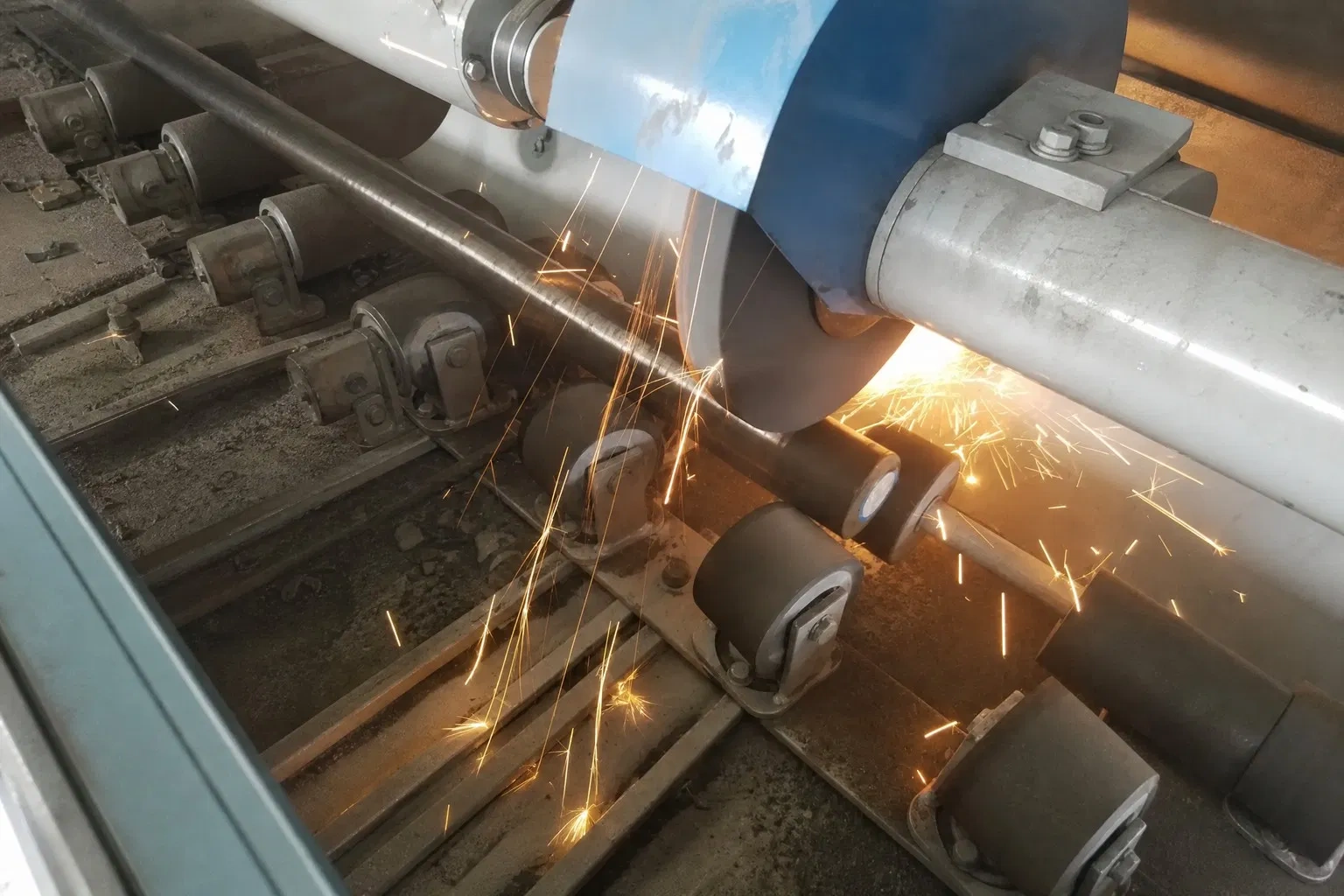
•High Density: To ensure a perfect fit in molding holes, these heaters are often subjected to a centerless grinding process. This gives them a bright, smooth surface, with very tight diameter tolerances, typically between -0.02mm and -0.06mm.
•Low Density: The surface often has a rougher appearance or a standard pipe finish. Diameter tolerances are looser, generally around ±0.10mm.
Lead Terminations
The way the power leads are connected to the heater can also offer a clue:
•High Density: Often feature swaged-in leads, meaning the wires disappear directly inside the tube, without a clearly defined cold zone. This provides a more robust and vibration-resistant connection.
•Low Density: Almost always use crimped-on leads or screw terminals connected to external rods, which can be a point of weakness in high-vibration environments.
6. Critical Applications: When to Use High Density?
High-density cartridge heaters are the preferred choice for applications demanding superior thermal performance, precision, and durability under challenging conditions. Their ability to generate intense, localized heat in confined spaces makes them indispensable in various industrial sectors.
Injection Molding and Die Casting
In the plastics and metallurgy industries, high-density heaters are crucial for maintaining precise temperatures in nozzles, manifolds, and molds. They are used in:
•Hot Runner Systems: Where rapid and uniform heating is required to maintain material fluidity and ensure part quality.
•Mold inserts and sprue bushings: For localized thermal control that improves part quality and reduces cycle times.
Medical and Diagnostic Equipment
The manufacture of medical equipment and clinical diagnostics demands stable and sanitary heat. High-density heaters provide this in devices such as:
•Sterilization units: To ensure the elimination of microorganisms.
•Fluid heating systems: Where precise temperature control is vital for patient safety and treatment efficacy.
•Analytical instruments: To maintain optimal conditions in laboratory processes.
Aerospace and Automotive Industry
These sectors require components that function reliably under extreme conditions. High-density heaters are employed in:
•Engine block and hydraulic system heating: To ensure operation in cold climates.
•Environmental test chambers and de-icing systems: Where vibration resistance and high temperatures are critical.
Other Demanding Applications
•Heat presses and sealing equipment: For rapid and uniform heating that ensures clean and efficient seals.
•Cutting and welding tools: Where concentrated heat is needed for precise manufacturing processes.
•Die and plate heating: To maintain constant temperatures in material forming processes.
In summary, if the application involves high temperatures, rapid duty cycles, vibrations, confined spaces, or the need for extremely precise thermal control, the high-density cartridge heater is the superior and more cost-effective technical solution in the long run, despite its higher initial cost.
7. General Applications: When to Opt for Low Density?
Although high-density cartridge heaters offer superior performance in demanding applications, low-density heaters have their own market niche and are an economical and effective option for situations where thermal requirements are less rigorous. They are suitable for applications seeking slower, more uniform heating, and where extreme durability under stress is not the primary concern.
Food Processing Equipment
In the food industry, where reliable and uniform heat is required, low-density heaters are commonly used in:
•Heat sealing bars: For sealing food packaging, where temperatures are not excessively high and cycles are not extremely rapid.
•Warming trays: To keep food at a constant temperature.
•Liquid dispensing systems: Where gentle heating is needed to maintain product viscosity or temperature.
Packaging Machinery (Less Demanding Applications)
For packaging tasks that do not involve high speeds or extreme temperatures, low-density heaters may be suitable for:
•Sealing jaws and cutting blades: In plastic film sealing processes or shrink wrap where millimeter precision and speed are not as critical as in injection molding.
Laboratory Devices
In laboratory environments, where gentle and controlled heating is often required for experiments or analytical equipment, low-density heaters can be a viable option for:
•Laboratory hot plates: For heating samples to moderate temperatures.
•Small ovens or drying chambers: Where constant but not intense heat is needed.
Liquid and Gas Heating (Low Thermal Demand)
When heating liquids, water, oil, or air is required, and there is no precise bore fit or need for high watt density, low-density heaters are often the appropriate choice. They provide sufficient heat for maintaining temperatures in tanks, pipes, and small process vessels where rapid temperature changes or extreme heat are not critical. Their simpler construction makes them more cost-effective for these less demanding applications.
•Small tank heating: To maintain liquid temperatures.
•Freeze protection applications: Where gentle heat is needed to prevent freezing of pipes or components.
It is important to note that while low-density heaters are initially more economical, their shorter service life and inefficiency in unsuitable applications can result in higher long-term costs due to frequent replacements and downtime. Therefore, the choice should always be based on a careful evaluation of the specific application requirements.
8. Selection Guide: A Decision Tree for Your Project
The selection of the appropriate cartridge heater is fundamental to the success of any heating application. To facilitate this process, a decision tree is presented that considers the critical factors discussed above. This systematic approach helps determine whether a high- or low-density heater is most appropriate.
Decision Tree for Cartridge Heater Selection
1.Does the application involve constant movement or vibration?
•Yes: Opt for a HIGH-DENSITY heater. Its swaged and compact construction offers superior resistance to shocks and vibrations, ensuring greater durability and reliability in dynamic environments.
•No: Proceed to the next question.
2.Is the required operating temperature for the sheath above 300°C (572°F)?
•Yes: Choose a HIGH-DENSITY heater. They are designed to withstand and operate efficiently at sheath temperatures up to 800°C (1472°F), thanks to their high-quality materials like Incoloy 800 and MgO compaction.
•No: Proceed to the next question.
3.Is a high watt density (intense heat in a confined space) or rapid heating required?
•Yes: The HIGH-DENSITY heater is the correct choice. Its ability to generate between 20-30 W/cm² (or more) allows for rapid and efficient heating in applications where space is limited and a large amount of heat is needed.
•No: Consider a LOW-DENSITY heater. They are more suitable for applications requiring slower, more uniform heating, with watt densities of 3-5 W/cm², and where initial cost is an important consideration.
Key Additional Considerations:
•Bore Fit: For high-density heaters, a precise fit in the bore (tolerance of +0.001″ to +0.005″) is vital for efficient heat transfer and to prevent overheating and premature failure.
•Operating Environment: Evaluate whether the heater will be exposed to moisture, oils, chemicals, or corrosive environments. In such cases, customized features such as moisture seals or sheaths made of specific materials may be required to prolong service life.
•Long-Term Cost: Although low-density heaters are initially cheaper, high-density heaters can offer a better long-term return on investment due to their higher efficiency, durability, and lower replacement frequency.
By following this decision tree and considering these additional guidelines, engineers and designers can make an informed decision that optimizes the performance and reliability of their heating systems.