If you operate high-temperature industrial furnaces or kilns, choosing between Silicon Carbide (SiC) and Molybdenum Disilicide (MoSi2) heating elements is one of the most important technical decisions you’ll make for your production process. Both are proven, high-performance heating technologies used in thousands of industrial applications worldwide — but they have very different characteristics, temperature ranges, cost profiles, and ideal applications.
This comprehensive guide SiC vs MoSi2 Heating Elements covers everything you need to know: the history and development of each technology, detailed technical specifications, atmosphere compatibility, cost analysis, power supply requirements, real-world application examples, ordering guide, and answers to the most frequently asked questions from furnace operators worldwide.
A Brief History of SiC and MoSi2 Heating Elements
Silicon Carbide (SiC) — Over 100 Years of Proven Performance
Silicon carbide as a heating element material has been in industrial use since the early 20th century. The first commercial SiC heating elements were introduced in the 1930s under the brand name “Globar” and quickly became the standard for industrial kilns and furnaces operating in the 800°C to 1400°C range. Today, SiC heating elements remain one of the most widely used high-temperature heating technologies in the world, valued for their reliability, mechanical strength, and competitive cost.
Molybdenum Disilicide (MoSi2) — The High-Temperature Specialist
MoSi2 heating elements were developed in the 1950s as a solution for industrial processes requiring temperatures beyond the capability of SiC. Originally developed in Sweden under the brand name “Kanthal Super”, MoSi2 elements opened up new possibilities in advanced ceramics, technical glass, and aerospace materials manufacturing. Their ability to operate continuously at temperatures up to 1800°C — with excellent oxidation resistance — made them indispensable for the most demanding high-temperature applications.
What Are SiC Heating Elements?
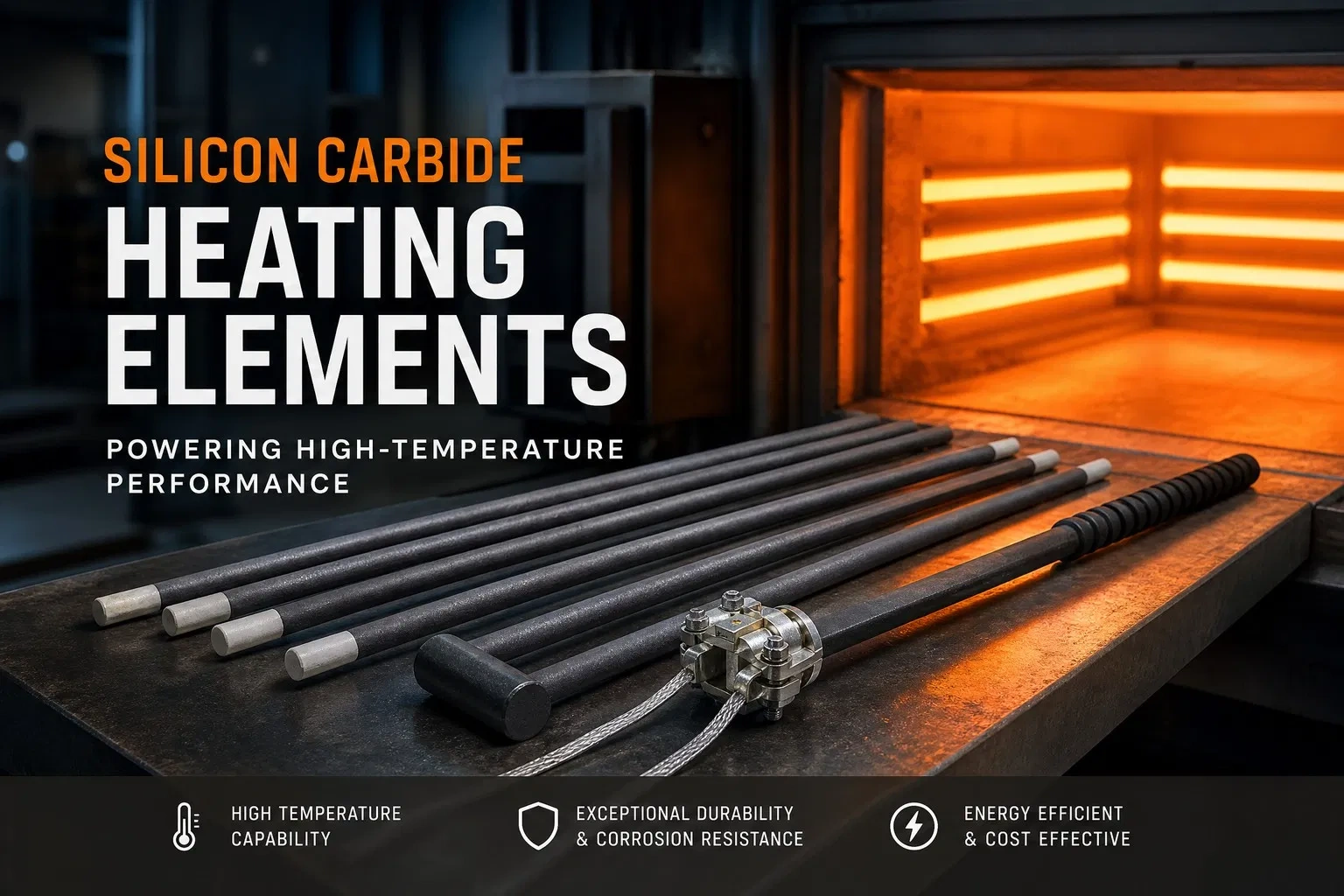
Silicon Carbide (SiC) heating elements are made from high-purity silicon carbide, a ceramic material with excellent electrical conductivity and thermal properties. They are available in several different configurations to suit different furnace designs:
Types of SiC Heating Elements
Rod Type (Straight) The most common SiC configuration. Straight cylindrical rods installed horizontally or vertically through the furnace walls. Available in diameters from 6mm to 50mm and lengths from 200mm to 3000mm. Used in ceramic kilns, heat treatment furnaces, and semiconductor diffusion furnaces.
U-Type Two parallel heating legs connected at one end, forming a U-shape. Installed through a single furnace wall, making them ideal for furnaces where access is only available from one side. Commonly used in laboratory furnaces and smaller industrial kilns.
Spiral Type (Grooved) A helical groove machined into the surface of the element increases the electrical resistance of the heating zone while reducing the cross-section. This produces a more uniform temperature distribution along the element length. Preferred for applications requiring precise temperature uniformity.
Dumbbell Type Features enlarged cold ends (the sections outside the furnace) with a narrower heating zone in the center. The enlarged cold ends reduce current density at the terminal connections, extending element life and simplifying electrical connections.
Three-Phase Delta Configuration For large industrial furnaces, SiC elements can be connected in three-phase delta or star configurations to balance the electrical load and reduce power supply requirements.
Key Properties of SiC Elements
• Maximum operating temperature: 1600°C
• Recommended continuous operating temperature: up to 1450°C
• Thermal conductivity: 120 W/m·K at room temperature
• Density: 3.1 g/cm³
• Bending strength: 150–200 MPa
• Coefficient of thermal expansion: 4.5 × 10⁻⁶/°C
What Are MoSi2 Heating Elements?
Molybdenum Disilicide (MoSi2) heating elements are made from a metallic ceramic compound of molybdenum and silicon, produced by sintering under high pressure and temperature. They combine the high-temperature capability of refractory metals with the oxidation resistance of ceramic materials.
Types of MoSi2 Heating Elements
U-Type (Standard Bent) The most widely used MoSi2 configuration. Two parallel heating shanks connected at the bottom by a U-bend, with the cold ends protruding above the furnace roof or through the furnace wall. Available in shank diameters from 3mm to 12mm. Used in the majority of industrial MoSi2 furnace applications.
W-Type Three shanks connected in a W-configuration, giving more heating surface area in a compact footprint. Used in furnaces with limited roof space where standard U-type elements would be too wide.
Multi-Shank Types (3, 4, 6 shanks) For large industrial furnaces requiring high power density, multi-shank configurations provide more heating surface in a single element. Available in 3-shank, 4-shank, and 6-shank designs.
Straight Type Single straight rods for use in vertical furnaces or as side-inserted elements. Less common than U-type but used in specific furnace designs where bent elements are not practical.
Super Kanthal / High-Density Types Special high-density MoSi2 formulations for extreme applications above 1700°C. These elements use a modified MoSi2 compound with additives to improve oxidation resistance and mechanical stability at the highest temperatures.
Key Properties of MoSi2 Elements
• Maximum operating temperature: 1800°C
• Recommended continuous operating temperature: up to 1700°C
• Thermal conductivity: 50 W/m·K at room temperature
• Density: 6.2 g/cm³
• Bending strength: 300–350 MPa (but brittle — low fracture toughness)
• Coefficient of thermal expansion: 8.5 × 10⁻⁶/°C
• Electrical resistivity: increases with temperature (positive temperature coefficient)
Detailed Technical Comparison
| Parameter | SiC Elements | MoSi2 Elements |
| Maximum temperature | 1600°C | 1800°C |
| Recommended operating temp | Up to 1450°C | Up to 1700°C |
| Atmosphere — Air | ✅ Excellent | ✅ Excellent |
| Atmosphere — Inert (N₂, Ar) | ✅ Good | ⚠️ Limited (no protective oxide layer) |
| Atmosphere — Reducing (H₂, CO) | ✅ Acceptable (mild) | ❌ Not recommended |
| Atmosphere — Vacuum | ⚠️ Limited | ❌ Not recommended |
| Thermal shock resistance | ✅ Excellent | ⚠️ Moderate |
| Mechanical strength | ✅ High (impact resistant) | ⚠️ Brittle (fragile) |
| Resistance stability over time | ❌ Increases significantly with age | ✅ Very stable |
| Temperature uniformity | Good (spiral type: excellent) | Excellent |
| Cold zone heating | Significant (cold ends stay cool) | Minimal |
| Power supply complexity | Moderate (needs aging compensation) | Low (stable resistance) |
| Maximum surface load | 1–20 W/cm² | 5–20 W/cm² |
| Typical service life | 1–3 years | 3–5 years (stable conditions) |
| Purchase price | Lower | Higher (typically 3–5× SiC) |
| Total cost of ownership | Lower for <1450°C | Lower for >1500°C long-term |
| Handling difficulty | Easy | Requires care |
| Replacement difficulty | Easy | Moderate |
Temperature Selection Guide
Choosing the right element based on your process temperature:
| Process Temperature | Recommended Element | Notes |
| Up to 1200°C | SiC | Most economical choice |
| 1200°C – 1400°C | SiC | Standard industrial SiC range |
| 1400°C – 1450°C | SiC (high grade) | Use high-quality SiC; monitor resistance aging |
| 1450°C – 1550°C | Either | Evaluate atmosphere, cycle frequency and budget |
| 1550°C – 1600°C | MoSi2 preferred | SiC near its limit; MoSi2 more reliable |
| 1600°C – 1700°C | MoSi2 | Only MoSi2 can operate reliably in this range |
| Above 1700°C | MoSi2 (high density) | Special high-density MoSi2 grades required |
Atmosphere Compatibility — Detailed Analysis
SiC in Different Atmospheres
Air: SiC performs excellently in air at all temperatures up to 1600°C. A thin SiO2 protective layer forms naturally on the surface and provides good oxidation protection.
Inert atmospheres (N₂, Ar): SiC operates well in inert atmospheres, though the lack of oxygen means no protective SiO2 layer forms. At temperatures above 1400°C in pure nitrogen, silicon nitride (Si3N4) can form on the surface, which slightly affects performance.
Reducing atmospheres (H₂, CO, cracked ammonia): SiC can tolerate mildly reducing atmospheres at lower temperatures. Above 1200°C in strongly reducing atmospheres, the SiO2 protective layer breaks down, and carbon or silicon can migrate, degrading the element. Use with caution above 1000°C in reducing conditions.
Alkaline vapors: SiC is sensitive to alkaline vapors (from ceramic glazes, fluxes, or sodium compounds). These attack the SiO2 layer aggressively, causing rapid element degradation. In kiln atmospheres with heavy glaze firing, expect shorter element life.
MoSi2 in Different Atmospheres
Air: MoSi2 performs best in air. The element forms a dense, self-healing SiO2 glassy layer that provides excellent oxidation protection up to 1800°C.
Inert atmospheres: MoSi2 can operate in inert atmospheres at high temperatures, but without oxygen, the protective SiO2 layer cannot form or repair itself. Long-term operation in pure inert atmosphere above 1600°C is not recommended without specific supplier guidance.
Reducing atmospheres: MoSi2 should NOT be used in reducing atmospheres. Hydrogen and carbon monoxide break down the protective SiO2 layer, exposing the MoSi2 to rapid oxidation of molybdenum, leading to catastrophic failure.
“Pest” oxidation below 700°C: A critical characteristic of MoSi2 is its vulnerability to accelerated oxidation between 400°C and 700°C — known as “pest oxidation”. In this range, MoSi2 can crumble to powder if exposed to air for extended periods. Always heat MoSi2 elements rapidly through this range and never leave them at these temperatures in air for extended time.
Power Supply and Controller Requirements
For SiC Elements
SiC elements require a power supply that can compensate for resistance increase over time. As new SiC elements age, their resistance typically increases by 3 to 5 times over their service life. This means:
• Transformer with multiple tapping: A variable transformer with 6–8 voltage taps allows the operator to increase voltage as resistance increases, maintaining constant power output throughout element life.
• SCR (thyristor) power controller: Modern furnaces use SCR controllers with automatic power regulation. The controller monitors actual power output and adjusts firing angle to compensate for changing element resistance.
• Initial current surge: New SiC elements have lower resistance and draw higher current at startup. Always start with a lower voltage tap and increase gradually during the first few hours of operation.
Typical power supply sizing for SiC:
• Allow 20–30% extra transformer capacity to compensate for resistance aging
• Size SCR controllers for peak current, not just nominal operating current
• Use matched sets of elements in each circuit for balanced load
For MoSi2 Elements
MoSi2 elements have a positive temperature coefficient of resistance — resistance increases with temperature — but unlike SiC, this relationship is stable and predictable over the element’s service life. This makes power supply design simpler:
• Standard transformer: A transformer with 2–4 taps is usually sufficient since resistance does not change significantly with aging.
• SCR power controller: Recommended for precise temperature control, but simpler than what SiC requires.
• Low-voltage, high-current supply: MoSi2 elements typically operate at lower voltages (typically 30–200V) but higher currents than SiC elements of similar power rating.
• Cold start protection: Because MoSi2 has very low resistance at room temperature, applying full voltage at startup would cause a massive current surge. Always ramp up power slowly from cold start.
Long-Term Cost Analysis
When evaluating SiC vs MoSi2 from a total cost of ownership perspective, consider all costs over a 5-year production period:
| Cost Factor | SiC | MoSi2 |
| Initial element purchase | Lower | Higher (3–5× SiC price) |
| Replacement frequency | Higher (1–3 years) | Lower (3–5 years) |
| Power supply cost | Higher (multi-tap transformer) | Lower (simpler supply) |
| Energy efficiency | Good | Good (slightly better at very high temps) |
| Labor for replacement | Lower (easier to handle) | Higher (careful handling needed) |
| Downtime for replacement | Lower | Lower (less frequent) |
General conclusion:
• For processes below 1450°C: SiC offers better total cost of ownership in most cases.
• For processes above 1500°C: MoSi2’s longer service life and simpler power supply often result in lower total cost over 5+ years despite higher initial purchase price.
• For processes with frequent thermal cycling: SiC’s better thermal shock resistance reduces unexpected failures and replacement costs.
Real-World Application Examples
Case 1 — Ceramic Tile Kiln (1200°C, Air Atmosphere)
Recommended: SiC A high-volume ceramic tile manufacturer operates tunnel kilns at 1200°C in air. The kilns run continuously 24/7 with weekly maintenance stops. SiC rod elements are the correct choice: the temperature is well within SiC range, the air atmosphere is ideal, and the mechanical robustness of SiC suits the industrial environment. MoSi2 would be over-specified and more expensive without any performance benefit at this temperature.
Case 2 — Zirconia Dental Ceramic Sintering (1550°C, Air Atmosphere)
Recommended: MoSi2 A dental laboratory sinters zirconia restorations at 1550°C in air. The temperature is near the upper limit of SiC and in the comfortable operating range of MoSi2. The furnace undergoes multiple daily cycles. MoSi2 U-type elements provide reliable, precise temperature control at 1550°C. The higher purchase cost is justified by longer service life and the precision requirements of dental ceramics sintering.
Case 3 — Steel Wire Annealing Furnace (950°C, Nitrogen Atmosphere)
Recommended: SiC A wire manufacturer operates a continuous annealing furnace at 950°C in a nitrogen atmosphere. SiC is the correct choice: moderate temperature, compatible inert atmosphere, and continuous operation.
Case 4 — Advanced Alumina Sintering (1650°C, Air Atmosphere)
Recommended: MoSi2 (high-density grade) A technical ceramics manufacturer sinters high-purity alumina at 1650°C in air. This temperature is beyond the safe operating range of SiC and requires high-density MoSi2 elements. The oxidizing atmosphere is ideal for MoSi2 element protection, and the stable furnace temperature profile (no rapid cycling) suits MoSi2’s thermal shock characteristics.
Case 5 — Atmosphere Heat Treatment (1100°C, Hydrogen Atmosphere)
Recommended: SiC A metal parts manufacturer heat-treats components in a hydrogen atmosphere at 1100°C. SiC is the only viable option here — MoSi2 cannot be used in hydrogen atmospheres at any temperature. SiC can tolerate mild reducing atmospheres at this temperature range with acceptable service life.
Ordering Guide — What Information Do You Need?
When ordering SiC or MoSi2 heating elements, always provide the following information to your supplier:
For SiC Elements
1 Element type: Rod, U-type, spiral, dumbbell
2 Overall length (L): Total element length including cold ends
3 Heated length (Lh): Length of the active heating zone
4 Cold end length (Lc): Length of each cold end (L = Lh + 2×Lc for rod type)
5 Diameter (D): Element outer diameter
6 Resistance (Ω): Nominal resistance at operating temperature (if known)
7 Operating temperature: Maximum continuous operating temperature
8 Atmosphere: Air, inert, reducing
9 Quantity: Number of elements required
For MoSi2 Elements
10 Element type: U-type, W-type, multi-shank, straight
11 Shank diameter (D): Diameter of the heating zone shanks (3mm to 12mm)
12 Overall length (L): Total element length
13 Heated length (Lh): Distance between the bend and the furnace top/wall
14 Cold end length (Lc): Length of the cold ends above the furnace
15 Center distance (A): Distance between the two shanks (for U-type)
16 Maximum operating temperature: To select correct MoSi2 grade
17 Atmosphere: To confirm compatibility
18 Power supply voltage: To calculate required resistance
19 Quantity: Number of elements required
Standard Dimensions Reference
Common SiC Rod Element Dimensions
| Diameter (mm) | Common Heated Lengths (mm) | Typical Applications |
| 10 | 200–600 | Small laboratory furnaces |
| 14 | 300–800 | Medium industrial kilns |
| 20 | 400–1200 | Large ceramic kilns |
| 25 | 500–1500 | Industrial heat treatment furnaces |
| 32 | 600–2000 | Large industrial kilns |
Common MoSi2 U-Type Element Dimensions
| Shank Diameter (mm) | Common Heated Lengths (mm) | Max Temperature |
| 3 | 100–300 | 1600°C (small lab furnaces) |
| 6 | 150–500 | 1700°C |
| 9 | 200–700 | 1750°C |
| 12 | 300–900 | 1800°C (industrial) |
Installation and Handling — Complete Guide
Installing SiC Elements
Inspect before installation: Check each element for cracks, chips or damage. Never install a damaged element.
Match resistances: Measure and group elements by resistance value. Connect elements of similar resistance in each circuit.
Use correct holders: Install alumina or refractory fiber element holders. Never allow direct metal contact on the heating zone.
Terminal connections: Use braided aluminum or copper flexible connectors. Ensure connections are tight but allow for thermal expansion.
Initial power-up: Start at 50% power for the first 2–4 hours. This allows the element to stabilize and the protective SiO2 layer to form.
Record initial resistance: Measure and record the resistance of each element at installation. Use this as a baseline to track aging.
Installing MoSi2 Elements
Handle with extreme care: MoSi2 is brittle. Never drop, impact, or apply bending force to the element. Use foam padding during transport and installation.
Support during installation: Support the element weight at all times during installation. The weight of the element itself can cause fracture if unsupported.
Alumina fiber holders: Install elements in alumina fiber holders or through alumina tubes. Never clamp or grip the heating zone.
Terminal connections: MoSi2 elements use aluminum braided flexible connectors on the cold ends. Ensure good contact without mechanical stress.
Initial power-up: Ramp up power very slowly from cold start. Use a 2–4 hour warm-up program to heat through the pest oxidation range (400–700°C) rapidly and reach operating temperature gradually.
Never operate cold: MoSi2 furnaces should not be left at temperatures between 400°C and 700°C in air for extended periods.
Maintenance and Service Life Optimization
Maximizing SiC Element Life
• Monitor resistance monthly: Track resistance increase over time. When resistance reaches 4–5× the initial value, plan for element replacement before failure.
• Replace as complete sets: Never mix old and new elements in the same circuit.
• Keep furnace atmosphere consistent: Avoid contamination from alkaline vapors, sodium compounds, or metal oxides that attack the SiO2 protective layer.
• Avoid thermal shock: Even though SiC tolerates it better than MoSi2, unnecessary rapid temperature changes reduce element life.
• Clean element holders regularly: Contaminated holders can cause arcing and local overheating.
Maximizing MoSi2 Element Life
• Avoid rapid cooling below 700°C: The most common cause of premature MoSi2 failure. If the furnace must be cooled, do so slowly and continuously through the critical range.
• Maintain oxidizing atmosphere: Never allow the furnace atmosphere to become reducing. Even small traces of hydrogen or carbon monoxide can degrade MoSi2 over time.
• Inspect SiO2 glaze regularly: A healthy MoSi2 element has a smooth, glassy SiO2 surface. Bubbling, discoloration, or rough texture indicates atmospheric contamination or temperature overshoot.
• Keep cold ends cool: MoSi2 cold ends should remain below 200°C in operation. Ensure adequate cooling and that the cold ends are not enclosed in the furnace insulation.
Frequently Asked Questions (FAQ)
What is the fundamental difference between SiC and MoSi2 heating elements? SiC is a ceramic material with excellent mechanical strength and thermal shock resistance, operating up to 1600°C. MoSi2 is a metallic ceramic compound capable of reaching 1800°C with very stable electrical properties, but it is more brittle and requires an oxidizing atmosphere.
Can SiC elements be used above 1600°C? Standard SiC elements are rated up to 1600°C, but continuous operation near this limit significantly reduces service life. For sustained operation above 1500°C, MoSi2 is strongly recommended.
Why do SiC elements need to be replaced in matched sets? As SiC elements age, their resistance increases by 3 to 5 times. If elements of different ages are connected in parallel, newer low-resistance elements carry more current and overheat while older high-resistance elements receive insufficient power.
What is “pest oxidation” in MoSi2 elements? Pest oxidation is a phenomenon where MoSi2 undergoes accelerated oxidation between 400°C and 700°C in air, causing the element to crumble to powder. To avoid it, always heat MoSi2 elements rapidly through this range during startup.
Can I mix SiC and MoSi2 elements in the same furnace? Generally not recommended in the same electrical circuit. However, multi-zone furnaces can use SiC in lower-temperature zones and MoSi2 in the highest-temperature zone, provided they are on completely separate power circuits.
What causes SiC elements to fail prematurely? The most common causes are: operating above the rated temperature limit, exposure to alkaline vapors, thermal shock, physical impact during installation, and connecting elements of mismatched resistance.
What causes MoSi2 elements to fail prematurely? The most common causes are: operating in reducing atmospheres, rapid cooling through the pest oxidation range, physical damage during handling, overheating, and contamination of the furnace atmosphere.
How do I know when SiC elements need replacement? Monitor resistance monthly. When resistance reaches 4–5 times the initial value, plan for replacement. Other signs include visible cracks, hot spots, element sagging, or inconsistent temperature distribution.
How do I know when MoSi2 elements need replacement? Signs include: visible cracks or fractures, surface blistering, discoloration of the SiO2 glaze, inconsistent glow color between elements, or temperature control problems.
Which element type is more environmentally friendly? Both are inert ceramic materials. SiC contains no heavy metals. MoSi2 contains molybdenum, which requires proper disposal. Energy efficiency is similar; the key is choosing the right element for your temperature to avoid waste.
How Heatecx Can Help
At Heatecx, we supply both Silicon Carbide (SiC) and Molybdenum Disilicide (MoSi2) heating elements for industrial furnaces and kilns worldwide. Our engineering team has extensive experience helping furnace operators select the right element type, configuration, and dimensions for their specific application.
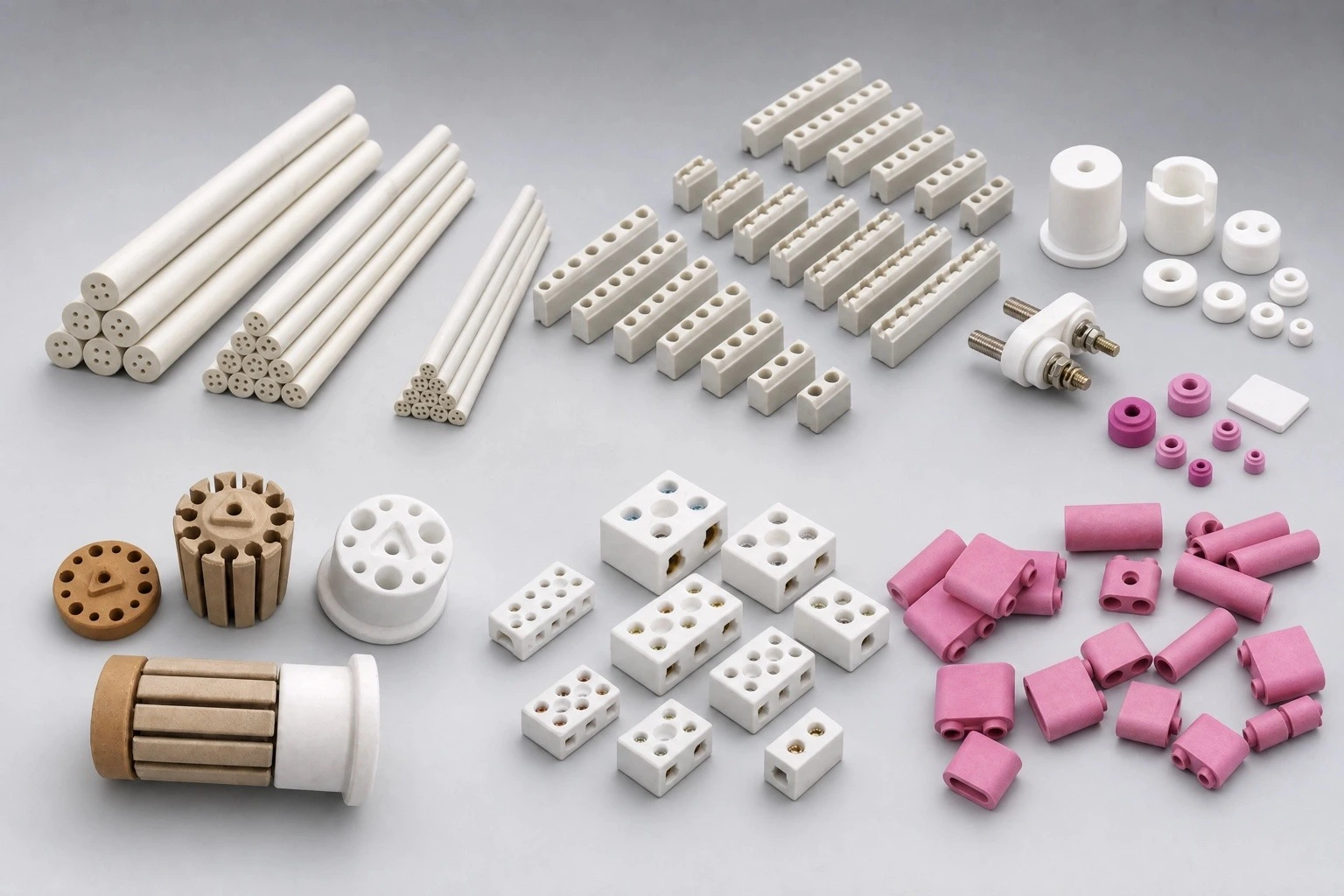
We also supply the complete range of accessories for both element types: element holders, alumina fiber supports, flexible connectors, and terminal hardware.
Browse our heating element range:
• Silicon Carbide (SiC) Heating Elements
Have questions about which element is right for your furnace? Contact the Heatecx engineering team with your furnace specifications — temperature, atmosphere, dimensions, and cycle profile — and we will recommend the most suitable solution for your application.
Published by Heatecx | Industrial Heating Element Machinery & Raw Materials Supplier