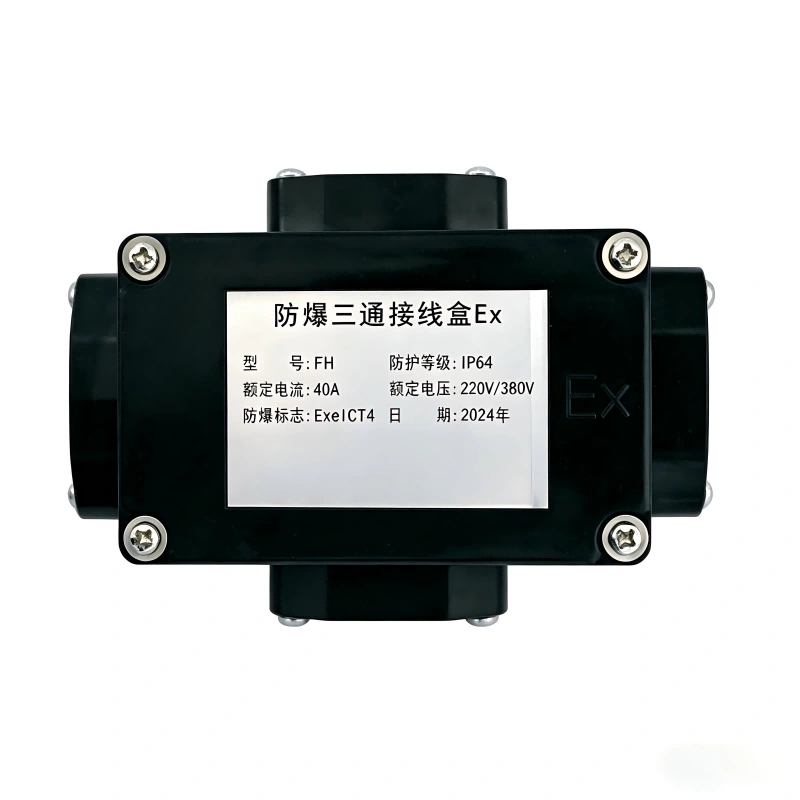
FTH Type Explosion-Proof Three-Way (T-Type) Junction Box
The FTH type explosion-proof three-way (T-type) junction box is specifically designed for complex connections in electric heat tracing systems within hazardous areas. It provides a safe explosion-proof connection node, suitable for connecting and extending heating cables, as well as for splicing heating cables of different power ratings on the same pipeline or handling complex conditions like three-way branch pipelines.
This product is the FTH type explosion-proof three-way (T-type) junction box, primarily used to provide reliable branching and connection for electric heating cable systems within explosion-proof areas (such as factory Zone 1 and Zone 2). Its core function is to solve safety connection problems in complex multi-branch scenarios, such as extending heating cables, splicing heating cables of different specifications, and connecting three-way branch pipelines. The product complies with explosion-proof standards (Explosion-Proof Mark: Ex e II C T6 Gb). The housing is made of high-strength engineering plastic, ensuring safety and durability in explosive gas atmospheres.
-
Applicable in hazardous locations of factory Zone 1 and Zone 2 where explosive gas mixtures are present.
-
Used for complex nodes in electric heat tracing systems that require branching, connection, or extension.
-
Typical Applications: In pipeline heat tracing systems for industries like petroleum, chemical, and natural gas, used to handle T-type three-way pipelines, connect heating cables of different power ratings, or safely extend heating cables within explosion-proof areas.
-
Professional Explosion-Proof Safety: Features the clear "Ex e II C T6 Gb" Increased Safety type explosion-proof mark. When used with heating cables of the corresponding explosion-proof rating, it provides intrinsic safety protection for complex connection points.
-
Handles Complex Wiring: The three-way (T-type) structure is specifically designed for handling branch connections in heat tracing systems. It is an ideal component for solving complex layouts like three-way branch pipelines, increasing the flexibility of system design.
-
Lightweight and Durable: The housing is made of high-strength plastic, which, compared to metal materials, offers advantages such as light weight, corrosion resistance, good insulation, and ease of installation.
-
Reliable Connection: Provides a robust, sealed protective environment for connections between heating cables, ensuring the long-term reliability of electrical connections.
|
Item |
Specification/Parameter |
|---|---|
|
Product Model |
FTH Type Explosion-Proof Three-Way (T-Type) Junction Box |
|
Rated Voltage |
AC 220V / 380V |
|
Rated Current |
40A |
|
Explosion-Proof Mark |
Ex e II C T6 Gb |
|
Explosion-Proof Type |
Increased Safety Type (e) |
|
Equipment Protection Level (EPL) |
Gb |
|
Maximum Surface Temperature |
T6 (≤85°C) |
|
Applicable Gas Group |
II C (includes hydrogen, acetylene, etc.) |
|
Applicable Area |
Factory Zone 1, Zone 2 (explosive gas atmosphere) |
|
Housing Material |
High-Strength Engineering Plastic |
|
Main Purpose |
Connection, extension, and branching between heating cables in explosion-proof areas |
-
Optional Configurations: According to the provided product information, this model is a standard specification product. Typically, manufacturers may offer options with different cable entry specifications (such as M thread, G thread). Details should be consulted with the manufacturer.
-
Customization Service: The product information does not mention a customization service. If special specifications are required (such as different rated current, voltage, material, or certification), it is recommended to contact the manufacturer directly to inquire about customization feasibility.
FAQ
What is the main difference between this explosion-proof three-way junction box and the previously mentioned two-way junction box (FJH type)?
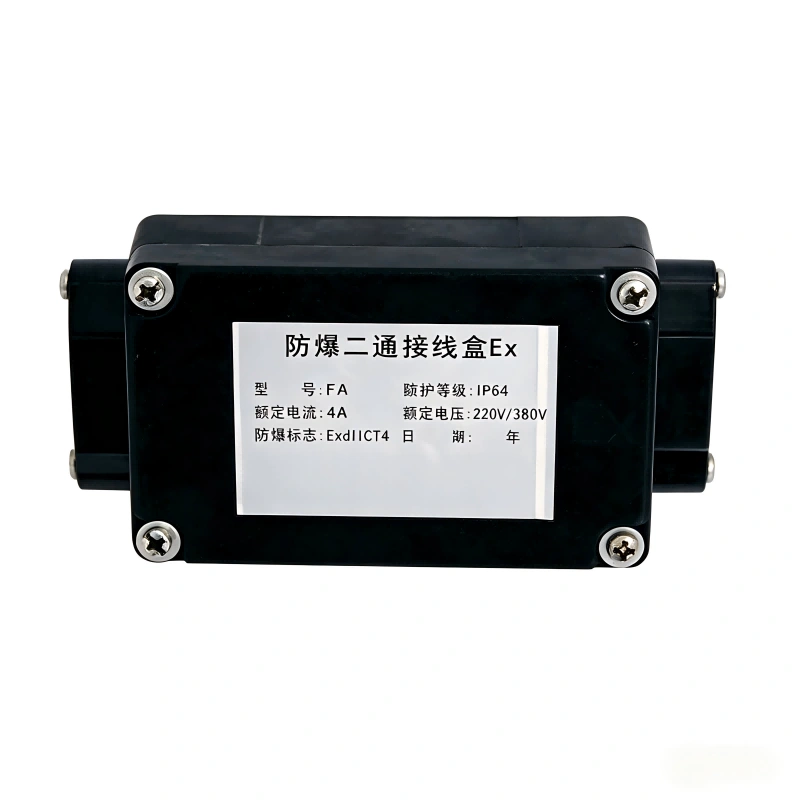
The core difference lies in the internal structure and applicable scenarios. The FTH type has a three-way (T-type) structure, specifically designed for branch connections in electric heat tracing systems. For example, it connects three heating cables to form a branch, making it suitable for complex layouts like three-way branch pipelines. In contrast, the FJH type has a two-way (straight type) structure, mainly used for the straight-line extension or simple connection of two heating cables. Please select the appropriate model based on the actual pipeline layout.