In the design of industrial heating systems, the selection of the heating element material is the core of thermal performance. It is not just about generating heat; it is about ensuring longevity, energy efficiency, and structural integrity under extreme conditions. At Heatecx, we specialize in providing thermal engineering solutions that optimize complex industrial processes.
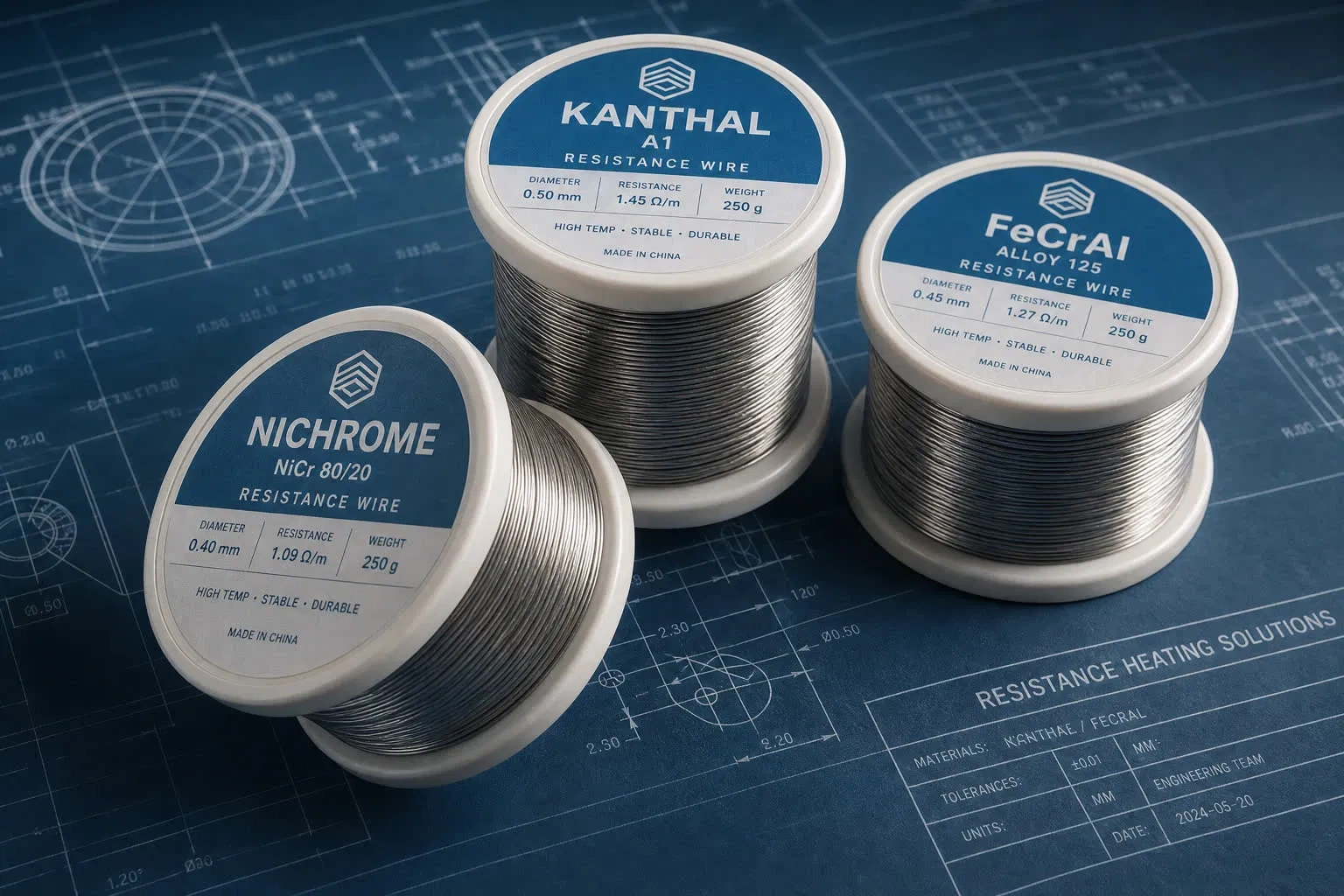
This comprehensive guide about Resistance Wires: Nichrome, Kanthal, and FeCrAl takes an in-depth look at the three most critical alloy families: Nichrome (NiCr), Kanthal, and FeCrAl, providing engineers and operators with the information needed for rigorous technical decision-making.
1. Nichrome (Nickel-Chromium): The Gold Standard in Mechanical Stability and Ductility
Nickel-Chromium alloys, commonly known as Nichrome (with NiCr 80/20 being the most prominent), have been the mainstay of the industry for decades. Their success lies in their exceptional mechanical and chemical behavior in medium-to-high temperature ranges, making them a reliable choice for electric heaters that require flexibility and durability.
Metallurgy and Protective Oxide Layer Formation
When heated, Nichrome develops a protective layer of chromium oxide (Cr₂O₃). This layer is remarkably adherent and elastic, meaning it does not flake off easily during thermal expansion and contraction cycles. This characteristic is crucial for the heating element lifespan, as it prevents internal oxidation and premature material degradation.
• Typical Composition: 80% Nickel, 20% Chromium (NiCr 80/20). Other variants include NiCr 60/15 with Fe.
• Maximum Operating Temperature: Approximately 1150°C – 1200°C (2100°F – 2190°F) in air, depending on the grade and surface load.
• Creep Resistance: Excellent. It maintains its structural shape without excessive deformation under its own weight at high temperatures, which is vital for dimensional stability in critical applications.
Key Advantages for Industrial Design and Operation
1 Post-Use Ductility: Unlike iron-based alloys, Nichrome remains ductile and malleable even after long periods of operation at high temperatures. This greatly facilitates repairs, maintenance, and mechanical adjustments without the risk of wire fracture.
2 Thermal Cycling Performance: It is the preferred choice for applications with frequent on/off cycles (thermal cycling), such as plastic sealers, industrial toasters, or certain types of intermittent furnaces, due to its more stable thermal expansion coefficient.
3 Non-Magnetic Properties: Nichrome 80/20 is practically non-magnetic, making it ideal for applications where magnetic fields must be minimized or controlled, such as in laboratory equipment or sensitive instrumentation.
4 Good Weldability: Allows for reliable electrical and mechanical joints, simplifying the manufacturing and assembly of complex heating elements.
2. Kanthal and FeCrAl: The Vanguard in Extreme Temperatures and Efficiency
Although Kanthal is a registered trademark and a global leader, its name has become the industry standard for referring to Iron-Chromium-Aluminum (FeCrAl) alloys. These alloys were specifically developed to overcome the temperature limitations of Nichrome, offering superior performance in extreme heat environments.
The Aluminum Oxide Revolution and its Impact on Oxidation Resistance
The key to FeCrAl’s superior performance is the formation of an aluminum oxide (Al₂O₃) layer on its surface when heated. Unlike chromium oxide, aluminum oxide is a superior electrical insulator and offers much more robust and durable protection against oxidation and corrosion at extremely high temperatures. This dense and stable layer is fundamental for the longevity of heaters in high-temperature furnaces.
• Typical Composition: Iron (base), Chromium (20-30%), and Aluminum (4-7%).
• Maximum Operating Temperature: Can reach up to 1425°C (2600°F), which is critical for applications such as ceramic kilns, non-ferrous metal smelting, and advanced heat treatments.
• Electrical Resistivity: Significantly higher than Nichrome. This allows for the design of heating elements with higher power in a smaller volume, optimizing space and energy efficiency.
• Weight: It is approximately 20% lighter than Nichrome, which can reduce the cost per unit weight and the structural load on the furnace, facilitating handling and installation.
Technical Challenges and Design Considerations
• Post-Use Brittleness: Once FeCrAl has been heated for the first time and has formed its aluminum oxide layer, its crystalline structure changes, becoming extremely brittle upon cooling. Any attempt to bend or mechanically manipulate it after its first heating cycle will result in fracture. This requires careful handling during installation and maintenance.
• Grain Growth and Creep (Deformation): At very high temperatures, the material tends to “creep” or deform more than Nichrome. This makes the use of appropriate ceramic supports essential, along with a design that anticipates this expansion to prevent short circuits or structural failures.
• Magnetism: Unlike Nichrome, FeCrAl alloys are magnetic, which can be a consideration in certain magnetic field-sensitive applications.
3. Detailed Technical Comparison Table: Nichrome vs. Kanthal / FeCrAl
For an informed decision, it is crucial to compare the key properties of these alloys:
| Property | Nichrome (NiCr 80/20) | Kanthal / FeCrAl (High Grades) |
| Melting Point | ~1400°C (2550°F) | ~1500°C (2730°F) |
| Max. Operating Temp. (in air) | 1200°C (2190°F) | 1425°C (2600°F) |
| Density (g/cm³) | 8.41 | 7.10 |
| Resistivity at 20°C (μΩ·m) | 1.08 | 1.45 |
| Temperature Coefficient of Resistance | Low | Very Low |
| Primary Protective Layer | Chromium Oxide (Cr₂O₃) | Aluminum Oxide (Al₂O₃) |
| Mechanical Behavior at High Temp. | Excellent stability, good creep resistance | Tendency to creep (deformation), requires supports |
| Post-Use Ductility | Maintains ductility | Becomes extremely brittle |
| Magnetism | Non-magnetic | Magnetic |
| Sulfur Resistance | Low | High |
| Relative Cost | Higher (due to Nickel) | Lower / More Efficient per unit of heat |
4. The Critical Impact of Atmosphere on Heating Element Lifespan
The durability and performance of a resistance wire depend not only on temperature but fundamentally on the chemical composition of the working environment. At Heatecx, we emphasize the importance of analyzing the furnace or system atmosphere before material selection:
• Oxidizing Atmospheres (Air, Oxygen): Both alloys perform well in air. However, FeCrAl is superior at temperatures above 1200°C due to the stability of its Al₂O₃ layer. Nichrome is excellent up to its temperature limit, forming a Cr₂O₃ layer that effectively protects it.
• Reducing Atmospheres (Hydrogen, Carbon Monoxide, Nitrogen): Nichrome generally performs better in these atmospheres, as the aluminum oxide layer of FeCrAl can be compromised or reduced, losing its protection. It is crucial to consult manufacturer specifications for each alloy in reducing atmospheres.
• Presence of Sulfur: Nichrome is highly vulnerable to sulfur attack (sulfidation), which can form low-melting-point nickel sulfides, rapidly destroying the element. In sulfur-rich environments, FeCrAl is the mandatory choice due to its superior resistance to sulfidation.
• Carburizing Atmospheres: Both alloys can suffer carburization, which forms metallic carbides that reduce ductility and lifespan. Specific alloys or protective coatings are required.
• Vacuum: At high temperatures in a vacuum, chromium in Nichrome can evaporate, contaminating the process and degrading the element. In these conditions, specific alloys or the use of FeCrAl with precautions are required, as aluminum can also evaporate at very high temperatures.
5. Specific Industrial Applications and Use Cases
The choice of the right resistance wire directly impacts operational efficiency and return on investment. Here are key applications by sector:
• Plastics Industry: Nichrome Flat Resistance Wire is ideal for sealing jaws, foam cutters, and extruder heating elements due to its fast thermal response, ductility, and ability to withstand frequent on/off cycles.
• Metal Heat Treatment: FeCrAl is preferred in hardening, tempering, annealing, and sintering furnaces for its ability to operate at extremely high temperatures and its energy efficiency. It is fundamental for processes requiring precision and thermal uniformity.
• Glass and Ceramics Manufacturing: Kanthal A1 and other high-grade FeCrAl alloys are the undisputed standard for ceramic, glass, and enamel firing kilns, where temperatures above 1300°C are needed to reach melting and sintering points.
• Home Appliances and Light Industrial: Nichrome is common in toasters, industrial hair dryers, convection ovens, and water heaters due to its balance of cost, performance, and ease of manufacturing.
• Laboratories and Prototyping: Nichrome is easier to manipulate and coil for custom resistors and rapid prototypes due to its ductility, allowing engineers to adjust designs with greater ease.
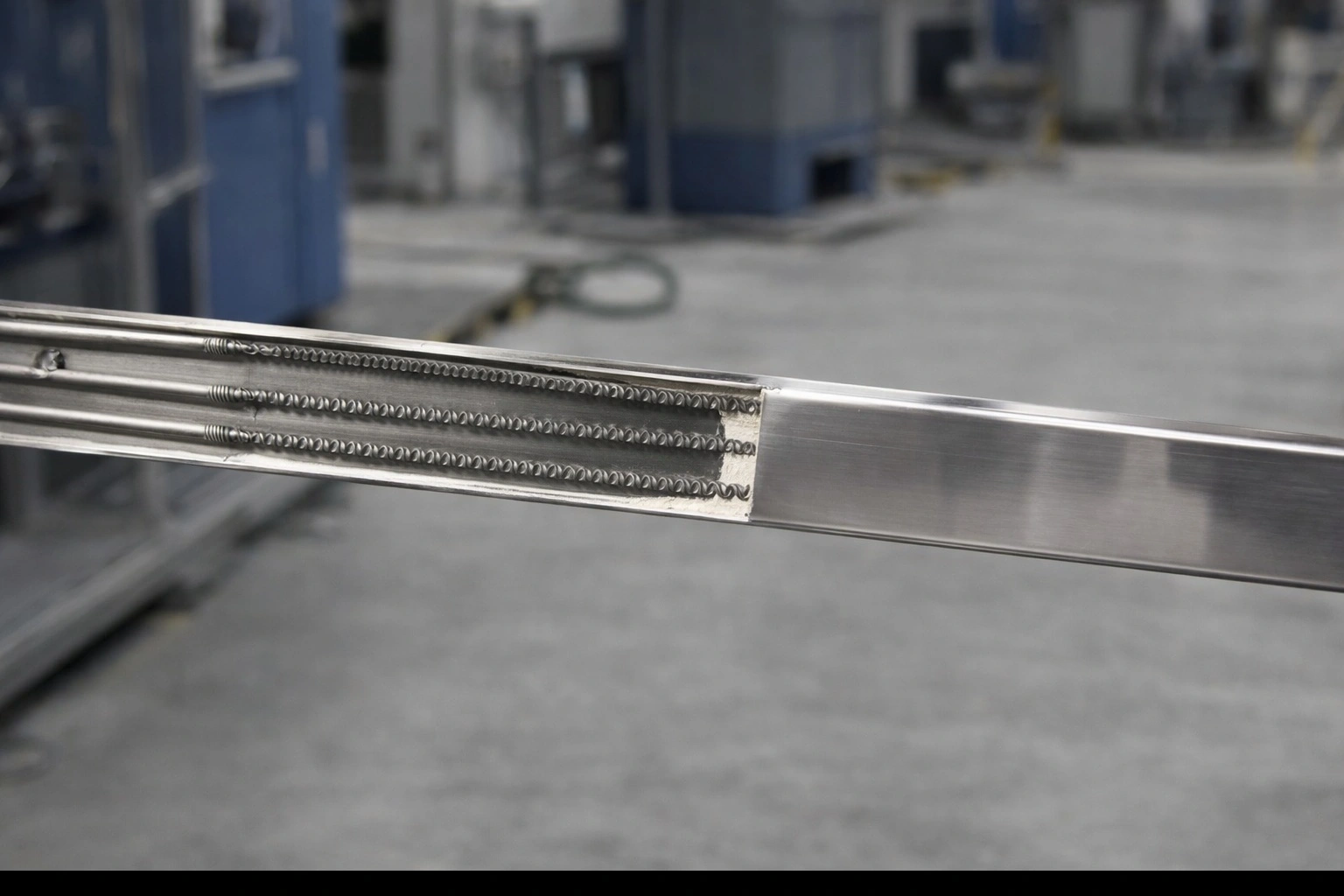
• Tubular and Cartridge Heaters: Both alloys are used, but Nichrome is often preferred for applications where vibration or mechanical shock are a concern, while FeCrAl is used when higher power density or temperature is required.
6. Preventive Maintenance and Best Practices to Extend the Lifespan of Your Heaters
Proper maintenance is as crucial as material selection to maximize the lifespan of heating elements and ensure optimal performance. At Heatecx, we recommend the following practices:
5 Avoid Contaminants: Contact with oils, salts, corrosive vapors, or low-melting-point metals (such as lead, zinc, tin, or brass) can destroy the wire’s protective layer, leading to premature failure. Ensure a clean working environment.
6 Surface Load Control (W/cm²): Do not overload the element. Excessive surface load raises the internal wire temperature above its design limit, accelerating oxidation and creep, which leads to premature failure. Always calculate and respect the recommended surface load.
7 Use of Appropriate Ceramic Supports: Ensure that Ceramic Insulators are clean, in good condition, and correctly sized. Inadequate or damaged supports can create hot spots, deformation, and short circuits. High-purity ceramics are essential for electrical and thermal insulation.
8 Reliable Electrical Connections: Loose or corroded connections generate additional resistance and localized heat, which can burn out the wire at the connection points. Use high-quality Terminal Pins, designed for high temperatures, and ensure a firm and clean tightening.
9 Regular Inspection: Conduct periodic visual inspections to detect signs of deformation, excessive oxidation, cracks in the ceramics, or hot spots. Early detection can prevent catastrophic failures.
10 Temperature Control: Precise control of furnace temperature is vital. Excessive fluctuations or overheating can drastically reduce the element’s lifespan.
Frequently Asked Questions (FAQ) for Engineers and Industrial Technicians
What is the main difference between Nichrome and Kanthal in terms of performance?
The main difference lies in the maximum operating temperature and post-use mechanical behavior. Kanthal (FeCrAl) withstands significantly higher temperatures (up to 1425°C) and has higher resistivity, but becomes brittle after the first heating. Nichrome operates up to 1200°C, is more ductile post-use, and better resists thermal cycling and vibrations.
Can I directly replace a Nichrome element with a Kanthal one without modifying the design?
It is not recommended. Due to Kanthal’s higher resistivity, an element designed for Nichrome will have lower power if the material is changed while keeping the same dimensions (length and diameter). It is essential to recalculate the wire length or diameter to maintain the desired power. Furthermore, Kanthal’s mechanical properties and post-use brittleness require different design considerations for supports.
Why does my heater burn out or fail prematurely at the connection points?
This is a common problem usually due to poor electrical or mechanical contact at the terminals. Causes include loose connections, corrosion, use of inappropriate connection materials, or excessive current load for the terminal. This generates additional resistance and intense localized heat that exceeds the wire’s capacity at that point. We recommend using high-quality Terminal Pins, designed for high temperatures, and ensuring a firm and clean tightening.
How can I identify if a wire is Nichrome or FeCrAl if I don’t have the documentation?
A quick and simple test is magnetism: FeCrAl alloys are strongly attracted to a magnet, while Nichrome 80/20 is practically non-magnetic. For precise identification, metallurgical analysis would be required.
What is “surface load” and why is it important?
Surface load (expressed in W/cm² or W/in²) is the power dissipated per unit surface area of the heating element. It is a critical design parameter. An excessively high surface load means the wire is operating above its heat dissipation capacity, which raises its internal temperature, accelerates oxidation and creep, and drastically reduces its lifespan. Maintaining the surface load within the manufacturer’s recommended limits is fundamental for longevity.
Conclusion: The Smart Choice for Excellence in Industrial Heating
Excellence in industrial heat begins with the proper selection and handling of raw materials. Whether your needs require the resilience and ductility of Nichrome for frequent cycles, or the power and resistance to extreme temperatures of FeCrAl for demanding processes, Heatecx provides the technical support and highest quality materials.
Explore our full Raw Materials catalog and Electric Heaters or contact our engineering team to design your next custom industrial heating solution. We are committed to optimizing your processes and the durability of your equipment.