When people discuss the quality of a tubular electric heating element, the conversation usually centers on MgO powder, tube diameter, or the resistive alloy used. But there’s a quieter process — often underestimated — that determines whether that element will survive bending, vibration, and thermal cycling without cracking: annealing.
This expanded guide covers what annealing is, why it’s essential in heating element manufacturing, its types, how it’s carried out, what happens when it’s skipped or done poorly, how its quality is verified, and the technical details manufacturers can’t afford to overlook.
What Is Annealing? Concept and Principle
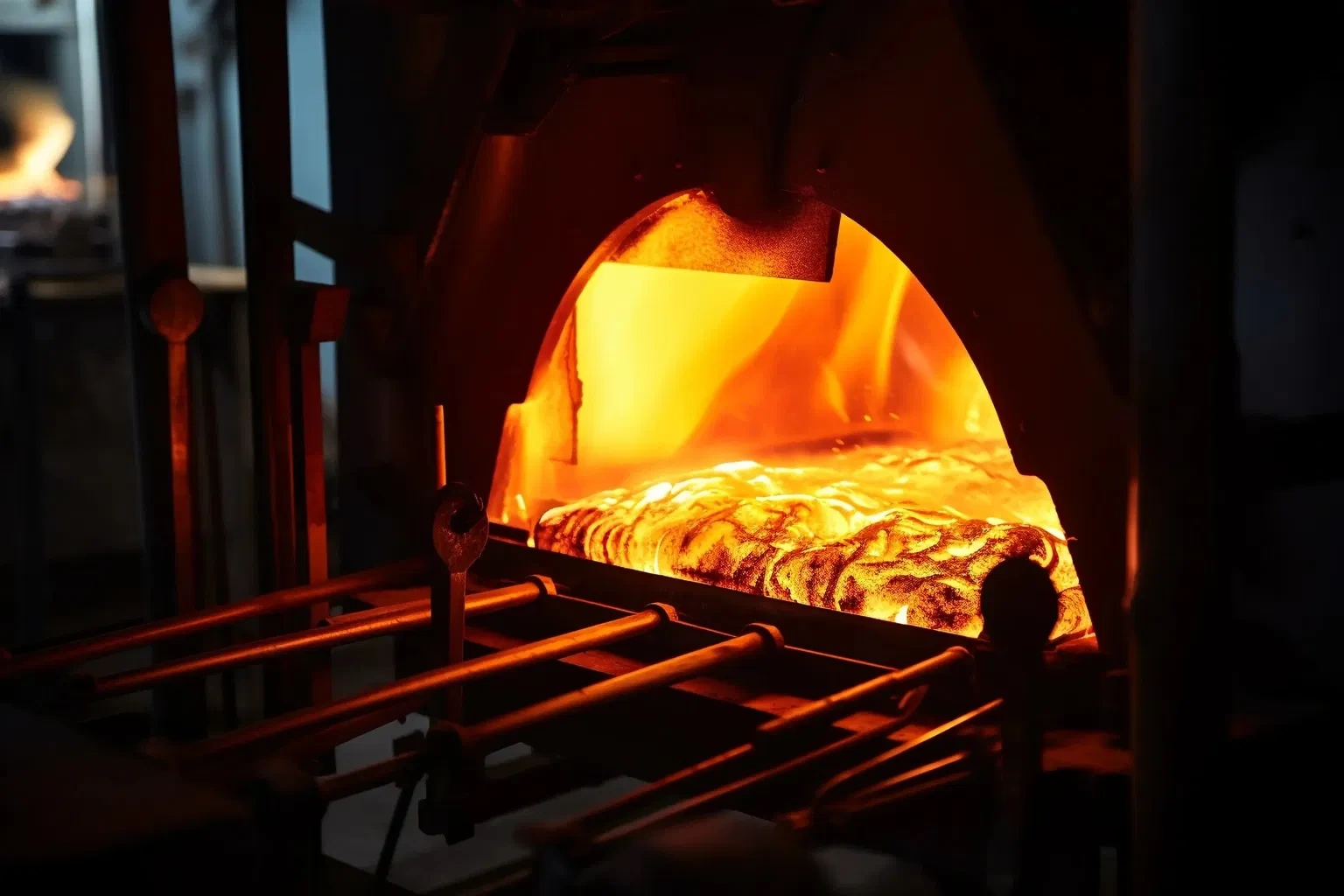
Annealing is a heat treatment process where a metal is heated to a specific temperature — generally below its melting point but high enough to allow its crystalline structure to reorganize — held there for a set period, then cooled in a controlled manner.
The metallurgical principle behind this process unfolds in three successive stages:
- Recovery: internal stresses accumulated from cold work begin to release, though the deformed grain structure hasn’t changed yet.
- Recrystallization: new, strain-free grains form and replace the elongated, stressed grains. This is the stage where the metal’s ductility actually returns.
- Grain growth: if time or temperature run excessive, the new grains keep growing, which can mechanically weaken the material if not tightly controlled.
That last point matters: annealing isn’t a “more heat and time is always better” process. Over-annealing can be just as damaging as under-annealing, and understanding this distinction is what separates a tightly controlled process from one that just “works most of the time.”
Understanding the metallurgical principle is only half the picture, though. The other half is understanding why, specifically in tubular heating element manufacturing, this stops being a lab curiosity and becomes a non-negotiable production requirement.
Why Annealing Is Essential in Heating Element Manufacturing
In a tubular heating element, the metal sheath goes through multiple stages of cold deformation: filling, diameter reduction (swaging), and often bending into 90°, 180°, or more complex shapes. Each stage progressively hardens the metal through the accumulation of dislocations in its crystal lattice.
Without an intermediate annealing step, the tube simply can’t withstand bending: microcracks, ovality, or complete fracture appear at the bend. These microcracks aren’t always visible to the naked eye, but they compromise the element’s seal, allow moisture into the MgO insulation, and drastically shorten the product’s service life.
That said, “annealing” isn’t a one-size-fits-all recipe applied to whatever tube happens to be running on the line. The exact temperature and time depend on which metal is being processed, and that’s where many improvised processes start to break down.
Recrystallization Temperatures by Material
Not every alloy anneals the same way. The temperature and time required depend directly on the sheath’s metallurgical composition:
| Material | Typical annealing range | Note |
| Stainless steel (300 series, e.g. 304/321) | ~1010°C – 1120°C | Requires controlled rapid cooling to avoid chromium carbide sensitization |
| Incoloy (800/825) | ~980°C – 1020°C | Nickel-chromium-iron alloy used in high-temperature applications |
| Copper | ~375°C – 650°C | Recrystallization can begin as low as 200°C, but industrial annealing typically runs in this range to ensure full softening |
These are general metallurgical reference values; each manufacturer should fine-tune parameters based on wall thickness, line speed, and end-customer specifications.
Once the target temperature is known, the practical question becomes how to actually get the metal there — and that’s where equipment technology comes in, since not every annealing machine heats the same way or fits the same stage of the process.
Types of Annealing Used in Heating Element Manufacturing
Different technologies achieve the same metallurgical goal, each suited to a different stage of the process:
1. Short-circuit annealing (direct resistance heating) A high-amperage, low-voltage direct current is applied straight to the metal through a system of conductive contacts or pulleys, generating heat via the Joule effect. This is the typical technique for annealing resistance wire and tube after a reduction process. Its main advantage over conventional furnaces is that it’s temperature-controlled rather than time-based, automatically adapting to variations in diameter or material.
2. High-frequency induction annealing Uses a high-frequency electromagnetic field to generate heat directly within the metal’s molecular structure, with no physical contact. It’s the preferred solution for localized annealing — for example, right before a bend — and when the material shows significant wall-thickness variation, since this method compensates for irregularities by adjusting the electromagnetic field’s penetration.
3. Continuous in-line annealing Integrated directly into the wire-drawing or tube-reduction line, so the metal is annealed immediately after deformation, with no extra handling and no process interruption. This is the standard for copper wire production, where diameter uniformity and material softness are critical.
Quick comparison of the three methods
| Method | Localization precision | Process speed | Typical use |
| Short-circuit | Medium (defined section) | High | Tube/wire right after reduction |
| High-frequency induction | Very high (specific point) | High | Localized annealing before bending |
| Continuous in-line | Low (full length) | Very high | Copper wire for conductors |
Regardless of which technology is chosen, all of them execute, in practice, the same physical sequence described earlier in this guide. It’s worth revisiting it now translated into concrete plant-floor steps.
How the Annealing Process Works
While the technology varies, the underlying process translates the three metallurgical stages above into plant-floor parameters:
- Controlled heating: the metal is brought to the recrystallization temperature specific to its alloy.
- Thermal soak: the temperature is held long enough for the crystal grains to fully reorganize, without overheating, causing excessive oxidation, or triggering excessive grain growth.
- Controlled cooling: the metal is cooled gradually or with assistance, avoiding thermal shocks that would introduce new stresses.
In theory, these three stages sound straightforward. In practice, on a line running at several meters per minute with different diameters and material batches entering the process, several variables can push the process off target if they’re not deliberately controlled.
Critical Considerations
- Temperature control vs. time control: time-based systems assume constant material and diameter conditions; in real production these vary, so temperature-based control delivers far more consistent, repeatable results.
- Material type: each alloy has its own optimal annealing temperature and duration; generic parameters risk under-annealing (leaving residual stress) or over-annealing (embrittling the grain).
- Atmosphere and oxidation: especially with copper, oxygen exposure during cooling can cause surface oxidation (scale) that affects conductivity and coating adhesion downstream; continuous annealing systems typically operate in controlled environments to minimize this risk.
- Equipment power and capacity: processing larger-diameter tubes or high-density MgO requires higher-power equipment (up to 45 kW in high-frequency induction systems) to ensure complete thermal uniformity.
- Batch-to-batch repeatability: the same annealing parameters should produce identical results batch after batch; uncontrolled variation is one of the most common causes of quality-audit rejections.
These variables aren’t theoretical. When neglected, their consequences tend to surface — sometimes months later — in the installed product, not on the production floor.
What Happens When Annealing Is Skipped or Done Poorly
The effects of missing, insufficient, or excessive annealing aren’t always obvious on the production line, but they show up critically in the field:
- Invisible microcracks at the bend: allow ambient moisture to gradually enter the MgO, degrading its dielectric strength over time.
- Premature dielectric failure: once moisture contaminates the MgO, insulation resistance drops and the risk of current leakage or short circuit rises.
- Fracture during bending itself: an under-annealed tube can break directly in the bending machine, wasting material and production time.
- Brittleness from over-annealing: excess temperature or time causes grain growth, which paradoxically makes the metal more brittle and less fatigue-resistant, even though it’s no longer “hardened” in the conventional sense.
- Premature hot spots: unrelieved residual stress can create uneven contact zones between the sheath and the MgO, affecting heat transfer and shortening the resistive wire’s service life.
Precisely because these failures aren’t always visible to the naked eye at the moment the part is made, no serious manufacturer should assume “annealing went fine” without verifying it through objective methods.
Quality Control After Annealing
A well-executed annealing process should be verifiable, not just assumed. Common quality-control practices in the industry include:
- Bend test: a batch sample is bent to the specified angle to check for visible cracks or microcracks detectable via dye penetrant inspection.
- Hardness measurement: techniques like Vickers or Rockwell hardness testing objectively confirm the metal reached the expected softening level, compared against a reference range for each alloy.
- Visual oxidation inspection: a surface with excessive scale or discoloration can indicate a process temperature out of range or an inadequate cooling atmosphere.
- Dimensional verification: annealing shouldn’t alter the tube’s dimensional tolerances; any deformation points to a process mismatch.
When these checks become a routine part of daily operations — rather than a one-off after a customer complaint — that’s usually also the moment to ask whether annealing should be brought in-house instead of relying on a third party.
When It’s Worth Investing in In-House Annealing Equipment
For manufacturers producing elements with frequent bends, variable diameters, or high volumes, relying on manual annealing or third-party processing introduces bottlenecks and hard-to-control variability. Owning dedicated equipment — whether short-circuit annealing, high-frequency induction, or continuous in-line annealing — allows you to:
- Adjust temperature parameters in real time based on the material batch.
- Reduce cycle times by eliminating transport to an external process.
- Maintain full heat-treatment traceability for quality audits or customer certifications.
With the principles, types, and quality controls now covered, it’s worth grounding all of this in the actual order these steps occur on a heating element production line: first the empty tube, then the tube already filled with MgO, and — in a completely different context — the MgO powder itself.
Annealing Empty Tubes
Before MgO filling, the metal tube may need pre-annealing if it already went through forming, cutting, or welding that introduced internal stress. This early annealing step ensures the tube reaches the filling stage with a stable metallurgical structure, ready for the deformation that follows during swaging.
But the empty tube is only the starting point. The real test comes after filling, once swaging has already significantly hardened the sheath and the product still has to go through bending.
Annealing Filled Heating Element Tubes
This is the most critical point in the process. Once the tube has been filled with MgO powder and reduced in diameter (swaging), the sheath metal hardens significantly. If the product design calls for subsequent bending, localized annealing — typically via high-frequency induction — must be applied exactly where the bend will occur. This restores ductility without annealing the entire piece, saving time and energy.
Everything covered so far concerns the sheath metal itself. But there’s a third use of the word “annealing” in this industry that shouldn’t be confused with the previous ones, since it has nothing to do with the tube’s metallurgy.
Annealing MgO Powder: A Different Case
It’s worth clarifying that the term “annealing” is also used — in a different sense — for magnesium oxide powder. Here it’s not a metallurgical treatment but a moisture-removal process: because MgO is hygroscopic, once it absorbs ambient moisture its dielectric strength drops sharply. Annealing the powder means baking it at controlled temperatures, generally between 150°C and 300°C, to evaporate moisture without altering its chemical properties, before it’s used for filling and sealing the element.
With the full picture now covered — principle, types, process, risks, quality control, and the three specific applications in heating element manufacturing — a few practical questions still tend to come up on the shop floor.
Frequently Asked Questions
Does annealing permanently reduce the tube’s mechanical strength? Not in a negative sense: the goal is to restore ductility so bending is possible. The finished part’s final mechanical strength depends on the overall design, not just its post-annealing state.
Can the same piece be annealed twice? Yes, as long as each cycle is controlled by temperature and time. That said, every additional annealing cycle should be evaluated to avoid excessive grain growth.
Does every tube diameter need the same equipment power? No. Larger diameters or higher MgO density inside the tube require more power to achieve thermal uniformity across the entire cross-section.
Does annealing MgO powder replace annealing the metal tube? No — they’re independent processes with different goals: one removes moisture from the powder, the other restores the metal’s ductility.
Conclusion
Annealing rarely shows up on a heating element’s spec sheet, but it directly determines how reliable that element will be in the field. Whether through short-circuit annealing, high-frequency induction, or continuous in-line annealing, having the right equipment for each stage of the process — empty tube, filled tube, or copper wire — plus verifiable quality control after treatment, is what separates a production line with high rejection rates from an efficient, reliable one.
At Heatecx we offer specialized machinery for each of these stages: the RT-01 Short-Circuit Annealing Machine, the RT-02 High-Frequency Annealing Machine, and the RT-04 Wire Drawing and Continuous Annealing Machine.