If you manufacture tubular heating elements, the MgO filling machine is one of the most critical pieces of equipment in your production line. Choosing the wrong machine can result in poor insulation quality, inconsistent MgO density, resistance wire misalignment — and ultimately, defective heating elements that cost you time and money.
This guide walks you through everything you need to know to choose the right MgO powder filling machine for your specific production needs: types, technical specifications, maintenance, integration into your production line, and the most frequently asked questions from heating element manufacturers worldwide.
What Is an MgO Filling Machine?
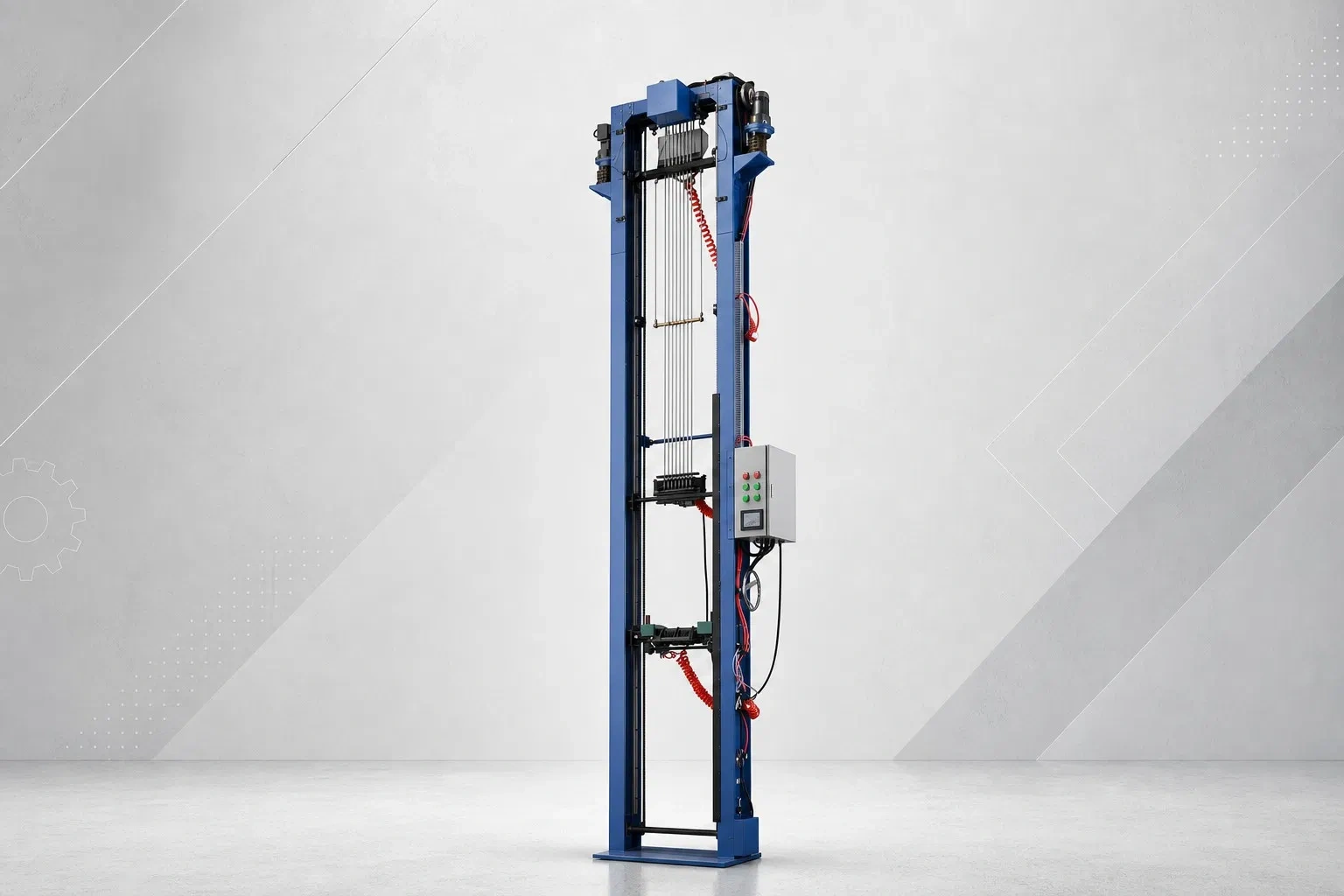
An MgO filling machine — also called a magnesium oxide powder filling machine — is used to fill tubular heating element sheaths with high-purity magnesium oxide (MgO) powder. The MgO powder acts as both an electrical insulator and a thermal conductor between the resistance wire and the metal sheath.
The three main goals of any MgO filling machine can be summarized as: center, solid, and fast.
• Center: The resistance wire must remain perfectly centered inside the metal tube after filling.
• Solid: The MgO powder density must be consistently high — typically above 2.17 g/cm³.
• Fast: The filling process must be simple, repeatable, and efficient for high-volume production.
Without a well-calibrated MgO filling machine, even the best resistance wire and highest-quality tubing will produce underperforming heating elements. The filling stage directly determines the electrical insulation resistance, dielectric strength, and thermal efficiency of the final product.
Types of MgO Filling Machines
Before choosing a machine, it’s important to understand the different types available on the market:
1. Single Column Filling Machine
The most economical option. Best suited for short tubes (up to 3 meters) and lower production volumes. Ideal for small manufacturers or those just starting out. Simple to operate, easy to maintain, and a solid entry point for new production lines.
2. Gantry Type (Multi-Guide) Filling Machine
Designed for high-temperature, small-granule MgO powder. Offers better center guarantee than single column machines. Recommended when withstand voltage requirements exceed 2000V. The gantry structure provides greater stability during the filling and vibration process, resulting in more consistent powder density.
3. Multi-Station Filling Machine (6 to 48 stations)
Fills multiple tubes simultaneously — typically 24 tubes at a time, with custom options up to 48. Best for high-volume industrial production lines. Filling speed can reach up to 600 mm per minute. These machines are PLC-controlled and can be programmed for different tube diameters and lengths without major tooling changes.
4. Cartridge Heater Filling Machine
Specifically designed for cartridge heater production. Fills MgO powder directly into the cartridge tube with the resistance wire pre-installed. Available in single-end and double-end configurations depending on your cartridge heater design.
5. Mini-Tubular Heater Filling Machine
Designed for very small diameter tubes (as small as 3 mm), used in precision heating applications such as medical equipment, laboratory instruments, and miniaturized industrial heaters. Requires extremely precise guide tubes and vibration control to achieve proper centering.
Key Technical Specifications to Compare
When evaluating MgO filling machines, always request and compare the following technical parameters from your supplier:
| Parameter | What to look for |
| Tube diameter range | Minimum 5.5 mm, check maximum for your largest tubes |
| Tube length range | Ensure it covers your longest elements |
| MgO powder density | Should guarantee ≥ 2.17 g/cm³, preferably ≥ 2.20 g/cm³ |
| Number of stations | 1 for low volume, 12–48 for industrial production |
| Filling speed | 250–600 mm/min depending on model |
| Control system | PLC with human-machine interface (HMI) recommended |
| Vibration system | Motor or electromagnetic — both effective if well calibrated |
| MgO powder loss | Look for jet nozzle technology for near-zero loss |
| Power supply | Single phase 220V or three phase depending on model |
| Air supply | Most machines require 5–7 kg/cm² compressed air |
5 Key Factors to Consider When Choosing an MgO Filling Machine
1. Tube Diameter and Length
Every MgO filling machine has a minimum and maximum tube diameter it can handle. Most standard machines work with tubes from 5.5 mm to 16 mm in diameter. For longer tubes (up to 8 meters), you need a machine specifically designed for extended filling lengths. If you produce a wide range of diameters, look for machines that allow quick changeover between guide tube sets.
Ask yourself: What tube diameters and lengths do I produce most often? Will my product range expand in the next 2–3 years?
2. Required MgO Powder Density
Higher-quality heating elements require higher MgO density. Look for machines that guarantee a powder density above 2.20 g/cm³ for premium applications. Most quality machines use vibration technology — either motor-driven or electromagnetic — to achieve consistent density. The vibration frequency should be adjustable to accommodate different MgO powder granule sizes.
Ask yourself: What withstand voltage do my heating elements need to achieve? Do my customers require third-party electrical insulation testing?
3. Number of Stations and Production Volume
If you are producing large volumes, a multi-station machine that fills 12, 24, or 48 tubes simultaneously will dramatically increase your output. Single-station machines are fine for prototyping or small runs. Calculate your required daily output before choosing — it’s often more cost-effective to invest in a larger machine upfront than to purchase a second machine when demand increases.
Ask yourself: How many heating elements do I need to produce per shift? What is my projected growth over the next 3 years?
4. PLC Control and Automation Level
Modern MgO filling machines come with PLC systems that allow you to set filling parameters digitally — length, time, position sensors, vibration frequency — and reproduce them consistently across thousands of production cycles. Manual machines require more operator skill and produce more variation between batches. For export-quality heating elements, PLC-controlled filling is strongly recommended.
Ask yourself: Do I need consistent, automated production or am I flexible with manual operation? Do my customers require production traceability?
5. MgO Powder Loss Control
Wasted MgO powder adds up quickly in high-volume production. MgO powder is a significant cost in heating element manufacturing, and machines with poor powder containment can waste 5–10% of your material. Look for machines that use jet nozzle technology, which ensures almost zero MgO loss during the filling process. This feature pays for itself quickly in medium to high-volume operations.
Ask yourself: How much MgO powder waste can my operation afford? What is my monthly MgO powder consumption?
How to Integrate an MgO Filling Machine Into Your Production Line
An MgO filling machine does not operate in isolation — it is part of a larger tubular heating element production line. To get the best results, consider how it integrates with the machines before and after it:
Before the filling machine:
• Resistance wire coiling machine — produces the resistance wire coil that goes inside the tube
• Tube cutting machine — cuts metal sheaths to the required length
• End cap assembly machine — installs the bottom end cap before filling
During filling:
• The tube is loaded vertically onto the guide rod
• MgO powder is vibrated into the tube from the top
• The resistance wire is held centered by the guide rod throughout the process
After the filling machine:
• Reducing mill (swaging machine) — compresses the filled tube to compact the MgO powder and reduce the tube diameter
• Straightening machine — straightens the tube after swaging
• Bending machine — shapes the element into U-bends, coils, or custom forms
• Annealing machine — relieves internal stress after bending
Choosing an MgO filling machine that is compatible in speed and tube diameter range with your reducing mill is essential — a bottleneck at the filling stage will slow down your entire production line.
Maintenance and Service Life
A well-maintained MgO filling machine can last 10–15 years in industrial production. Key maintenance tasks include:
• Daily: Clean MgO powder residue from the guide tubes, nozzles, and vibration table
• Weekly: Check vibration motor or electromagnetic unit for wear; lubricate moving parts
• Monthly: Inspect guide tubes and core rods for wear; replace if centering accuracy is affected
• Annually: Full inspection of PLC system, sensors, and pneumatic components
The most commonly replaced spare parts are guide tubes, core rods, and jet nozzles. When buying a machine, always confirm that your supplier stocks these parts and can ship them quickly — a machine idle waiting for a spare part costs far more than the part itself.
Common Mistakes When Buying an MgO Filling Machine
• Buying based on price alone. A cheaper machine that produces poor MgO density will cost far more in defective products and rework.
• Not considering future tube diameters. If you plan to expand your product range, choose a machine that can handle multiple diameters without major tooling changes.
• Ignoring after-sales support. Choose a supplier who offers technical support, video guides, on-site service, and spare parts availability with fast delivery.
• Underestimating production volume. A single-station machine that works fine today may become a bottleneck as your business grows.
• Skipping the factory acceptance test. Always request a FAT (Factory Acceptance Test) before shipment — have the supplier demonstrate the machine filling your specific tube dimensions and MgO powder grade.
Frequently Asked Questions (FAQ)
What is the difference between a single column and a gantry type MgO filling machine?
A single column machine uses one vertical guide column and is more economical. A gantry type uses a bridge structure for greater stability, better centering accuracy, and is recommended for high withstand voltage applications above 2000V.
What MgO powder density should I aim for?
For standard heating elements, a density above 2.17 g/cm³ is acceptable. For high-quality elements requiring withstand voltage above 2000V, aim for 2.20 g/cm³ or higher. Your MgO filling machine’s vibration system is the key factor in achieving consistent density.
Can one MgO filling machine fill different tube diameters?
Yes, most modern machines can be adjusted for different tube diameters by changing the guide tube and core rod sets. Multi-station PLC machines often allow you to install guide tubes of different diameters simultaneously.
How long does it take to fill one tubular heating element?
Filling speed depends on tube length and machine type. A standard machine fills at 250–350 mm per minute. A high-speed multi-station machine can reach 600 mm per minute while filling 24 tubes simultaneously.
What causes poor centering of the resistance wire after filling?
Poor centering is usually caused by worn guide tubes or core rods, incorrect vibration settings, or MgO powder with incorrect granule size for the machine’s nozzle type. Regular maintenance and using the correct MgO powder grade for your machine are the most effective preventive measures.
How do I know if my MgO filling machine needs recalibration?
Signs include increasing rejection rates due to off-center wire, inconsistent insulation resistance readings in finished elements, or visible MgO powder density variation between tubes in the same production run.
How Heatecx Can Help
At Heatecx, we supply a complete range of MgO powder filling machines for tubular heating element manufacturers worldwide — from single-column machines for small production runs to multi-station PLC-controlled systems for industrial-scale manufacturing.
Our machines are designed for precision, minimal MgO powder waste, and consistent density above 2.20 g/cm³. We also supply all the consumables and spare parts your filling machine needs, including high-purity MgO powder, guide tubes, jet nozzles, and resistance wires.
Browse our MgO Filling Machine range: heatecx.com/en/productos/machinery/mgo-filling-machine/
Have questions about which machine is right for your production line? Contact the Heatecx team — we’re happy to help.
Published by Heatecx | Industrial Heating Element Machinery & Raw Materials Supplier