Introduction to Industrial Heaters and the Importance of Insulation
At the heart of countless industrial processes, band heater clamps, band heaters, and heating bands play an absolutely crucial role in optimal machinery operation. These components are essential for precise and controlled heating in machines such as extruders, injection molders, and blow molding equipment, where thermal precision determines the final product quality. The operational efficiency and durability of these heating clamps depend greatly on the insulation material used in their construction. The choice between mica insulation and high-temperature ceramic blocks is not a trivial decision; it directly impacts overall equipment performance, the expected component lifespan, and the total operational cost of the installation. Understanding deeply the difference between mica and ceramic heater is absolutely fundamental to optimizing any industrial process requiring controlled and efficient heating. This blog will explore in depth the technical characteristics, comparative advantages, and specific applications of both insulation types, guiding you toward the best decision for your particular needs.
In the plastic processing industry, selecting the correct heater can mean the difference between an efficient and profitable process versus one that generates waste and elevated costs. Mica heaters for plastic and industrial ceramic heaters represent two different philosophies of industrial heating, each optimized for specific temperature ranges and particular applications. While mica offers economical solutions and rapid heating for moderate-temperature applications, ceramic provides superior robustness and efficiency for high-temperature processes. Both technologies have evolved significantly in recent decades, incorporating improvements such as integrated J-type thermocouple and integrated K-type thermocouple for more precise temperature control, as well as stainless steel shielding for enhanced durability. Understanding these technical differences is essential for any professional involved in the selection, purchase, or maintenance of industrial heating equipment.
Mica Heaters for Plastic: Technical Characteristics and Specialized Applications
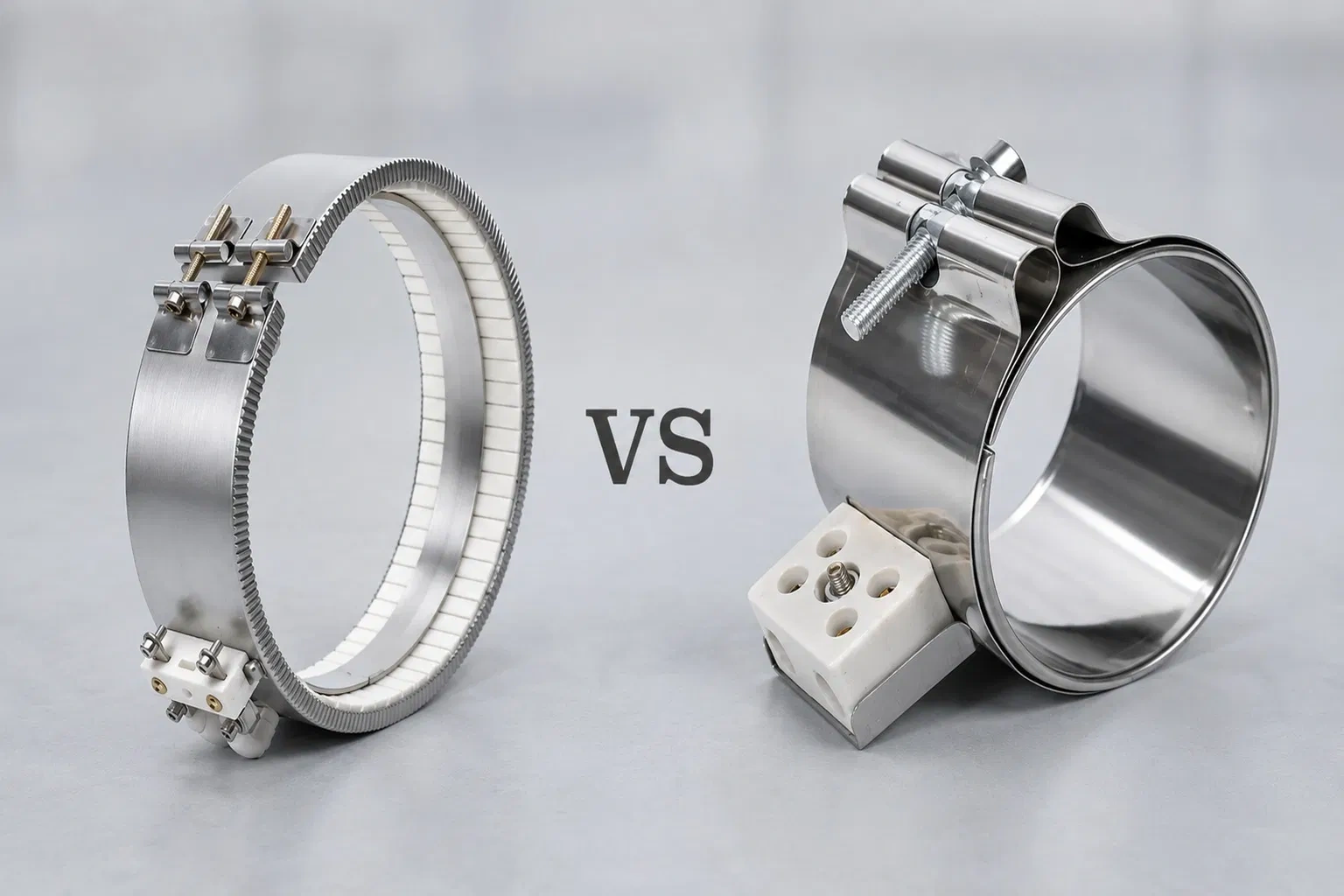
Mica heaters for plastic represent a popular, economical, and highly effective solution for applications requiring rapid and efficient heating at moderate temperatures. Mica insulation is characterized by its excellent thermal conductivity, its ability to be manufactured in thin and compact designs, and its ease of installation in confined spaces. This characteristic enables very effective cylindrical heat transfer, distributing heat uniformly around the cylinder or band to be heated. These heaters are typically shielded in stainless steel to protect the heating element from corrosion and mechanical wear, and in some cases may incorporate brass bands for injection nozzles, offering additional robustness and adaptability to different machine configurations. The maximum temperature 350°C for mica is a key factor to consider in heating system design, making them ideal for processes such as low-temperature plastic extrusion, injection molding of conventional thermoplastics, and processing of heat-sensitive materials.
With high power density that can reach up to 7 watts per square centimeter in optimized designs, mica heaters are the preferred choice for applications requiring rapid heating and agile thermal response. This characteristic is especially valuable in short production cycles where heating time is critical. Efficient band heaters made of mica are particularly popular in the industry because they offer an excellent balance between initial cost, operational efficiency, and replacement ease. They are the ideal solution for heating bands for plastic injection machines at competitive prices, plastic extrusion heaters, heating bands for injection machines of standard production, low-temperature plastic blow molding heaters, and injection nozzle heaters where temperature does not exceed 350°C.
The design of mica heaters allows rapid heating and agile thermal response, crucial in short production cycles and in machines requiring frequent temperature changes. The ability to integrate an integrated J-type thermocouple or integrated K-type thermocouple directly into the heater facilitates precise temperature control, although it is less common than in ceramic heaters. Low-consumption heating bands made of mica are especially valued for their energy efficiency in moderate-temperature applications, where they can significantly reduce energy consumption compared to other solutions. Custom-made heating bands of mica can be specially designed to adapt to the exact dimensions of your machinery, guaranteeing perfect fit and optimal heat transfer. When quoting mica band heaters, it is important to consider not only the initial price, but also the expected lifespan and replacement cost, as these heaters tend to have a shorter lifespan than their ceramic equivalents.
Industrial Ceramic Heaters: High-Temperature Characteristics and Superior Durability
When temperature demands exceed conventional mica limits, industrial ceramic heaters emerge as the superior and most reliable solution. These heaters use high-temperature ceramic blocks as primary insulation, allowing them to operate at maximum temperature 700°C for ceramic, and even higher in some specialized configurations that can reach 800°C or beyond. The construction of articulated ceramic clamps allows controlled thermal expansion and contraction without compromising the structural integrity of the heating element, resulting in greater durability and extended lifespan, frequently exceeding 5 years in continuous operation. The high power density of ceramic heaters, which can reach 8 watts per square centimeter or more, ensures powerful, uniform, and efficient heating.
Ceramic heaters are especially suitable for heating extruder barrels in high-temperature processes, for extrusion of high-performance polymers such as polyesters, polyamides, and technical polymers, and for applications requiring industrial ceramic heating blankets for optimal energy efficiency and superior heat retention. The ability to integrate an integrated J-type thermocouple or integrated K-type thermocouple directly into the heater facilitates extremely precise temperature control, vital for critical processes where temperature variations can significantly affect product quality. Ceramic heaters are synonymous with reliability, consistent performance, and durability in the most demanding and continuous-operation industrial environments.
The ceramic material used in these heaters is resistant to chemical corrosion, mechanical abrasion, and extreme thermal fluctuations. This inherent robustness makes ceramic heaters especially valuable in applications where machinery operates under severe conditions, with frequent thermal cycles or with potentially corrosive materials. The stainless steel shielding that protects ceramic elements adds an additional layer of protection against mechanical and environmental damage. Industrial heaters for high temperature of ceramic type are the preferred option for manufacturers seeking to maximize equipment lifespan and minimize downtime from component replacement. Although the initial cost is higher than mica heaters, the total cost of ownership is frequently lower due to extended lifespan and greater energy efficiency.
Detailed Technical Comparison: Mica vs. Ceramic – Specifications and Performance
The choice between mica and ceramic heaters fundamentally comes down to the specific needs of your application, considering factors such as operating temperature, expected lifespan, energy efficiency, and available budget. Below is a comprehensive comparison table highlighting the main technical and performance differences:
| Characteristic | Mica Heater | Ceramic Heater |
| Maximum Operating Temperature | 350°C (maximum temperature 350°C mica) | 700°C (maximum temperature 700°C ceramic) |
| Power Density | Up to 7 watts per square centimeter | Up to 8+ watts per square centimeter |
| Insulation Material | Layered mica insulation | High-temperature ceramic blocks |
| Heat Transfer | Rapid, good cylindrical heat transfer | Uniform, very high thermal efficiency |
| Expected Lifespan | 2-3 years in continuous operation | 5+ years in continuous operation |
| Energy Efficiency | Good for moderate-temperature applications | Very high, especially with ceramic heating blankets |
| Initial Cost | Generally lower (30-50% less) | Generally higher |
| Total Cost of Ownership | Moderate (frequent replacements) | Low (extended lifespan) |
| Typical Applications | Low-temperature plastic, injection, blow molding | High-temperature extrusion, heavy processes |
| Corrosion Resistance | Moderate | Excellent |
| Design Flexibility | High (thin and compact designs) | Moderate (more robust) |
| Thermocouple Integration | Less common | Very common (type J and type K) |
| Standard Shielding | Stainless steel | Reinforced stainless steel |
For best heaters for extruders, the decision will fundamentally depend on the operating temperature of the material being processed. While mica offers an economical solution for lower-melting plastics (polyethylene, polypropylene, PVC), ceramic is indispensable for high-performance polymers (polyesters, polyamides, PEEK) requiring temperatures above 350°C. Integration of an integrated J-type thermocouple or integrated K-type thermocouple is possible in both types, but is more common, beneficial, and effective in ceramics for precise control in higher temperature ranges. The difference between mica and ceramic heater boils down to: mica for moderate and economical applications, ceramic for demanding and long-duration applications.
Energy Efficiency and Operational Savings: Low-Consumption Band Heaters
Energy efficiency is a growing concern in modern industry, where energy costs represent a significant portion of total operational expenses. Selecting efficient band heaters can generate significant savings over time, frequently recovering the initial investment in less than one year. Low-consumption heating bands are those that minimize heat loss to the environment, maximize energy transfer to the process, and maintain stable temperatures with minimal fluctuations. Ceramic heaters, with their high-temperature ceramic blocks and the possibility of incorporating industrial ceramic heating blankets as external insulation, are inherently more efficient in high-temperature applications, as they retain heat better and distribute it more uniformly.
This translates to lower energy consumption to maintain the desired temperature, especially in continuous 24-hour operations. To further optimize efficiency, it is possible to request custom-made heating bands, specifically designed for the exact dimensions and thermal requirements of your particular machinery, guaranteeing perfect fit and maximum efficiency. A custom heating band can reduce heat loss by up to 30% compared to a standard component that does not fit perfectly. When quoting mica band heaters or ceramic, it is crucial to consider not only the initial component price, but also the long-term operational cost and impact on monthly energy consumption. A higher-cost ceramic heater can generate energy savings that completely justify the additional investment within 12 to 24 months.
Modern efficient band heaters incorporate advanced technologies such as uniform heater distribution, optimized thermal shielding, and in some cases, intelligent temperature control systems that adjust power according to actual needs. Calculating return on investment (ROI) must consider: initial component cost, expected lifespan, monthly energy consumption, energy cost in your region, and replacement cost when the component fails. In many cases, especially for high-temperature and long-duration operations, ceramic heaters offer superior ROI compared to mica heaters, despite their higher initial cost. Investment in energy efficiency is not only a financial decision, but also an environmental responsibility in the current era of industrial sustainability.
Selection, Purchase, and Suppliers: Complete Guide to Acquiring the Best Heaters
Finding the right band heater clamp manufacturers and heating clamp suppliers is as important as choosing the correct heater type, as manufacturer quality determines component reliability. The market offers a wide range of options, from fast-shipping band heaters for emergency replacements to customized solutions requiring weeks of development. To purchase band heater clamps or industrial ceramic heaters, it is recommended to seek companies with proven experience, quality certifications (ISO 9001, etc.), and solid reputation in manufacturing high-quality components for the plastic industry. When requesting heating band prices or quoting mica band heaters, ensure you provide detailed and complete specifications, including: exact cylinder or band diameter, component width, required power (expressed in watts per square centimeter), available voltage (120V, 240V, 480V), desired thermocouple type (for example, integrated J-type thermocouple or integrated K-type thermocouple), preferred shielding material, and any special application requirements.
The sale of industrial ceramic heaters and mica is conducted through specialized distributors who can offer expert technical advice and customized solutions for your industrial heaters for high temperature and other specific heating needs. A good supplier not only sells the product, but also offers complete post-sale support, spare parts availability, technical advice for installation, and quality warranty. It is recommended to request references from other customers, review quality certifications, and compare multiple quotes before making a final decision. Some band heater clamp manufacturers offer free technical consulting services to help you select the most appropriate component for your specific application. Taking advantage of these services can save time and money by avoiding costly selection errors.
When evaluating heating clamp suppliers, consider factors such as: delivery time, stock availability, flexibility for custom modifications, warranty policy, availability of post-sale technical service, and references from satisfied customers. Some suppliers offer fast-shipping band heaters for emergency situations, which can be critical if a heater fails unexpectedly during production. Maintaining a solid relationship with one or two trusted suppliers is a smart strategy that can save significant time and money long-term. Requesting an updated band heater catalog from the supplier will allow you to quickly identify available options and make specification comparisons. Some manufacturers also offer volume discounts or long-term contracts, which can significantly reduce total acquisition cost.
Preventive Maintenance, Spare Parts, and Lifespan Extension
Proper maintenance and availability of spare parts for blow molding machines and other equipment are essential to ensure operational continuity, minimize downtime, and extend the lifespan of your heating equipment. Industrial heaters for high temperature, whether mica or ceramic, are subject to accelerated wear over time due to extreme operating conditions, repeated thermal cycles, and exposure to potentially corrosive materials. It is essential to perform periodic inspections (recommended every 3-6 months) to detect early signs of deterioration, such as visible deformations in the stainless steel shielding, cracks in the mica insulation or high-temperature ceramic blocks, changes in electrical resistance, or abnormal temperature fluctuations.
Having an updated band heater catalog from your supplier will allow you to quickly identify components needed for replacement, avoiding prolonged and costly downtime. Additionally, understanding the technical specifications of your heating bands and heating clamps will help you request replacement parts with precision, ensuring complete compatibility with your machinery. Maintaining a minimum inventory of critical spare parts is a recommended practice, especially for machines that are critical to production. A well-structured preventive maintenance program can extend heater lifespan by 30-50%, representing significant savings in replacement costs.
Regular inspections should include: measuring electrical resistance with a multimeter, verifying shielding integrity, visual inspection for cracks or deformations, testing thermocouple continuity (if integrated), and verifying that the heater maintains desired temperature without excessive fluctuations. Documenting these inspections in a maintenance log is crucial for identifying failure patterns and planning preventive replacements. When a heater begins showing signs of aging, it is better to replace it preventively before complete failure, avoiding unexpected production shutdowns. Investment in a preventive maintenance program is a smart strategy that pays for itself many times over through reduced downtime and extended component lifespan.
Comprehensive Conclusion and Final Recommendations for Optimal Selection
The choice between mica and ceramic heaters is a fundamental strategic decision that must be based on careful and exhaustive analysis of your specific industrial application requirements. If your process operates at moderate temperatures, up to maximum temperature 350°C for mica, and you seek an economical solution with rapid heating and low initial cost, mica heaters for plastic are an excellent option that has proven its effectiveness in countless applications. They are ideal for plastic extrusion heaters of low-temperature materials, heating bands for injection machines of standard production, low-temperature plastic blow molding heaters, and injection nozzle heaters where temperature does not exceed 350°C. Mica offers an excellent balance between cost, efficiency, and replacement ease for these applications.
However, for high-temperature applications, where maximum temperature 700°C for ceramic is required and greater durability, energy efficiency, and operational reliability are needed, industrial ceramic heaters are the undisputed and recommended choice. Their ability to handle superior high power density, their inherent robustness, their extended lifespan, and their superior energy efficiency make them perfect for heating extruder barrels of high-performance equipment, extrusion of technical polymers, and other demanding industrial processes. Although the initial cost is higher, the total cost of ownership is frequently lower due to extended lifespan, lower replacement costs, and significant energy savings.
Always consider the difference between mica and ceramic heater in terms of operational performance, expected lifespan, energy efficiency, and long-term total cost of ownership. When selecting your band heater clamps or band heaters, always consult with trusted band heater clamp manufacturers and heating clamp suppliers to obtain expert advice and customized solutions that guarantee the efficiency, reliability, and profitability of your operations. Do not forget the critical importance of spare parts for blow molding machines and a good updated band heater catalog for effective and preventive maintenance. Implement a preventive maintenance program that includes regular inspections, performance data documentation, and proactive replacement of components showing signs of aging.
The correct decision will not only optimize your production, improve product quality, reduce downtime, but also ensure the longevity of your investment in industrial heating equipment. Remember that each application is unique, and what works perfectly for one machine may not be optimal for another. Therefore, take time to carefully analyze the specific requirements of your operation, consult with experts, and make an informed decision based on technical data and experiences from other users. The initial investment in selecting the correct component is minimal compared to the long-term benefits you will obtain in terms of efficiency, reliability, and operational profitability. In conclusion, both mica and ceramic heaters have their place in the industry, and the key is to select the correct technology for each specific application, thereby ensuring maximum performance and return on investment.